How to Change Your Mind Through Mindfulness? Can it Really be Done?

Wondering how to change your mind through mindfulness? It is an interesting concept for those striving to lead their team effectively by being mindful.

The answer can be as simple as reducing your brain’s “me center” activity. Sounds easy, right? But in reality, is it really that straightforward? The good news is mindfulness and meditation have been proven to reduce your brain’s “me center” activity. And as an added bonus, it also initiates brain activity changes that will make you a better leader.

Mindfulness and Effective Leadership are Interconnected

How to Change Your Mind Through Mindfulness
Click on the image to see a full infographic (opens in new tab)

A mindful leader is both effective and inspiring. They’re acutely aware of their surroundings and the feelings of people around them. They’re capable of keeping their emotions and anxiety levels in check and are often more motivating for their employees.

Ready to be a more mindful leader? Some people find it helpful to set aside time each day to practice mindful behavior, but mindfulness can also be practiced at the moment, such as when taking a walk or eating a meal.

Mindfulness Benefits Leaders by Changing Their Perspective

How to Change Your Mind Through Mindfulness
Click on the image to see a full infographic (opens in new tab)

Leaders can benefit from changing their thinking by looking at problems from different angles and making better decisions.

Mindfulness helps you keep calm while sailing through the sea of problem-solving. Still thinking about how to change your mind through mindfulness? Keep reading to find out how.

The world of work can be a fast-paced environment, but it’s important to take time for yourself and set your priorities. If you can slow it down and stay present, you’ll be able to make better decisions by being mindful.

Know the Science Behind Being Mindful and its Impact On the Brain

How to Change Your Mind Through Mindfulness
Click on the image to see a full infographic (opens in new tab)

We all know meditation benefits our mental and physical well-being, but do you know what meditation does to the brain?

Researchers have discovered that people who meditate regularly have thicker cortexes in their brains, which are associated with attention and mental processing.

In other words, you might find that practicing meditation helps you concentrate better. But it can also assist in mind-calming and relaxation. So, give meditation a try if you want to improve your focus, mindful behavior, and concentration or reduce stress and anxiety. You’ll be amazed at how it can impact your brain.

Mindfulness Changes the Behavior of Executives and Professionals

Mindfulness can help leaders, executives, and professionals be more focused and productive and create a positive work environment.

Ready to find out how to change your mind through mindfulness? Here’s a list of mindful behaviors to help you make better decisions.

Be aware of your own biases

How to Change Your Mind Through Mindfulness
Click on the image to see a full infographic (opens in new tab)

Mindfulness can help you to be more aware of your own biases. By being aware of your biases you can ensure that they do not interfere with how you view people, situations, or decisions.

It gives you an advantage when making crucial bias-free business decisions.

Understand the impact of your decisions

How to Change Your Mind Through Mindfulness
Click on the image to see a full infographic (opens in new tab)

When making decisions in the business world, it’s essential to consider the immediate impact of your decision and the long-term ramifications. You can’t be sure of the consequences if you don’t think through your decisions in detail.

Respect the perspectives of others

How to Change Your Mind Through Mindfulness
Click on the image to see a full infographic (opens in new tab)

It’s easy to get caught up in your point of view and fail to see things from the perspective of others. But when making decisions in the business world, it’s important to consider the perspectives of those who will be affected by your decisions.

If you’re not mindful of other people’s points of view, you could make a decision that doesn’t make sense for everyone involved. So, if you’re a leader, executive, or manager looking to make better decisions, mindfulness is worth a try! There’s nothing to lose anyway!

The Final Verdict

As a leader, sometimes you might wonder how to calm down in difficult situations. And while it’s hard to change how you think about things, it’s even harder to change the way you see the world. But it is possible with mindfulness.

Want to know how to change your mind through mindfulness and see things from a different perspective? Use mindfulness practices when making decisions throughout your workday. Apply the principles of mindfulness whenever you can and be present in every moment and every decision.

You can relax, pay attention in your meetings, and devise problem-solving solutions with simple mindfulness exercises. Mindfulness helps you change your mind and see the world differently.

Let’s put your memory to work! Answer these questions to check your recall.

0

Change Your Mind Through Mindfulness

Test if you know How to Change Your Mind Through Mindfulness.

1 / 10

What is the primary benefit of mindfulness for leaders?

2 / 10

How does mindfulness help in reducing the brain's "me center" activity?

3 / 10

Which part of the brain thickens as a result of regular meditation?

4 / 10

How does mindfulness benefit leaders during meetings?

5 / 10

What is the impact of mindfulness on biases?

6 / 10

How can mindfulness improve communication skills in leaders?

7 / 10

What role does self-reflection play in mindful leadership?

8 / 10

How often should leaders practice mindfulness to see benefits?

9 / 10

What is a key characteristic of a mindful leader?

10 / 10

Why is it important for leaders to slow down and stay present?

Your score is

The average score is 0%

0%

5 popular mindfulness books that every business leader should read

Did you know mindfulness reduces anxiety and is strongly linked with creativity? Mindfulness has many benefits, especially if you are a business leader. Reading some of the top mindfulness books will undoubtedly elevate your problem-solving and can improve your leadership in a variety of ways.

Having trouble finding the right book to get started? Don’t worry. You’ve come to the right place. I’ve compiled a list of the top five interesting mindfulness books for business leaders. If you’re looking to embrace mindfulness as part of your leadership style – or even if you aren’t – I strongly recommend these books to get started on your path to mindful leadership.

What Is Mindfulness?

Mindfulness is a state of mind – or mental workout if you will – that enhances your brain and increases your capacity to cope with daily stressors and emotional upheavals.

Why is this important for business leaders? It’s simple, really. A mindful leader is present, self-aware, and approaches their workday calmly.

Mindful leadership has been found to inspire and motivate team members more so than traditional leadership methods.

While this list is by no means exhaustive, it’s a great place to get started on your journey to mindful leadership.

5 must-read mindfulness books for business leaders

“The Mindful Way Workbook” by Zindel V. Segal, Mark Williams, and John Teasdale

It is common for business leaders and entrepreneurs to suffer from anxiety, stress, and other mental conditions. The mindful way workbook uses a proven cognitive therapy program to help executives cope with daily stressors.

Written by three experts, it helps people understand mindfulness and the reasons why people get stuck in stress and a vicious cycle of negative emotions.

Even if you are not going through any complex emotional situations, this book can still help you. It can help you develop the skills to be more focused and relaxed while performing tasks and prevents stress and anxiety. After reading this book, you will be able to respond to feelings and thoughts in a more thoughtful way.

“Wherever You Go, There You Are” by Jon Kabat-Zinn

This book is an excellent tool to help you practice, learn, and apply mindfulness strategies in your daily life. It helps you understand how you can become mindful without doing anything extraordinary. You can achieve an enhanced level of mindfulness simply by improving and bringing small changes to your everyday life.

Kabat-Zinn, a professor of medicine emeritus, beautifully explains that every heartbeat and every breath is a new opportunity to try to live again. After reading this book, you will learn how to practice generosity, patience, judgment, concentration, humility, and simplicity.

Kabat Zinn is on a personal mission to connect science and mindfulness, and his book is proof of his great work. He highlights the best practices – based on science and mindfulness – for business success.

“Creating Mindful Leaders” By Joe Burton

In the age of disruption, Joe Burton, an entrepreneur and CEO of a well-being training platform, Know How to Thrive, has written a book: Creating Mindful Leaders. Burton’s book helps you learn resilience, emotional intelligence, and mindfulness skills and is full of practical tips to implement these skills.

The practices mentioned in this book are based on positive psychology, neuroscience, and brain training that put forward a roadmap of greater happiness, performance, health, and success for you.

Did you know? Outstanding leadership depends upon emotional intelligence. Various case studies and research show that emotional intelligence is increased by mindfulness, which enables leaders to solve challenging and mind-boggling problems.

“The Mindful Leader” by Michael Bunting

Michael Bunting’s book is considered the best reading choice for business leaders because it provides training for becoming mindful and enhancing leadership. It encourages and shows different perspectives and methods of mindfulness to the leaders to lead in the competition.

This book helps you understand the relationship between mindfulness and leadership. It hones in on the specific disciplines of mindfulness that will impact your leadership style. It will also help you make changes that will transform your organization, team, and whole life.

Michael Bunting has practiced mindfulness for more than 22 years and teaches it at Sydney University in a leadership context. He knows from experience how mindfulness can transform the life of a leader.

“Finding The Space To Lead” by Janice Marturano

Finding the Space to Lead is the best book if you are looking for something that offers a pragmatic and well-written approach to mindfulness. It contains various practical exercises that will help you significantly change your attitude towards your business operations and routine life.

It includes tools that you will need to develop leadership strength. As a senior executive, Janice Marturano writes from a position of personal experience about mindfulness.

This book will help you understand how your emotions affect your leadership and why mindfulness is essential, especially for business leaders.

Alternative books on mindfulness, especially for business leaders

While the above-reviewed mindfulness books are our top picks, I have a list of some extra great reads if you’re looking for more. And while they didn’t make the top list, these additional books also help people become great leaders and assist leaders in achieving greater success in their businesses.

  1. The Miracle of Mindfulness by Thich Nhat Hanh
  2. Practicing Mindfulness by Matthew Sockolov
  3. Altered Traits by Daniel Goleman and Richard J. Davidson
  4. 10% Happier by Dan Harris
  5. Whole Catastrophe Living by Jon Kabat-Zinn

Final words

I hope this list of mindfulness books helps get you started on your path to mindful leadership. Even if it is just a nudge in the right direction, I know it can help. Reading really is a great way to master new skills.

Find a great piece of advice from one of the above-mentioned books that genuinely resonates with you.  And use it to steer your leadership technique in a better direction.

As Max Depree said, “we cannot become what we want by remaining what we are.” So, why not follow his advice, choose a mindfulness book today and start working to become what you want to be in the future.

Have you read another mindfulness book that you feel I may have overlooked? Share it below in the comments so others can benefit from the same wisdom.

Mindfulness-Based Stress Reduction: Learn How to Empower Your Mind at Work

Stress is a major threat to both your physical and mental health. And it is commonplace to experience excessive levels of stress in a professional environment. When it comes to stress management, the key is how you manage your stressors. An increasingly popular method for stress management is Mindfulness-Based Stress Reduction (MBSR).

MBSR helps you develop the necessary skills to navigate stressful situations – both in and out of the workplace. It mentally equips you to manage yourself and your response to stress.

In this guide, I’ll show you how you can maintain your focus and be more productive at work by reducing stress. The techniques revolve around mindfulness and improving your mental health. So, without further waiting, Let’s Start!

What is Mindfulness-Based Stress Reduction?

Mindfulness-Based Stress Reduction
Click on the image to see a full infographic (opens in new tab)

Mindfulness Based Stress Reduction is a mindfulness-based program that Jon Kabat-Zinn created in the 1970s. MBSR is a flexible and customizable approach to stress reduction. It is made up of both mindfulness meditation and yoga.

While the program is typically eight weeks long and includes weekly meetings, a daylong retreat, and home practice, that doesn’t mean that you can’t use some of the valuable lessons in your everyday life.

MSBR has been found to be useful in the treatment of stress management as well as depression, hypertension, and anxiety. It is also used as a part of treatment for patients with diabetes mellitus, cancer, and disorders caused by immune deficiency.

How can Leaders/Executives Benefit From the Practice?

Mindfulness-Based Stress Reduction
Click on the image to see a full infographic (opens in new tab)

If you’re looking for some early symptoms and signs that you might be experiencing too much stress, look out for the following: an adrenaline rush, weak coping mechanism, exertion, inability to concentrate, and a fast heartbeat.

Leaders and executives are always in a rush and deal with stressful activities every other day. They make difficult decisions and are responsible for forward planning for themselves, their company, and their employees.

In order to deal with these situations, you need to ensure you can keep your stress and anxiety on a balanced level.

People face different stress types in their daily life. It can depend on your workload, responsibilities, routine, and other tasks. The problem often results when all of these situations compound to create extremely stressful situations. You might experience stress overload.

By recognizing these early symptoms and implementing effective stress management practices, leaders and executives can maintain their health, improve their decision-making abilities, and enhance their overall productivity. MBSR is one of the most important practices that help leaders keep stress levels in check and promote a balanced and productive life.

Mindfulness-Based Stress Reduction Practices

As I mentioned, MBSR is usually practiced in combination with meetings, retreats, as well as home practices. But there are some valuable practices that you can employ in the workplace to help you become more stress-resilient.

These practices include:

Breathing

Mindfulness-Based Stress Reduction
Click on the image to see a full infographic (opens in new tab)

Instructors of MBSR sessions teach you special breathing techniques that involve breathing from your belly.

With this technique, you inhale and fill your belly with air and slowly exhale.

This process has been found to lower your blood pressure and heartbeat, releasing anxiety and stress. If you find yourself buckling under pressure, why not try some belly breathing?

Gratitude Journaling

Mindfulness-Based Stress Reduction
Click on the image to see a full infographic (opens in new tab)

Gratitude journaling has been found to be useful in helping people discover their optimism.

This practice involves writing down the things you are thankful for.

It has been proven to help you develop a positive attitude and can help eliminate depression.

Home Assignment

Mindfulness-Based Stress Reduction
Click on the image to see a full infographic (opens in new tab)

Most MBSR sessions also include elements that you should practice at home.

These can include, listening to meditational music or performing mindfulness techniques, or they may also provide a special workbook to work on.

Any of these activities can easily be practiced in a quiet place in the office, if you’re seeking to ground yourself mentally.

Meditation

Mindfulness-Based Stress Reduction
Click on the image to see a full infographic (opens in new tab)

A common form of meditation in MBSR is body scan meditation.

In the process, you close your eyes and concentrate on your body parts.

This meditation can be helpful because it helps you focus on and relax the tense parts of your body. You can almost feel the tension or stress leaving the area.

Yoga

Mindfulness-Based Stress Reduction
Click on the image to see a full infographic (opens in new tab)

Yoga is commonly practiced around the world to relieve stress. In fact, millions of people practice yoga to cast away their stress – and as a bonus, it helps them keep fit too.

MBSR generally includes relaxing but smooth yoga movements and poses.

These movements will help rid your body of anxiety and stress.

Quick Tips on How to Apply MBSR Exercises & Techniques in the Office

As I discussed above, there are many mindfulness-based exercises (some are part of Mindfulness Based Stress Reduction) that you can practice in the office that do not require any sort of professional help or guidance.

These exercises are specifically designed to help you achieve a better mental state while also improving your overall well-being.

Once people embrace mindfulness techniques, they can keep themselves calm and work efficiently under pressure.

Office Mindfulness Practice 1: Sitting

Mindfulness-Based Stress Reduction
Click on the image to see a full infographic (opens in new tab)
  • Find yourself a comfortable chair and place it in a corner without distractions.
  • Then, place your legs in a relaxing position in a square manner where your knees do not touch each other and your palms are on your knees.
  • Then start the process of breathing in and out.
  • Lastly, open your eyes and realize what you just experienced in a minute of serenity. Make yourself aware of what is happening around you.

Office Mindfulness Practice 2: Self-Compassion Pause

Mindfulness-Based Stress Reduction
Click on the image to see a full infographic (opens in new tab)

According to Dr. Kristin Neff, a leading researcher on self-compassion, by practicing self-compassion, you can become more resilient against stress and better able to cope with its challenges. One way to cultivate self-compassion is through what Neff calls a “self-compassion pause.”

Self-compassion is a technique that promotes self-love and how you can be kind towards others as well. Most of the time, people are good at showing compassion to other people but fail to do so for themselves.

When you start to feel stressed, take a moment to think about three things you are grateful for and how you were a completely different person a year ago. This practice is intended to help you stay on track and reflect on your successes to date.

While I’ve been discussing how you can utilize some of the valuable Mindfulness Based Stress Reduction lessons in the office – or at home – to get the most out of this technique, I recommend you at least consider a professional course. Here’s a list of some of the more popular MBSR courses:

  • Silent Meditation Retreats
  • 8 weeks long MBSR course designed by Dr. Jon Kabat Zinn
  • Professional MBSR course by Udemy
  • Harvard Medical Courses of MBSR

Get started with Mindfulness-Based Stress Reduction today

Work can be stressful. Life can be stressful. That’s why it’s important that you can realize and manage your stress levels. Excessive stress and anxiety can lead to unbearable consequences. It’s important to make your mental health a priority.

If you’re not quite ready for professional help, or you’re just looking for something to get you through those busy days. Why not consider some practical Mindfulness Based Stress Reduction activities? Some of these simple takes can help you focus and manage your stress. So take a deep belly breath and start to ease your stress.

Think you’re an expert? Let’s see how you fare on this quiz.

0

Mindfulness-Based Stress Reduction

Check if you know what MBSR is exactly.

1 / 10

How long is a typical MBSR program?

2 / 10

What is the focus of MBSR techniques?

3 / 10

How can leaders recognize early signs of excessive stress?

4 / 10

What is a self-compassion pause?

5 / 10

What is a common benefit of yoga in the MBSR program?

6 / 10

What is the primary benefit of body scan meditation?

7 / 10

Which technique is recommended for lowering blood pressure and heartbeat?

8 / 10

What are the components of a typical MBSR program?

9 / 10

Who created the MBSR program?

10 / 10

What is Mindfulness-Based Stress Reduction (MBSR)?

Your score is

The average score is 0%

0%

Mindful leadership: How to harness mindfulness and be a better leader

“So many leaders are struggling with doing the hard things and doing them in a human way,” says Jacqueline Carter, author of Compassionate Leadership. Compassionate leadership, like mindful leadership, derives from a similar idea. 

An idea that involves changing the emphasis of leadership to focus on relationships. A leadership style where leaders practice active listening, understanding, empathizing, and supporting their employees, enabling them to feel valued, respected, and cared for.

But why do leaders want to make the change? It’s simple, it enables employees to reach their full potential and do their best work. Employees prefer – and are more motivated – by emotionally stable leaders, more so than leaders that create hostility and excessive tension in the workplace. And it’s not just your employees that will benefit, you will also profit from reduced stress and anxiety.

Many leaders, however, struggle to be more empathetic and emotionally supportive of their employees. They seem more naturally inclined to treat the employee/employer relationship as a formal one. 

“It takes an immense amount of courage to see vulnerability as a leadership strength and not as a weakness,” says Marcel Schwantes, founder, and chief human officer of Leadership from the Core.

What is Mindful Leadership?

Mindful leadership
Click on the image to see a full infographic (opens in new tab)

Mindfulness is increasingly gaining momentum in the workplace, and its place within leadership ranks is equally prevalent. In leadership, a mindful leader is present, self-aware, and approaches their workday calmly. This leadership style has been found to inspire and motivate team members more than traditional leadership methods. 

A mindful leader brings out the best in their team. Their aim is not for personal benefit but rather to boost productivity and bolster professional presence and mindfulness among their coworkers. 

A mindful leader is a master of… well, self-mastery. Under the guidance of a mindful leader, the whole team experiences less stress, and you also know what kind of killer stress is. And, as mentioned, a boost in productivity.

How do leaders accomplish this? Simple; they focus.

How Can You Harness Mindfulness?

Let’s be honest. Creating mindful leaders is a challenge and sustaining mindful leadership is even more so. There will be trials to face, testing your resolve to keep to the morals that mindfulness demands. 

Some trials from the outside and some from the inside. That said, did we say it was impossible? Not at all! If you’re committed, you can become a mindful leader and reap the benefits for yourself and your team. Here’s how you can get started.

Mindful Leadership Demands Compassion

Mindful leadership
Click on the image to see a full infographic (opens in new tab)

Simply put, be human and remember that your team comprises individuals. A mindful leader will understand that people will always be different from computers, that they are not just machines where you type a command and execute it.

A mindful leader understands that people are a complex mix of emotions. Even more, they know that each person is unique and has their own strengths and weaknesses.

What to do about it? Help them. Connect with them. If a new recruit on the team or an intern wants to talk over lunch, then take them. A mindful leader would take them to lunch and learn more about them. Or, to be accurate, more about their personality.

This way, the mindful leader learns more about the team, thus making it easier to analyze their strengths and weaknesses. Consequently, they will know who is better suited for each job.

Mindful Leadership is Open

Mindful leadership
Click on the image to see a full infographic (opens in new tab)

This tenet connects to the first one. A mindful leader knows their team’s limit, and rather than reacting harshly to it, they solve it with an open mind.

They know that people make mistakes, sometimes they fail to meet deadlines, and they are also aware that some days people may not be able to come to the office. Whatever the reason, traffic, no car, sick, or problems at home, they understand challenges might arise.

Therefore, a mindful leader knows when to stop, analyze the problem, and make decisions accordingly. 

In practice, one way to do this is to ask your employees for constant and honest feedback. All one needs to do is listen.

Mindful Leadership is Always Calm

Mindful leadership
Click on the image to see a full infographic (opens in new tab)

The last thing anyone needs – both in personal and professional life – is overwhelming stress. Once you become overstressed and its roots grow deep, your judgment gets clouded in a haze of panic. The result? Poor decision-making.

Stress is a leader’s natural enemy. But it can be inevitable because of the immense responsibility put on them. They worry not only about work but about their employees’ salaries and even their clients’ satisfaction.

They must worry and think over a lot of things. But what good is a leader that falls into panic every time a new situation arises?

The best way to avoid this is to take short breaks, plan ahead, and keep away from distractions.

When you feel overwhelmed or distracted, leave everything just like you do during a break, and take a deep breath. Take the time to relax your mind and find a better solution.

Mindful Leadership Requires Intuition

Mindful leadership
Click on the image to see a full infographic (opens in new tab)

Every situation is different, and there is no one magic formula to solve everything. Things don’t really work like that, especially for a leader. That’s why it is essential to plan ahead and foresee potential problems.

A mindful leader doesn’t approach anything without a plan. The best way to fully utilize intuition is to have a plan. Small stepping stones, if you will. With these little goals in mind, a leader will analyze and adapt to the situation accordingly.

In fact, it is easier to predict what comes next with a plan in mind.

Mindful Leadership Does Not Lie

Mindful leadership
Click on the image to see a full infographic (opens in new tab)

Naturally, democracy has its place in the office. And a mindful leader is by the people and for the people. Well, mainly for the people. Mindful leaders indeed connect with their team, but what is the basis of that connection? Authenticity.

By being authentic, a mindful leader ensures that not only does their team interact well with them but also interacts well with each other. And how can a team work together if there is no trust?

That’s why it’s essential always to be sincere. Speak the truth, especially when it hurts, but always be kind. If an employee makes a mistake, there’s no need to sugarcoat things. Instead, confront them and provide them with a solution simultaneously.

Mindful leadership

Final Thoughts

Mindful leadership focuses on relationships rather than outcomes. By honing the qualities of mindfulness, leaders and their employees can reach their full potential and do their best work. Subsequently, they also stand to benefit from reduced stress and anxiety.

Let’s see what you remember! This quiz will put your knowledge to the test.

1

Mindful Leadership

Do you have those traits? Find Out.

1 / 10

What is the primary focus of mindful leadership?

2 / 10

How can mindful leadership benefit employees?

3 / 10

Why do some leaders struggle with being empathetic and supportive?

4 / 10

What does a mindful leader understand about their team members?

5 / 10

How should a mindful leader handle team members’ mistakes?

6 / 10

How can a mindful leader use intuition effectively?

7 / 10

How should a mindful leader approach giving feedback?

8 / 10

What practice can help a leader remain grounded and focused?

9 / 10

How can a mindful leader support their team’s professional growth?

10 / 10

What is the role of compassion in mindful leadership?

Your score is

The average score is 100%

0%

How to create a good LinkedIn profile that attracts headhunters

Are you considering a career change? Or maybe you just want to keep your options open? Whatever your job status or motivations, one of the most important tools for professional workers is their LinkedIn profile. So, whether you’re looking for a new job – or even if you’re not – there are some “must-have” and “nice-to-have” LinkedIn features that you should consider implementing (or enhancing) to ensure you have a good LinkedIn Profile. And, if you want to take it one step further, a maximized job search tool.

Whether you are a LinkedIn beginner or already have some LinkedIn experience, this post will walk you through the process of creating a good LinkedIn profile and getting the most out of LinkedIn. For experienced LinkedIn users, you can even skip ahead and discover some extra features that you might be missing out on!

Why LinkedIn?

Why is LinkedIn such an important resource when it comes to job searching? Simple connections that can spread beyond your immediate circle. If you’re looking for a job, you’re going to need recruiters and headhunters. Did you know that there are over 900,000 of them present on the LinkedIn platform? But the trouble is often having your LinkedIn profile noticed by the right people. The answer again comes back to having a good LinkedIn profile that will attract recruiters and help you land your dream job.

How to use this guide

For simplicity, I have separated this post into three sections to help you navigate the article and also to make sure you get started at the right spot. You can decide how committed you are to maximizing your LinkedIn profile.

The first section is my “ABSOLUTE MINIMUM,” “MUST DO LIST.” These are things which you HAVE TO do straight away – even if you are not actively looking for a new job.

The second section is for ACTIVE JOB SEARCHERS. While these tips are not “must do”, they’re necessary if you want to become an active LINKEDIN member and increase your probability of being seen on LinkedIn.

Finally, the last section is for those seeking to get the most out of LinkedIn. By implementing a COMPLETE LINKED PROFILE, you can leverage every possible element of LinkedIn in order to seize every opportunity and fully maximize your LinkedIn profile.

LinkedIn profile must-haves for professionals

  1. Use a Professional Headshot as Your Profile Picture
  2. Create a Compelling Headline
  3. Develop Your LinkedIn Summary into a Story
  4. Add Your Work History
  5. Include Most if Not All of Your Licenses and Certifications
  6. Fill in that Skills Section (And Get Some Endorsements)
  7. Hack the Honors & Awards Section
  8. Make Your LinkedIn Profile Visible to Everyone
  9. Work Keywords Throughout Your Profile
  10. Get Some Recommendations
  11. Disclose That You’re Open to New Opportunities
  12. Complete Skills Assessments
  13. Spotlight the Services You Offer
  14. Connect with your Current and Past Colleagues, Clients and Partners
  15. Add Your LinkedIn Profile in Another Language

LinkedIn Profile enhancements for active job searchers

  1. Direct Connect with Recruiters & Hiring Managers
  2. Follow Relevant Influencers in Your Industry
  3. Leverage a Custom LinkedIn Cover Photo
  4. Start Reposting Industry Relevant Content

LinkedIn best practices for a complete LinkedIn profile

  1. Fill Out Your Profile Completely
  2. Add Your Pronouns
  3. Customize Your URL
  4. Add Some Interests
  5. Customize Your Invites
  6. Make your LinkedIn profile buzzwords-free
  7. Use The Find Nearby Feature
  8. Publish Long-form Content and Add Comments

LinkedIn profile must-haves for professionals

LinkedIn profile photo

Use a professional headshot as your profile picture

Your profile picture is your calling card on LinkedIn, and a professional photo gets 21 times more views. It’s an absolute must-have to attract headhunters and recruiters.

If you’re looking for a surefire way to make your LinkedIn profile stand out, consider using a professional headshot as your profile picture.

A good headshot will help you appear more credible and trustworthy to potential employers. And don’t worry – you don’t need to be a professional photographer to take a great headshot!

Technical tip: Your LinkedIn profile picture should be 400 x 400 pixels in size. Larger file sizes are also acceptable (though 8MB is the maximum), but avoid using small, low-resolution images. 

LinkedIn profile photo examples

  1. Think about what you wear in your photo. Consider what other professionals in your target industry are wearing and dress accordingly. 
  2. Make sure everything looks neat and clean—make sure it reflects who you are!
  3. Finally, go ahead and upload the image.

Create a compelling headline

94% of recruiters use LinkedIn to vet job candidates. Optimize your LinkedIn profile and show that you’re a recruiter’s perfect candidate.

Your headline should convey who you are and what you’re about in a short, clear way that will get them interested enough to click on more information or call for an interview!

Don’t forget to include profession-specific skills and titles in your profile. This will ensure your profile is presented when someone uses keyword searches. For example, use “Shopify SEO Specialist” instead of SEO Expert. Do a little industry research to find the right terms.

How can you stand out from other HR leaders on LinkedIn? Include areas of expertise, results, and how you achieve goals. These LinkedIn headlines from HR managers are great examples of that.

LinkedIn example title

Why does this work?

Shayn included key phrases that will get the attention of recruiters and employers. “Delivering Projects” and “On Schedule and Within Budget” will grab their attention. They even explain how they get those results. This headline is the perfect sales pitch.

Here are some more examples:

LinkedIn examples

Develop your LinkedIn summary into a story

Your LinkedIn summary is the first thing recruiters read after your headline; it’s critical that you get it right. Moreover, they don’t have the time to read your entire profile from top to bottom – they read your headline, then your summary, and quickly decide whether you’re relevant for the position they’re hiring for.

Think about your summary as you would think about your elevator pitch. If you had 30 seconds to sell yourself, what would you say?

A good way of doing this would include the following:

  • Your years of experience in your current field.
  • A list of skills relevant to the desired position applied at the company (i.e., hard/soft skill sets)
  • What excites you about yourself?
  • Your recent job titles
  • Professional Accomplishments
  • What kind of job you’re looking for, and your target audience?

Here’s a good example:

LinkedIn example

And another good example:

LinkedIn example

Tiffani, International Finance and Economics Graduate, stands out because they:

  • Shows they value in-depth knowledge as a Chief Financial Officer by demonstrating pride in their heritage and world experience.
  • Presents a no-BS attitude that makes them likable.
  • Avoids jargon-filled phrases like “Highly motivated results-oriented recruiter with a proven track record” that too many of his peers use.
  • Lists a breadth of countries visited, helping candidates find common ground when connecting. 

Lines we love:

My job is to find an entry-level role to work for a large firm with integrity. Who seeks to excel in their field, who respects and values their employees, clients, and serves their community well.

Tips on How to Write the Good LinkedIn Profile Summary

  • Use clear, concise sentences and keep them between 3 and 5 paragraphs long.
  • Separate the information into well-organized paragraphs.
  • When appropriate, use bullet points.
  • People management? Include how many and in what context.
  • Be specific and use numbers – the number of people you managed, the range of the budget you handled, and so on.

Add your work history

If you’re a job seeker, your LinkedIn profile is a great way to showcase your skills and experience. One way to do this is to add a “Featured” section. To do this, go to your profile, click the “Add profile section” button, and select “Featured.”

From there, you can choose what you want to add, whether it’s articles you’ve written, projects you’ve worked on, or events you’ve organized. This is a great way to show off your skills and experience to potential employers.

Another way to showcase your work is by adding multimedia to your profile. You can upload photos, videos, or presentations that highlight your expertise. This is a great way to make your profile stand out and show potential employers what you’re capable of. So, if you’re looking for a way to showcase your skills on LinkedIn, add a Featured section and multimedia to your profile.

Here’s an example of what a good example looks like:

LinkedIn Profile

Include most if not all of your licenses and certifications

Professional licenses and certifications can help set you apart from other job seekers and show that you have the skills and knowledge required for the role. If you have any relevant licenses or certifications, be sure to include them in your LinkedIn profile. To do this, go to your profile, hit “add profile section,” and pick “licenses and certifications” from the drop-down menu. Then, simply add the relevant information about each license or certification. Including this information in your profile will help you to stand out from other candidates and show that you are qualified for the role.

Fill in that skills section (and get some endorsements)

Crafting a strong LinkedIn profile is essential for any job seeker. One important but often overlooked section is the “Skills and Endorsements” section. LinkedIn allows you to add up to 50 skills, so take advantage of this by listing all your skills, synonyms, and derivatives. For example, if you’re a web developer, you might include skills such as HTML, CSS, JavaScript, and responsive design. By including a variety of skills, you increase your chances of showing up in search results and catching the attention of potential employers. So don’t neglect this important part of your LinkedIn profile – take the time to list all the skills you have to offer.

Once you’re done building your LinkedIn job seeker profile, it’s time to get some endorsements. Contact your coworkers and former colleagues who are on LinkedIn and ask them to endorse your skills. To return the favor, you can also offer to endorse them. Why is this important? Because endorsements are social proof. They may not be the deciding factor for whether a recruiter hires you, but they will give your profile an added boost of credibility. Furthermore, endorsements from people in your field can help you to stand out from the competition. So, take the time to build up your endorsements, and you’ll be sure to see the benefits.

Hack the honors & awards section    

  1. Open your profile on LinkedIn. Scroll down to the section labeled “Honors & Awards.”
  2. Begin adding your accomplishments, one by one. For each accomplishment, include as much detail as possible. Where applicable, include information about the scope of the project, your individual contribution, and any challenges you faced and overcame.
  3. Be sure to add a mix of accomplishments, including both professional and personal achievements.
  4. Ask a trusted friend or colleague to review your job seeker profile and offer feedback on your Honors & Awards section. Make any necessary revisions based on their feedback.
  5. Save your changes and close the profile page.

Adding languages

In terms of languages, simply enter the languages you know along with their knowledge level (e.g., Beginner, Intermediate, Fluent, etc.), and you’re good to go.

Mentioning languages on LinkedIn is always useful, as many multilingual job opportunities are available in almost every field.

Here’s an example of a good awards section:

  • 2018, Bronze Clio Digital/Mobile & Social Media Technique Award
  • 2013, Smith & Company Marketing Campaign of the Year
  • 2008, JonesFlores Innovation Accomplishment Award

Make your LinkedIn profile visible to everyone

Anyone who is logged into their LinkedIn profile or the mobile app should typically see your full profile. So, make sure your LinkedIn profile is accessible to everyone. It’s an essential change if your objective is to find a new job, make new connections, post stories, and grow your network. This ensures you have the most visibility and the maximum chance of being hired.

Work keywords throughout your profile

When writing your profile summary, it’s important to use all 2,000 characters so that you can include as many keywords as possible. This will help your profile show up more often in searches. The same is true for each section of your work experience, education, and volunteer experience.

Use all the available space to include as many keywords as possible. Including relevant keywords throughout your profile will improve your chances of being found by potential employers and networking contacts.

Recruiters search for these in resumes using an Applicant Tracking System (ATS) , and in profiles by using the LinkedIn Recruiter platform. Plus, the top keywords for LinkedIn are all generally keywords that will be included on your resume, too.

Just like in an ATS, recruiters use the LinkedIn Recruiter platform to search for candidates by position titles, location, and skills. 

Here’s a list of top keywords for your LinkedIn profile, based on what recruiters search for:

Position Titles

Specific job titles are among the most searched keywords on LinkedIn. Recruiters aren’t just going to search for a “Tech Industry Leader.” They’re searching for “Senior Mechanical Engineer,” “UX Design Associate,” or “HR Manager.”

Make sure you don’t just include your current job title but the exact titles of prospective jobs you’re looking for too.

Location

Similarly, don’t just list your current location on your profile (though you should absolutely do that.) If you’re looking to relocate, be sure to mention the cities and states you’re interested in.

Skills & Certifications

Searching for skills and certifications is a surefire way to find profiles that fit the mold of the recruiter’s ideal candidate. Integrate names of specific software, methodologies, and both hard and soft skills throughout your profile.

Likewise, be sure to include important certifications you hold. Many job descriptions will call only for candidates who have a PMP, SHRM, or similar certification, so you better believe recruiters will search for those.

In all of these, use industry-standard language. If you’re a Certified Scrum Master, say exactly that instead of something like “Scrum expert.”

Here’s how it works in practice:

As a Ph.D., you have a wide range of technical skills.

These technical skills are also keywords to include in your LinkedIn profile.

A hiring manager or recruiter will look for people who possess the skills they seek in a job candidate.

Here are examples of Ph.D. skill sets keywords and ways to describe them.

  • Analysis & Problem-Solving.
  • Interpersonal & Leadership.
  • Project Management & Organization.
  • Research & Information Management.
  • Self-Management & Work Habits.
  • Written & Oral Communication.

Here are some good examples of how to do this:

LinkedIn

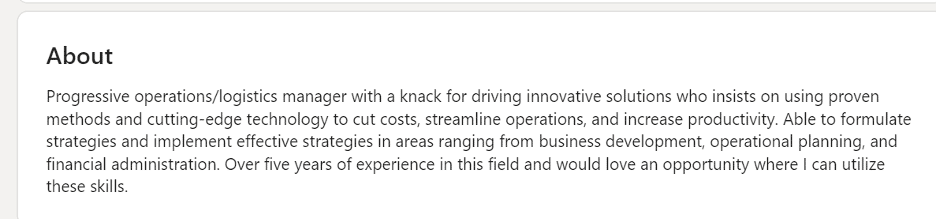
About section Keywords Insertion:

LinkedIn keywords

Professional Experiences Insertion:

For example, those aiming for marketing keywords for their LinkedIn could do this:

Get some recommendations

LinkedIn recommendations can add social proof to a job seeker’s profile and show that your coworkers and peers think highly of your skills. You can get the best, most meaningful recommendations from your direct management.

To get started, think of all the people you’re close to and have had positive interactions within your professional crowd. Then, contact them and ask them for a recommendation on your LinkedIn profile. By taking this step, you’ll be on your way to furthering your career goals.

Disclose that you’re open to new opportunities

A good LinkedIn profile is a job hunter’s best friend. Updating your status to “open to new opportunities” tells recruiters that you are actively looking for a job. This way, they will be more likely to approach you with potential job openings.

And don’t worry, your boss won’t be able to see your status; just make sure that “Share with recruiters only” is turned on. So, if you’re serious about finding a new job, make sure to update your LinkedIn profile accordingly.

Either way, LinkedIn gives you control over how visible you are to recruiters. You can use this to your advantage to get your dream job.

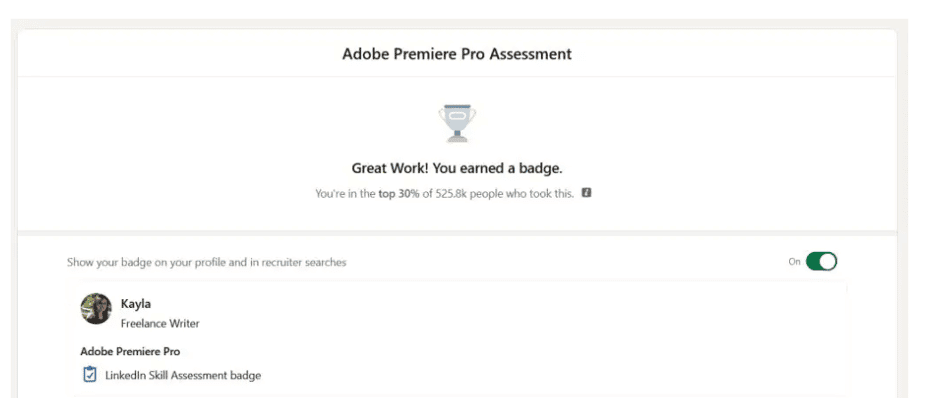
Complete skills assessments

Taking skills assessments is a great way to improve your chances of getting hired. Data shows that candidates with verified skills are around 30% more likely to be hired for the roles they apply for.

And displaying proof of your abilities strengthens your personal brand more generally as well.

That’s why taking a skills assessment and adding the results to your LinkedIn profile is a good idea. It’s a quick and easy way to demonstrate your abilities and show potential employers that you’re the right person for the job.

These quizzes are an excellent way to give proof of your proficiency in skills to potential hiring managers and others with whom you’re networking.

Why take assessments?

Assessments are free to take, and even if you fail, they won’t hurt your profile. 

LinkedIn assessments

“Show your badge on your profile and in recruiter searches” make sure the switch is turned on. This way, your profile, and especially the Skills section, will look much more impressive. 

Also, when recruiters are searching for candidates on LinkedIn, if they have a filter on to look for people who have passed specific skill assessments, you’ll be sure to show up!

LInkedIn assessments

Spotlight the services you offer

LinkedIn services

Job seekers can use LinkedIn to find new opportunities and connect with potential employers. However, LinkedIn offers a unique feature to consultants, freelancers, and those working for smaller businesses.

The new Services feature helps these professionals showcase their range of services. Just as significantly, filling out the Services section of your profile can boost your visibility in search results.

This means that potential clients are more likely to find you when they search for someone with your skills and expertise. As a result, taking the time to complete the Services section of your LinkedIn profile can pay off in a big way.

For example:

Look at the example below with a ‘Marketing’ Business Focus to illustrate how to add services you provide.

LinkedIn marketing services

Connect with your current and past colleagues, clients and partners

During the hiring process, prospective employers look at your LinkedIn profile. Making connections with previous coworkers can significantly increase the size of your network and give the impression that you are more involved in your field. This raises your chances of connecting with a hiring manager, which could offer you an edge over the competition.

LinkedIn is the world’s largest professional network, so one new connection can lead to many others. You gain indirect access to former coworkers’ contacts when you add them to your network. This implies that if they like or comment on your posts, you’ll show up as a suggested connection in their network and your postings will display in their contacts’ newsfeeds. This will increase your visibility and help you connect with people who might prove valuable to your career.

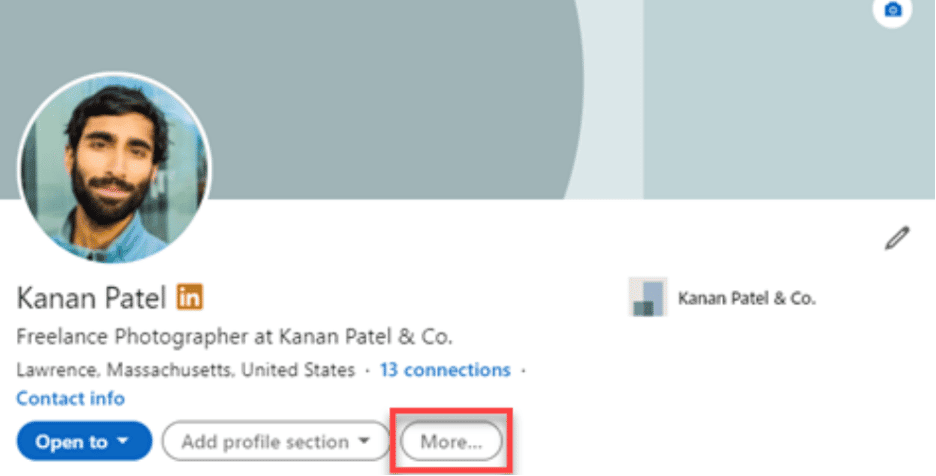
You can share your profile with any of your 1st-degree connections and coworkers from the introduction section on your profile. This can help you to grow your network or to increase your chance of finding and securing professional opportunities.

To share your profile:

  • Click the Me icon at the top of your LinkedIn homepage.
  • Click View profile.
  • Click the More… button in your introduction section.
Good linkedin profile

  • Select Share Profile from the dropdown.

Add your LinkedIn profile in another language

If you’re looking at international opportunities, or even if you simply want to interact with professionals in your sector in other countries through LinkedIn, nothing is better than putting your LinkedIn profile in a secondary language.

Creating a profile in the local language of that country is a great way to present your visibility.

To create your profile in a second language, visit your LinkedIn profile page. In the upper right-hand corner, click on “Add Profile in Another Language.”

LinkedIn Profile enhancements for active job searchers

LinkedIn networking

Direct connect with recruiters & hiring managers

LinkedIn is probably the only place where you can get a message directly to the person doing the hiring. Use it to connect with recruiters, hiring managers, and other professionals in your industry.

If you’re job seeking, a direct connection with recruiters and hiring managers is a must. One of the easiest ways to grow your LinkedIn network is to sync your profile with your email address book. This enables LinkedIn to suggest people you could connect with. LinkedIn will also show you how you are connected to potential new connections, which can be a helpful way to break the ice. You never know when a recruiter or hiring manager will check out your profile, so it’s always good to have a strong and up-to-date presence on LinkedIn. So go ahead and sync those profiles! Plus, the more connections you have, the easier it will be to find a job when you are ready to make a move.

To send an InMail Message, navigate to the profile of the member you’d like to send an InMail message to, or you can also search for a member and send a new InMail message from the messaging page or conversation windows. Click the More button on their introduction section. Select Message [Name of the member] from the dropdown. Type the Subject field (optional) in the new message pop-up window. Type the message in the text box. Click Send.

Example of InMail Message:

Hello {{prospect name}},

I came to know that you are using {{competitor’s product}} for {{purpose}}. So, I wanted to connect with you to introduce our new launch {{product name}}. It is quite similar to {{competitor’s product}} but is way better in functionality.

Without taking much of your time, here is a summary of its features:

{{advantages}}

Does it seem interesting?

Our company is offering a free trial for esteemed individuals like you to experience the effects for yourself.

Please let me know if the free trial interests you.

Thanks,

{{Your name}}

Follow relevant influencers in your industry

A good LinkedIn profile isn’t just a digital resume – it’s a way to show your professional personality and build a network of engaged contacts. One way to make sure your profile is engaging and up to date is to follow relevant influencers in your field.

This ensures that your feed is full of interesting content you can share with others, demonstrating your expertise and passion for your work. In addition, the following influencers give context to your profile, helping you to stand out from the crowd and connect with like-minded professionals and recruiters. So, if you’re looking to build a strong LinkedIn presence, don’t forget to follow the right influencers for you.

Leverage a custom LinkedIn cover photo

According to data, recruiters only remember 20% of what they read but 80% of what they see.

And as a result, people with custom cover photos receive more connection requests, messages, and job interviews.

Background photo tech specs

But here’s the twist… Almost no one takes advantage of this! For your cover photo to show up the way you want it to, you should pay attention to the size requirements. The recommended LinkedIn background photo dimensions are 1584 x 396 pixels. The quality of the picture you upload is essential as well. with 4MB and an aspect ratio of 4:1 ideally.  When it comes to formats, LinkedIn accepts JPG, GIF, and PNG.

LinkedIn banner

The background photo of your profile page is one major factor in attracting the attention and consideration of recruiters. It should highlight what matters most to you while setting a context for potential employers who may be viewing it at any time.

The right typeface can make all the difference when trying to stand out amongst other candidates – so be sure not only to choose wisely but tightly crop wherever possible!

LinkedIn banner

Start reposting industry-relevant content

Creating and sharing content on LinkedIn is essential to getting the most out of the platform. Hiring managers, recruiters, and business executives will see you more often if you consistently post high-quality content. This is very powerful as not only does this broaden the number of people who see your posts, but it also has the benefit of being viewed as worthy of engagement.

LinkedIn best practices for a complete LinkedIn profile

Fill out your profile completely

While it’s easy to skip over some sections, it is always more beneficial to ensure that you completely fill out your LinkedIn profile. Why? Well, the most filled-out profiles come up first during a recruiter search, and if yours isn’t fully completed, you risk that the headhunter will not see your profile as it will appear at the bottom of the search list.

Add your pronouns

Pronouns are an important part of language and communication, they are also key to a good LinkedIn profile for job seekers. By including your pronouns in your profile, you will avoid any awkwardness or confusion later on. You will also signal to potential employers that you are an inclusive and professional individual who is comfortable with using different pronouns and make your LinkedIn profile always worthy.

Customize your URL

Job seekers often create a LinkedIn profile in order to connect with potential employers and build their professional network. When creating a good LinkedIn profile, users are given an automatically generated URL that includes a string of random numbers. This URL can be difficult to find, read, and share. Having a professional and clean URL that includes only your name is much easier.

To change your URL on LinkedIn, go to your profile page and click “Edit public profile & URL.” Then click the “Edit” button next to your current URL. Enter the new URL and click “Save.” Having a name-only URL on LinkedIn will make it easier for people to find, read, and share your profile.

Add some interests

This is a valuable way to show some personality and stand out from the competition. If a recruiter from such a company is looking at your profile, they’re going to be more inclined to contact you.

To add an interest – just look up whatever company, group, or school you’re interested in, click on their LinkedIn page, and then select “Add to Interests.” That’s it!

 Just remember to keep it professional – no one wants to see that you’re interested in “partying” or “getting trashed.” Keep it job seeker-focused, and you’ll be on your way to impressing recruiters in no time.

Customize your invites

While many connections occur organically on LinkedIn, there will be situations where you’ll want to take a proactive approach and reach out to specific connections.

For this to be effective, you need to create a customized invite that provides a snapshot of your profile highlights — who you are, what you do, and why it matters — along with a personalized message about why this connection matters to you.

With so much competition out there, a generic invite is likely to get lost in the shuffle. But a well-crafted invite that is tailored to the individual will help you stand out and improve your chances of making a lasting connection. 

Here’s an example of what a good connection message looks like:

“Greetings, [First Name],

I’m currently looking for a new job and am expanding my network with HR professionals like yourself. Willing to discuss any opportunities at any time.

Best wishes,

[Your Name Here]”

Plus, adding a Skills Assessment badge to your profile makes you stand out from other candidates – which can make all the difference in getting hired. So if you’re looking for a way to improve your job prospects, taking a skills assessment is a great place to start.

Make your LinkedIn profile buzzwords-free

Do you have the word “driven” on your LinkedIn profile?

That could be a mistake.

According to LinkedIn, “driven” is one of the ten most overused buzzwords found in LinkedIn profiles — words that “make you go ‘meh'” and should be removed immediately (if not sooner).

A good LinkedIn profile will give a potential employer a well-rounded sense of your skills, experience, and character. However, many job seekers fall into the trap of using meaningless buzzwords in an attempt to make their profile stand out.

Why no buzzwords?

While it’s important to use language that accurately describes your abilities, overusing terms like ‘specialized,’ ‘leadership,’ ‘focused,’ ‘strategic,’ ‘experienced,’ ‘passionate,’ ‘expert,’ ‘creative,’ ‘innovative’ and ‘certified’ can have the opposite effect.

This is because these words are used so often that they have become almost completely meaningless. Instead of using buzzwords, focus on using clear and concise language. This will help you create a LinkedIn profile that accurately reflects your skills and experience.

Take this bio, for example:

LinkedIn profile buzzwords

I’ll give it a go at editing to make a buzzword-free profile.

LinkedIn profile buzzwords

Use the find nearby feature

A little-known feature on the LinkedIn Mobile app is “Find Nearby.” This feature allows users to see profiles of other users who are physically nearby and who have also turned on the feature.

This can be extremely helpful if you are attending a physical networking event, as it allows you to see the LinkedIn profiles of nearby attendees. This is a great way to make sure that your profile is seen by people who might be interested in connecting with you.

Publish long-form content and add comments

By sharing relevant content and adding comments, you can give yourself greater prominence in the LinkedIn feed and start to express why you think a particular piece of content matters. LinkedIn is also a great way to share a broader range of content. By adding comments to your shares, you can show potential employers your interest in a certain field or company and start to build rapport. Well-expressed comments also make it clear that you have something valuable to say and are willing to engage in thoughtful discussion. As a result, adding comments to your LinkedIn shares is a great way to improve your chances of landing your dream job.

You can do so by clicking on the ‘’Post’’ Button and Sharing Content related to your industry.

LinkedIn post

A little like this:

LinkedIn post

The bottom line

Craft a Standout Profile

Now that you’ve gone through the checklist of what makes a good LinkedIn profile, it’s time to sit back and wait for the job offers to start rolling in! By ensuring that your profile is strong and engaging, you’re setting yourself up for success in the world of online networking. So, take a deep breath, relax, and enjoy the fruits of your labor – a well-deserved job offer may be on its way. Thanks for reading, and best of luck in your job search!

Frequently Asked Questions

How safe is LinkedIn?

LinkedIn is as secure as any other social networking site. You can safeguard yourself by creating a unique password that is not shared with any other accounts. However, any information you post on your profile should be considered public information.

Can I add my resume on LinkedIn?

At the top of the LinkedIn homepage, click the “Jobs” icon. Select “Applied Jobs” (above the search bar). Select a job to view more about it and see the resume used to apply.


 

How to Practice Mindfulness at Work and Find Focus

People who work long hours every day often struggle to find focus. They can slip up, lose concentration, be forgetful, and perform substantially worse over time. They tend to lack discipline and the ability to stick to a single self-incentivized action over a long period of time. What’s the solution, you might ask? Simple, Mindfulness, but you must first understand how to practice mindfulness to harness the power of focus.

Mindfulness is a conscious, active mental workout that helps improve your ability to think clearly and with purpose. It is something that is practiced. It’s a routine or set of skills that are executed to reach a repeatable conclusion of feeling mentally refreshed and capable of taking on a load of tasks again. Learning to practice mindfulness helps to put you into a renewed state where what once seemed impossible can become achievable.

How to practice mindfulness

How to Practice Mindfulness?

How does one practice mindfulness? Like any good routine, there are exercises that strengthen the mind and relieve your core issues. Each exercise works a different part of the brain and helps to elevate focus a little at a time.

Practice #1: Focus on the Present Moment

How to practice mindfulness
Click on the image to see a full infographic (opens in new tab)

With repetitive work, we often enter what you might call a “groove” where we operate at your station without thinking. Sure, it helps pass the time, but it doesn’t mean you’re consciously present. You don’t want to enter a state of “not thinking.”

Don’t confuse this with a “flow state” where your focus is dialed up. In this state, your mind is going much faster than usual to accomplish higher-level problem-solving. Keep your mind focused on the present, what’s happening around you, where you are, and how you feel in the moment. Compartmentalize your thoughts about the past or future and focus on the present when you’re at work.

Practice #2: Avoid Multitasking

How to practice mindfulness
Click on the image to see a full infographic (opens in new tab)

Multitasking might sound ideal if you’re seeking higher efficiency, but just like all things that sound too good to be true, there’s more to be said of how it doesn’t work than the good it can do. When you multitask, your mind is never fully focused on one thing. Our brains aren’t geared to do that.

We have one consciousness and one set of senses that all need to stay on one task at a time. People who multitask are no different. They aren’t focused on each individual task. They’re focused on coordinating them rather than doing them well. Keep your focus on one thing at a time. If you have multiple unavoidable tasks, arrange them in a sequence of one at a time so your focus remains on each one individually.

Practice #3: Refocus Your Mind Regularly

How to practice mindfulness
Click on the image to see a full infographic (opens in new tab)

Being mindful is all about reminding yourself to think actively. If you consistently burn out on tasks after one or two hours of work, set the alarm for an hour and then take a short break to refocus yourself. Throughout the day, you may need some passive or automated reminders to keep you thinking positively. Focus on simple things like breathing or the space between your fingers to regain focus. Then transition back to the tasks at hand. You can also practice meditation to help you focus.
Practice #4: Slow Down

How to practice mindfulness
Click on the image to see a full infographic (opens in new tab)

The faster you work, the more you get done, right? It’s the same philosophy as burning a candle at both ends. Twice the fire, twice as bright, and twice the heat. The problem is that it only lasts half as long. The mind can and will burn out the same way. If you work fast and as hard as possible, eventually, you slow down.

But you won’t be able to speed back up again until you come to a complete stop. Mindful work requires a measured, moderate speed. Don’t work fast. Work at a pace that you can keep consistently for much longer. Frame your work around an increment other than time. Working by milestones takes the focus off how fast you can finish and how many you can complete, where speed is less of an issue than completeness.

Practice #5: Practice Gratitude

Click on the image to see a full infographic (opens in new tab)

Sometimes you can’t keep the bad thoughts out. That’s natural. Human beings are predicated on negative thinking because it keeps us abreast of all the potential threats in our vicinity. By focusing on what could go wrong, we mentally prepare ourselves to deal with it.

But sometimes, that can boil over and create undue stress and anxiety. It’s hard just to say, “Think positive instead.” If it were that easy, people wouldn’t feel stressed. Instead, show gratitude. Engage in spiritual thankfulness or reflect on past success and the positive feelings you had and still have. Showing gratitude is a quick, simple, but sure way to enforce positive emotions.

Practice #6: Be Grounded

How to practice mindfulness
Click on the image to see a full infographic (opens in new tab)

Just because you’re in your own head doesn’t mean you have to concentrate exclusively on yourself. The more you think about yourself, the more you end up distracted by the past and the future, things you can’t change, and things you don’t know about yet. Ground yourself in the present by practicing and achieving humility, a humble sense of self-confidence.

The more you try to push yourself up as the world’s leading character, the more that self-reflection will turn into harsh judgment. You’ll second guess your own actions and halt your own work progress. Stop that early by establishing a positive self-image focused on the present, the work you are doing, and the methods you have to do it.

How to Practice Mindfulness

How to Practice Mindfulness to Achieve Your Goals at Work?

Knowing how to practice mindfulness can help you achieve your goals at work and make more thoughtful and meaningful progress in daily life. The methods are universal. Focusing on the present reduces stress from the unknown. Avoiding multitasking ensures that you will give tasks due attention. Taking meditation breaks helps reduce anxiety. Slowing down keeps the heart rate low and steady. Practicing gratitude and being grounded with humility make you more pleasant and approachable as a person. When you know how to practice mindfulness, you will also learn to focus on living and working for a better life.

Put your skills to the test! Take this quick quiz to see how much you’ve learned.

0

How to Practice Mindfulness?

Check if you know the secret.

1 / 10

Why is it important to focus on the present moment while working?

2 / 10

What is a common mistake people make when trying to be more efficient?

3 / 10

How can you refocus your mind during a busy workday?

4 / 10

Why should you avoid working at a very fast pace?

5 / 10

What practice can help you stay positive during stressful times?

6 / 10

How does grounding yourself help improve focus at work?

7 / 10

What should you do if you feel overwhelmed with tasks at work?

8 / 10

How can practicing humility help you stay focused at work?

9 / 10

What should you do if negative thoughts start to affect your focus at work?

10 / 10

What is the effect of slowing down your work pace?

Your score is

The average score is 0%

0%

How to change your career successfully: sidesteps, industry change and career progression

Have you heard of The Great Resignation? I am sure you have! It has been all over the news recently. Has the sound of it inspired you to start thinking about changing jobs? Are you stuck on how to change your career though?

It is regularly being reported that following the pandemic and other recent global events, there is a wave of workers who are quitting their jobs. And the media would have us believe they are doing so in droves. But is it really a thing?

It’s more accurate than you think! Fortune Magazine states that about forty percent of US workers are quitting their jobs with no signs of slowing down. That’s quite a number! Even Microsoft is dreading The Great Resignation as forty-one percent of workers are thinking of quitting.

As unsettling as it may sound, thinking of making a career change opens new career opportunities. Given today’s fast-paced world, it’s always good to keep up with the pace and strive for growth opportunities simultaneously.

Are you finding yourself caught up in the hysteria? And wondering how to make a career change successfully. My tip, persevere!

Make sure that you aim for the right job. Look for something that not only fits your skillset but is in sync with your interests as well. You’ll thrive if you are passionate about it! Be consistent, do your research and understand how to change your career.

Become socially active, start networking and work on building relationships with people who are already in the field. You’ll be amazed to know how networking works to land a job or get a task done in the most impressive manner just because you have connections in the right places.

If you’re uncertain about where to get started, keep reading. Taking risks can be scary, but they can also be extremely rewarding! Don’t let fear step in your way. Let me walk you through some valuable tips and help bring your anxiety one notch down.

Why do people change careers?

Have current global events driven you to change jobs? Or do you want to change jobs for some other reason?

There are numerous reasons why people change careers and resign from their current positions.

Some may be unhappy with their current job or feel like they are not progressing in their careers.

Some might be looking for a change of pace or a more challenging job that keeps the thrill alive.

How to make a career change?

Or maybe they’re seeking a better work-life balance or more flexible hours to spend more time with family or juggle between two jobs.

Executive-level employees may have different reasons for changing careers than middle or lower workers. Driven by enthusiasm and hungry for growth, these executives might be searching for an opportunity to use their skills and experience in a new industry or to take on a new leadership role.

Or they may be looking at the bigger picture to make a difference in the world. Learn more about the highest-paid occupations in the US here.

Points to ponder when thinking of making a career switch

Let passion and yearning for learning be your driving factors, and focus on your strengths. Once you learn what you’re good at, look for opportunities where you can put these strengths to practice.

Change in career path means stepping out of your comfort zone and trying something new. Sometimes, taking a risk can lead to great rewards. Let me give you some insight as someone who has successfully helped professionals make the transition.

To make the transition smooth, ask yourself:

  • Are you motivated enough to deal with the risks?
  • Do you clearly envision where you want to see yourself?
  • Can you make the transition smartly?
  • Would you persevere in diligently working till you get the desired outcome?
Are you making a career change?

Once you have the answers to these questions, you can get started on your career change with these pro tips:

Make sure you have a focused vision

Always have a clear vision of what you want to do next. What are your goals and objectives? What are you passionate about? Once you understand what you want to do, you can start researching different career options and paths.

Differentiate between existing skills and transferable skills

It is also essential to consider your transferable skills when a question pops into your mind about how to change your career. Do you have skills that can be applied to a new field or industry? Utilizing your existing skills will make the transition into a new job much more manageable.

Step out of your comfort zone and take some risks. Success doesn’t come easy.

Don’t be afraid of changing careers. If your current job has you feeling stuck in a monotonous routine, it may be time to make a change and look for something that excites you. Sometimes, the best way to find success is to venture outside of your comfort zone.

The current job climate status? Extremely competitive!

The current job climate is highly competitive. With the recent recession, many people are out of work and looking for jobs. It has resulted in employers receiving an abundance of applications for each open position.

Do your research before changing your career.

The current job climate is an important factor to consider before changing careers. The job market is constantly changing and evolving, and it is crucial to be aware of the current trends.

For example, the rise of the gig economy has created new opportunities for freelancers and contract workers. However, it has also made it more difficult for full-time employees to find stable work.

The job climate also varies location-wise. Some regions are booming, while others are struggling. For example, the tech industry is booming in Silicon Valley, while the manufacturing industry is grappling in the Midwest. Researching your region’s job market before making a career change is necessary.

The job market is improving, but finding a job can still be very difficult. Since the job market is so competitive, only the best candidates land the top positions. Prepare yourself to answer difficult questions during an interview.

Fortunately, several websites offer job listings, and many books and articles offer advice on how to change your career. All you have to do is look for the signs you’re ready for a change.

Tips on how to change

A career change can sometimes mean a pay cut, at least in the short term. Make sure you have a solid plan to support yourself and your family during the transition.

A career change can be a great way to revitalize your life and get yourself out of a rut. Do your homework first, have a solid plan, and take advice from career changers.

Tips for changing career

Here are some guidelines on how to change jobs:

Changing within or outside your Industry

There are numerous reasons why you might consider changing careers, whether within your current industry or outside of it.

Perhaps you’re feeling dissatisfied in your current role or looking for a change of pace. Irrespective of the reason, it’s crucial that you are thorough in your research because good research will back up the decision you take.

Look around, and talk to your friends, colleagues, or mentors to get their insights if you are considering a career change within your industry. If you’re considering a complete career change, you’ll need to widen your research spectrum to explore more options.

Whether outside or within your industry, you will find many resources that will lead you to your final decision. Research online and speak to a career counselor to better understand your options.

With meticulous planning, you can make a successful career change that will lead to a more fulfilling and satisfying work life.

When is the right time?

The right time depends on your individual circumstances. However, it may be time to consider a change if you are unhappy with your current job or feel like you are not reaching your full potential.

Alternatively, a change may also be beneficial if you have been in the same role for an extended period and are starting to feel that your growth is stagnant.

Ultimately, the decision comes down to what you feel is best for your career and future goals. If unsure, speaking to a career counselor or advisor may help you.

Choose the right time to change your career.

Identify your motivators

Different people have different motivating factors that can lead them to change their careers. For some people, it may be a desire for more money or better perks. While others may be looking to make a difference in their community or the world.

Changing careers is a big decision, regardless of your motivations. So soul-searching and proper research are vital before making the switch. Once you get an idea of what you want and why you want it, you will find success in your new career.

Side-stepping

Side-stepping in your career can be a difficult thing to do. You may have spent years working your way up in a specific field. Looking for a new direction or starting from scratch can be overwhelming!

Take some time to assess your skills and experience.

  • What are you good at?
  • What do you enjoy doing?
  • What are your strengths?

You may find the idea daunting, but let’s be optimistic and consider it an opportunity to learn and grow.

Embrace the challenge and use it as a chance to build yourself up in a new career in a new manner. Strive for a new, better you!

Many people have gone through career changes, and they can be a great resource. Talk to family and friends, contact professional organizations, and look for support groups. These people can offer advice, guidance, and support as you navigate yourself through a career change.

Learn from past mistakes

The past shapes your future, and I can’t stress how true that is! You can take many different paths. After all, the only way to find the right one is by trial and error and see what works best for you. Be patient, flexible, and willing to put in the hard work. With persistence, you can find the perfect career for you.

Be true to yourself

Changing careers can be overwhelming but staying true to yourself is crucial. It’s easy to get caught up in what other people think you should do or what’s trending at the moment, but you need to make sure you’re choosing a career that’s right for you.

Simply changing careers won’t magically fix all your problems. Be honest about what you’re hoping to achieve and what you’re willing to sacrifice to make your career change successful.

Changing a career can be an exhausting yet exciting process. Make sure you stay true to yourself and your goals, and you’ll be on your way to a successful new career.

Plan your future

Are you feeling a little less overwhelmed now? I hope I have been able to help alleviate some of your concerns about changing careers.

Maybe you feel that your present job is not challenging enough, or maybe you think that your growth is stagnant. Maybe you’re seeking a better work/life balance or simply ready for a change but feel totally lost and don’t know how to change your career.

Irrespective of the reasons, changing your career can be a big decision. But also an excellent opportunity to start fresh, learn new skills, and pursue your passions.

Once you have a clear idea of what you’re looking for and how to change jobs. You can start to research different career options. Take the plunge and get started today. Update your resume, start networking, and apply for jobs.

How to control anger: Tips and treatment options to help you keep your cool

People who are prone to outbursts of anger can find working in professional environments especially challenging. Whether you – or somebody that you work with – have trouble controlling your temper it is especially important that you learn how to control anger before it becomes a bigger problem.

We all know that keeping control of your emotions can be challenging at the best of times. And it can be particularly challenging in a corporate environment where you are constantly dealing with multiple personalities and stressful situations.

It can be the perfect environment to aggravate you – especially if you are already someone who struggles to maintain control and tend to have angry outbursts. However, maintaining control is vital for a healthy working environment.

One of the first steps to controlling anger is identifying your stressors. This guide will help you identify different types of anger as well as anger triggers. I’ve also put together some useful tips on dealing with your own anger or dealing with a colleague who struggles with anger issues.

Types of anger issues

Before we start, let’s look at anger and how it can manifest itself in people. Essentially there are three different types of anger issues people can suffer from.

Outward

This is the most common anger type. Outward anger is where a person expresses their rage in obvious, external ways. For example, a person suffering from outward anger issues might express it by shouting, cursing, throwing things, or being verbally abusive towards others at the office.

Inward

Alternatively, anger can be directed inwards. With this type of anger, an individual directs their rage toward themselves. For example, they might express their anger by harming themselves, denying themselves happiness (including denying basic needs such as food, etc.) and isolating themselves from colleagues at their workplace.

Passive

When a person suffers from passive anger, they use subtle and indirect ways to show their emotions. For example, sulking or refusing to speak to coworkers.

Impact of anger issues

Being angry and out of control can have a negative impact on both your professional and personal life, not to mention your physical and emotional well-being. It can have adverse effects on your relationships with colleagues, family, and friends.

On a physical level, not dealing with your anger appropriately can lead to heart disease, diabetes, high blood pressure, and a weakened immune system.

While on a mental level, unmanaged anger can lead to various mental health problems, including stress and depression.

What causes anger issues in a person

While the reasons that people suffer from anger issues can be varied, there are several well-known reasons that can trigger anger in people. These triggers can occur on a personal or professional level and the ramifications can be seen at home or the work environment regardless of where the problem started.

  • Stress
  • Family/ personal issues
  • Financial issues
  • Depression
  • Grief
  • Attention deficit hyperactivity disorder (ADHD)
  • Obsessive-compulsive disorder (OCD)
  • Bipolar disorder
  • Oppositional defiant disorder (ODD)
  • Intermittent explosive disorder (IED)

Signs that someone is suffering from anger issues

It is possible that a person can suffer from anger issues, and they may not even realize it. There are, however, some key indicators that you can look out for to help identify anger issues in yourself or a colleague.

Physical symptoms

Physical symptoms cause changes in your body, including the brain, heart, and muscles. Anger can also cause changes in hormone levels by increasing testosterone levels and reducing cortisol levels.

Some physical symptoms you can watch out for include:

  • Increased heart rate
  • High blood pressure
  • Muscle tension

Emotional symptoms

Anger also goes hand in hand with your overall emotions and feelings. For example, a person suffering from anger issues will likely also experience the following emotional symptoms:

  • Frustration
  • Anxiety
  • Irritability
  • Stress
  • Guilt
  • Feeling overwhelmed

Tips on how to control anger

Now that we have discussed how to identify anger and what can cause it, let’s take a look at some tips on how to control anger. You can use them next time you feel like you are losing control of your temper in a corporate meeting or event.

  • Take slow and deep breaths.
  • Count down from 100.
  • Say the word ‘relax’ or ‘calm down, repeatedly.
  • Stretch using some yoga-like movements.
  • Calm down and visualize yourself in a relaxing scenario.
  • Listen to your favorite music.
  • Note down your feelings in a journal.
  • Take a break and move away from others to a quiet room to reflect on yourself.
  • Speak to a friend or colleague.
  • Watch a comedy or something funny and laugh.
  • Reflect on your positives and be thankful for them.
  • Practice empathy.
  • Find a creative way to release your anger and control your emotions. (e.g., gardening, painting, etc.)

How to deal with someone who has anger issues

The tips above can be especially helpful in controlling your own anger, but what if your problem is an angry colleague? Well, I’ve got some tips to help you deal with that too. If you know someone who is dealing with anger issues and doesn’t know how to control anger, Here are a few things you could do to manage the situation.

  • Stay calm.
  • Give him the space that he requires.
  • Try listening to what he has to say.
  • Help him identify why he gets angry by speaking to him and asking questions.
  • Assist him in seeking professional help to manage his anger.

It’s also crucial to identify what causes anger in a particular person. Identifying the reason for anger could be helpful in finding the solution.

How to control anger: Treatment options

If your anger problems are worsening or the above techniques are not alleviating the problem, it might be time to seek other treatment options. There are several professional counseling and therapy options you could try to cope with your anger.

Counseling and professional help

Counseling is a type of short-term treatment where you speak to a professional about your issues. A certified professional counselor should be able to help you by identifying your problem and suggesting solutions.

Many workplaces, educational institutes, and healthcare institutions have professional counseling services to help manage emotions in clients, students, and patients.

There are also therapies and treatments such as Cognitive behavioral therapy (CBT) to help cope with anger. More on this later.

Anger management programs

There are various online anger management programs or courses available. These programs teach you the cause of your anger and how to control anger, in a professional and personal setup.

The programs sometimes use a combination of counseling and therapy to help employees manage their temper.

Here are a few anger management programs you can try.

Seek help from colleagues, friends, and online forums

If all else fails, you can try to get assistance from colleagues, friends, and family. This is a relatively cost-effective way to help deal with your anger. Another option is to seek help for similar anger issues posted on online forums, boards, etc.

They are made by like-minded people suffering from the same issues. A counselor or related professional heads the group or forum, where you can get assistance and learn how to control anger.

Here are a few things they do in these anger management local support groups and forums.

  • Talk openly about each other’s feelings.
  • Get practical solutions on treatment options.
  • Improve your ability to cope with challenges.
  • Gaining a sense of self-control, empowerment, and hope.

Therapy options for anger management

Additionally, there are a few anger management therapies you can try to control your rage in the workplace.

Cognitive Behavioral Therapy (CBT)

CBT is the most commonly-offered therapy for a range of emotional issues. It involves talking therapy in which your feelings, thoughts, and behaviors and their impact on others are examined.

CBT teaches you how to manage your emotions using practical skills. You’ll learn how to calm your mind and relax your body, which will help you control your anger.

Psychotherapy

Psychotherapy goes much deeper into a person’s inner feelings and lasts longer than counseling. It goes into your past to help you identify the root cause and why you get angry the way you do.

Psychotherapy also helps you identify if certain situations specifically make you angry and, if so, why it happens.

More often, people don’t address their anger issues, which makes it stressful for colleagues at the workplace. How do you manage a colleague who is constantly in a rage with just about everything?

The role of food and nutrition in anger management

Lastly, food and nutrition play an essential role in your anger management plan. Making simple modifications to your diet can make a difference in your mood and emotions. Here are a few tips on nutrition to control your rage.

  • Eat many dopamine-building foods, including poultry, eggs, fish, and leafy greens.
  • Eat foods rich in omega-3 fatty acids to help fight off depression and mood swings. These foods include flaxseeds, chia seeds, walnuts, and fish.
  • Eat foods high in magnesium that promote sleep, including spinach, sunflower, pumpkin, and almonds.
  • Limit your sugar intake. Eat some fruits for desserts to limit having desserts that are high in sugar.

Learn how you can get a complete and nutritious meal with the above nutrients.

Conclusion

Having anger issues can have a detrimental effect on a person’s professional development as well as their physical and mental health. That’s why it is extremely important to know how to manage anger and identify your triggers before it becomes a bigger problem.

FAQs

Is having anger issues a mental disorder?

Anger isn’t a mental disorder, but it could be a symptom of a mental health condition.

What is the best therapy for anger management?

Cognitive Behavioral Therapy (CBT) is an effective treatment for anger management.

Why does someone get angry over little things?

Someone could get angry over little things due to stress, anxiety, depression, feelings of grief, personal issues, or financial issues.


Mindfulness vs Meditation? Which is Better for Executives?

It’s fairly common practice to find mindfulness or meditation programs in today’s modern workplaces. While the overall benefits are still being debated, it is becoming increasingly evident that by including mindfulness or meditation in your work practices, you increase your ability to remain calm under pressure. You can also develop better skills to focus and enjoy clearer thinking. But when it comes to mindfulness vs meditation, which is more beneficial for busy executives?

The jury might still be out on which type of practice – meditation or mindfulness – is better, but I believe it really comes down to your individual needs and goals. It’s worth pointing out here that you don’t necessarily have to choose either. You can practice meditation as part of a greater mindfulness routine, and you can also practice mindfulness without meditation.

Still confused? Let’s take a closer look at the two practices to find out which one you can use in your daily work routine – or maybe you might choose both!

Mindfulness, Meditation, and the Workplace

Mindfulness vs Meditation
Click on the image to see a full infographic (opens in new tab)

Mindfulness and meditation in the workplace are increasingly being recognized for their role in developing essential employee skills. Research has found that employees or executives who practice meditation can maintain better focus on their work, will be more comfortable with themselves, can achieve better emotional awareness, and ultimately, will have better interpersonal relationships.

As companies progressively become more aware of both the physical and mental well-being of their executives, they also recognize the importance of workplace wellbeing programs. Many companies have even developed specific wellbeing programs. These programs include everything from psychological counseling, yoga, meditation, and relaxation, to family-building activities. They can also provide dedicated spaces for recreation and cultural expression.

Mindfulness vs Meditation

Mindfulness vs Meditation: How are they Different?

Mindfulness vs Meditation
Click on the image to see a full infographic (opens in new tab)

Mindfulness and meditation are often mistakenly considered to be the same thing. That’s not really the case, though. Practicing mindfulness does not always include meditation and likewise, meditation does not necessarily mean one is practicing mindfulness – although generally, meditation does include elements of mindfulness.

Mindfulness is the practice of focusing one’s attention on the present moment. And it can be achieved with or without meditation. To begin with, mindfulness generally starts by focusing on one thing, such as breathing. Alternatively, you can practice open monitoring, where you focus on breathing while also observing the thoughts that arise in your mind.

Mediation, on the other hand, is a mental exercise that helps achieve an overall sense of calmness and relaxation. It is the practice of focusing the mind internally. To do this, generally, people focus on a thought, an object, or an activity – for example, breathing. If you increase your focus, you can achieve mental clarity, emotional calmness, and stability.

Perhaps the idea of mindfulness vs meditation is misleading. As you can see, while both practices are intrinsically related, each specific practice can be used to achieve different outcomes and they are distinctly different in the way in which they are practiced. Mindfulness is generally related to increasing awareness of the present moment, while meditation is related to achieving inner calm.

Mindfulness vs Meditation: What to Choose?

Mindfulness vs Meditation
Click on the image to see a full infographic (opens in new tab)

As I mentioned, the difference between the two generally comes down to your own personal goals and motivations for taking up either practice. Let’s take a closer look at how each practice can differ depending on why you do them.

1. What are Your Desired Outcomes?

Mindfulness vs Meditation
Click on the image to see a full infographic (opens in new tab)

When weighing up mindfulness vs meditation, which practice you choose really depends entirely on why you have decided to practice them. If you are trying to achieve a total disconnection from reality, even for a few moments, meditation would be the way to go. However, if you are trying to fully focus attention on the present moment, mindfulness would be the way to go. Or perhaps more simply, mindfulness seeks awareness of something, while meditation tries to achieve awareness of nothing.

2. Mindfulness vs Meditation: which has greater benefits?

Mindfulness vs Meditation
Click on the image to see a full infographic (opens in new tab)

Although both practices have their benefits, each one offers different results. Meditation can be especially useful to help you develop greater decision-making skills and better awareness of your emotions.

Alternatively, mindfulness can be useful to improve task efficiency, as it allows us to improve our ability to concentrate and focus attention. It can also be useful for managing stress and anxiety and achieving a better quality of sleep. Perhaps most importantly, it can help you make better, well-informed decisions by developing a greater sense of self-awareness. It helps you to analyze situations more consciously without making hasty judgments or getting carried away.

Which Practice is Better for Executives?

Mindfulness vs Meditation
Click on the image to see a full infographic (opens in new tab)

Still weighing up mindfulness vs meditation. Maybe you’re wondering which practice is better suited to executives. Remember, you need to first ask yourself what you’re trying to achieve.

Both practices are mental exercises that can help to promote the psychological well-being of executives, but there is no universal magic formula. Each person is different, so a very effective practice in one person may not work well for the next.

Mindfulness vs Meditation
Click on the image to see a full infographic (opens in new tab)

For example, executives who are experiencing high levels of anxiety related to their work may benefit more from mindfulness. As we have seen, practicing mindfulness helps you to improve concentration and increase efficiency.

Alternatively, for executives who are looking to hone their ability to remain calm and make effective business decisions, meditation might be the way to go.

Mindfulness vs Meditation

How to Include Mindful Practices in Your Daily Schedule?

It only takes a few minutes a day to incorporate mindfulness practices or meditation into your daily work routine. However, over time, you might be inspired to increase the time you spend focusing on your mental wellbeing after you realize the potential for benefits. In terms of reward for effort, it’s a simple equation. Just 5-10 minutes can improve your performance and have you feeling happier and more satisfied.

Are you ready? Take this quiz to see if you’ve mastered the material we discussed.

0

Mindfulness vs Meditation

Mindfulness vs Meditation? See if you know the difference. 

1 / 10

What is the primary focus of mindfulness?

2 / 10

Which practice is more about achieving awareness of nothing?

3 / 10

How does mindfulness help in the workplace?

4 / 10

What is a key benefit of meditation for executives?

5 / 10

Which practice is particularly effective for managing stress and anxiety?


6 / 10

What should you focus on during mindful breathing?

7 / 10

Which practice involves mentally scanning the body for areas of tension?

8 / 10

How can mindfulness apps help busy executives?

9 / 10

Which practice is likely to help improve quality of sleep?

10 / 10

What is the main goal of body scan meditation?

Your score is

The average score is 0%

0%

Self-awareness: why it’s an increasingly important leadership skill

All leaders need a rich and varied set of skills and personality traits to be successful. And an increasingly important skill that has recently gained more traction is self-awareness.

Most people consider themselves to be self-aware, 95% in fact, according to studies at Harvard. But the reality is that this number is actually closer to 10-15%.

That’s a pretty low number for a skill that has been proven to be beneficial to leaders and in turn business.

Extensive research has shown that self-awareness in leadership roles creates many benefits for business success and helps set the tone for the growth of the whole company.

Let’s find out what it means to be truly self-aware and what you can do to build your own self-awareness.

What is self-awareness?

A generic, one-size-fits-all definition of self-awareness doesn’t really exist. Some people see it as a heightened state of self-consciousness. While others define it as the difference in the way you see yourself versus how others see you.

Some people believe that you are born with self-awareness, while others believe that you can master it through therapy. Insisting that in order to understand yourself, you must first understand your past. The premise of this idea is that in understanding where you come from, you also understand why you may react the way you do.

I tend to favor the latter and believe that self-awareness is a skill that can be learned.

What is the behavioral science behind self-awareness?

Psychologists say that self-awareness is the ability to focus on yourself. And perhaps most importantly, it is the ability to understand how your actions, thoughts, or emotions match with your internal standards – or indeed if they don’t.

Numerous studies into self-awareness over the past 50 years concluded that on a basic level, there are two different types of self-awareness:

  • Internal self-awareness: which is how we understand ourselves and our strengths, weaknesses and motivations.
  • External self-awareness: which is how we understand how we appear to other people and the impact we have upon them. This requires empathizing with others so we can understand their perspective.

Interestingly, people who have heightened internal self-awareness skills don’t necessarily have external self-awareness skills. This means that while they may understand their own motivations, they may be lacking in empathy and understanding of others.

An alternative way of approaching self-awareness is the principle of the 5 elements of self-awareness, which includes:

  • Your concept of yourself, or how you perceive yourself.
  • Understanding our thoughts, which helps us to become more aware of our emotions.
  • Recognizing our feelings, both when we speak about ourselves and when others speak about us.
  • Acknowledging our body’s physical responses, which are likely going to be automatic and beyond our control.
  • Honing your emotional intelligence, which is to understand your own emotions and also how they affect others.

It’s abundantly clear that to become more self-aware, you need to develop an understanding of yourself in many areas. It’s about knowing who you are and how you will respond to stimulation or external stressors.

Why is self-awareness an important leadership skill?

Self-awareness is increasingly being recognized as an important leadership skill because it creates harmony and collaboration in the workplace. It helps create a growth mindset where you show that you are happy to learn and to move forward. It also enables you to accept that like everyone else, you are not perfect.

If you are truly self-aware you will understand your purpose and the value that you bring to your role, your company and your team. You will appreciate your strengths and characteristics which will allow you to perform better – while also knowing when you need to seek support.

By developing your self-awareness, you will be better placed to understand when you should listen to others, or if you are in the position to assert your authority. A manager who knows when to listen leads an inspired and engaged team.

How leaders can use self-awareness to be more effective, productive and inspire better employees

Emphasizing self-awareness in leadership roles builds trust in employees and shows that your company is willing to evolve.

If your team knows that you are open and receptive to new ideas, it creates an environment that promotes better business performance all around.

Being self-aware enables you to become more approachable and humbler. It can be frightening for some managers to admit they don’t know it all yet having the strength and wisdom to accept that they don’t, helps your business grow and flourish in a collaborative spirit of success.

Self-awareness is all about adopting a growth mindset. Instead of asking why something has happened, ask yourself what could you have done to make it better. Once you can ask yourself this, you are on the way to self-awareness and an improved business future.

So how do self-aware leaders benefit from understanding their own behaviors and emotions?

As mentioned, self-awareness enables leaders to realize their strengths and to know when they should gain support or delegate duties if someone is better suited to the task.

It requires managers to put away their own egos and instead focus on collaboration. Which creates a business environment that inspires growth and development.

A self-aware person is willing to listen to others, is confident in their abilities and has a growth mindset that accepts that change and development on all levels is the best way to move the company forward.

Importantly self-aware leaders understand that like everyone they have their own set of unconscious biases and are likely to ask for input from other team members when it comes to decision-making.

What prevents people from being self-aware?

The most common reason leaders fail to develop self-awareness is ego. A business leader may believe that all their success comes down to their own hard work and commitment. This is called a self-serving bias and people with this mindset refuse to accept that they make mistakes, or their business success has anything to do with luck or other team members.

People that possess this mindset often blame external factors for mistakes or problems rather than taking responsibility. They blame external factors, like the economy, the delivery chain, the suppliers and anything else before they acknowledge their own contribution – or lack thereof.

How leaders can master self-awareness

Now that you know what self-awareness is and how, as a leader, you can benefit from it. Let’s take a look at how you can learn to develop a greater sense of self-awareness. 

Identify your emotions.

Acknowledging your emotions will help you identify what triggers them. Knowing what makes you feel happy, excited, worried or angry will provide you with the insight to control them – or better yet respond more appropriately. We often become stuck in behavioral patterns and react in the same knee-jerk way without asking ourselves why. The simple act of recognizing our emotions provides us with valuable insights into how we react.

Get some honest feedback

Asking your close friends, trusted colleagues or family for some honest feedback on how you present in various situations might seem daunting, but remember you are the only person who doesn’t witness your own behavior patterns. It is important to see yourself through other people’s eyes, as this will help you see how your communication methods and habits affect other people.

Realize that you have both strengths and weaknesses

Everybody has strengths and weaknesses. Even if you’re an important leader, this also applies to you. Once you have learned a bit more about yourself and can understand how others may see you, you can tailor your communication style to achieve the best results.

Successful leadership relies on delegation and self-awareness will help you understand when you are the best person for a job and when you are not.

Keep an open mind

All good leaders are naturally curious, they are always looking for new insights or innovation. Keeping an open mind and listening to colleagues and employees can help you develop new successful strategies. Practice active listening and guard against becoming judgmental of people or plans before you have heard them through.

Keep a journal

Keeping a journal can lead to improved self-awareness. By writing something down you are acknowledging that it is important to you. It can also help you see how you react to situations and when this can be improved in the future.

Be a better leader, be more self-aware

Science tells us how we can be more self-aware by understanding ourselves – both from within and also from how we are perceived by others. It’s about understanding what drives us and appreciating how we respond and react to our environment. It is through these lessons that we can overcome our egos and bias and be better leaders.

We are better placed to nurture and inspire others by leaning into our strengths and seeking support for our weaknesses.