Stress Management: The Only Guide You Need

Are you an expert on stress management at work? If not, this post is for you.

The way we each deal with stress and how it affects us is a personal matter. Each executive deals with stressful situations differently. Think about how you currently handle stress. Do you get stress out easily? Are you cool, calm and collected most of the time? Are certain situations at work triggering you and causing stress? Do you leave work every day stressed to the max? These are good questions to ask yourself to see if you need help with stress management.

Stress is an automatic emotional, physical or mental response to daily events that happen every day. Your stress response will be positive or negative, depending on how you personally handle stressful situations.

Try a few different coping mechanisms listed below and see what works best for you!

18 Stress management techniques and how to utilize them in everyday executive life! CLICK TO TWEET 

Strategy 1: Work Smart

Stress Management Technique 1. Work Smart. Follow a balanced schedule, create a calming morning routine, take regular breaks and not over-commit to tasks. Prioritize tasks and delegate.

Click on the image to see a full infographic (opens in new tab)

Work smarter with time and task management. Time management ensues when you follow a balanced schedule, create a calming morning routine, take regular breaks and by not over-committing to tasks. These are all preventative stress measures that can help with stress management.

Task management takes place by prioritizing tasks, delegating, seeking clarifications, negotiating and compromising (when necessary). These techniques help take the stress out of your daily activities and can help break the workday up so it’s more manageable and less stressful.

Strategy 2: Track All Your Stressors

Stress Management Technique 2. Track All Your Stressors. Keeping a stress journal can help you track the stressors. Write about how you dealt with them.

Click on the image to see a full infographic (opens in new tab)

Knowing your stressors is an effective way for executives to maintain stress management. By tracking what exacerbates your stress you can learn the proper responses and even how to avoid these situations. Keeping a stress journal can help to track the stressors and even write about how you dealt with them. Another option is to use a stress tracker to track your stress response.

Lower Your Stress Level Today!

Strategy 3: Operate within Your Job Boundaries

Stress Management Techniques. Operate within Your Job Boundaries. Don't exceed your mandate and don't make promises you can't keep. That allows you to focus more wholly on your key work responsibilities.

Click on the image to see a full infographic (opens in new tab)

As executives, we are continually stretched thin by daily work engagements and responsibilities. Make it a priority to operate within your role responsibilities. Don’t exceed the mandate and don’t make promises you can’t keep. Maintaining these boundaries helps with stress management and allows you to focus more wholly on your own work responsibilities.

Strategy 4: Abandon a Sedentary Lifestyle
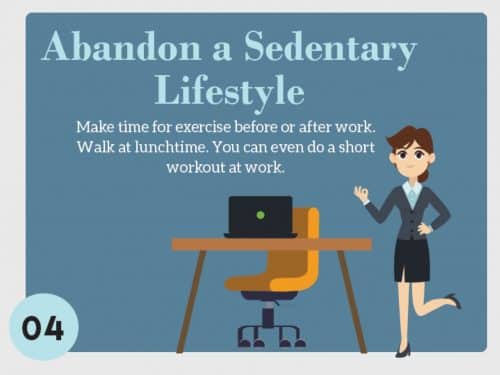
Stress Management Technique 4. Abandon a Sedentary Lifestyle. Make time for exercise before or after work. Walk at lunchtime. You can do even short workout at work.

Click on the image to see a full infographic (opens in a new tab)

Exercise has many therapeutic benefits and stress management is one of them, according to several studies. Exercise releases endorphins in the brain, which reduces stress and anxiety. Make time for exercise before or after work. Plan to talk for a walk at lunchtime. You can even do a short workout at work.

We know that being too sedentary is bad for your waistline but, it is also bad for your cognitive function. Even if you’re stuck in your office all day long there are still ways to get more movement in that can help with stress management.

Be Active While Sitting at Work and Reduce your Stress!

Strategy 5: Be Comfortable at Work

Stress Management Technique 5. Be Comfortable at Work. Invest in good ergonomically designed seats for comfort at your desk or even a massage chair for extra relaxation. Aromatherapy also helps.

Click on the image to see a full infographic (opens in new tab)

Comfort at work is important for stress management because it allows you some reprieve from an executive’s busy schedule. Invest in good ergonomically designed seats for comfort at your desk.

If you’re wanting to turn your desk chair into a stress-relieving spa try this massage chair for extra relaxation! Other ways to create a relaxing workplace ambiance are to use light therapy for a mood and energy boost or to utilize aromatherapy for stress relief.

Spray Anxious Feelings and Stress Away!

Strategy 6:  Be Proactive in Your Workplace Duties

Stress Management Technique 6. Be proactive in your workplace duties. Make sure you fulfill your tasks and meet deadlines. If needed, clarify your job description, ask for a transfer, change of duties or a more engaging job.

Click on the image to see a full infographic (opens in new tab)

Being proactive in your work duties is essential to maintain order, stay on task and meet deadlines. All of which are major stress triggers when not addressed. Talk to your seniors about workplace stressors. Clarify your job descriptions with them. If your creativity and drive need a boost, then request for a change of duties or a more engaging assignment. If needed, ask for a transfer. Your mental health is always a top priority so don’t be ashamed to ask for any of these adjustments.

Strategy 7: Practice Relaxation Techniques

Stress Management Technique 7. Practice Relaxation Techniques. Meditation, yoga and mindfulness are exceptional for daily stress relief. Deep breathing exercises can also calm your mind.

Click on the image to see a full infographic (opens in a new tab)

Relaxation techniques are great to do anywhere or anytime. They are perfect for the busy executive to help with stress management. Yoga and mindfulness are also exceptional for daily stress relief. Right when you wake up set an intention for your day or quickly for a few minutes at the office to reset and calm your mind. Deep breathing exercises can help calm your mind and ease the stress from the workday.

Meditation can also be useful for executives to set intentions on, particularly stressful days, before an important meeting or when you’re feeling unfocused and unproductive. Executives can try a meditation headband which can help improve stress response and reduce stress and anxiety.

Stat Relaxing your Mind with Biofeedback!

Strategy 8:  Stop Bad Work Habits to Decrease Your Job Stress

Stress Management Techniques 8. Stop Bad Work Habits. Resist Perfectionism. Stop negative thoughts, quit micromanaging. Avoid procrastination, appreciate feedback, see things from a humorous angle.

Click on the image to see a full infographic (opens in new tab)

A great way to incorporate stress management is to stop bad work habits. Resist perfectionism, stop negative thoughts, and quit micromanaging. Avoid procrastination, start appreciating feedback and even see things from a humorous angle.

These small but mighty shifts in perspective will lessen your stress from the workday. Allow you to actually enjoy the job and maybe even reward yourself on achievement.

Strategy 9: Reach out

Stress Management Techniques 9. Reach Out. Talk with others about what is stressing you. Getting it off your chest and airing grievences will help you not to feel alone.

Click on the image to see a full infographic (opens in new tab)

Simply put- talk about what is stressing you out. Sometimes just getting it off your chest can help the stress fade away.  Reaching out to others is a simple way to air grievances and not to feel alone!

Ask co-workers for support or lean on friends and family members. If you need to, establish new satisfying friendships. This can be great to feel a sense of camaraderie with other executives or to let your friends and family in on daily work life.

Strategy 10:  Check Your Nutrition

Stress Management Techniques 10. Check your nutrition. Make sure your diet includes vitamin C, complex carbohydrates, magnesium and omega-3 fatty acids. Reduce sugar, caffeine and alcohol.

Click on the image to see a full infographic (opens in new tab)

Proper diet helps to offset the impact of stress. When you eat well-rounded meals full of vitamins and nutrients, you strengthen your body’s immune system, your moods become more stabilized and blood pressure is reduced.

To help combat stress with nutrition make sure your diet includes vitamin C, complex carbohydrates, magnesium, and omega-3 fatty acids. Vitamin C is linked with boosting the immune system and lowering cortisol, the stress hormone. Complex carbohydrates such as whole grains induce serotonin production, which minimizes anxiety and stress. Proper amounts of magnesium also restrict cortisol and prevent inflammation in the brain. Omega-3 fatty acids found in fish and nuts have been found to reduce surges of stress hormones.

Just as healthy foods can diminish stress, unhealthy foods and maximize it. Reduce sugar, refined carbohydrates, caffeine and alcohol to lower your body’s stress response.

Stress Out? Find out the Best Foods to Fight Stress

Strategy 11:  Seek to Make Work Satisfying and Meaningful

Stress Management Techniques 11. Seek to make work meaningful & satisfying. Think about the ways your work benefits the world. Ask frequently for feedback to understand how you can make more meaningful contributions.

Click on the image to see a full infographic (opens in new tab)

Think about the ways your work benefits the world.  It can give your soul more purpose and, in turn, give you more drive to do your best.

Track your achievements. It will help you see the progress and the returns on what you do. Monitoring your success will always make you happier and is a great stress management technique.

Ask frequently for feedback. Your face-to-face interactions with clients and employees will help you understand how you can make more meaningful contributions to them.

Finally, don’t set unrealistic deadlines or expectations (to avoid disappointment and stress), and enjoy the moment!

Strategy 12:  Sleep Well

Stress Management Techniques 12. Sleep Well. Get the recommended 7-9 hours a night. If needed, melatonin supplements can help. Melatonin pills can improve sleep quality and duration.

Click on the image to see a full infographic (opens in new tab)

Not getting an adequate amount of sleep can lead to a stressful and unproductive day. Sleep deprivation can lead to irritability, lack of concentration and focus, increased errors and forgetfulness. All side effects that will surely lead to more stress for executives.

Therefore, getting the recommended 7-9 hours a night is beneficial for stress management. If needed, melatonin supplements can help. Melatonin pills can promote sleep onset and improve sleep duration.

Find out More about How to Use Melatonin Supplements to Sleep Well

Strategy 13: Challenge Yourself to Unplug (Me Time)

Stress Management Techniques 13. Challenge yourself to Unplug (me time). Pick a hobby that will keep you interested and engaged. Learn new language, sport or activity. Engage in community work or volunteering.

Click on the image to see a full infographic (opens in new tab)

Unplugging after every workday is something that all professionals should practice for self-care and mental health. If there is no downtime and your brain is always “on” this could cause you to be in a state on constant stress.

According to a study done by the Annual Review of Clinical Psychology persistent stress, particularly in older or unhealthy individuals, can damage health and cause disease.

A good way to prevent this from happening is to unplug from work daily. Pick a hobby that will keep you interested and engaged. Learn a new language, sport or activity. Engage in community work or volunteering.

Activities like this can help you gain new confidence and become more resilient.

Strategy 14: Focus on the Bigger Picture

Stress Management Technique 14. Focus on the Bigger Picture. Include your big important goals on the top of your daily to-do list. Ignore or delegate the tasks related to the small stuff.

Click on the image to see a full infographic (opens in new tab)

Focusing on the bigger picture can help you take your mind off the minute details that could be causing unnecessary stress.

Therefore, always include your big important goals on the top of your daily to-do list.

Focus on the tasks that matter and which are aligned with your big goals. Ignore or delegate the task related to the small stuff. That will allow you to advance your business and your career.

Concentrating on these big targets make the biggest difference in meeting goals at work. It is also a solid foundation for stress management at the workplace.

Strategy 15: Work-Life Balance

Stress Management Technique 15: Balance Your Work and Life; Create time for the people you love. relate to people who have different, non-executive jobs to get a different perspective on life.

Click on the image to see a full infographic (opens in new tab)

Create time for the people and things you love. Many executives love their work, but there is more to life than working. Allowing for a proper work-life balance will not hinder your performance but will actually enhance it. It also allows you to share your successes with people who are happy and proud of you.

Relate to others who don’t share the similar experiences of being an executive. It may be hard at the very beginning, it is important, however, to have others outside of that circle to get different perspectives on what is important in life. It is possible to have a successful career and a happy private life!

Get Powerful Strategies on Maintaining Work-life Balance

Strategy 16: Take Time off

Stress Management Technique 16. Take Time off. Take a day to yourself and recoup. Take a weekend getaway with teh one you love or even a trip with the family to refresh.

Click on the image to see a full infographic (opens in new tab)

Possibly the best stress management technique is to just take time off. Take a day to yourself and recoup (no checking emails for work texts!). Take a weekend getaway with the one you love or even a trip with the family to refresh.

Strategy 17: Change Your Job

Stress Management Technique 17. Change Your Job. If stress management isn't helpful for your regular work stress, then this is something you should consider.

Click on the image to see a full infographic (opens in new tab)

 If you’ve tried some stress management techniques and that just isn’t helping, try a career change. As executives, we should always be striving to be great leaders. Sometimes great leaders need a change in direction to keep the fire burning.

A permanent change in a career can be scary and thrilling all at the same time. If stress management isn’t helpful for your regular work stress, then this is something you should consider.


Strategy 18: Seek Professional Help 

Stress Management Technique 18. Seek Professional Help. Take part in a stress management training or take advantage of one-on-one psychology services.

Click on the image to see a full infographic (opens in new tab)

If you have tried all previous strategies and you still feel stressed and overwhelmed, then maybe it is high time you consulted a professional. Everyone needs help at times so seeking professional help can be the answer to your stress management. Take part in a stress management training or take advantage of one-on-one psychology services. It’s no secret that executives lead stressful careers so this extra help in dealing with stress can be supportive and nurturing.

Conclusion

Stress on the body isn’t always bad. Even so, as executives, we have our fair share of stressors hit us daily and the need for stress management in this career is necessary. This isn’t an easy career and we must put in the work to stay on top of our game. To maximize work productivity and promote overall wellbeing stress management must be a priority for all executives.

Staying on top of stress management is just as important as eating well and exercising. Good mental health makes for a happy and healthy executive. Try a few of the stress management techniques listed above and see what works best for you!

Do you have any stress management techniques? Please list them in the comments below.

40 Powerful Mantras for Instant Stress Relief

Daily stressors are a fact of life. Usually, corporate executives have high levels of stress due to the fast-paced nature of the job. To help ease some of this tension we can quiet the mind by using mantras to reduce stress.

While exercise is used to train our bodies, meditation and mantras can be used to train our minds.

According to Dr. Herbert Benson, president and founder of the Mind/Body Medical Institute at Harvard Medical School, those who chanted mantras experienced psychological changes. These changes ranged from reduced heart rate, lower stress levels, and slower metabolism. Benson also documented that repeating mantras can benefit the immune system and relieve insomnia, leading to reduced doctor visits.

The benefits of mantras are real, so why not use them to reduce stress? Mantras are free. There are no side effects. It is so simple and easy. Let’s now look at how to use mantras to reduce stress in just two minutes per day!


Reduce stress in just 2 minutes with these 40 mantras for executives! CLICK TO TWEET


1. What is a Mantra?

Mantra is a Sanskrit word. It is derived from two other words manas (mind) and tra (tool), literally translating into ‘a tool of the mind’. A mantra is any word, phrase or sound that helps keep your mind in focus. This act of prolonged repetitive verbal utterance is one of the most common mental practices in human culture.


2. How Mantras Can Reduce Stress


There are two elements that lead mantras to help us reduce stress:

– Repetition

According to a study done by the Department of Psychological & Alternative Medicine at Sri Balaji Clinic in India, by repeating a mantra to yourself it helps to improve concentration and steadiness, helps with mental rejuvenation. A mantra is fueled by the act of repetition.

In a study done by the Neurobiology Department at the Weizmann Institute of Science, mantras were found to have a sedative effect. According to their study, “repetitive speech may account for the long-established psychological calming effect associated with commonly practiced mantra-related meditative practices”.

Another study in Brain and Behavior shows that silently repeating a single word to yourself quiets the system responsible for your mind wandering. This system is called the default network. The default network of the brain is responsible for thoughts when you’re left alone and undisturbed. We know it as a “busy mind”, which happens when we don’t have anything to do and our mind wanders. The understanding behind how mantras reduce stress comes down to slowing down the thoughts and getting out of one’s head.

– Sound and rhythm

Mantras can reduce stress by combining sound, breath, and rhythm. This combination evokes a relaxing quality and allows for your mind to stop wandering and for you to just be still. As a result of the sound vibrations, different patterns of the mind rearrange themselves to become tranquil.

Over time, that vibration sinks deeper and deeper into your consciousness, helping you to eventually feel its presence. A powerful yet subtle force working inside each of us that carries into deeper states of awareness.


3. How to Practice Mantras to Reduce Stress


3.1. Consistency

The best way to learn and improve is through practice and repetition. Whether it’s playing an instrument, learning a new skill like painting or writing, or your job- there are no shortcuts. Success doesn’t happen overnight so utilizing mantras takes practice and patience.

Consistency is key regardless of your chosen mantra. The focus of bringing yourself back to the mantra, again and again, will eventually open the energy of the manta.

It will stop being just words and become living energy that you’ll feel shifting your inner state.

Several traditions suggest staying with one mantra for several months before switching to another, in order to deepen your practice and cultivate a sense of ease, presence, and peace.

3.2. Breathe

The simplest way to start this practice is to just breathe. Breathe is not a mantra, per se, but it is a great starting point to understanding how crucial this exercise can be to your mental health.

This video is a great tool for learning how to breathe and to understand why diaphragmatic breathing is so great for your mental and physical health:


3.3. Calm you down

To use the mantra to reduce stress stop whatever you’re doing and sit in a relaxed position. Start to take slow, deep breaths to calm the body and mind.

3.4. Repetition

Concentrate on keeping the mental chatter at bay. Start to repeat your mantra. When other thoughts and feelings start to enter your mind, just acknowledge that they’re there and return to your mantra. Check in with your thoughts, and then let them go.

See if you can set aside two minutes a day to practice this mental meditation using mantras.


4. How to Use Mantras to Reduce Stress in Daily Executive Life

Using a mantra is easy. Executives have likely found themselves in a high stress or nervous situation and have used their breath or words of affirmation to calm down. Think back to how you felt before you gave a big speech or presentation. Were you nervous? How did you calm yourself down? In this situation, many executives likely choose to take deep, slow and deliberate breaths or, possibly repeat ‘I can do this’ to oneself. This is, in essence, using a mantra to reduce stress!

The power of mantras comes from the sound and vibration of your voice.

The difference between motivational quotes and mantras is that the chanting helps to take you on a spiritual journey where the mind, body and soul become calm.

So, speak or chant your mantra, don’t just think of it!

Here’s how executives can try this out and use mantras to reduce stress:

– In the office: While you’re sitting at your office chair set a timer for two minutes. Plant your feet firmly on the floor, sit up tall, relax your shoulders. Breathe. Breathe deeply for 60 seconds and only concentrate on your breath, nothing else. Then, repeat your mantra for a minute.

You can easily carve out two minutes of your day to improve your mood and productivity while you’re at work! You will improve your stress response and focus on what’s important. You will also feel less stressed and you will calm your body, mind, and soul.


– In daily life:  Try using this technique while on your work commute, in the shower, or right when you wake up before you start your day. Put your cellphone away, close your eyes, and repeat your mantra. It’s just two minutes per day!


Now that you’ve learned how to use mantras to reduce stress, try some of the following mantras!


5. 40 Powerful Mantras to Reduce Stress

Now it’s time to take a look at some effective mantras to use to reduce stress!

Before you read through this list just remember that is does not matter what mantra you choose, none are better than the others.

Dr. Herbert Benson and his colleagues also tested many mantras and prayers. They decided that regardless of what the practitioner repeats the word or phrase has nearly the same effect: relaxation and the ability to better cope with life’s unexpected stressors. The beauty of a mantra is that you can set a specific intention according to your needs. Do you need to reduce stress? Calm your mind? Decrease anxiety? Mantras can help!

As executives, these coping mechanisms can greatly improve our attitudes, emotions and even work performance.

Take a look at our list of 40 mantras to reduce stress!


5.1. Mantras to reduce stress

1. Trust

2. One task at a time

3. Steady your nerves

4. I’ve survived all the difficult moments of my past life

5. Steady your reactions

6. Do it your own way

7. Focus on quality, service, and value

8. Be a leader

9. Trust the process

10. A vision is a dream with a plan

11. Progress is a process

12. Trust the path

13. Wherever you are, be all there

14. I control my emotions


5.2. Mantras to promote concentration, calm the mind and decrease anxiety

15. Om (and deep breaths)

16. Let it go

17. With every breath, I feel myself relaxing

18. Be here now

19. Have fun

20. I have control over how I feel, and I choose to feel at peace

21. Don’t major in minor things

22. I give myself permission to let go of what no longer serves me

23. Focus on what’s important

24. Clear the small stuff


5.3. Mantras to encourage self-confidence

25. Look how far I’ve come

26. All experiences are helping me grow and learn

27. This is only a paper tiger

28. Live life to express, not to impress

29. Perfectionism stunts progress

30. Good enough is good enough

31. There is no danger to run out

32. Be not afraid

33. Be confident

34. I will do better next time

35. Failure is normal, success is the ability to go from failure to failure

36. I can and I will

37. More does not mean better

38. Work for a cause, not for applause

39. There is no wrong decision

40. Be brave


And what is your own mantra: …………………………………..… ?


Pick a mantra and use it! Put your mantra everywhere. At the office, at your desk, at home. Put it anywhere so you can glance over at it when you get overwhelmed.


6. Conclusion

Corporate executives rarely get a chance to relax and unplug. Using mantras can be an effective fix for this. Executives in daily work or personal life can easily use mantras!

By repeating a thought or catchphrase, it gains suggestive strength and energy. This act of repetition can actually help us control stress and anxiety. Using mantras to reduce stress can help executives in stressful work settings and can redirect that energy into productivity and positivity.

Take two minutes each day to practice a mantra meditation and regain mental clarity and calmness!

Do you leave work every day stressed to the max?

18 Stress Management Techniques That Really Work

You can check out our infographic on related topic by clicking the image below:

mantras for stress relief cover


Do you have any mantras that you use to help reduce stress? Please comment below and let us know!

Am I Burned-Out?

The role of an executive requires a high level of expertise in various capacities such as managing projects, staff, and budgets. These duties may often require your attention outside of your regular shift and because of your commitment to achieving company goals, you don’t hesitate when it comes to meeting the demand. This may cause you to ask yourself, am I burned out?

Depending on how long you’ve been working, your career may be affecting the way you manage your personal life. Symptoms of burnout are not always recognizable due to the sense of feeling like you can’t shake off the tiredness. Despite your desire to maintain control, there are signals your body may be sent to let you know that you’re overworked.

You don’t have to struggle any longer trying to solve the am I burned-out puzzle. Here are seven ways you can tell if you may be suffering from burnout symptoms

1. Fatigue Stays Longer than Expected

Burnout can creep into your life subtly. You may have convinced yourself that working a little longer to finish a report, responding to emails, and preparing for a meeting won’t hurt you.

However, if you’ve been experiencing fatigue that won’t go away after getting at least seven to eight hours of sleep, your work could be the cause of why you keep thinking am I burned-out? You may not want to admit that your body can’t handle the prolonged excessive stress, but if left unaddressed, the stress may begin to affect you emotionally.

2. Loss of Interest that Leads to Low Morale

Working hard may be the core of your career ethics standard, but working without incentive or mental stimulation can be very challenging. If your goal is to attain a high level of success on your work projects, but you’re struggling to find worth in the tasks you’re assigned, burnout may be the factor behind your apathy.

Results from a survey designed to evaluate the burnout status of more than 400 employees who worked at a university revealed that when an employee’s job does not provide an environment that fosters personal development, employees will lose interest or leave their job.

3. Your Appetite has Increased or Decreased

Eating to sustain your energy is a requirement everyone needs to meet. However, if you’re opting for food that is increasing your body weight or contributing to your high blood pressure or sugar levels, burnout could be the underlying reason you’re craving high carb foods.

On the other hand, you may have lost your appetite because you’re constantly thinking about work especially if you’ve been thinking am I burned-out? Statistics indicate that change in appetite is a result of stress.

4. Falling Asleep Quickly Is a Challenge

Sleep can be refreshing and contributes to the healing of your body. However, it can be difficult to obtain when your body is in work mode while you are in bed. Your body and mind should work in harmony when it comes to maintaining a healthy sleep rhythm. When this pattern is interrupted, sometimes your body thinks it should be up when it is time to fall asleep. This can cause you to think am I burned-out?

5. Health Problems Are not Subsiding

Medical problems can arise due to a poor diet, but stress can also cause and exacerbate existing health issues. Burnout can cause a constant state of anxiety and depression can present physical symptoms.

The only way to rule out these conditions and link low work performance to burnout symptoms is to conduct a thorough physical and mental assessment. Your doctor can evaluate any existing medical conditions you may have to ensure that your vitals are normal. He or she will also be able to assess if any new health situations are prevalent and answer your question am I burned-out?

Your doctor may also make recommendations in helping you with burnout symptoms. Seeking support from an expert can help you avoid crashing which can be a physical state you may not be able to recover from if you don’t seek help now.

6. Loss of Concentration Increases Everyday

Forgetting a phone number or your thought pattern periodically is normal. However, when your inability to sustain your attention while working can put your career at risk. Burnout syndrome can affect your mental performance for a long time if steps are not taken to recharge your mind. High work performers generally feel apprehensive about admitting their inability to handle everything successfully. So they avoid asking themselves the question am I burned-out?

However, when projects, your family life, and your health begin to suffer the consequences of your divided attention, it’s time to reduce your stress level. This means taking a step back, reassessing what’s really important to you, and implementing the help you need to thrive instead of just surviving.

7. Anger is Quickly Sparked

Your ability to respond to conflict situations or questions in a kind manner can be challenged when you’re burned-out. When you’re tired and haven’t been fueling your body with the right food, you will respond based on how you’re feeling. You might even feel guilty after you snap at others, but don’t have the mental energy to correct your behavior. Asking yourself am I burned-out can help you sort out mental and emotional challenges.

We want to hear from you. Share your thoughts about how your job may be affecting your family life or health, and what course of action you plan to take. If you’ve received help, share how you were able to recover from being overworked, and the answer you received regarding your am I burned-out question.

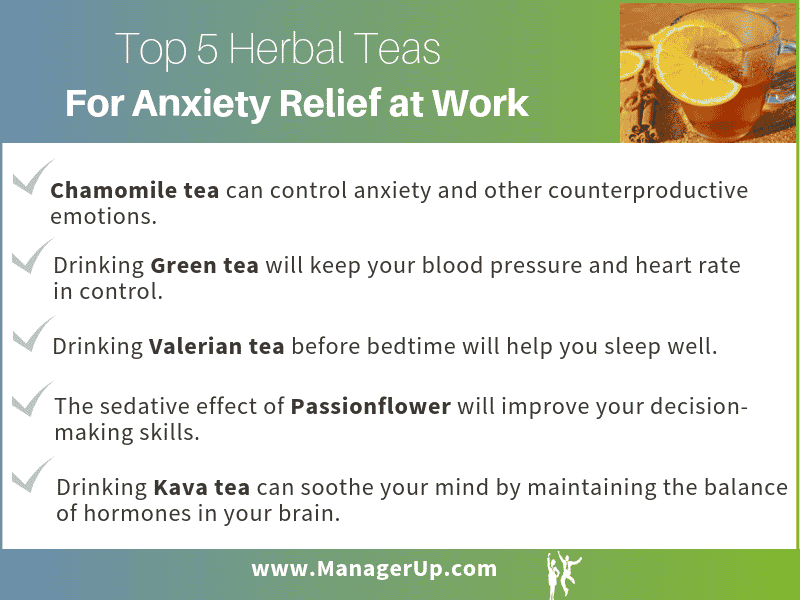
Top 5 Herbal Teas For Anxiety Relief at Work

Using teas for anxiety can help them avoid nervousness, and jittery feelings and improve their self-confidence.

Anxiety is a feeling that all of us have experienced several times in our life. It’s a feeling of some unknown fear that makes us nervous and uneasy. We all have experienced butterflies in the stomach before examination during our school days.

Even today, we feel the same when we have to make a presentation or appear for a job interview. Even the top level executives are not spared from this feeling. Even if you have given enumerable presentations in the past, you do feel jittery before meeting a new client or when you are trying to strike an important deal. But there’s a way out to beat your nervousness by drinking teas for anxiety.

According to a report published by the World Health Organization or WHO, the mental health of employees is a crucial determinant of their productivity. Excessive anxiety and poor mental health can increase the risk of burn-out among managers. It can seriously affect their ability to contribute to their professional and personal lives.

Having a cup of tea prepared from herbs before a meeting can help you avoid anxiety. Find out more here. CLICK TO TWEET

Studies have found that some teas can enhance your productivity and create a conductive atmosphere for all at the workplace.

Let us have a look at some of the scientifically proven herbal teas for anxiety you can drink before important meetings and presentations to stay calm and relaxed.

Executive Summary:

teas for anxiety

1. Chamomile

A cup of chamomile tea is what you need when experiencing a jittery moment just before an important meeting or interview. It acts as a great stress-buster and helps you calm down. According to the study published in the Alternative Therapies in Health and Medicine, Chamomile contains compounds that have the ability to reduce negative emotions by binding to the brain receptors.

You can drink chamomile teas for anxiety as and when needed, like before your performance appraisal. You can also drink it on a regular basis if you tend to get nervous about small things like asking leave from your boss.

It will correct the imbalance in your nervous system and inhibit the counterproductive emotions that could affect your ability to be bold and make rational decisions.

Want more tips that can help you avoid anxiety? Consider reading one of these top books on stress management and anxiety and learn to stop worrying and be more successful at work!

FREE YOURSELF FROM STRESS NOW!

2. Green Tea

Green tea contains an amino acid, L-theanine, which can produce a relaxing effect on your mind by controlling your blood pressure and heart rate.

Regular consumption of green tea can help to maintain the balance of chemical substances in your brain that plays a role in triggering anxiety and nervousness.

A report published in Biomolecules and Therapeutics has indicated that green tea can boost the production of feel-good hormones such as serotonin and dopamine thus promoting a positive attitude.

So, have a cup of warm green tea for breakfast if you know your day ahead at the office is going to be stressful and challenging. Have also a look at this amazing product and mist away anxiety and stress! This mist is portable and can help relieve anxiety and stress while promoting relaxation.

SPRAY ANXIOUS FEELINGS AWAY NOW!

3. Valerian

Valerian is a powerful medicinal herb that is specifically used to counter the effect of imbalanced levels of hormones and neurotransmitters in the nervous system. A study published in the LWW Journal has indicated that this herb can produce a soothing effect on the nerves and prevent anxiety.

It acts as a natural sedative and promotes sound sleep. Chronic insomnia can make you feel unrefreshed during the daytime and increase your anxiety. Lack of sleep can also reduce your productivity during the daytime resulting in mistakes, which can worsen your anxiety.

Valerian, by acting as a sedative, can help you sleep well and thus, prevent anxiety. However, since this herb can make you drowsy and decrease your level of alertness, you should avoid having tea during the daytime.

Simply drink Valerian teas for anxiety before bedtime to sleep well. You will get up feeling fresh, positive, and free of anxiety.

Extra tip: Combine your valerian tea with yoga and use bedtime to wind down. Relax, calm your mind… and get your best-ever body! We have compiled a list of best books on yoga and meditation with executives in mind.

CHECK OUT OUR LIST NOW!

4. Passion Flower

Passionflower can act as a natural sedative and calm the nerves. The results of a scientific research published in the Journal of Pharmacy and Therapeutics have affirmed that Passionflower can produce a soothing effect on the mind and body.

It prevents the negative impact of unfavorable circumstances on your decision-making skills.

You can drink passionflower teas for anxiety before meeting an important client to prevent feeling nervous, restless, and agitated.

5. Kava

Drinking Kava teas for anxiety can be highly soothing for your mind. A study published in the BioMed Central has proved that Kava tea can relax the mind and reduce anxiety.

It can help you to stay calm even during stressful situations like bidding for a huge, profitable project. It works by correcting the imbalance of hormones in the nervous system.

Most of these teas for anxiety are available in the forms of dry herbs and tea bags. You can brew the dry herbs in boiling water for 5 to 10 minutes, strain it and drink the tea. You can dip the tea bags in warm water for a few minutes and drink the liquid.

Anxiety can hamper your ability to think rationally. It may force you to make decisions that could be counterproductive for your organization as well as your own career.

On the contrary, staying calm and composed by drinking the teas for anxiety will allow you to deal with the challenging situations with better confidence and logical reasoning. This will improve your productivity and boost the chances of success.

GET MORE TIPS ABOUT HOW TO DEAL WITH ANXIETY AT WORK HERE!

Try these teas for anxiety and let us know how you felt. Leave a comment to share your experience with us.

Caffeine and Stress: A Dangerous Workplace Combination

Let’s face it. Executives and entrepreneurs are under a lot of stress at work. Project deadlines and delays, managing subordinates, filling orders…things can get heavy.

Many managers are lucky to get through the day without being completely drained by the heavy and ominous load that they carry on their shoulders and a large majority of them see their faithful friend’s coffee as an essential part of keeping up with the pace.

But many don’t know that while coffee, and more specifically caffeine, can stimulate your brain, it can also enhance your negative physiological responses to stress, possibly contributing to some chronic health issues in the future.

A Gallup poll found out that about two-thirds of American adults drink every day on average 2.7 cups of coffee. The average worker has been shown to drink even more, averaging out at 20 cups per week.

Caffeine does have its benefits when it comes to production, evidenced by findings from researchers at the Department of Psychiatry and Clinical Psychobiology at the University of Barcelona, who found that caffeinated beverage that contains sugar improve “cognitive performance in terms of sustained attention and working memory.” But at what cost?

It is showed that caffeine consumption under occupational stress produced increases in serum cholesterol levels, blood pressure, and plasma cortisol levels

A study from the journal Health Psychology, the official journal of the Division of Health Psychology from The American Psychological Association, showed that caffeine consumption under occupational stress produced increases in serum cholesterol levels, blood pressure, and plasma cortisol levels.

Some of you may know what that means and some of you may not. Let’s take a look!

Executive Summary:

caffeine and stress

1. The Downside of Cortisol

Cortisol is the bad boy of hormones. It’s nice to have around when you need it but when you don’t it can cause you some problems.

Cortisol is released by the adrenal glands under periods of stress to enhance certain bodily functions that help you escape from danger, i.e. increasing blood glucose levels to provide energy to escape & enhancing your brain’s use of glucose so that you can think quickly.

This may have served us well when we were traversing the African savannahs and needed to get away from a charging water buffalo. Or even today when that big guy at the bar has had a bit too much to drink and takes exception to your fedora.

But cortisol is not meant to be in constant circulation as it is in so many of the general population as well as businessmen today due to our constant levels of stress.

When cortisol overstays its welcome it can have a wide range of negative health consequences all over the body leading to increased risk for health issues such as:

– Anxiety

– Depression

– Digestive problems

– Headaches

– Heart disease

– Sleep problems

– Weight gain

– Memory and concentration impairment

That is why it is important to try and keep blood cortisol levels even.

Try to practice meditation or yoga to beat down stress and reduce cortisol levels.

FIND OUT MORE HERE!

2. High Blood Pressure … The Executive Silent Killer

Another negative physiological response triggered by stress and caffeine was the increase in blood pressure among study participants.

Most people are a little more familiar with the theme and risks of high blood pressure than cortisol.

High blood pressure is known as the “silent killer” because it has no obvious signs or symptoms.

It comes on slowly over time and most people don’t even know they have it.

 According to the American Heart Association, high blood pressure increases the risk for serious conditions such as:

– Heart attack

– Stroke

– Heart failure

– Kidney disease or failure

– Vision loss

– Sexual dysfunction

– Angina

– Peripheral Artery Disease

So we already have a one-two punch for heart disease with cortisol and HBP.

High blood pressure is dangerous and definitely something to be avoided for executives at all costs, regardless of how good of a cappuccino your office Nespresso machine makes!

3. Chronic Stress And Poor Diet Cause Cholesterol In Executives, Which Contributes to Arterial Damage

Study participants also saw an increase in their serum cholesterol levels but cholesterol has been a bit of a muddy topic lately.

For decades a high cholesterol level was thought to be the leading contributor for cardiovascular disease risk.

As studies and evidence came out the direct link began to become less clear and cholesterol was broken down into two types, LDL (bad) and HDL (good).

It was thought that LDL cholesterols are bad because they build up in arterial walls decreasing blood flow or even completely blocking it to areas of the heart, all the while causing it to pump harder to try and deliver the blood. HDL cholesterols are thought to carry LDL particles out of the bloodstream and into the liver for other uses.

But as doctors prescribed more and more statin medications to lower cholesterol levels and Americans ate less and less fat, our incidences of heart disease increased.

In short, it was discovered that the elevated cholesterol was not causing the heart disease itself, but was an indication of a bigger underlying issue: arterial wall damage done by low-grade inflammation caused by chronic stress, high intake of refined sugars and other factors.

The cholesterol merely acts as a patch for the damage.

So, while it may seem on the cover that high cholesterol isn’t a concern, the chronic stress and poor diet that cause it is still a contributing factor to arterial damage and heart disease.

So while an espresso may give you the jolt you needed to start your day, and a green tea may carry you through your afternoon, they can really decrease the quality of life for executives and entrepreneurs in the long run and put you at risk for some pretty nasty conditions.

It doesn’t mean that you can’t ever enjoy the flavor and caffeine rush of your mocha late, just think of it as a treat or a reward for a good week of hard work.

It would be a better idea to adopt dietary changes that give you natural energy and incorporate habits that help you cope with and lower your stress for your long-term well-being.

healthy diet books

START EATING HEALTHY NOW!

Do you agree? Please leave a comment below.

Start Using Magnesium For Stress Today!

Stress is not a new phenomenon for the busy executives like you. If you accept stress and let it stay in your life permanently, it will invite with itself a long list of diseases, read depression, hypertension, diabetes, heart attacks, and so on.

If stress has become a frequent guest in your life, it’s time you start eating foods rich in magnesium for stress.

Whit magnesium at your disposal, you can chuck out stress from your life. Find out more here. CLICK TO TWEET

Magnesium needs no introduction. We all know that it is one of the essential minerals needed by our body. But, do you know why exactly we call it essential? It is because your nervous system needs it desperately to keep working at its best. Your brain needs it to stay calm and relaxed and your nerves need it to avoid irritation and agitation.

In short, you can use magnesium for stress to ensure this uninvited guest stops visiting you.

Executive Summary:

magnesium for stress

Benefit #1: Magnesium Reduces Stress Hormones

The deficiency of magnesium can increase the cortisol levels thus contributing to anxiety, brain fog, and panic attacks. You can avoid these symptoms by using Magnesium for stress.

This mineral can restrict the production and release of cortisol, a stress hormone. It can also help you avoid brain fog, a kind of mental block that destroys the creative thinking skills of executives.

Magnesium can reignite the brain functions and boost your creativity thus improving your productivity while reducing stress through its inhibitory effect on the cortisol production.

If you are getting too stressed, consider getting a bit of extra help. Spire is a stress management and activity tracker that reminds executives to control their breathing through alerts triggered by respiration patterns.

LOWER YOUR STRESS LEVEL TODAY!

Benefit #2: Magnesium Increases GABA Production

Magnesium for stress reduction works by binding to the GABA (gamma-aminobutyric acid) receptors in the brain. The results of a study published in Neuroreport have reaffirmed that magnesium has the potential to stimulate the activity of GABA, which is an inhibitory neurotransmitter.

A low level of GABA can cause you to feel easily overwhelmed even at the thought of attending a seminar or giving a presentation. It can cause irritation and anger, which are not positive virtues to have while interacting with your clients, colleagues, and other team members.

Benefit #3: Magnesium Produces Anti-Inflammatory Effect

Chronic inflammation can take hold of the healthy organs in your body, and that includes your brain. Brain inflammation can increase the risk of anxiety, depression, and memory loss.

Research published in the journal of immunology has confirmed the anti-inflammatory properties of Magnesium. This mineral can destroy the inflammatory messengers of the immune system called cytokines thus inhibiting inflammation in the brain. It can prevent cytokines from destroying the brain tissues and altering the functions of this vital organ.

This would help you avoid the symptoms of stress such as anxiety, memory loss, depression, apathy, irritability, slowed responses, and inability to focus.

Don’t you think these benefits of using magnesium for stress offer a great ROI for you?

Benefit #4: Magnesium Eliminates Heavy Metals

A study conducted by Italian researchers and published in the Magnesium Research to examine the role of magnesium in brain activities has shown encouraging results.

It was found that this mineral can reduce stress levels and improve your ability to cope with the challenges at your workplace and personal life.

It works by supporting the elimination of toxic, heavy metals like mercury, and lead from the body. These toxins can cross the brain’s filter called the blood-brain barrier and accumulate in this organ resulting in considerable damage.

Now that you have realized the immense potential of magnesium for stress reduction, you must be eager to find out the foods that contain this mineral. Below is the list of foods having a high amount of magnesium.

– Kelp

– Cashews

– Almonds

– Parsley

– Soy Beans

– Avocado

– Leafy greens

Conclusion

Have you been told to “relax” “calm down” etc. too often? If yes, you should take a chill pill! I mean, you should take magnesium supplements or increase your intake of magnesium-rich foods.

It will ensure the feeling of being calm and relaxed comes naturally to you. When this mineral enters your body in abundance, it improves your mental health and drives out stress and the diseases it brought in with itself.

Do you want to learn more about foods that fight stress?

foods that fight stress

IMPROVE YOUR STRESS RESPONSE WITH THESE NATURAL FOODS TODAY!

We want to hear from you. If you have started using Magnesium for stress, please share your experience with us in the comments!

Depression at Work and How to Cope with It

The intense pressure of a managerial position coupled with the repetitive nature of office work and the challenging personalities found in virtually every workplace can be a recipe for depression.

The occasional “bad day” where you feel frustrated or unmotivated is normal work fatigue; however, being unable to concentrate for days or weeks on end to the point that it is negatively affecting your personal and professional life could be a sign of depression at work.

If these symptoms sound familiar, you are not alone.

report prepared by the Centre for Organizational Health and Development at the University of Nottingham’s School of Medicine used data from the World Health Organization and other organizations to find that nearly half of the world’s population experienced some form of mental illness, such as depression, during their life that impacted their ability to function in daily life.

Staying engaged in as many of your regular daily activities as possible, including work, is an essential part of working through depression.

Unfortunately, this is easier said than done for many individuals suffering from depression. Those suffering from depression at work are often forced to accept reduced hours, responsibilities, and pay because of their symptoms.

The following are techniques that you can use to cope with depression at work.

Executive Summary:

depression at work

1. Recognize And Acknowledge

Feeling tired all of the time, increased isolation from coworkers, decreased productivity, crying spells, burying your emotions in unhealthy behaviors, and calling in sick can be signs of depression. If you have tried “powering through” and nothing seems to work, it is time to seek professional help.

A psychiatrist, therapist, or other mental health professionals can provide you with various coping mechanisms for dealing with your depression symptoms.

It is also important to realize that you are not alone. In fact, as many as 1 in 20 workers are dealing with depression at work at any given time.

2. Talk to Someone

Most of us are comfortable venting about our day-to-day work-related frustrations with friends, family, or even co-workers. However, we are often reluctant to discuss depression with others out of fear that it may be interpreted as a sign of weakness.

In reality, sharing your struggles with someone that you trust can make it easier to cope with your depression at work.

In certain situations, it may even be advisable to arrange a meeting with your immediate boss once you have an actual diagnosis and are actively seeking treatment. This will let your boss know that any changes that he or she may notice in your job performance are not the result of dissatisfaction. In fact, you are taking steps to improve the situation.

Do you need more tips to cope with depression at work?

HAVE A LOOK AT THESE GREAT BOOKS ABOUT MEDITATION AND ANXIETY 

3. Identify Depression Triggers

Most people experiencing depression at work will find that certain situations may trigger or exacerbate their symptoms. For instance, too many deadlines or a contentious meeting.

Take a moment to identify at least five scenarios that worsen your depression symptoms.

Once you have done this, create an action plan listing specific steps that you can take to either avoid the trigger or lessen its impact.

4. Take Time Off

Most executives and managers are highly ambitious and tend toward Type-A personalities. As a result, they are reluctant to take vacations or mental health breaks. Taking time away to unplug from the pressures of work is essential for your mind as well as your body.

Do not be afraid to take a few days of vacation if you feel your depression worsening. You should also make it a point to never leave vacation time unused. Allowing yourself time to recharge. You will return to work with renewed productivity and creativity that will make you a better leader for your organization.

5. Focus on Smaller Tasks

Depression can make it difficult to concentrate, which can make large projects seem overwhelming. Give yourself permission to say “no” to projects and additional commitments when possible if you feel yourself getting overwhelmed.

If you find yourself struggling to get started on a particular task, try breaking it down into small, manageable pieces or even delegating if that is appropriate for the task.

6. Learn Calming Techniques

Even with diligent treatment, you might find yourself experiencing an acute episode of depression while at work. In these instances, it is helpful to have a few self-calming techniques at your disposal to help you relax and reset so that you can get back to your work as quickly as possible.

For example, you can take a quick walk around the block or shut your office door so that you can meditate for five minutes.

Improve your meditation practice with Muse, by Gaiam, which encourages changes in the brain and helps you reduce stress and anxiety.

START RELAXING YOUR MIND NOW!

7. Personalize Your Workspace

Your physical workspace can have a significant impact on your overall mood. Start by making sure that there is plenty of light, which will automatically help you feel happier and more alert and focused. You can then add some colorful yet professional furnishings and accessories to make your office a more pleasant environment.

If you have dealt with depression at work, we urge you to share your story and coping strategies in the comments below.

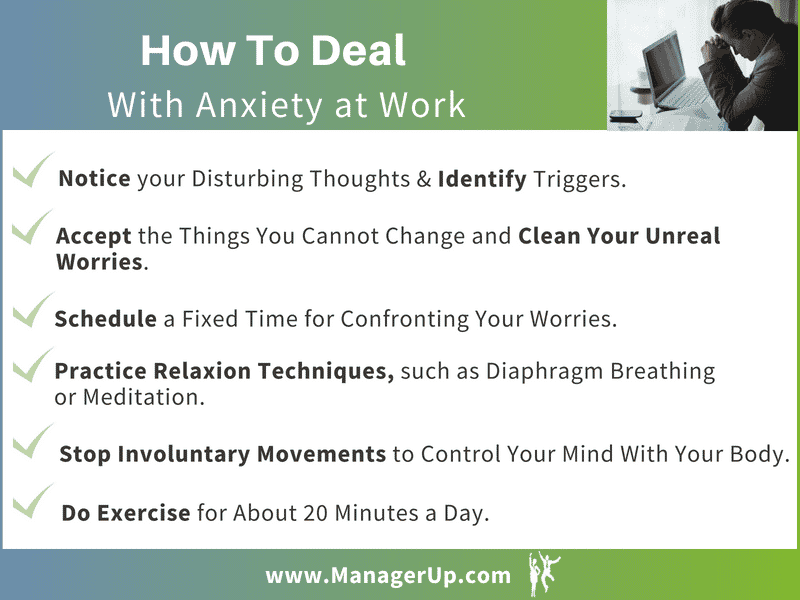
Important Tips For How To Deal With Anxiety At Work

It is important to learn how to deal with anxiety at work.

Anxiety can interrupt your chain of thoughts and speech. It can cause you to stumble or even stammer while giving important presentations or discussing project details with clients.

Getting anxious can also result in mistakes as your thinking is not entirely focused on the work you are doing. Ignoring the impact of anxiety can make employees short-tempered. They may even avoid participating in social gatherings and meetings.

Generalized Anxiety Disorder is a psychological disorder that is characterized by excessive and persistent worries about different things.

According to the Anxiety Disorders Association of America, one in four employees experiences persistent anxiety, which can impair his or her ability to function optimally at the workplace.

Some factors that have been identified as triggers for anxiety include excess work responsibilities, meeting deadlines and relationships with the people at work.

You can follow the tips mentioned beneath to learn how to deal with anxiety at work and reduce its effect on your efficiency.

Executive Summary:

how to deal with anxiety at work

1. Notice Your Disturbing Thoughts And Identify Triggers

Occasional anxiety is a part of life and is considered natural. For example, feeling anxious thinking about the deal you plan to crack with a new partner is bound to make you anxious and excited both at the same time.

Similarly, feeling anxious when you switch job is also common as there is uncertainty involved in the work environment and the new colleagues you have to work with.

But, when anxiety becomes too frequent and begins to interfere with your routine work, it can affect your work performance severely.

This form of anxiety is called generalized anxiety disorder (GAD) and involves feeling extremely worried or nervous over trifles. According to the Anxiety And Depression Association Of America, about 40 million adults in the US suffer from anxiety.

When anxiety becomes too frequent and begins to interfere with your routine work, it can affect your work performance severely.

According to research published in Medical News Today, a group of brain cells plays a role in creating these anxious feelings. It can cause you to get stuck with a repetitive feeling of worry.

This may result in some form of repetitive behavior such as turning in everything to your boss because you fear that if it’s not perfect, it would prove you don’t deserve the role.

This tendency to worry over trifles can reduce your self-confidence and even affect your overall impression during important meetings.

These feeling can be avoided by making conscious efforts to notice them when they come up and identifying the triggers for such disturbing thought.

Writing in a journal what you were doing when the feeling started will help you identify the preceding triggers.

Keeping a diary of your emotions will help you locate a pattern that correlates different situations that trigger anxiety. You can also have a look at our best books on stress, anxiety, and sleep and free yourself from anxieties right now!

READ MORE NOW!

2. Declutter Your Mind And Clean Worries

Take steps to declutter your mind and clean the worries that are not based on any objective truths or cannot be changed.

Research at the Behaviour Research and Therapy has proven that acceptance can help you avoid anxiety more easily than fighting the disturbing thoughts.

There are certain things about your job that you cannot change such as the attitude of your colleagues. You must realize that worrying about uncooperative colleagues will not help the situation get any better.

When you know you cannot change the attitude of your colleagues, accept them as they are or simply ignore their behavior when it doesn’t directly impact your work.

There are certain things about your job that you cannot change. Acceptance can help you avoid anxiety.

You also need you to identify the factors that create a sense of uncertainty or fear in your mind. Such feelings can make you more nervous.

For example, the fear of experiencing a mental block while delivering a speech can make you more anxious even though it may not actually happen. Just thinking that it might happen can make you more nervous and cause you to stumble while giving the speech. Such causes of fear and anxiety can be managed tactfully by making notes before the speech so that you know you can refer to them in case you have a mental block.

Similarly, most executives are anxious thinking they may be fired even after working hard and being successful at work. Analyzing such causes of anxiety will help you realize how unfounded your fears are.

When you notice these kinds of worries, be confident of your work and capabilities, and clean the anxious thoughts out of your mind.

Such causes of fear and anxiety can be managed tactfully by making notes before the speech so that you know you can refer to them in case you have a mental block.

Similarly, most executives are anxious thinking they may be fired even after working hard and being successful at work. Analyzing such causes of anxiety will help you realize how unfounded your fears are.

When you notice these kinds of worries, be confident of your work and capabilities, and clean the anxious thoughts out of your mind.

S.J. Scott and Barrie Davenport can also help you declutter your mind.

READ MORE NOW!

3. Schedule Worry Time

Once you have cleaned your unreal worries and accepted worries that cannot be changed, the rest of the causes of anxiety, which are based on factual circumstances that you can change, need to be tackled more carefully.

If anxiety due to such causes has become a routine activity for you, you can as well include it in your other daily tasks and schedule a specific time for worrying.

The idea is when you designate a specific day and time of a week for pondering or worrying over what’s happening in your life, you are less likely to think about them the rest of the time.

When you encounter a negative thought interrupting you while working on a project, write it down and tell yourself you can think over it during your next scheduled slot of ‘worry time.’

It is an effective way for how to deal with anxiety at work as it allows you to put aside your disturbing thoughts and focus on productive activities.

4. Relaxation Techniques

When you have just a few minutes left before an important meeting with a client and anxiety has taken over your mind, try relaxation techniques to deal with it.

Relaxation techniques such as diaphragm breathing that involves pushing out your abdomen, instead of chest, when you breathe is a great way to relax your mind and avoid anxiety.

To practice, place your hand on your belly and feel how the stomach moves while breathing.

Counting while breathing, meditation, and circular breathing that involves breathing in through the nose and breathing out through the mouth are also great ways to calm the anxious mind.

These techniques work instantly and ease your senses thus allowing you to face the client with a greater confidence.

You can also use the Meditation headband to keep yourself calm and relaxed and avoid anxiety.

TRY IT NOW!

5. Control Your Mind With Your Body

Your body has the power to control what’s going on in your mind. When you find it difficult to shrug off any nagging thought that has been interfering with your work, you can use the power of your body to control your mind.

When the anxiety-provoking thought refuses to go away, take a few seconds to identify your posture or body language.

Most often, you will realize you have been fidgeting your fingers, moving your legs, or rocking the chair in a restless manner. These movements occur at a subconscious level and reflect the turbulence in your mind.

Make a conscious effort to stop involuntary movements. Control your mind with your body.

Sit straight with your chin up. This posture marks a confident personality. It will instill a sense of confidence in your anxious mind and allow you to think with a positive attitude. Improve your posture while sitting.

FIND OUT HOW NOW!

You can also watch the Amy Cuddy’s talk about the power of body language to understand how changing your body language can help you avoid anxiety and be successful at work and in life.

6. Exercise

A study conducted to evaluate the Effects of Exercise and Physical Activity on Anxiety has proven that exercises can help reduce anxiety.

It was found that the anxiolytic (Anxiety-relieving) effect of exercises tends to last longer by instilling a sense of optimism.

This can be a great way to learn how to deal with anxiety at work while also improving your physical fitness.

BRAIN AFTER EXERCISE

According to the Anxiety and Depression Association of America, physical activities result in the release of chemicals called endorphins in the brain, which act as natural painkillers and reduce anxiety.

You can avoid anxiety by exercising for about 15 to 20 minutes a day. You can opt for simple walking or jogging or even try swimming, playing tennis or any sport to deal with anxiety. We have selected must-read books to exercise step by step.

Your anxiety can become easily evident to your clients, colleagues, and superiors as it causes trembling, affect the tone of your voice and increase sweating.

This may create an unfavorable impression about you at your workplace and reduce your opportunities for handling challenging projects or taking up better responsibilities.

Follow these techniques for how to deal with anxiety at work to feel confident and bag better projects and opportunities.

If you have any suggestions to deal with anxiety, leave a comment below to share them with us.

Basic Meditation Techniques for Beginners to Reduce Stress

According to a study published in the JAMA Internal Medicine, regular meditation can reduce stress and improve the overall wellbeing of a person.

Meditation is an ancient science that has its root in ancient India. Later, the Buddhists adopted meditation as a way to attain nirvana.

Gradually, it spread along the ancient silk routes to reach the rest of the world. In the modern age, the art of meditation has left the boundaries of spiritualism and become a powerful means of finding mental peace and calm.

The effects of meditation can be particularly beneficial for executives who experience high-stress levels due to constant work pressure, regular meetings, and job insecurity.

Meditation can improve the productivity of executives by improving their creativity, concentration, and cognitive skills.

Let us learn the meditation techniques for beginners that will help you stay calm, happy, and healthy.

meditation for beginners

Step by Step Meditation Techniques for Beginners:

Step 1: Choose a Convenient Place and Time

Meditation provides a great relaxing experience and hence, you must do it at the time and place that’s convenient for you. Hence, the first step for the meditation techniques for beginners is to choose a time when you are not likely to be disturbed.

You may practice it in the morning once you get up, or before going to sleep. You can also practice meditation for a few minutes between two meetings at the office.

The idea is to choose a quiet and peaceful place that can make the meditation experience more relaxing.

Step 2: Warm Up

Warming up before meditation can have a tremendous influence on your mind and help you to focus on your breathing. So, try to do stretching exercises for a few minutes before beginning your meditation session.

You can simply do a few sit-ups or walk briskly for a few minutes if that’s feasible for you. The idea is to loosen the muscles, reduce stiffness, and relax your body.

It is an important step for the meditation techniques for beginners as it will help you avoid numbness and tingling in the limbs while you sit still during the practice.

Physical activities like stretching will also improve the stress-relieving benefits of meditation and encourage your mind to concentrate better.

Even if you are practicing meditation at your workplace, warming up for a minute or two won’t be too difficult for you.

Step 3: Wear Comfortable Clothing

Dressing in comfortable clothing is an important step for meditation techniques for beginners. Make sure the clothes you wear are not too tight and the material is soothing.

Also, if the weather is too cold or warm, wear appropriate clothing to avoid discomfort because if you start sweating or feeling too cold, you will not be able to concentrate. This will hamper the benefits you can achieve.

If you practice meditation at your workplace, remove your tie and jacket before meditation as these clothing can cause some discomfort.

Step 4: Control Your Thoughts

Take a few deep breathes to provoke a meditative state. Try to remove unwanted thoughts from your mind. You can imagine a cloud over your head and put all your thoughts into that cloud.  Just imagine everything that’s in your mind passes through it.

This will clear your mind and help you enter a deep state of relaxation needed to begin your meditation session.

You can also try a meditation headband that monitors and improves your meditation practice and guides you to a calm mind.

Getting into the correct frame of mind may take a lot of time and effort initially. But, you will be able to achieve this state with regular practice.

Step 5: Meditate with Deep Breathing

Deep breathing in and out before meditation forms an integral part of the meditation techniques for beginners to prepare your mind and body. Deep breaths can bring your mind into a peaceful meditative state.

Take deep breathes. Continue breathing in and out while keeping your entire focus on the process. Put your hands on your belly and feel the air as it enters your body. Similarly, focus on the air moving out of the lungs.

Here is how to do it:

Initially, practice it for 5 to 10 minutes and increase the duration gradually as you gain better control over your mind.

If you find it difficult to focus on breathing, chant a mantra such as ‘Om’ slowly in an even tone. You can also switch on soft instrumental music to help you concentrate better.

These meditation techniques for beginners are of particular importance for the executives who practice it in the office where constant noise can distract their mind and prevent them from focusing. The music will nullify the noise and help you concentrate.

Find more advice on meditation in our list of books on yoga and meditation.

Simple Exercise for Meditation Beginners

Step #1: Sit Relaxed

Place a comfortable set or cushion in one room and sit relaxed.

Step #2: Check Your Posture

Note what both your legs are presently doing. Cross your legs in front (If seated on a cushion). If you’re on a chair, just rest your feet bottoms on the floor. Ensure you remain comfortable. Now straighten—but don’t stiffen– your upper body. Your spine will adopt a natural curvature.

Then, check what your two arms are doing. Set your upper arms to be parallel to the upper body while resting their palms on your legs at your most natural angle.

Drop your chin slightly and drop your gaze gently downward (but don’t shut your eyes). Simply let whatever appears in front of your eyes remain there without over-focusing on it.

Step #3: Listen To Your Breath

Listen to the natural physical sensations of your breathing as the air moves through your mouse/nose, the rising/falling of your chest and/or belly.

At some point, your attention will wander from the breath to other places. Notice this when it happens. Don’t judge/worry. Simply return your attention gently to the breath.

Be empathetic about your straying mind even if it’s doing so constantlythat’s normal anyway. Now, you don’t wrestle with your thoughts. Rather, you train to observe them without reacting then sitting back and paying attention.

Keep coming back to your natural breath time and again, without judging or expecting.

Step #4: When Ready, Slowly Lift Your Gaze

Take some moments and identify any sounds permeating the environment. Listen to your body. How does it feel right now? What thoughts and emotions are you experiencing?

Repeat as needed and re-learn.

Maybe you began meditating, but gave up on it, or may you haven’t even started because you’re skeptical about meditation in general.

Whichever the case, we recommend you reading “Unplug”. Meditations made easy! You’ll be meditating before you even finish the book.

Read More Now!

Common Mistakes Made by Meditation Beginners

You could be just starting off with an aim to cure your long-running stress at your firm.

Or you’re just experimenting in search of happiness after a flurry of team meetings, networking events, and business pitches.

The thing is, like in every other therapy, there are some potential pitfalls on your way. Give these a wide birth in your journey:

1. Choosing the wrong meditation for your work and body type: Determine what’s in line with your executive life and follow it.

2. Having unrealistic goals: Don’t over-expect. Sure meditation helps but truth be told, meditation is not a magic bullet to solve all your troubles.

3. You’re not consistent: You must be persistent.

4. Don’t overcomplicate matters: Stop aiming for the perfect. Nothing is. Do meditation for beginners simple.

5. Being conservative: Be ready to explore other techniques if things are not working out.

6. You keep comparing yourself with others: It should be about ME, not your fellow officials.

Conclusion

What do you desire the most in your life? Promotion? Success? Better salary? Well… Happiness is usually the most neglected choice. But, if you give it a thought, you will realize that all the other desires finally lead to happiness.

However, the paradox is executives never seem to find and retain happiness even when they consciously go after it, in spite of the money, position, and power they achieve.

This is exactly where meditation can step in as a practical solution.

If you have any suggestions to make the practice of meditation easier, please leave a comment to let us know.

5 Scary Work-Related Stress Symptoms You Should Know

Though stress is a very common consequence of a busy, successful career; most executives fail to recognize the work-related stress symptoms.

The impact of stress on their mental and physical health is diagnosed only when they suffer from complications such as depression, hypertension, or heart attacks.

The extent of stress in manager was evaluated by the American Psychological Association in August 2017. The findings of this survey were alarming. It revealed a significant rise in the number of Americans who experienced at least one symptom of stress within just one month prior to the study.

These symptoms of stress are not limited to your mental health.

They can turn bigger and engulf your life by affecting your physical health, your intelligence, your personal relations, and even your successful career.

This study has thrown light on the need for educating executives about how they can identify the symptoms of stress as they are more prone to develop these symptoms owing to constant work pressure.

Being aware of the warning symptoms of stress would help them take appropriate steps to reduce stress before they turn your life upside down.

Executive Summary:

work related stress symptoms

1. Dreading Work

The feeling of dread for work becomes evident when you develop a tendency to find excuses to avoid going to the office.

Falling sick too often, and trying to pass on the responsibilities to others may indicate this symptom.

There may be several reasons for you to start dreading your work. The unpleasant work atmosphere in your office, uncooperative colleagues, constant pressure to perform better, lack of job security, and unfair competition can reduce your interest in work.

You must love your work, if you want to progress.

Dreading work will increase your mistakes and also make you shun responsibilities and better opportunities.

Do you think your employer would be happy keeping you at the desk if you have this attitude? If you dread work, your employer may just show you the door!

You can avoid these work related stress symptoms by adopting a positive attitude.

You can try and be patient with your colleagues and have a hearty talk with them about how you feel.

Explaining to them that working in collaboration with each other might be a win-win situation for all will help you avoid unfair competition.

These strategies might help you to avoid the feeling of dreading your work.

2. Panic Attacks

If you have developed a tendency to panic at the slightest provocation, it may indicate work-related stress symptoms. Feeling a bit anxious before an important meeting or presentation is common.

However, in case, you experience palpitations, dry mouth, dizziness, profuse sweating, and faster breathing due to heightened anxiety, it could be a sign of panic attacks associated with stress.

Imagine what would happen if you panic in front of your client. He wouldn’t be too enthusiastic to award you the project.

If you keep losing projects due to panic attacks, you would just be a liability for your employer that must be gotten rid of at the earliest.

Additionally, panic attacks can also increase your risk of severe depression and suicidal tendencies.

You can avoid these symptoms by trying some simple strategies.

Get a meditation headband that monitors and improves your meditation practice, to help relax your mind.

This will calm your mind and help you achieve your goals with the scheduled meeting.

3. Angry Outbursts

Constant stress can make you impatient. Angry outbursts tend to be more common when you have to depend on others for the project completion and when you are racing ahead of time to meet the deadline. It can make you feel helpless resulting in outbursts of frustration that you might take out on others.

However, you must understand that getting angry cannot serve the purpose at all.

In fact, it might make the matters worse as you may just pass on the stress to others.

The angry outburst can backfire as your colleagues would no longer be cooperative with you. Angry outbursts can also create imbalances in the levels of hormones in your body and increase your risk of chronic diseases such as hypertension, diabetes, cancer, stroke, and heart attacks.

I am sure you know that these diseases are not something you can get rid of by taking medicines for a few days. They will stay with you lifelong.

Your impatience at the workplace will make you a patient of these diseases for the rest of your life.

Instead of getting angry, you can try to think with a calm mind and reschedule the tasks to be able to meet the due date.

You can explain the gravity of the situation to others and motivate them to work harder.

Take deep breaths or simply sit in a quiet place for a few minutes. Beat down stress with a stress management device.

These techniques would work and help you achieve your goals without feeling stressed.

4. Changes in Body Functions

Constant stress will have an effect on how your body works.

Stress could affect the regulatory processes that keep your blood pressure, heart functions, blood sugar levels, metabolism, and other functions in control.

If you ignore this, you are just waiting for a disaster to happen.

You can, at any time, fall down with paralysis due to stroke. You may just collapse at your workplace with extremely high or low blood pressure!

You might lose control of your vehicle if you feel a sharp, clutching pain in the chest while driving. Needless to say, it could be a heart attack!

You might not be able to recognize the changes in these functions while juggling between multiple responsibilities at work and your personal life.

Yet, it is highly important to pay attention to these work-related stress symptoms and make appropriate changes in your lifestyle and diet to avoid the complications of stress.

5. Tooth Grinding

Pressing and grinding of the upper and lower jaw against each other is one of the most common work-related stress symptoms. You may start doing it unknowingly. However, within a few minutes into it, you will realize you are grinding your teeth when your jaws and facial muscles start aching.

Teeth grinding can also occur due to other reasons such as improper alignment of the teeth.

You can identify the cause of this symptom by correlating the time and your mental state when you grind your teeth. If you do it even when you are sleeping or not under stress, it could be a dental problem.

However, if you do it more frequently when you are too busy with work or before or during an important meeting, it can be a sign of stress.

If you don’t take steps to control teeth grinding, you may lose your teeth one by one. Slowly, you would have no other option but to go for dentures.

Conclusions

The factors that cause work-related stress symptoms may be unavoidable for managers. However, it is definitely not difficult to recognize the symptoms of stress.

If you are experiencing these symptoms, you can adopt the stress-busting techniques such as meditation and yoga.

You can also check out our top books on stress management to free yourself from stress and anxieties!

stress management books

The idea here is to not wait for drastic complications to occur. The earlier you understand this, the better. If you choose to ignore these scary signs of stress, you can consider yourself as sitting on a volcano ready to erupt at any moment.

If you are aware of any other symptoms that could indicate stress at workplace, please leave a comment below to let us know.