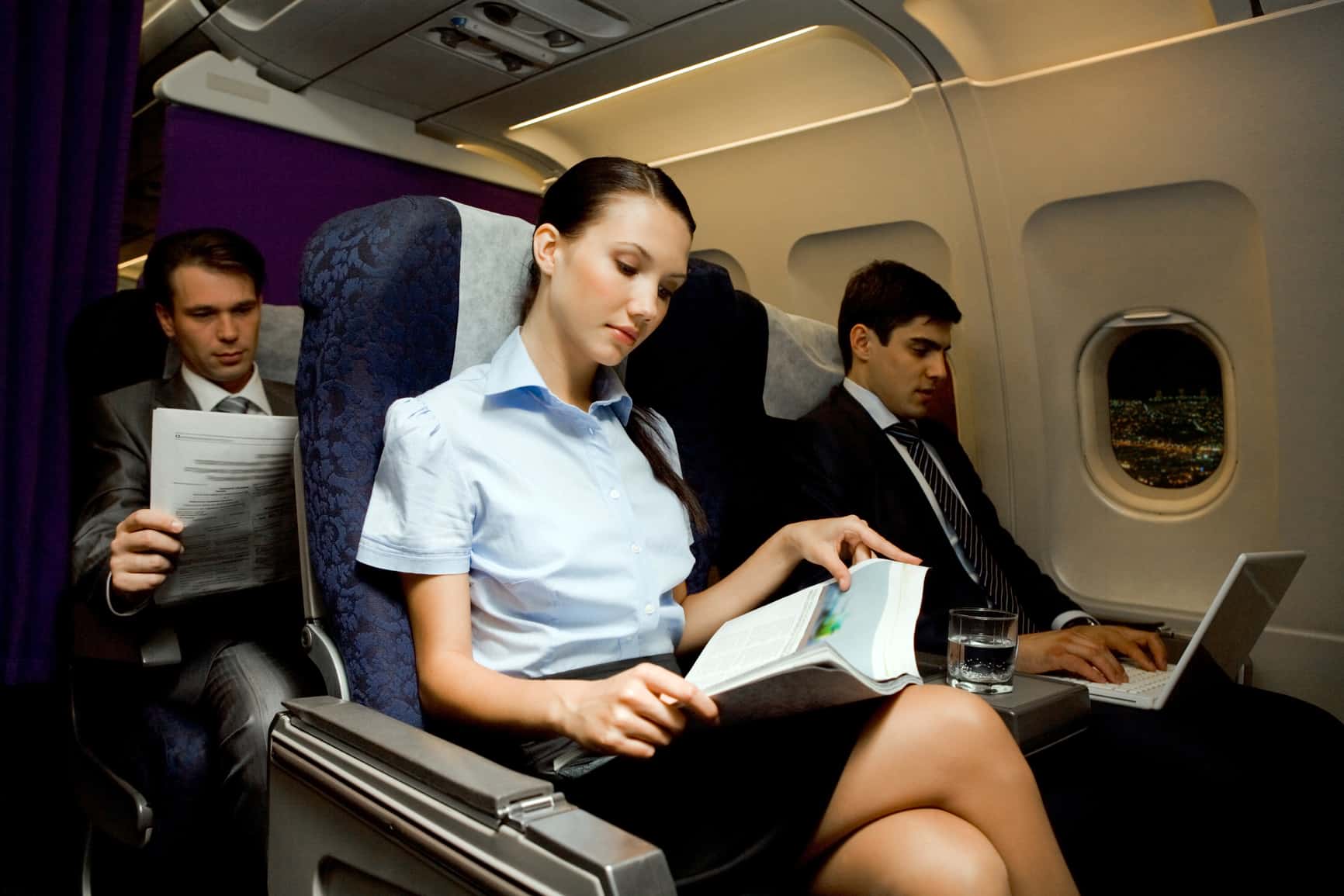
The Ultimate Guide to Productive Business Travel

Traveling for work can be exciting when you’re off to new destinations, however, it’s still work. Being out of your normal surroundings can cause travel fatigue, which in turn, can affect your performance when jetting off to meet with clients or drum up a new business.

Knowing a few business travel tips will help make all your trips for work more fruitful though, and will have the added bonus of allowing you extra energy to take in a few sights while you’re there too.

Pack your bags and get ready to win that new contract or present your product to a new market with absolute aplomb. These business travel tips are the cure for your travel fatigue.

Business Travel Can Be Stressful. Learn How to Cope with It to Stay Calm and Be Productive. CLICK TO TWEET 

1. Plan Ahead Before Your Trip in all Aspects

 How can you be at your best without a good plan of action? The trio, ‘shelter, clothing, and food’, have been long-believed to be the three basic needs of all human beings. And planning these three basic needs ahead of your trip is one of our top business travel hacks.

Your first step is knowing more about where you’re going. If you’ve been there before, that makes it a little easier but you’ll still be a victim to travel fatigue if you just wing it.

If it’s a new destination for you, ask your fellow colleagues if they’ve been there and what business travel tips they recommend for that location. Once you know more about where you’re going, choose a hotel that is close to your meetings. You don’t want to risk having trouble finding your way or getting stuck in traffic. Being late will make you look unprofessional and unpolished.

Now, what shall you pack? Consider the tone of the trip. Business attire should be packed properly to avoid wrinkling. A travel steamer works wonders though to tidy up your clothing for a fresh-pressed style. Will you be attending a fancy dinner or gala during this trip? Be sure you have the right evening attire that fits the mood of the event.

Additionally, it helps to take comfortable clothes for travel, especially if your flight is a lengthy one. Packing clothes for your workouts including your sneakers and swimwear so you can do laps in the pool will ensure you squeeze in that exercise. Pack a jump rope or resistance bands if your hotel doesn’t have a gym. If you think you’re too tired to exercise, push past it. A study in Japan found that it helped relieve travel fatigue.

Don’t forget nutritious and healthy snacks! Your carry-on should have all the essentials like fresh fruits, seeds, and protein bars. Pack more in your checked luggage too, like jerky or dried fruits. Be sure to read our post about healthy travel snacks for a more comprehensive guide!

50 Healthy Travel Snacks Every Manager Should Know

Before you jet off to the airport, make sure you handle all the necessary work arrangements at the office. Delegate projects and call a meeting prior to your leaving to ensure everyone knows what is expected of them in your absence.

The same diligence must be taken at home as well. Children and partners tend to take frequent travel hard. Try to spend time with them before leaving and set a date for a fun family outing for when you return to minimize your travel-related stresses.

2. Be Flexible and Confident During Inconveniences

 Another important business travel tip to remember is that sometimes things happen that are beyond your control. Exert mindfulness over yourself during these times. A prominent example of this is when your flight becomes delayed, or even results in missing your connection, or your luggage has been lost.

When things happen that are beyond your control, find a space to sit in and breathe deeply. The stress isn’t good for you and must be released. Stress will only add to your travel fatigue. After breathing, take the first steps toward resolving the issue at hand. Notify your office, notify those waiting on you at the destination, and try to get work done from the airport if possible.

As executives, we aren’t infallible to irritation in the face of inconvenience. However, we must act accordingly to represent our companies with prestige. Tackle inconveniences with a positive attitude and use them as an opportunity. You cannot prevent such inconveniences from arising, but, you can definitely control your response in the face of such travel impedances. Network with other passengers or set up with your laptop while you wait.

3. Reduce Health Problems During Your Flight to Avoid Travel Fatigue

One of the biggest struggles you’ll have as a business traveler is staying hydrated. Air travel causes dehydration which is why it’s so important to drink plenty of water. It might be annoying to get up to go to the bathroom during your flight, but you’ll stave off illnesses related to dehydration.

Additionally, with so many people in a cramped space, it’s easier to be susceptible to germs. Your chances of that increase when you’re burning the candle at both ends. Flying frequently exposes you to radiation and jet lag throws your circadian rhythm out of whack. Let’s not forget that sitting for prolonged periods at a higher altitude is terrible for circulation too.

What can you do? Try these business travel hacks for preventing health problems:

– Drink water every 50 minutes.

– Get up and do stretches every hour while you’re on the flight. Stretching your arms, legs, back, and neck can avoid cramps.

– Wear an eye mask to help you sleep on the plane to prevent jet jag.

– Bring a travel pillow to help keep your neck in a good position and avoid pain.

You’ll find even more ways to stay healthy on a plane in our other post so you’ll always feel your best wherever your work takes you.

23 Strategies To Stay Healthy on The Business Flight

Bonus tip: Avoid alcohol during the flight. As alcohol’s dehydrating effects can be amplified with the strain of flying, it’s best to avoid it until you’re firmly on the ground.

Find out How Alcohol Affects Your Body and Your Business Trips

4. Choose Healthy Meals to Avoid Gaining Weight and Be More Energetic at Your Destination

 Research has found that foods rich in sugar, fats, and salt can make you feel bloated and drowsy affecting your productivity. Such foodstuffs can also affect your concentration and distract you from work. Look good and feel good by opting for healthier cuisine during your business travels.

Eating fresh foods rather than processed or pre-packaged foods will nourish your body and prevent travel fatigue. A great business travel tip is to lean toward vegetables, fruits, and water as much as possible.

Don’t skip breakfast either. Your body is counting on you to supply it with steady nutrients. By the same token, avoid those muffins, cakes, or croissants, tempting as they are. Instead, reach for those fruits, yogurts, and eggs for healthy proteins.

Do you love coffee? While trying to cope with your travels, we suggest you swap it out for green tea. You’ll get that energetic vibe from the caffeine, plus all the benefits of green tea. It contains catechins, a special type of antioxidant, and is known for boosting the brain in both creativity and problem-solving.

Learn more in our post, how to make a healthy executive breakfast.

Time for lunch? Choose steamed, grilled, boiled, baked, or poached items. Skip those heavy sauces, gravies, and cheeses. Always control your portions at restaurants and during business meetings. If you feel hungry at a buffet-style luncheon, fill up on vegetables and broth first to help curb your appetite and supplement your hydration.

Dinner can be as big a challenge. Because you’ll likely be sleeping soon, choose foods that are easier to digest. Again, vegetables are one of the great business travel hacks that you want in your corner. Fish is another healthy option, giving your body the good fats it needs. Feel like something sweet? Enjoy low-fat yogurt and let that calcium help your body produce more melatonin that will help you sleep better. Taking a stroll or a light walk after dinner can also help your metabolism and improve digestion.

Avoid drinking alcohol too. It’s empty calories, and it reduces your energy and productivity. Walking after your meals will also soothe your digestion and prime you for sleep, getting you ready for the next busy day of working while traveling.

It can be challenging to eat right while you’re traveling for business, so be sure to read our tips on how to survive unhealthy meeting food.

Know More About Avoiding Unhealthy Foods During Lunch Meetings

5. Practice Stress Reduction Activities

 When you travel for business, it can be even more stressful. You’re in a new place and out of your comfort zone. Even the most well-traveled people experience stress, so making the time for relaxation is vital. We encourage you to take care of your stress levels while you’re away to avoid travel fatigue. There are many activities that you can engage in to relieve stress.

Go for walks after meals and after those big meetings. It’s great to stretch your legs and can be an instant mood-booster. Another bonus to that is you can explore the city. Whenever possible, try to schedule some down time to see what makes your destination so special. It will lend a new perspective to your business.

Miss your loved ones? Get them on a video call and enjoy their faces and voices. When we talk to our family and friends, it feels less lonely when we’re far from home.

Another great business travel tip: meditation or yoga. It’s the perfect activity right before bed. Practicing meditation or yoga in your hotel room can increase mindfulness and help you feel relaxed.

Learn Different Yoga Routines and Create a Perfect Environment for Yoga Activities in Your Hotel Room

6. Don’t Stop Your Workout Program

 We mentioned earlier how exercise benefits you for fighting travel fatigue. It reduces stress and anxiety, improves energy and productivity, and leads to better health and wellness. You might be on a different schedule, but don’t use that as an excuse to be lazy. Regular exercising is a must-do-everyday business travel tip. You’ll feel so much better once you get moving.

Practice running in the early hours to start your day on a fit note. You can even try using the hotel pool for a more relaxed workout. No gym? Go for a walk or run around the city or try doing body weight exercises in your hotel room. Need more ideas for workouts while away from home? Read about our quick travel workouts!

The Best 30-Minute Workout for a Successful Business Trip

7. Get Enough Sleep

 Sleep is one of the biggest business travel tips there is. Even if you think there aren’t enough hours in the day to get everything done, sleep must be a priority. We recommend 7 to 8 hours of sleep each night of your stay to reduce travel fatigue. Our article about sleep deprivation can help you understand more about why it’s so important to get good sleep.

It can be challenging to fall asleep in an unfamiliar place while in a different time zone. A warm bath before bed can help prime the body for a lovely rest. This can soothe your nerves and help you sleep better.

While trying to sleep, take note of your room’s exposure to natural light. Our body’s circadian rhythm (sleep-wake cycle) is triggered by natural light and darkness. A well-balanced circadian rhythm can help you sleep better at night. Therefore, make sure that your hotel room is dark while sleeping. Taking an eye mask and earplugs along can help banish bright lights and strange sounds to put you into a deeper, uninterrupted slumber. For quality sleep at night, it is highly important to ditch electronic devices before bedtime. Electronic devices can biologically affect your circadian rhythm. Try to complete your laptop work at least half-hour before bedtime, so as not to disrupt your sleep quality.

Essential oils like a lavender spray can add a soothing smell to your room. Phone up room service and ask for some chamomile tea bags in your room, or better yet, bring some of them along in your snack stash to ensure you have everything you need.

We don’t recommend taking medications for sleep. Instead, we’d love to tell you more about natural sleep aids that will help you catch those elusive z’s on your business travels.

Melatonin can help you avoid jet lag too. It’s a natural hormone your body produces, but when your system is thrown off, taking some melatonin supplements can help. We encourage you to read our article about melatonin supplements to learn more.

Adjust Your Sleep-Wake Cycle and Beat Jet Lag with Melatonin!

8. Take Time to Recover Properly when You Return Home

 After returning from your business trip, it can take some time for you to recover. To avoid any health issues due to changes in the food, water, or the surrounding environment, eat simple and healthy food. This is important as the body can take some time to adjust to different types of climate, environmental factors, foods, and water. Let go of the stress of jumping right back into work.

Avoid travel fatigue once you’re returned by getting that 7 to 8 hours of sleep your body needs. Again, rely on melatonin if needed. If you’re too tired, you won’t be productive.

One of the best business travel tips is to schedule your priorities at work once you return. Make use of lists to manage things and enlist your team to tackle other matters for a perfect strategy.

Business travel takes a lot out of you. It’s important to keep an open line of communication with family and friends to get the emotional support you need. We need our connections to help keep us strong and motivated. Make good on scheduling that extra time with them to hit the refresh button on your life.

These tips are sure to increase your productivity, as well as, help you enjoy your business travel experience. Have you found business travel hacks that reduce your travel fatigue? Share them below in our comments!

50 Healthy Travel Snacks Every Manager Should Know

    Whether you spend the majority of your time in airports flying to conferences and business meetings or consider your vehicle your primary office, it is important to have a selection of healthy travel snacks at the ready.

    The right snacks will help you feel energized, focused and satisfied during your business trips. CLICK TO TWEET 

    The following are eight healthy travel snacks that require minimal planning and preparation. Best of all, they are tasty and portable so that you can carry them with you no matter where your day may take you.

    healthy travel snacks


    Healthy Travel Snacks For Your Business Trips

    Seeds:


    healthy travel snacks
    healthy travel snacks
    healthy travel snacks
    healthy travel snacks
    healthy travel snacks
    healthy travel snacks
    eating healthy while traveling

    Seeds can make up for your perfect dry snacks you can carry during travel, especially if your stay is going to be for a longer duration.

    Just like almonds and other nuts, seeds also have a longer shelf life. So, they can be your healthy travel snacks until the last day of your trip.

    Seeds are an excellent source of fiber, magnesium, and omega-3 fatty acids. It only takes a couple of minutes to toast up seeds tossed with a little olive oil and your favorite seasoning. If you do choose to purchase pre-roasted seeds, be sure to choose varieties that are low or reduced sodium.

    1.   Pumpkin seeds

    What makes pumpkin seeds healthy snacks for executives is they offer a great protein punch. Also, a research study published in the African Journal of Traditional, Complementary and Alternative Medicine has shown that pumpkin seeds can maintain your blood pressure within normal limits.

    So, if your hectic and stressful lifestyle has taken a toll on your health resulting in hypertension, you can carry pumpkin seeds with you during travel.

    2.   Sunflower Seeds

    Executives who have to travel frequently are at a higher risk of developing high cholesterol. They are deprived of freshly cooked home meals while traveling. The food offered by most restaurants is loaded with fats that increase their cholesterol levels.

    If you are facing the same issue, you can try sunflower seeds for healthy travel snacks. A research study published in the Chemistry Central Journal has shown that Sunflower seeds have anti-lipemic properties that can help to control your cholesterol levels.

    This will help you prevent the disorders linked to high cholesterol even though you need to travel frequently to meet your business commitments.

    3.   Flax Seeds

    Flax seeds can be roasted to create crunchy, protein-packed healthy travel snacks. It only takes a couple of minutes to toast up seeds tossed with a little olive oil and your favorite seasoning.

    Flax Seeds are an excellent source of fibers, magnesium, and omega-3 fatty acids. If you do choose to purchase pre-roasted seeds, be sure to choose varieties that are low or reduced sodium.

    Pumpkin, sunflower, and other seeds not only contain protein and healthy fats, but they are also mess-free for traveling.

    Fruits:


    When it comes to healthy travel snacks, fresh fruit is pretty much a no-brainer. Fruit is highly portable and requires little to no preparation. Grab an apple, banana, or clementines along with a couple of pieces string cheese as you head out in the morning and you are good to go.

    4.   Apples

    What makes apples perfect healthy travel snacks for traveling executives is this fruit is easily available. Also, just one apple can be quite filling for your stomach and keep you from experiencing hunger pangs until the end of the meeting.

    So, if you have an important meeting scheduled for a day, just grab an apple and you would be good to go.

    5.   Bananas

    Just like apples, bananas can also be a great healthy snack for managers who need to travel frequently. Bananas are particularly beneficial for managers who often travel to different time zones.

    When you travel from one time zone to another, your body’s internal clock or circadian rhythm is disturbed. As a result, your digestive processes and bowel habits can suffer. This can increase your risk of constipation and indigestion.

    Research studies published in the Journal of Medicinal Food has shown that bananas have a rich fiber content. This can help to satisfy your hunger by creating a sense of satiety. Also, the fiber content can ease digestion and prevent constipation.

    6.   Cherries

    Cherries are loaded with vitamin C and natural antioxidants. Also, they are not messy to eat while traveling. You can even eat cherries for your breakfast while you travel to your client location from the hotel you are staying in.

    7.   Plums

    Plums are not particularly very tasty. Yet, they can add a unique flavor to your smoothies. You can also eat plums for your after-dinner desserts. You can eat them at any time, even to beat boredom between two meetings.

    8.   Oranges

    Oranges are low in calories and rich in nutrients. Eating oranges is also recommended for managers traveling to a country having hot weather. The juicy content of this fruit will keep you hydrated and prevent fatigue.

    9.   Clementines or mandarins

    Mandarin, just like oranges, are juicy and can allow you to stay hydrated. They also provide a rich source of flavanols that can improve your health by protecting your body against free radicals.

    10. Papaya

    Frequent traveling across different time zones can affect the digestive functions of your body. That is why; managers who have to travel frequently suffer from digestive symptoms such as constipation, bloating, and indigestion. Eating papayas during snack time will help you avoid tense digestive disturbances, thanks to the rich fiber content of this fruit.

    11. Apricots

    Apricots offer a natural source of vitamin A and C. These vitamins will protect your skin from the effects of mental stress that most managers experience, especially during their travel to the client location. It is one of the healthy travel snacks for managers as it can also prevent the damage to the skin due to pollutants and free radicals, thus reducing wrinkles and fine lines.

    12. Grapefruit

    Grapefruit makes up for healthy travel snacks for managers who need to travel frequently. It is easily available and just one grapefruit can create a sense of fullness in your stomach thus preventing hunger pangs during important meetings.

    13. Avocado

    Avocados are rich in several essential nutrients while being a good source of dietary fibers. Eating an avocado between presentations can help you feel satiated and allow you to focus on the discussion even when the meal time is missed.

    14. Muskmelon

    Muskmelons have high-water content, which makes them healthy travel snacks while traveling to warmer countries.

    Berries:


    The speed at which mental stress is rising in managers is alarming. Stress has also emerged as a common precursor for depression, hypertension, and heart attacks. Stress is more common in the managers who travel frequently because of a disturbed sleep-wake cycle and the higher pressure to fulfill the purpose of the travel.

    If you want to protect yourself against the effect of a stressful routine, you can consume berries as your healthy travel snacks.

    15. Grapes

    Grapes contain compounds that can regulate the balance of hormones in the brain and improve your moods thus relieving stress.

    Scientific studies published in the Integrative Medicine Research has shown that grapes can also protect you against the development of stress-induced diabetes.

    16. Blackberries

    Blackberries possess anti-degenerative properties that can protect talented managers from losing their decision-making skills even as their age increases. It can also reduce the risk of degenerative diseases such as Alzheimer.

    17. Strawberries

    Vitamin C and flavonoids in strawberries make them healthy travel snacks for managers. You can even fill your pockets with a few strawberries and eat a few during a short break between long meetings.

    18. Blueberries

    Just like strawberries, blueberries also contain a high amount of vitamin C and flavonoids that make this fruit healthy travel snacks. It can also prevent dark circles under eyes. Most managers develop them due to the lack of sleep as a result of their hectic lifestyle and frequent traveling.

    19. Goji berries

    Berries can also provide a natural source of antioxidants and fibers while being low in calories.

    Dried Fruits:


    Not only will a handful of dried fruit satisfy a late-afternoon sweet tooth, but it also provides fiber to keep you full and carbohydrates for energy.

    Since the drying process concentrates the sugars in the fruits, it is important to make sure that the fruit does not have any added sugar. You should also keep the serving size to half a cup.

    20. Raisins

    Raisins contain a concentrated form of carbohydrate, which can maintain your energy levels for a longer duration. Eating raisins as your healthy travel snacks can prevent weakness and drowsiness that occur due to the lack of sleep or missed meal times.

    21. Dried mango

    Dried mango can be pleasing for your taste buds. The sweet and tangy taste of dried mango can help you feel fresh and energetic for several hours. Dried mangos can also keep you awake when someone else is giving a presentation.

    22. Dried apricot

    Dried apricots are healthy travel snacks for managers who suffer from a lack of sleep due to frequent traveling across different time zones. It can enhance the production of melatonin and also reduce stress thus improving the quality of sleep.

    23. Dried cherry

    Dried cherry can offer a great way to satiate hunger without adding too many calories to your diet. Cherries contain vitamin A and C, which can improve the health of your skin and immunity.

    24. Banana chip

    Banana chips can provide a tasty crunch of fiber. This can help satisfy your hunger by creating a sense of satiety while traveling for business.

    25. Apple chip

    Apple chips can be an alternative to banana chips as your healthy travel snacks if you suffer from anemia. The rich iron content of apples can replenish this mineral in your body and prevent anemia. Anemia may occur due to your irregular meal times or not eating balanced meals while traveling.

    26. Dates

    This dried fruit is a perennial travel snack favorite since it is easy to stash in a purse, carry-on, or in the glove box of a car. Dates also contain a high amount of iron and calcium needed by your body to function optimally. Iron can help to prevent anemia while calcium can improve the health of the bones and teeth.

    Nuts:


    Frequent traveling, especially across different time zones, can take a toll on your physical and mental health. It can hamper your general health and even reduce your strength and stamina.

    If you often feel too weak and exhausted during your travel and even upon returning to your home country, you should eat nuts.

    27. Almonds

    Almonds are considered healthy travel snacks as they are loaded with several nutrients and fibers.

    Clinical research published in the Journal of Agricultural and Food Chemistry has indicated that almonds have a rich content of monounsaturated fat, α-tocopherol, and minerals such as copper and magnesium. It also contains several other nutrients that can improve your energy levels and stamina.

    So, almonds will allow you to attend all your meetings and presentations and impress your client with your enthusiasm and higher energy levels. This will surely help you meet the purpose of your travel.

    Almonds can also improve your digestive functions, thus preventing digestive disturbances that might occur if your meal times are disturbed due to extended meetings.

    28. Walnuts

    If you are particularly looking for nuts that can protect your heart, walnuts would support your purpose. The incidence of heart disorders such as myocardial infarction is higher in busy managers due to the hectic lifestyle they lead.

    The risk if much higher in the executives who need to travel frequently because they find it difficult to follow a healthy diet during their stay in a hotel.

    Walnuts are considered healthy travel snacks for managers because these nuts are rich in Alpha Linoleic Acid. Research published in the Journal of Nutrition has indicated that walnuts can reduce the risk of heart attacks.  Alpha Linoleic Acid works by improving the blood circulation into the heart muscles.

    29. Peanuts

    Peanuts are healthy travel snacks for managers for multiple reasons. Peanuts can improve the functions of your brain and enhance your memory and cognitive skills. They can also create a sense of fullness in the stomach.

    Peanuts are loaded with several vitamins and a mineral called folic acid that is needed by the brain to perform cognitive functions.

    30. Roasted pine nuts

    Roasted pine nuts are great for your taste buds. The calorie content of these nuts is lower compared to the fried nuts, which makes the roasted version the healthy travel snacks for managers who need to travel frequently.

    31. Cashew nuts

    Cashew nuts provide a sense of satiety and prevent the desire to eat for several hours. This can make them healthy travel snacks you can carry with you when you know your day is packed with several meetings with the client.

    32. Pistachios

    The unique flavors of pistachios can allow you to feel fresh and prevent fatigue even when your schedule includes traveling from one client location to another during an on-site visit.

    33. Brazil nuts

    Brazil nuts contain omega 3 fatty acids that can reduce your risk of heart diseases. It can also lower your cholesterol levels and keep you healthy.

    34. Hazelnuts

    You can pack hazelnuts in your travel bag and munch on them when you feel hungry. It will also improve your ability to respond to the queries of clients during meetings with spontaneous and quick thinking.

    This would surely be a great virtue for you to possess if you want to climb the ladder for success in your career or business.

    35. Trail Mix

    There is no rule that says that you have to settle for just one snack. You can always combine several of your favorite healthy travel snacks into a custom trail mix. By choosing your own dried fruits, nuts, and seeds, you can control the salt and sugar content and experiment with unique ingredient combinations.

    The sweet and salty combination of nuts and dried fruits provide plenty of nutrients as well as protein and fiber.

    Veggies:


    Vegetables are easily available healthy travel snacks as they offer a natural source of vitamins and minerals. Veggies like cucumber and radishes are low in calories but high in nutrients.

    36. Boiled cauliflower florets

    Boiled cauliflower florets sprinkled with the spices of your choice can keep your taste buds satisfied. Cauliflowers can provide a sense of satiety without adding too many calories to your diet.

    37. Cucumbers

    What makes cucumbers healthy travel snacks is this vegetable does not require any cooking. Also, it has a high water and fiber content that can help you stay hydrated and feel full.

    38. Celery sticks

    The aroma of celery sticks added to its unique flavor will help you feel fresh even when the day at the client location prolongs due to extended presentations and discussions.

    39. Cherry tomatoes

    Cherry tomatoes provide a rich natural source of vitamin C, which can prevent the signs of aging. It also contains a high amount of water, which prevents fatigue by improving your hydration. Moreover, you can eat them at any time as this veggie it does not require cooking.

    40. Snap peas

    Snap peas offer low-calorie snacks you can consume at any time during the day. It contains vitamin A needed to keep your skin healthy.

    41. Baby carrots

    Baby carrots have a high amount of vitamin A. Wrinkles are common in the managers who live a stressful life. Eating baby carrots as your healthy travel snacks will prevent your skin from developing premature signs of aging.

    42. Radishes

    Just like carrots, radishes are also rich in vitamin A, which can enhance skin health.

    Radishes can also support hair growth and prevent premature greying of the hair and hair loss. Hair loss is linked to the lack of sleep and stress in the managers who have to travel frequently.

    Whole Grains (cereals):


    Complex carbohydrates, such as those found in whole grains, are digested slowly. This kind of carbohydrates provides a steady stream of glucose for both short and long-term energy during your business trip.

    43. Snack Bars

    Although snack bars sometimes get a bad reputation for having too much sugar and sodium, they can make healthy travel snacks if you know what to look for. Look for bars that contain whole, natural ingredients, such as fruit and nuts, fewer than 200 calories, 5-10 g protein, and that are low in sugar.

     Kind and Larabar are two brands that score high terms of offering plenty of fiber, vitamins, and minerals.

    44. Whole grain crackers

    Crackers made with natural ingredients and limited sugar always make healthy travel snacks.

    45. Popcorn

    Popcorn is perfect for those moments when you crave something salty and crunchy. Popcorn has less than 100 calories and provides 3,5 grams of dietary fiber.

    Others:

    46. Roasted Chickpeas

    If you love hummus, consider a bag of high-protein roasted chickpeas as a travel-friendly alternative.

    Not only are chickpeas loaded with protein, but they can also help lower your cholesterol. Although normally associated with hummus, chickpeas can be roasted to create a crunchy, satisfying snack that is easy to carry with you in a small container or baggie. You can even have fun by seasoning them up with your favorite spice or herb combinations.

    47. Jerky

    As long as you go for a low-sodium version, jerky is a healthy snack and will provide you with the protein that you need to power through those on-the-go days.

    Jerky contains 9.4 grams of protein per ounce. If you pair your jerky with a little fresh fruit for some carbohydrates, you should feel full and energized until you are finally able to stop for a proper meal.

    As an added bonus, jerky is a good source of iron and zinc, which can help boost your immune system.

    48. Dark Chocolate

    Cacao is a natural stress reliever and an excellent source of antioxidants and magnesium, which benefit cardiovascular health. Look for dark chocolate that is at least 70 percent cacao to get the most benefit.

    Combine a handful of dark chocolate chips with some nuts or a cup of Greek yogurt for a satisfying, protein-packed snack that you can eat on the run.

    49. String Cheese

    String cheese can be your perfectly healthy travel snack as they offer a rich amount of proteins. It cannot just please your taste buds, but also support your overall health. Proteins repair and heal the damaged tissues of the body.

    50. Boiled Eggs

    A boiled egg is essentially pure protein and only has 70 calories. Par your egg with fruit or nuts and you have an easy healthy travel snack that you can eat wherever you go.

    Are you interested in healthy eating? Read our post about healthy eating when traveling. And avoid the pitfalls that you may encounter from when you arrive at the airport to the post-meeting drinks with clients.


    What are your go-to snacks for when you are on the go all day? Let us know your favorite healthy travel snacks in the comments below.


    How to do a quick travel workout with no equipment

    Business travel is nearly essential as an executive and let’s face it, business trips aren’t necessarily conducive to staying healthy. During business trips is it essential for executives to stay on track for personal health and mental clarity for the task at hand. An easy but effective travel workout can allow executives to stay focused and well energized for anything that comes their way.

    Even when we’ve established a good routine of exercise and eating at home, a change of venue can throw things out of balance pretty quickly.

    However, just because your gym and equipment are at home doesn’t mean you have to give up on getting in a good workout while traveling for business. This is where a travel workout can help immensely and can be done in 30 minutes or less!

    Offset the stress of business trips with easy travel workouts you can do anywhere. Click to Tweet 

    In this article, we’ll take a look at some easy exercises executives can do almost anywhere that only use your body weight. Keep reading to find out how to stay active on your next business trip.

    Before You Get Started

    Most likely, you are not a professional trainer. Most executives’ main focus in life is not going to be fitness.

    It is important to recognize that you will need to gradually work up resistance and stamina while maintaining good form.

    If something is hurting, take a break. If an exercise is too intense, try and different exercise or take a break. Working out shouldn’t necessarily be easy, but it also shouldn’t be painful.

    With time, you will be able to master these moves and replace them with even more intense ones.

    The feeling of accomplishment in fitness definitely spills over to other areas of our lives, giving us increased self-confidence in other matters as well.

    Flexibility Exercises

    The flexibility portion of this workout can be used as a warm-up for a total 30-minute workout or, use it to unwind and release stress after a long day. This travel workout uses some standard stretch and yoga poses to get your muscles warmed up and ready for the day.

    1. Child’s pose

    This pose is a great starting point for your workout.

    The child’s pose allows you to relax, reduce stress and focus on your breathing. This is important for executives during travel because it allows you to take a break from work and shift your focus from the business at hand.

    In a kneeling position, bring your big toes to touch, if comfortable. Keep your knees as wide as needed while hinging at the hips and bringing your forehead to rest on the ground. Arms outstretched in front for a deeper stretch or hands back by your hips for a more restorative position. Start to breathe deeply.

    Take 10-15 breaths in this position before moving on.

    2. Cat-cow

    For a tight upper body from sitting in meetings all day, cat-cow will help loosen your back and shoulders. It is an instant tension reliever.

    Start on all fours and as you exhale, pull in your abdomen toward the spine while rounding your shoulders downward, like a cat. Then reverse the pose by inhaling and bringing your neck and shoulders up as you look skyward while pushing your belly back toward the ground.

    Continue with the movement for 8-10 breaths, or until you feel ready to move on.

    3. Wide-leg forward fold

    This pose is a great lower back and hamstring stretch, which can help release tension after hours of air travel and sitting.

    In a standing position, bring feet apart to wider than shoulder distance with both feet facing the same direction. Stand tall with shoulders back and slowly start to hinge at the hips to fold forwards. Knees can bend slightly if hamstrings are tights. Bring hands down to the floor in front of you. Keep the majority of your weight in the toes. If that is too intense, bring them to a chair or side of your bed. Keep spine extended and long and breath.

    Hold the stretch for 8-10 breaths.

    4. Wide-leg standing twist

    This one stretches out shoulders and neck muscles for extra flexibility.

    Adding wide-leg standing twist to your travel workout can help release tension in the upper back that executives sometimes get from working repeatedly at a computer.

    Again, starting with a wide-leg stance make an X shape with your arms. Hinge from the hips and reach down with the right hand to touch the floor or chair or side of the bed. Keep left hand reaching to the ceiling, creating a forward fold with a twist. Look up toward the ceiling for a more complete twist or look down toward the ground to be gentler on your neck.

    Hold the stretch for 8-10 breaths and return to starting position. Then, repeat on the left side.

    5. Crescent Lunge

    Lunge stretches are great for executives because it allows the hips to open up and relax. Since this part of the body suffers from sitting in meetings all day, it is a great addition to your travel workout.

    Bend into right knee and step left foot back far enough so that the leg is long and you’re on the ball of your back foot. Keep right knee bent at a 90-degree angle, or less, with the knee directly over the ankle. Make sure that knee doesn’t go past ankle at any point to protect joints. Reach arms up overhead while engaging the core. Hips should be square toward the front. Continue engaging the back leg and keeping torso tall to get the full stretch in the left hip.

    Hold for 8-10 breaths and return to starting position. Then, repeat on the opposite side.

    6. Downward facing dog

    Perhaps, the most popular yoga pose. The downward facing dog is a great stretch for your whole body.

    This stretch can open up your hamstrings, lower back, chest and shoulders. All necessitates for busy executives who sit a lot!

    From cat-cow post curl your toes under and send your hips up toward the sky to make an inverted V position. Press firmly into both palms and bend knees as much as needed, eventually working toward straight legs.

    Try taking 8-10 breaths here and come back down to child’s pose whenever you need a break.

    This is a more advanced yoga posture so be careful and listen to your body!

    For Advanced Executives:

    For an added challenge, the more advanced executive can try increasing the number of breaths of each stretch when possible! Start with 8-10 breaths for each.

    As you get more comfortable with the positions the body is in try 15-20 breaths. The longer you can breathe and relax in the stretch the more flexible your muscles will become.

    Cardio Exercises

    Cardio is an essential part of any travel workout. After sitting on airplanes or in meetings all day long it is important to get your heart pumping and boost your metabolism.

    Cardio can also help reduce stress, which is especially important for busy executives during business travel.

    You can do these exercises in your hotel room with no equipment. Therefore, it’s perfect for when you’re pressed for time or want to skip the treadmill in the hotel gym.

    Perform these cardio exercises not for repetitions, but for time. 20 seconds of exercise with 10 seconds of rest continuously for two minutes.

    1. Jumping Squats

    Jumping squats are one of the most effective exercises to build strength so, kick things up a notch with this cardioversion.

    Start with feet hip distance apart and torso tall, bend knees to a 90-degree angle. Note that you don’t have to go as low if this causes knee issues. As you come back to standing add a jump so that feet come off the ground. Land softly and go immediately back into the squat position.

    For a modification try nixing the jump and instead come up to the tip toes before returning to the squat.

    2. Burpees

    Burpees are one of the most strenuous cardio moves for travel workouts. However, they are one of the most effective cardio and strength moves out there!

    Start in a plank position and quickly hop feet forward to meet the hands, or as close as you can get to the hands. Then, burst upward into a jump. Now reverse it back into the plank position.

    For an easier, but still effective modification, take out the jump forward and backward and replace with a simple step forward and backward. This will still get your heart rate pumping but will be easier on your joints and allow you to get used to the movements.

    Try doing this like the circuit mentioned above, 20 seconds of work with 10 seconds of rest for two minutes!

    3.Jumping Jacks

    Jumping jacks are a great way to boost metabolism and break a sweat.

    Softly jump and land with your legs apart, jump again and bring them back together. As you continue the jumping rhythm, claps your hands above your head at the apex of the jump.

    To modify this and make it easier on the knees take out the jump and alternate stepping feet out to one side while continuing to clap hands above head.

    Continue for 20 seconds of work and 10 seconds of rest for two minutes!

    4.Mountain Climbers

    Mountain Climbers are great for core strengthening and calorie burning.

    Staring in a plank position, bring one knee toward your chest and then back. Alternate quickly for a “running in place” type motion while remaining in a plank position.

    You can modify this exercise by just slowing down. Instead of a “running in place” motion alternate bringing each knee up in a more slow and controlled way. You’ll still get the same great benefits but this difficult exercise will be made slightly easier.

    Continue for 20 seconds of work and 10 seconds of rest for two minutes.


    For Advanced Executives:

    To challenge yourself (if you have more time) and get a more intense workout, try for 30 seconds of work with 15 seconds of rest continuously for 4 minutes!

    Strength Exercises

    Strength training is the final puzzle piece of a total body workout. It can supercharge your metabolism for almost 48 hours. Add this element into your travel workout! It will allow you to stretch, raise your heart rate, and build muscle- all in 30 minutes. You don’t need a set of weights or a gym, just your own body weight using this plan travel workout.

    You can find more strength workout here.

    1. Squats

    Squats are one of the best strengthening exercises and an essential addition to your travel workout. It’s a simple and effective move the involves almost all muscle groups and joints in a safe way.

    This is great for busy executives because it can help build muscle and increase your heart rate all in one!

    Start with feet hip-width apart and firmly planted on the ground, while keeping your torso tall bend your knees as if you’re going to sit on a chair. Your hips will lower but the back stays straight. Lower hips until knees come to a 90-degree angle, less if you have any knee or hip issues.

    Once you’re in the squat press firmly into both feet and return back to standing and repeat.

    Try doing 3 sets of 12 repetitions, with 30 seconds of rest between sets for a great leg burn!

    2. Push-up

    This is a classic upper body exercise that works the chest, arms and core muscles.

    Upper body and core strength will help executives with better posture.

    Start out in a plank position with wrists directly under shoulders and belly pulled in. Bend elbows to 90-degree angle to lower torso towards the floor. Once lowered press into palms and return to plank position.

    Repeat for 3 sets of 12 repetitions with 30 seconds of rest between sets.

    For a modification, try doing lowering knees to the floor, which can take some pressure off the wrists and lower the intensity.

    3. Bird Dog

    Bird dog is a great core exercise that also helps with focus and balance. Balance and focus are essential for executives, especially during business travel.

    Starting on all fours bring wrists directly under shoulders and knees under hips, pull the belly in towards the spine. Ground into the left hand and extend right arm as if you were shaking someone in front of your hand. If you feel balanced enough, next extend the left leg. Keep core engaged and reach arm and leg to opposite ends of the room.

    You will feel your core muscles support the balancing act.

    Hold for 2-3 breaths and then switch legs and arms. Continue like this until you’ve completed five repetitions on each side.

    4. Ab Crunch

    Ab crunches are a simple core exercise that can tone and tighten your abs.

    Start by laying on your back with knees bent and the soles of your feet on the floor. Bring hands behind ears and keep elbows wide away from the face. As you exhale bring your shoulders off the mat toward your knees. Do not sit up all the way!

    This exercise is most effective if you engage your core and pull your abs in as you crunch. Just bringing your shoulders an inch or two off the ground. As you inhale slowly lower shoulders back down to the ground.

    Complete 3 sets of 12 repetitions with 30 seconds rest between sets for maximum benefits.


    For advanced executives:

    For an added challenge try increasing the number of sets!

    Once you become familiar with the exercises try completing 4 sets of 12 repetitions. This will burn even more fat and really push you during your travel workout.

    Conclusion

    Don’t give in to the stress and exhausting schedule of business travel. As you can see, you can do a 30-minute workout anywhere and anytime. There is a good reason why industry leaders are often fit and devote lots of time to exercise and travel workout plans.

    Travel workouts are the ultimate stress reliever. They also help your mind work clearly and quickly. An advantage that no executive can afford to be without.

    Have you found a fitness routine that serves you well regardless of your location and available equipment?

    Share your routine in the comments below. As always, there is inspiration to be found in exchanging information with other successful people.

    The feeling of accomplishment in fitness definitely spills over to other areas of our lives, giving us increased self-confidence in other matters as well.

    23 Tips To Stay Healthy On The Business Flight

    Have you ever wondered about the downsides of flying? Flying can help managers conduct two meetings in a day in two different parts of the world. Flying for business trips is the best timesaving solution for all business purposes.

    However, the adverse effects of flying on your health can disturb the health dynamics for you as well as your employee. Ensuring continued good health of an employee is what keeps the organization inching toward the top.

    Obviously, you cannot avoid traveling, as it is a part of your job. Worry not; we have a few simple tips for you on how to stay healthy on a plane. These tips are as simple as looking after what you eat and wear while traveling.

    Learn how to stay healthy on a plane, and fly high in the corporate world. CLICK TO TWEET

    1. The Risks of Flying

    The three biggest factors that make flying unhealthy are the constant sitting, the unhealthy airplane food, and dehydration.

    Many flyers never stop to think about how these things have an impact on health. Usually, we are either just trying to get through the flight as quickly as possible or are on our laptop or tablet, trying to finish off some last-minute crucial work.

    Simply by being aware of the risks and making some minor changes to our behavior, we learn how to stay healthy on a plane. We can effectively eliminate the dangers to our health while flying.

    We’re looking at a few of the big issues in this article, but  there are some other risks to consider  as well.

    1.1. Sitting Is Bad for You

    Is sitting the new smoking? Current health research data supports this claim. Sitting is something we all do too much of, and has an overall negative impact on our health.

    The human body is designed for work and to be standing. Flying on a plane in the cramped seats with little legroom can be just bad or even worse for our back, metabolism, and muscles.

    There is no airline equivalent of the “standing desk” yet, so savvy flyers will need to make an effort not to be stuck sitting the entire time.

    1.2. Airplane Food Really Is Bad

    It’s not just a tired stand-up comedy routine to knock airplane food. It’s genuinely bad for you. Research has shown  that airline food is bad for tastes different due to the additives/extra sugar and salt in it. Since the change in air pressure causes your taste buds to react differently to food, most of the items the airline serves have extra sugar and extra salt. Even if you are in business or first class, you might find that the food is less enjoyable due to this.

    1.3. Dehydration

    You might have noticed that you tend to get thirsty while flying. Being on a plane is like sitting in front of an air conditioning vent for several hours. The air is dry and recycled, which leads to dehydration much faster than on land.

    2. Tips to Stay Healthy While Flying

    Knowing how to stay healthy on a plane can help you prevent and manage the side effects of flying. Following these tips will help you overcome all the hindrances that may otherwise affect your work and, thereby, your organization.

    2.1. Wear Comfortable Clothing

    Wear loose-fitting cotton clothes, and avoid synthetic garments. Wear outfits that cover your entire body and closed footwear, like shoes, to avoid getting cold. Prevent sneezes and runny nose during your business meeting at your destination.

    2.2. Choose the Right Seat

    If possible, choose an aisle seat. An aisle seat makes it easier to move around intermittently during your flight. In addition to preventing cramps, it reduces the risk of deep vein thrombosis (DVT) in which blood clot formation occurs in the large veins of legs.

    In long flights, choose a seat close to the window to control light exposure. The exposure to the sunlight or darkness can be beneficial for regulating the melatonin levels and supporting the circadian rhythm.

    The exposure to bright sunlight can shut down your melatonin production, thus allowing you to feel more alert and energized.

    Executives who want to experience sound sleep should keep away from light. Blocking the lights from the windows can help you promote your melatonin production.

    2.3. Drink Plenty of Water

    One of the best things you can do for your health while traveling is drinking lots of water. As the air in the plane is excessively dry, your body gets dehydrated faster. Dehydration has all kinds of negative effects on your body and mind. Drinking alcohol to try to relax does not make it any better. Ensure that you drink plenty of fluids while flying to keep you sufficiently hydrated.

    Drinking water helps the brain perform at its peak, eliminating brain fog and grogginess. Hydrating the body helps energize it to achieve the day’s tasks.

    FIND OUT MORE BENEFITS OF DRINKING WATER FOR EXECUTIVES HERE

    2.4. Avoid Mental Exhaustion

    Mentally, flying can be exhausting. You are traveling for a meeting that can lead to the growth of the business. Therefore, avoid any tasks that may cause mental fatigue and affect your output at the meeting. Plan your time wisely and utilize it appropriately.

    If you have a plan that involves some work and some other engaging activities, the flight will be over before you know it. These activities could be listening to a new album, playing a game on your phone or tablet or reading a great book.

    2.5. Use Glasses Instead of Contact Lenses

    Opt for glasses during the flight so that you can remove them whenever you want to sleep. Contact lenses will not allow you to sleep a wink during the entire journey. Using contact lenses can hamper your efficiency and productivity after reaching your work destination.

    You can always put in contact lenses once you reach your destination.

    2.6.Perform Gentle Yoga Stretches

    Sitting for a long time affects your muscles. Perform gentle yoga stretches and pranayama breathing on your seat to stretch your arms and legs and expand your chest.

    When possible, extend your legs and point your toes toward your knees. This will keep your leg muscles from cramping due to staying in the same position. You can also stretch your back by reaching upward. And, if possible, expand your chest by stretching your arms out to the sides as well.

    These stretches will help you avoid muscle aches and keep you active during your business flight. Just because you are sitting doesn’t mean you can’t stretch your muscles! You can use these wonderful techniques to keep healthy when you are at your office as well.

    HERE YOU HAVE 6 EASY LOWER BACK STRETCHES TO DO IN THE OFFICE!

    2.7. Walk

    Sitting for a long time without moving increases the risk of deep vein thrombosis. Take frequent breaks from sitting and move around. Some of your movement is going to be limited by seatbelt signs and flight attendant directions.

    However, you can still manage to get up and move around a bit. Try not to sit for more than 50 minutes at a time. Stand up and move to increase blood circulation in your body, especially the legs, and prevent deep vein thrombosis and cramps. Walking is good for your muscles, joints and your mind, too.

    2.8. Use Compression Socks

    Compression socks are useful in preventing deep vein thrombosis, aches, and pains in the legs, leg cramps, and swelling due to insufficient physical movements while flying.

    2.9. Don’t Forget Medications

    As an executive, you cannot lose focus on your work at any point in time. You have to make sure that you do not face any health issues during your business tour. If you take any medications, carry them in enough quantity to last through your journey. You can also carry some extra medicine in case your trip is extended.

    A prescription of medicines just in case you need additional medications at your destination is another precautionary measure. Prevent any hurdles in the path of your work. This will ensure that you are in good health and your sole focus is your work.

    2.10. Keep Your Hands Clean

    Keeping your hands clean is essential irrespective of whether you are at home, office, or traveling. It might seem a minor thing but can lead to numerous infectious diseases. Some of these diseases can be gastrointestinal problems and respiratory infections, ultimately affecting your work.

    Wash your hands or use a sanitizer and kill the germs before they attack you and, thereby, your work.

    2.11. Keep Your Immune System Strong

    Reaching the top is not easy; you need to overcome all the hurdles to fly high. Diseases and health issues are some of the common issues we face while achieving this goal. As an executive, you need to travel a lot, and you are exposed to innumerable germs on the seat and in the washroom.

    You cannot avoid germs, but you can keep your immunity boosted for such days so that your body is able to tackle them. Be diligent in getting the vaccines advised for your destination.

    Eat plenty of vegetables and fruits, exercise regularly, maintain a healthy weight, and avoid smoking. Incorporate all the healthy habits in your routine to boost your immunity.

    2.12. Use Neck Cushions

    Sleeping in an upright position can cause neck cramps. This situation will make you uncomfortable during your hours in the plane, and worse, dampen your mojo in your meetings. You can use neck cushions to give support to your neck and ensure that you do not suffer from neck stiffness.

    According to many studies, neck pillows help you sleep in an upright position without any discomfort.

    Have a Look at This Neck Pillow Specially Designed for Executives Who Travel on a Regular Basis.

    HAVE A LOOK AT THIS NECK PILLOW FOR EXECUTIVES WHO TRAVEL ON A REGULAR BASIS

    2.13. Turn on Air Vents

    You would think that turning on the air vents will only improve ventilation, but that’s not it.

    There is a scientific explanation for its positive effect on your health. The low humidity on the plane causes drying of your mucous membranes, and you become more susceptible to microbial infections. Turning on air vents creates an air barrier between you and the microorganisms. It throws the microbes away from you due to the air turbulence, thus exposing you to fewer microorganisms.

    2.14. Sleep Well with Eye Masks

    Your body uses sleep time to repair damaged cells and refreshes your mind. Deep sleep can improve your decision-making skills and your creativity at work. Eye masks can help you go into the deep sleep stage by creating darkness even in the brightest daylight. These masks can also improve the disrupted circadian rhythm and help fight jet lag.

    Use an Eye Mask and Wake Up Feeling Refreshed, Now!

    USE AN EYE MASK AND WAKE UP FEELING REFRESHED, NOW!

    2.15.Cancel out Noises with Earplugs

    The change in altitude causes an imbalance in the air pressure in your ears. It leads to moderate discomfort, stuffiness, pain in the ears, and mild-to-moderate hearing loss.

    Earplugs can help you prevent this as well as aid in sleeping without getting disturbed by the noisy surroundings.

    2.16. Reduce Nausea

    If you experience nausea during the flight, avoiding heavy meals and alcohol on the flight are the best solutions. If you have motion sickness, you can take an anti-emetic medicine before boarding the flight.

    2.17. Sleep on the Flight

    If you have difficulty sleeping and even earplugs or sleep masks cannot help you sleep, try melatonin supplements to help you sleep. Do not opt for sleeping pills.

    Find Out How to Take Melatonin for a Deep Sleep During Your Business Trips!

    FIND OUT HOW TO TAKE MELATONIN FOR A DEEP SLEEP DURING YOUR BUSINESS TRIPS!

    2.18. Avoid Caffeine and Alcohol

    Alcohol causes dehydration either by inhibiting the release of hormones that maintain the fluid balance in the body or by causing diuresis.

    Although the exact mechanism is unknown, caffeine is another agent known to induce fluid loss. Caffeine affects the circadian rhythm and has a disruptive effect on your sleep, reducing your sleep time. Also, caffeine consumption during business trips can enhance the cumulative stress response.

    Therefore, avoiding caffeine and alcoholic drinks can help you crack the business deal by maintaining a healthy sleep cycle with the right fluid balance in your body.

    GET MORE INFORMATION ABOUT HOW YOUR BODY REACTS TO ALCOHOL ON YOUR BUSINESS TRIP

    2.19. Stay Away From the Artificial Blue Light

    Artificial blue light is the light emitted by smartphones, laptops, and tablets. This light can disrupt your natural sleep-wake cycle by creating an impression of daytime during the night.

    The artificial light from these gadgets enters the eyes, which, in turn, sends signals to the brain. As a result, your mind believes that it is still the daytime, which prompts it to lower the melatonin production. It disrupts your sleep and keeps you awake in the bargain.

    You should take care to avoid gadgets that emit blue light while flying so that you can experience sound sleep.

    2.20. Eat Before Boarding

    Regardless of whether you are traveling by business class or first class, eat before boarding. It is the best solution to your hunger and has no adverse effects on your health. None of the options you will have on long flights for food is going to be very good for you. Also, the taste of the food provided on a flight will never satisfy your taste buds since taste perception changes at high altitudes.

    Eat something high in protein and low in carbohydrates before boarding. Most airports have some restaurants with healthy options. Choose easy-to-digest foods such as raw veggies and fish if you want to sleep on the plane. The extra protein will keep your metabolism pumped up and help you feel full for longer. Eggs, chicken, cheese, yogurt or almonds are healthy protein-rich foods.

    GET MORE TIPS ABOUT HEALTHY EATING DURING A BUSINESS TRIP

    2.21. Take Your Own Snacks on the Plane

    You can eat some snacks and rest during your flight to enable you to work well after reaching your destination. The right snacks will help you feel energized, focused, and satisfied so that you do not turn to fast food on the plane.

    Fruits, dried fruits, seeds, and nuts are healthy travel snacks that require minimal planning and preparation.

    HEALTHY TRAVEL SNACKS IDEAS FOR YOUR NEXT BUSINESS TRIP

    2.22. Consider Fasting on the Flight

    Eating plane food is always a concern and you may need to travel frequently for your work. The best you can do is have food before boarding and fast on the flight.

    In long flights, fasting helps you reset your internal body clock and adapt to the new time zone.

    2.23. Relax and Enjoy the Flight

    Managers, business executives, and entrepreneurs are considered some of the most stressed social groups. If you belong to one of these groups, the simplest tip is to chill and enjoy the journey. If you focus on the negative aspects of flying, the flight will only seem longer.

    You can make use of the flight time to just mellow out on your seat and enjoy the flight before going back to work. Those who enjoy socializing often make new friends and even business contacts while flying.

    So, if you have trouble figuring out how to stay healthy on a plane, chill and make your flight work to your advantage!

    If you are health conscious and have always wondered how to stay healthy on a plane during all your business trips, the answers are listed above.

    Just follow the simple tips stated above for plane journeys and cope successfully with the health risks on your way to the top! Flying doesn’t have to be an arduous health-destroying part of your job. Make the most of it and enjoy the flight!

    Share your own travel strategies to stay healthy on a plane in the comments below.

    Drinking On A Plane. The Important Truth About Alcohol.

    Business trips by air have to happen. With that comes stress of work and travel and, a likely way to combat this is with alcohol. While that may seem like an easy option drinking on a plane has many negative side effects. And drinking on a plane not only affects you during the flight but possibly for days after as well.

    The next time you have to fly, avoid the booze. You will be more alert and readier to take care of business when you get there.

    Sans alcohol, air travel already affects the body and mind in many ways. With the addition of alcohol, those side effects can have negative consequences.

    Let’s take a look at what people think happens by drinking on a plane and what really happens. Then, we will take a look at seven things that can put you off your game because you were drinking on a plane.

    Conventional Wisdom Says a Drink Helps

    Some people say they must have something to drink when flying. “Steadies the nerves,” is a common reason. Other people just have a fear of flying and a drink helps allay that fear. Many people equate flying with vacations, thus vacations perpetuate having a few drinks. Whatever the reason is conventional wisdom says alcohol helps overcome these concerns or is the norm for air travel.

    Although alcohol is perceived as a sedating drink that induces sleep, it can actually create insomnia and disturbed sleep patterns. Some studies show that 15-28% of subjects used alcohol to help them fall asleep. And according to The National Sleep Foundation, 20% of Americans use alcohol to help them fall asleep each night.

    While this may help initially, the use of alcohol quickly loses its effectiveness as a hypnotic, while retaining its sleep disturbing properties.

    The Reality Is Drinking Makes It Worse

    Well, alcohol does “steady the nerves.” Alcohol does lower inhibitions. It also leads some people to a false sense of security. A report at Bryn Mawr College compares the effects of alcohol on the brain to what happened to Phineas Gage. Mr. Gage is famous for surviving a railroad rod penetrating through this skull. The accident destroyed his prefrontal cortex. It also changed the man from an easy-going, hard worker to a brawler. Why? Not having a prefrontal cortex eliminated his impulse control.

    While this is an extreme example it is a good reminder that situations and substances can alter our impulse control. According to a study done by Oregon State University and UCLA, alcohol can restrict impulse control. This means that simple tasks will become harder to finish and finding a solution to simple problems becomes nearly impossible. This is important to keep in mind if you are flying for business.

    Drinking anywhere but especially drinking on a plane can create that loose feeling, which is your impulse control slipping away. You are more likely to make a rash decision. As a person who makes decisions that have dollar values into the millions, you need all your wits about you all the time.

    When you are on a plane, especially going from one time zone to another, these effects are magnified.

    Effects of Drinking on a Plane:

    1. Alcohol Develops Anxiety and Mood Swings

    While alcohol may seem to lower your inhibitions at first, it is linked to the development of anxiety and mood swings in generally asymptomatic people. Drinking on a plane can even affect your next-day behavior and moods. From an executive standpoint, this can be detrimental to that big business deal that you’re flying half-way across the globe to solidify.

    KLM Airlines takes the matter so seriously, they cover it on the company website. It is common knowledge that having a few drinks can lower your inhibitions and ease slight anxiety. This same principle should not be applied during air travel. Being at high altitudes and going from one time zone to another is already a shock to our body and alcohol will one exacerbate this effect.

    2. Alcohol Affects Your Cognition

    The interior pressure of an airplane drops as it rises. It never gets dangerously low but at high altitude, we are receiving about 4% less oxygen than we would on the ground. A 1985 Federal Aviation Report (FAA) found that the lower levels of oxygen on an airplane impaired cognitive function more than alcohol. This means that the second we reach higher altitude our bodies are already struggling to regulate internal functions. Coupling this with a few alcoholic beverages can lead to sickness and cognitive impairment.

    It’s important to note this decrease in oxygen while flying. This means that the same number of drinks you would have on the ground can impair you significantly more when having that amount of drinks on a plane. Simply put, altitude and alcohol do not mix.

    3. Drinking on a Plane Causes Dehydration

    Another complicating factor of drinking on a plane is the air in a plane is very dry. You dehydrate more rapidly in a plane than you do on the ground. Alcohol is a diuretic. The combination means you lose vital fluids faster than normal.

    The University of Connecticut has studied mild dehydration and found it does affect how people act and feel. The report claims that mild dehydration in men and women caused headaches, fatigue, and difficulty concentrating. Problem-solving skills were altered as test subjects perceived more tasks as difficult. Test subjects, predominantly the males, also experienced difficulty with mental tasks, particularly in the areas of vigilance and working memory.

    Mild dehydration can cause a whole shift in your body’s short-term cognitive abilities. While flying it is already a challenge to maintain proper hydration, add alcohol into the mix and it’s a recipe for disaster.

    As an executive when you walk into a business meeting, you need all your mental faculties intact. Getting off an airplane and going straight to sort out a business deal can already be slightly disorienting due to mild dehydration and time zone changes so, nix the alcohol to set up for success.

    4. Alcohol Exacerbates Jet Lag Symptoms

    According to the Mayo Clinic symptoms of jet lag can include mood swings, disturbed sleep, daytime fatigue, difficulty function or concentrating and a general feeling of being unwell. This is something your body will most definitely go through if your air travel requires time zone changes.

    Drinking on a plane and the effect it has on a body makes the situation and side effects worse. Alcohol exacerbates jet leg symptoms. As a result of rapidly crossing different time zones, your body needs time to adjust. Alcohol disturbs your circadian rhythm or your internal body clock. So, it makes it more difficult to adjust your internal body clock to your new destination time.

    Harvard Health, a publication of Harvard University, says to avoid caffeine and alcohol. Both promote dehydration and can disturb your sleep. As previously discussed, mild dehydration has many side effects. Especially for high functions business executives.

    If you are interested in how to get over jet lag, have a look at the post How to Fight Jet Lag. An Executive Survival Guide.

    5. Drinking on a Plane Increases the Risk of Deep Vein Thrombosis.

    In general, alcohol lowers your risk of deep vein thrombosis (DVT), which is a blood clot in a deep vein, usually in the legs. However, the situation reverses on long trips where you are in a seat, especially on plane trips.

    According to the Centers for Disease Control (CDC), air travelers with long periods on the plane are at an increased risk of DVT. DVT can happen to anyone, especially those who sit for long periods. Air travelers are at a higher risk because of sitting and being in a cramped position for longer periods, with less chance of getting up and walking around.

    If you are drinking on a plane, you are less likely to feel the need to get up and walk around. Your natural inhibitions are put to the wayside. The more you learn, the more you know that drinking on a plane is just a bad idea all the way around.

    6. Alcohol Can Hinder Your Rest and Energy

    Probably one of the most detrimental consequences for drinking on a plane is the loss of energy. For busy executives, this is something that cannot be forfeited on a business trip.

    According to the National Sleep Foundation, alcohol disturbs your internal clock. When you have a drink, it may help you fall asleep right away during the flight, but you will likely wake up feeling wide-eyed in the middle of the flight. This can obviously put a damper on your daytime energy, which will leave you feeling exhausted and unable to concentrate once you reach your destination.

    While sleeping on a plane isn’t ideal sometimes it is necessary to be able to do your best work on a business trip. Drinking alcohol on a plane can hinder your rest by contributing to poor quality of sleep.

    According to the National Sleep Foundation, alcohol can block REM sleep. REM sleep is considered to be the most restorative type of sleep. With less REM you will feel groggy and unfocused. Both a likely consequence of drinking on a plane.

    Lastly, drinking on a plane leads to extra bathroom trips. Typically, your body knows when it is time for sleep and not time for trips to the bathroom. This means that your body has learned to put your bladder into hibernation for the night. But alcohol, a diuretic, can more your need to use the restroom more, which in turn will interrupt your normal sleep pattern.

    GET MORE INFORMATION ON HOW SLEEP DEPRIVATION CAN AFFECT YOUR WORK PERFORMANCE

    7. Drinking on a Plane Aggravates Breathing Problems.

     Since alcohol causes your whole body to relax, including the muscles of your throat, it increases the risk of snoring sleep apnea. Sleep apnea does not allow you to get a good night’s rest as your body continuously wakes up throughout the night because of air restriction. This will most certainly leave you tired and groggy the next day because it’s like you didn’t even sleep at all.

    All of these consequences of drinking on a plane are negative and far outweigh the fact that having a drink while traveling will “steady the nerves.” For executives, it’s important to remember this as business travel is a normal part of our routines.


    Extra Tip: Getting to Point B

    When you touch down, are you going to rent a car or is someone picking you up? If a rental car is in your future then drinking on a plane is a recipe for disaster for sure.

    First, driving while intoxicated illegal and dangerous for your safety and that of others. NEVER drive under the influence.

    Second, when you are getting to your destination, you are already tired and probably frustrated from being on a plane, working your way through security and delays. Add alcohol on top of that, and you are certainly not in shape to drive a strange city in a vehicle you are not familiar with.

    The DUI limit may be .08, but you will likely be charged with an offense with less than .08 Blood Alcohol Content. New York State can charge you if your BAC is more than .05. Battling a ticket or even a criminal charge is not something you need to do at any time, much less on a business trip.

    Did you know these negative effects on your body on drinking alcohol on a plane? Have you ever had a bad experience drinking on a plane on your business trip? Feel free to share your comments with us.

    25 Serious Effects Of Flying On The Human Body

    Are you a senior manager who must travel frequently? Is a plane your second home and you always have a travel bag ready to fly out for another meeting at the drop of a hat? If you nodded yes to any of these questions, then the effects of flying on the human body are something you need to factor into your travel plans.

    Airplanes maybe the fastest mode of transport and a fundamental need for business expansion; however, they are not without their pitfalls. “In 1997, the World Bank sponsored a detailed study that discovered that significantly higher rates of health insurance claims were filed by employees who traveled compared with those who did not,” says the report in the New York Times.

    Flights pose numerous hidden health risks that most of us are unaware of. The effects of flying on the human body vary from mild skin dryness to more severe problems like deafness. Flying increases the risk of catching a cold, dehydration, aging faster, reduced alertness, increased risk of diseases like cancer, fuzzy thinking, and many others.

    As a senior executive, maybe you cannot avoid flying, as it is a part of your job. However, to manage these health concerns successfully, a few hacks might go a long way even as you jet across the world.

    Today we take a look at some of the effects of flying on the human body and the health risks that accompany flying.

    Challenges that Executives May Face on the Plane

    Seemingly safe, an airplane is a hostile environment as far as health is concerned for every executive who travels by plane. The in-flight environment is different than at home, at the office or in the car. It is a completely manmade and highly controlled environment. This means that there is a lot that is beyond control as well.

    Some of the challenges that we face are caused by conditions created by a high altitude and changes in atmospheric pressure. Others are caused by an attack on our immunity due to too many people in a closed environment and disruptions in our routine.

    Let’s take a look at the most common issues we can face during a flight. It can help us tackle them well.

    1. Changes in the air pressure while taking off and descending

    Being a CEO who needs to fly for business meetings and conferences regularly, you might have often experienced a popping sensation in the ears or abdominal discomfort while the plane takes off and lands. As the plane takes off and the altitude rises, the gases in the air cabin expand due to decreased air pressure. Before landing, as the plane descends, the air pressure starts increasing, due to which the gases start contracting.

    These changes in air pressure may affect body parts in which air is trapped, for example, causing a popping in the ears due to the trapped air inside the ear.

    2. Lower air pressure than at sea level and low oxygen level

    Airplanes fly at high altitudes where the air pressure is lower than the air pressure at sea level. Therefore, pressure changes are made in the cabins to equalize it to the atmospheric pressure on the ground and maintain a comfortable environment for us. Despite these changes in cabin pressure, it is hard to replicate the pressure on the ground.

    As per the World Health Organization (WHO), the pressure in the plane at an altitude of 36,000 to 40,000 feet is similar to that of atmospheric pressure at 6,000 to 8,000 feet above sea level. This creates discomfort, and the low oxygen level can lead to difficulty breathing.

    3. Dry air and low humidity

    The humidity inside an airplane is very low, which leads to dry air. The dry air dries up the mucous membranes, thereby increasing the risk of contracting infections.

    4. Cosmic (UV) radiation

    Cosmic rays are the radiations from the sun and other elements in the universe. At sea level, we remain protected by the atmospheric shield. But at higher altitudes, such as on flights, there is increased exposure to cosmic rays that increases the risk of health problems caused by these rays. As a frequently traveling executive, you are at a higher risk of exposure to these rays compared to others.

    5. Turbulence

    Although turbulence is usually not felt except during take-off and landing, some of us experience motion sickness during these periods. Choosing the mid-section seat while booking flight tickets can help avoid such experiences that occur due to in-air turbulence.

    6. New time zone

    Are the after-effects of traveling more difficult than traveling? This can be true because of the disturbed circadian rhythm. Changes in time zone affect your sleep cycle, which greatly affects your overall health and, consequently, your productivity at work.

    7. The concentration of germs

    Air vents in the plane circulate air. However, cabin air contains only 50% fresh air from outside, and the remaining 50% is the re-circulated air. We cannot open the windows remember! An airplane is a completely packed room with air vents as the only source of ventilation.

    It leads to an increased concentration of germs in the air you breathe. These germs can survive for days or even weeks inside the plane! Airplane seats, handles, tray tables, and other surfaces on the plane can harbor bacteria. Repeated exposure to these microbes increases your risk of infection.

    8. Unhealthy eating

    The food provided in the airplane is mostly packaged. This means it contains a high amount of saturated fats – the bad ones. Being a frequently traveling executive often translates into greater consumption of such unhealthy food and increased health risks. Fasting while on the flight can save you from such food. Keep you healthier in the long run by averting high cholesterol and the risk heart disease, diabetes, and stroke.

    9. Contradictory signals from the vestibular system and the eyes

    Our vestibular system consists of numerous tiny canals within the ear, which help the body maintain balance in relation to its surrounding. It can sense the changes in air pressure and the movement of the airplane as it takes off and lands. It can also sense if there is turbulence mid-air.

    However, our eyes do not see any of these changes, leading to a state of confusion and mixed signals to the brain when you are flying.

    10. Sitting for a long while in an uncomfortable position

    So many times, we experience discomfort, swelling in the feet, and joint stiffness during or after a flight. This is because the blood flow is reduced, especially in the legs, while we are seated continuously for long.

    11. Fear of possible technical failures and bad weather

    Most flight phobics, although aware of the facts that a flight is safe and their fear may be irrational, are still debilitated with a fear of technical failures, bad weather, and even minor turbulence. This constant worry can be harmful to your work performance if you are a senior manager who must fly often.

     HERE YOU HAVE A LIST OF TIPS TO STAY HEALTHY ON A PLANE

    Effects of Flying on the Human Body and the Risk of Health Issues

    1. Executives are at a 100 times higher risk of catching a cold

    What could be more discomforting than sitting beside a sneezing passenger? Due to the lower humidity, our mucous membranes dry up, making us more susceptible to a microbial infection.

    If you catch a cold before reaching your destination, you might be too disturbed to focus on the goals of the trip. A bad cold may make it very difficult for you to give presentations and also focus on your business goals.

    2. Executives are at an increased risk of breast and skin cancers

    A study conducted by a group of researchers reported that extensive air traveling may lead to an increased incidence of breast cancer and melanoma. A study published by Di Trolio R et al. reported that cosmic rays could lead to various changes in the genes, which are the cause of these cancers.

    However, it is unclear whether flying is the culprit behind other cancers too.

    3. Hypoxia or low oxygen is a risk in executives who have existing medical conditions

    As the plane goes higher, the air pressure and the amount of oxygen in the atmosphere reduce. The amount of oxygen available on the aircraft is sufficient for us to breathe comfortably when we are healthy.

    However, those who are unhealthy are at a higher risk of suffering from hypoxia. It leads to less oxygen absorption in the blood and can lead to difficulty in breathing in managers with medical conditions. These medical conditions can be  anemia or heart or lung diseases, such as coronary heart disease or pulmonary hypertension.

    Executives who suffer from these diseases are unable to tolerate low oxygen conditions.

    4. Low oxygen can cause fuzzy thinking and hamper productivity

    Low oxygen at high altitudes alters the thinking ability. This is one of the reasons executives should rest instead of working on a flight.

    This claim is supported by the fact that aviation regulations insist pilots wear an oxygen mask above a certain altitude is to keep them sharp and alert.

    5. Flying can cause anxiety

    Courage and frequent flying are the key necessities to overcome fear and anxiety on a plane. Anxiety feeds on fear. Instead of feeding the fear, we should focus on trying to make this journey a restful one that can lead to an excellent deal and organizational progress.

    6. Flying increases the risk of formation of blood clots three times

    When we are seated for long hours, the prolonged immobility can result in pooling of the blood in the body, especially in the legs, leading to swelling, stiffness, and pain in legs. A prolonged period of immobility may lead to blood clots in the veins, a condition known as deep vein thrombosis.

    According to a research study by WHO, long-haul flights lasting four hours and above have a two- to threefold risk of causing deep vein thrombosis. Thrombosis is a condition where blood clots are formed in the deep veins.

    The WHO Research Into Global Hazards of Travel reported that one out of 6,000 passengers will suffer from deep vein thrombosis due to a long flight.

    7. Flying leads to swelling in feet

    When we sit for long hours, our ankles and feet may swell due to the pooling of blood, which is generally harmless. Stretching the legs, walking intermittently, and wearing loose clothing can help prevent swelling.

    8. Headaches are common during landing

    A systematic review published in 2017 suggested that airplane headache attacks are clinically stereotyped and occur as a very severe form of pain. They happen mostly during landing and may last for about 30 minutes. The study suggests that changes in air pressure can be the reason for an airplane headache.

    9. Bad breath can make you unsociable

    On long flights, when our salivary glands do not produce enough saliva and the mouth dries up, bacteria that cause bad breath to grow inside the mouth. Bad breath may also occur when we fast during the flight.

    Another reason for bad breath is a condition called tooth squeeze. Tooth squeeze or barodontalgia is a toothache due to changes in pressure while flying.

    Being an executive, you need to speak confidently in public. But, bad breath can be a millstone around your neck, pulling down your confidence while speaking to people.

    10. Bloating is real

    Gases expand at a higher altitude, due to which we experience bloating in the body in areas where gases are trapped. The gases contract on landing, and the bloating subsides.

    11. Flying can make you gain pounds

    Regular travel may be a part of your job; however, being seated for long hours on a flight can lead to increased weight.

    How is gaining pounds one of the effects of flying on the human body? Blame it on the combination of packed food and stress. As Men’s Health explains, “Not only are you within striking distance of the airport food court, but also the normal aggravation you endure when traveling fires up your body’s stress hormones—actually making you crave those sugary, high-calorie foods you find at the airport.”

    12. The jet lag can pull you down

    Jet lag is the most common disorder that occurs among regular travelers. As your job may need you to travel to different parts of the world several times a month to oversee regional offices, the changing time zone could lead to a disturbed circadian rhythm and cause jet lag. It is one of the most common problems you have to face as a senior executive.

    GET INFORMATION ABOUT JET LAG CAUSES, SYMPTOMS AND PREVENTION

    13. You age faster in flight

    Of the multiple stressors that cause us to age faster, the stress of our responsibilities as a manager, entrepreneur, or a business executive cannot be ignored. Extensive flying, which is part and parcel of a manager’s job, is also known to make us age faster. Physicist Chin-Wen Chou points out that when we are on a flight, we age a bit faster than when on the ground.

    14. Flying can dehydrate our body

    The low moisture content on a flight causes our nasal passages to dry up, which can make us prone to microbial infections. Executives may also become groggy and face reduced cognitive performance due to dehydration.

    Although there is no evidence on internal dehydration, drinking plenty of water can help prevent these symptoms of dryness.

    15. Cabin air can dry your skin

    The humidity on a flight is as low as 20%, which is less than half of that on the ground (40%-70%). This low humidity on a flight results in drying of skin and chapped lips, which can lead to flaky and irritated skin. The oil glands in our skin secrete more sebum to compensate for the dryness, leading to oily skin, which is more prone to pimples.

    As an executive who needs to be presentable at all times, it is necessary to take proper care of the skin. Using a moisturizer to keep the skin moist and healthy is the best way to prevent skin dryness and consequent skin breakouts.

    16. In-flight environment can cause dry eyes

    Dryness of the eyes is not as simple as drying of skin because eye dryness may lead to itching of the eyes and cause severe discomfort throughout the journey.

    Dryness and itching of the eyes during important meetings or presentations can distract us, make us lose our focus, and affect our productivity and impact as a high-profile influencer. There is a lot that you need to pick up from business presentations and dry eyes can be a real spoilsport.

    17. Executives may face dryness of the mouth

    Often a sign of nervousness, a dry mouth can be a real dampener if you are flying to make presentations or conduct important meetings.

    The dry in-flight atmosphere can cause severe dehydration of the mouth, making you feel thirsty. Carrying bottled water or drinking sips of fluids frequently during flights is important to overcome dryness of the mouth.

    18. Executives may face “popping sensation” in the ears or ear pain

    The popping sensation or ear pain is caused by pressure changes that occur with a change in altitude. While take-off, the air escapes from the middle ear and the sinuses and, while landing, it flows back to equalize the pressure.

    Generally, this does not cause any problems except minor discomfort. We should avoid flying or take appropriate medications if we have a nose, ear, or sinus infection, as it may interfere with the pressure adjustment within the ears.

    19. Flying can cause nasty tooth pain

    Barodontalgia is a toothache experienced due to pressure changes in the environment while on the airplane. It is not easily predictable. However, we may experience it if we have a dental pulp disease.

    20. Pressure changes in flight reduces the sensation of taste by 30%

    Most times, we feel that the taste of food is bland while on a plane. An interesting fact is, it’s not the food, it’s our taste buds that are duller when flying. A professor of experimental pharmacology at Oxford University reported that food and drinks taste different depending on whether we have them while in the air or on the ground.

    21. Flying can make you sleepy

    Even when we are comfortably seated, long travel hours, an endless journey, and the niggling thoughts of having to work after such a long journey tend to make us very tired. The combination of sitting for long hours, unhealthy food, and dehydration can also result in fatigue, leading to sleepiness.

    22. Alertness goes for a toss for managers

    Executives who fly frequently may experience sleepiness, fatigue, hypoxia, dehydration, a popping sensation in the ears, or tooth pain on a flight. These factors can hamper alertness and mental sharpness during work hours post flight when you need them the most.

    23. Constipation can cause serious trouble

    Executives can experience constipation after a long flight due to dehydration, low physical activity on the flight, and low-fiber food during the journey.

    5 NATURAL WAYS THAT FIGHT CONSTIPATION FOR EXECUTIVES

    24. Beverages are the culprits – coffee, caffeinated tea, and alcohol

    As executives, we need to have better focus and concentration and a calm mind for the business goals we set out to achieve. But consumption of caffeine and theine, the constituents of coffee and tea, increase the stress level and affect our output at work.

    Also, caffeine and alcoholic beverages cause frequent urination. As we are already dehydrated due to the low humidity on the flight, consuming such drinks will have an add-on effect, leading to excessive internal dehydration.

     FIND OUT MORE ABOUT HOW YOUR BODY REACTS TO ALCHOL ON YOUR BUSINESS TRIP

    25. Motion sickness can make a business trip go down the drain

    Severe turbulence or medical conditions may lead to motion sickness while on the flight, leading to nausea and vomiting. To prevent this, executives can consult a physician for medicines that help you keep nausea at bay.

    You can check our infographic on the related topic by clicking on image below:


    Be aware of the effects of flying on the human body, and learn how to cope with air travel. This will help you ace your business trips and make it worth your while.

    Did you experience any challenges other than those listed above? Share them in the comments, and we will give you tips to manage them well.

    How to Avoid Jet Lag? An Executive Survival Guide.

    You don’t have to dread long-haul flights. Learn how to avoid jet lag.

    You’ve spent a weekend preparing for a presentation in front of upper management. Midway through the presentation, after a long-haul flight, your mind begins to wander; you feel exhausted, and you stutter in annoyance as you try to capture your thoughts.

    Jumping from time zone to time zone is never easy for business travelers who spend the extent of their weeks trading briefcases for suitcases and offices for airports.

    Even if travel isn’t a regular occurrence, a long-haul flight that takes you to another continent for a special work obligation can take its toll.

    Excessive sleepiness, insomnia and difficulty concentrating are among the pitfalls you face as a consequence of business travel.

    Knowing how to fight jet lag is one of the most important skills you can acquire as an executive.

    Because the stress associated with long-haul flights increases significantly for executives who fly more than six times a year, it’s essential for your health, and your company’s, that you discover successful strategies for how to fight jet lag.

    Jet Lag: The Worst Side Effect of Business Traveling

    Jet lag is a temporary disorder that causes headaches, fatigue, irritability, and insomnia in executives who travel across many time zones in a short period.

    Jet lag upsets your body’s natural circadian rhythms, what we often call our “body clock.” It affects executives differently depending on age, stress level and overall health.

    Also known as desynchronosis or time zone change syndrome, jet lag creates havoc with your body and causes indigestion, constipation, daytime drowsiness and difficulty with concentration; not exactly the things you want to experience as you’re prepping for a business meeting.

    There are other factors that influence jet lag which are, the direction of travel (east or west) and how many time zones are crossed. Managers should consider them while traveling for work.

    Find Out How These Factors Influence Jet Lag

    How To Avoid Jet Lag

    Fortunately, executives can learn how to fight jet lag so that they can reset their internal clock and have a productive trip.

    The most efficient way to avoid jet lag is to get exposure to the sun, use melatonin to sleep during the correct hour in the new time zone and time your meals to eat during the correct hours and not when your body thinks its dinnertime. And you can do that before or during the business trip.

    The changes to your daily routine can make a huge impact on avoiding jet lag.

    Let me show you how to do it.

    Beating Jet Lag Before the Business Trip

    1. Consider Arriving a Day Ahead

    As a successful executive, you know that a less-than-stellar performance can significantly affect your company.

    Because flying across multiple time zones affects your ability to think critically, how to fight jet lag includes arriving at your destination early whenever possible.

    Yael Klein, managing director of Airplus, says that “although it may be more cost-effective for a staff member to travel very early in the morning to make a 9 a.m. meeting, it might be more conducive for them to travel the evening before and stay the night in a hotel, as it may enable them to perform better on the day of their meeting.”

    2. Do Not Start Your Trip With a Sleep Deficit

    Ensure that you get a good night’s rest in the days before flying. Eat a healthy diet, hydrate, and exercise.

    By maintaining good habits leading up to a flight, it will greatly reduce the chances of jet lag and allow your body to adapt to the new time zone faster than normal.

    3. Start Adapting Your Sleep Patterns a Few Days Prior

    For extreme time zone changes, slowly start adapting sleep patterns to your destination a few days before your trip.

    For an eastward trip go to bed and wake up a couple of hours earlier than your normal schedule and for a westward trip go to bed and wake up a couple of hours later.

    This helps your body anticipate and match a change in time zones. If needed try using melatonin pills to adjust your sleep habits before travel.

    Another option is to adjust the timing of your meals. Normal days revolve around breakfast, lunch, and dinner so changing when your mealtimes are to that of your upcoming destination can help alleviate jet lag.

    Beating Jet Lag During the Business Trip

    1. Get Some Sun

    When you travel across time zones, you get out of sync with the rising and setting of the sun.

    Research suggests that spending 15 to 20 minutes in the sun, without sunglasses, as soon as you can after landing is a simple, effective way how to fight jet lag.

    Since light affects how much melatonin your body produces, soaking up some sun before heading to your hotel or business meeting will help your body adapt its internal body clock to the new time zone.

     2. Take Melatonin Supplements

    Melatonin is a hormone produced by your body that helps regulate your sleep-wake cycles; it’s also available in pill form as a supplement. This hormone can help you get the sleep you need to bring you’re A-game to the business at hand.

    To adjust your sleep schedule, you must consider the direction of travel. If you are flying east, then you must phase advance your biological clock. Meaning that bedtime is going to come sooner than it would in your normal time zone. On the other hand, when flying west, you must phase delay your biological clock.

    In these instances, melatonin pills can help you avoid jet lag by assisting you to sleep when you need to according to what time zone you are in.

    It’s important to consider when you take the melatonin; if it’s taken too early in the day, rather than helping you adjust to a new time zone, it can cause sleepiness and delay your body’s ability to adapt.

    If you are new to using melatonin, we recommend starting with 3mg, to not cause drowsiness and allow your body to adjust to using it.

    For your body to use it correctly it is suggested to take melatonin after dark. Experts say take it on the day you travel and a few days after you arrive to allow your body to adjust to the new time zone.

    Get More Information About How To Take Melatonin

     3. Adapt Your Timing Meals at Your New Destination

    Eating is one of the zeitgebers for your body. By modifying your eating times it can help you to avoid jet lag.

    For example, say you leave London at 8:30 am on a 10hour 30min flight to Dallas. It’s an important work trip to solve a legal problem with a new technological product. When you’re on the plane, you don’t eat breakfast or lunch according to London time but instead, eat your meals according to Dallas time.

    Once you arrive in Dallas, your body will adjust easier since you still have to eat dinner at a reasonable time, as opposed to eating dinner on the plane in line with London time. You won’t feel as though you need to go to bed soon after but instead will be ready to tackle your work meeting and then have dinner before bed.

    Planning mealtimes are an important way to avoid jet lag but, so is the type of food you eat.

    Make sure to stay completely hydrated and drink plenty of water. Stay away from high fat and sugary food while gravitating towards low carbohydrate and fresh fruits and vegetables.

    Don’t know what healthy snacks to eat?

    Have a Look at Our Post With 50 Health Travel Snacks for Business Trips!

    4. Fasting With No Food at all for About 16 hours

    Research shows that if you don’t eat for 16 hours, you’ll adjust much quicker to the new time zone. If you do have to eat, stick with a lighter meal such as a salad or fruit and vegetables.

    Avoid eating for at least two hours before your flight and fast for at least 16 hours in total.

    Conclude your fast with breakfast (or lunch/dinner) at your new destinations.

    This tactic is easier when you have previous experience with fasting, however, some executives find it impossible to renounce the business class meals.

    Other Tips Apart from Sun, Melatonin and Timing Meals

    5. Avoid Alcohol During Your Business Trip

    By the time you’ve dealt with traffic on the way to the airport, checked in your luggage and navigated airport security checkpoints, you may be tempted to head for the airline lounge for a bit of liquid refreshment. Be careful with what you choose.

    Avoid alcohol at any time during your business trip, including during the flight.

    According to the Natural Sleep Foundation, alcohol may interrupt your circadian rhythm by affecting levels of chemicals that tell your body when it is time to sleep or wake up.

    Jet lag is bad enough. Drinking on a plane and the effect it has on a body makes the situation worse.

    Find Out Why

    6. Keep Caffeine at a Minimum

    Similar to alcohol, caffeine dehydrates your body; because it is a stimulant, it causes problems with your ability to sleep.

    Dehydration and interrupted sleep patterns both aggravate the symptoms of jet lag and prolong your recovery time, something you can’t afford when conducting business.

    Along with interrupted sleep, caffeine can cause stress and perpetuate anxiety. Avoid stress and jet lag by nixing the caffeine.

    To be honest, caffeine can help combat jet lag if you’re groggy and need a pick me up to get your juices flowing. This is a good option once you’ve landed at your destination.

    But avoid caffeine during your flight and after 4 pm the rest of the days. If you sip a latte at 4 pm, half of the caffeine will still be in your system at 10 pm which will continue to mess up your circadian rhythm.

    7. Get Some Exercise

    Exercise is generally more helpful when you’re traveling so that you exert more energy and can continue a steady workflow. While it has a little direct impact on your internal clock, it can increase the length and quality of your sleep during the adjustment period.

    It is always helpful to exercise while traveling, but it is especially helpful when traveling west. In this instance, only exercise in the evenings to block the production of melatonin and delay sleepiness.

    Research shows that outdoor exercise specifically, can hasten synchronization to a new time zone and help you avoid jet lag.

    If you’re short on time or need some inspiration, try one of our quick travel workouts!

    The Best 30-Minute Workout for a Successful Business Trip

    8. Protect Your Sleep

    Use a comfortable 3D eye mask to help you sleep well and avoid jet lag, among other benefits.  This mask improves disrupted circadian rhythm.

    The 3D shape of this mask allows you to open your eyes freely and enjoy the darkness, no light will go through the mask allowing complete blockage of any distractions that may disturb your sleep.

    Earplugs and neck pillows are also essential to avoid noise and find some comfort while sleeping on an airplane.

    Avoid eating heavy meals at night to not disrupt your sleep.

    Use natural remedies to induce sleep such as herbs, lavender spray, warm showers or sleepy time tea.

    Learn More Ideas of Natural Sleep Aids Now!

    Other Ideas to Help You Avoid Jet Lag

    While the following tips won’t fight jet lag, they will give you a healthy means to overcome it and help improve your performance at your destination.

    1. Drink Loads of Water

    Mild dehydration is common when traveling by air and can enhance the symptoms of jet lag. To prevent this, drink plenty of fluids before, during, and after your flight.

    2. Do Stretches Every Hour During Your Flight

    Lack of exercise not only makes a long flight uncomfortable, but it also sets you up for an extended period of jet lag.

    Sitting in one position for so long leads to swelling in your legs and feet; sometimes the swelling is so severe that you can’t wear your regular dress shoes for that all-important presentation.

    Knowing how to fight jet lag includes recognizing the importance of doing arm and leg stretches in your seat during your flight. Get up and walk the aisles every so often; take a stroll on layovers and stopovers, and avoid mobile walkways.

    As an executive in today’s corporate world, business travel is a necessary part of your job. By learning how to fight jet lag, you’ll be alert, productive and able to optimize your performance once you arrive.

    Do you have other strategies on how to fight jet lag? If so, we’re eager to hear your comments!

    Expert Advice On Eating Healthy While Traveling

    If you are a middle or upper-level manager, sales executive, or a corporate trainer, frequent business travel is probably a part of your life. While the travel may provide a welcome change of scenery, eating healthy while traveling also poses significant challenges if you are trying to maintain a healthy diet and lifestyle.

    From high-calorie snacks and fast-food restaurants at the airport to the inevitable snack spread in the meeting room and the expense account dinners with clients, healthy eating when traveling can seem almost impossible.

    The best way to eating healthy while traveling is to create a game plan ahead of time just as you do when preparing for an important meeting.

    The following are our favorite tips for eating healthy while traveling you can follow the next time you hit the road for work.

    General Tips to Eat Healthy  on a Business Trip:

    1. Bring Your Own Snacks

    When you travel for business, you never know when you might encounter an unexpected delay at the airport or a meeting that suddenly goes into overtime. The best way eating healthy while traveling is to plan ahead. Therefore, pack your own healthy travel-friendly snacks in your purse or carry-on.

    Healthy Snacks to Pack When Traveling:

    Individual packs of pretzels, nuts, and dried fruit travel well, take up little room in your purse or carry-on, and won’t make a huge mess if you try to eat them on the plane or in your rental car.

    HEALTHY TRAVEL SNACK IDEAS FOR YOUR NEXT BUSINESS TRIP

    2. Choose Fresh Instead of Processed or Pre-packaged at the Airport

    If you find yourself starving during an airport layover, try to steer clear of the ubiquitous airport chain restaurants. They typically have a scaled down version of their normal menu and tend to offer very few healthy items. Whenever possible, look for fresh options. Fruit, veggie cups, and yogurt are much lower in fat, calories, and sodium. You may be able to find a few healthy items, such as granola bars and packets of trail mix, at the airport gift shop or newsstand kiosk.

    Healthy Food Options at Airports:

    If you do have to resort to airport staples, such as Au Bon Pain, Panda Express, McDonald’s, or Starbucks, look for broth based soups and customizable salads and sandwiches. These options will keep the damage to a minimum and help you meet the purpose of eating healthy while traveling.

    3. Choose a Healthy Breakfast

    If you know your day ahead is going to be a hectic one with several meetings planned, you need to have a breakfast that is filling for your stomach.

    You surely would not like your attention to be diverted to hunger pangs in the middle of the meeting. Also, the chances that you will get enough time between two meetings to have some healthy snacks are going to be less.

    A Breakfast Idea for Business Trips:

    For eating healthy while traveling, it’s advisable to eat a breakfast that can keep you full for longer. Oatmeal can is a great choice for your breakfast in such cases.

    A research study published in the Journal of American College of Nutrition has shown that oatmeal contains a high amount of fibers.

    This can create a sense of satiety and prevent hunger pangs for a longer duration.

    GET MORE IDEAS ABOUT WHAT TO EAT IN THE MORNING TO START YOUR BUSINESS DAY RIGHT

    4. Avoid the Pastries and Muffins Served at Meetings

    Even a relatively small, healthy-sounding muffin can contain hundreds of calories and minimal nutritional value. They are also loaded with refined sugar and carbohydrates that will have you crashing by mid-morning.

    Healthy Eating Strategies for Meetings:

    Try to eat a sensible breakfast before a morning meeting so that you will be less tempted to reach for a muffin or doughnut during the mid-morning break. If that is not possible, throw a piece of fruit or a granola bar into your purse or briefcase that you can eat during a quick break.

    GET MORE TIPS FOR HEALTHY EATING AT WORK MEETINGS NOW!

    5. Keep things healthy and simple at group meals

    Most business travelers would probably admit that their favorite part of traveling for work is being able to enjoy a nice meal on the company dime. Unfortunately, you are likely to wind up at a restaurant with a menu featuring super-sized entrees that are smothered in sauces, gravy, or cheese that can leave you feeling bloated and sluggish for the rest of your trip.

    At such instances, you need to make wise choices to ensure your platter consists of healthier options.

    Healthy Options While Traveling:

    Instead of opting for foods that contain a high amount of fats or carbs, you can stick to simple and healthy options.

    You can begin with eating salads to satisfy the hunger pangs. And once you feel adequately satiated, you can move on to the main course. Choose foods that are steamed, grilled, and poached. Also, skip heavy sauces and gravies as they contain a lot of hidden calories. This will minimize your calorie intake and also allow you to stick to eating healthy while traveling.

    6. Choose the Right Restaurant at Your Destination

    Go online to locate restaurants near where you will be staying and look over their menus ahead of time. Not only will you be able to offer a healthy dining option when your group is trying to decide where to go for dinner, but you will also be able to formulate a game plan for ordering.

    Dinning Tips While Traveling:

    Look for simple menu items that are baked, broiled, poached, or roasted. Also ask for any dressings or sauces to be served on the side. You can also keep portion sizes in check by combining appetizers or ala carte items to create your own meal.

    7. Avoid Fatty Foods For dinners To Sleep Well

    Adjusting your body’s sleep-wake cycle based on the new time zone can be difficult for managers who have to travel frequently. However, making the right choice of food for your dinner can help you sleep well.

    What to Eat and What Not to Eat at Night:

    You must avoid a heavy meal that contains a high amount of fatty foods for dinner. A study published in the Advanced Biomedical Research has proven that a fatty meal can worsen indigestion.

    The symptoms of indigestion such as abdominal pain, and nausea can keep you awake.

    You can, instead, opt for eating healthy while traveling by including foods that are easily digestible in your dinner. You can eat porridge, sandwiches prepared from Brown bread, fresh fruits and yogurts.

    8. Keep Your Alcohol Intake in Moderation During the Business Trip

    The last thing that you need while trying to power through an early morning sales presentation is the lingering effects of the previous night’s happy hour. Not only will a few too many drinks at dinner or the hotel bar leave you feeling fuzzy headed the next morning, but most alcoholic drinks are loaded with sugar and calories.

    Healthy Choices for Happy Hour:

    It is possible to enjoy unwinding with co-workers after a long day of meetings while also eating healthy while traveling. Choose low-calorie drink options, such as wine spritzers or a drinks on the rocks with club soda. It is also a good idea to drink a full glass of water in between each alcoholic drink to keep consumption in check.

    Eating Healthy on the Plane:

    1. Eat According To Your New Time Zone

    The best way to eating healthy while traveling is to adjust your body’s internal clock according to the time zone of the destination country. Your body’s internal clock determines your sleep-wake cycle as well as meal times.

    Once you are in the plane, you can set your watch to the time zone of the destination. You can have your meals to suit the time of the travel destination. Starting the same in the flight itself will allow your body to adjust to the meal times of the new zone much faster.

    For instance, if you are traveling from New York to London and board the flight at about 5 PM, skip the dinner in the plane. The dinner served at about 6 PM in the fight based on the New York time zone will correspond to 1 am in London!

    You can, instead, wait for the flight to land in London in the morning where you can have your breakfast. It will train your body to adjust to the new time zone faster.

    2. Fasting

    You can also try fasting to adapt your body’s internal clock to the new time zone. If you need to cross more than 5 time zones, you can fast for at least 16 hours during your traveling.

    You can start your meals with a filling breakfast at your destination. This will allow you to adapt to the new time zone so that you can stick to eating healthy while traveling.

    3. Limit Caffeine Intake

    Your sleep-wake cycle is bound to get affected during your travel to a different time zone. Research published in the Science Translational Medicine has shown that caffeine can influence the human circadian timing.

    Drinking a cup of coffee before your habitual bedtime can induce 40 minutes of phase delay of your circadian melatonin rhythm. Also, if you drink coffee at a time close to the nighttime at your destination, you may not be able to sleep well when you arrive.

    An excessive consumption of coffee can also have a negative impact on the purpose of your business trip as well as your desire for eating healthy while traveling. A research published in Health Psychology has indicated that caffeine consumed while under occupational stress such as during a business travel, can worsen the cumulative stress response.

    FIND OUT WHY CAFFEINE ENHANCES YOUR STRESS RESPONSES

    4. Drink Water to Avoid Dehydration

    The risk of dehydration is higher during air travel. All aircraft have an air circulation system to remove the carbon dioxide released by all the passengers while breathing.

    At the same time, the air circulation system also takes in breathable air containing oxygen from the atmosphere outside the plane.

    However, aircraft fly at a height of more than 35000 feet from the earth’s surface. At this height, the air tends to be extremely dry with hardly 10 to 20% of humidity.

    Breathing in a dry air can reduce the moisture in your body while traveling and thus, cause dehydration.

    Effects of dehydration on your business:

     If the dehydration is not addressed by drinking plenty of water during the flight, you may feel uncomfortable during the meetings you have to attend after arrival.

    Dehydration can also increase your risk of indigestion and constipation during business travel. This can reduce your work productivity and keep you from attaining the purpose of business travel.

    Research published in The Nutrients has shown that dehydration can affect your moods adversely and make you irritable. These symptoms can pose a risk of you creating a negative impression on the client.

    Keeping yourself well-hydrated is essential while traveling.

    5. Avoid alcohol on the plane

    Alcohol can be highly disruptive for your sleep-wake cycle and prevent you from eating healthy while traveling. This is specifically important when you have a meeting to attend within a few hours of landing.

    Research published in Substance Abuse has shown that alcohol may make you drowsy only for a short duration. However, the later effect of alcohol on your nervous system will result in the stimulation of your senses that will keep you awake. Consuming alcohol while on a flight can prevent you from getting any sleep.

    Also, not getting enough sleep while on the flight may keep you drowsy later once the flight lands at the destination.

    That’s not all. Consuming alcohol can also increase dehydration during the flight and dampen your daytime energy. This will make you feel exhausted and prevent you from putting your best views forward during meetings.

    Thus, alcohol can lower your productivity and focus during the meetings scheduled for the day.  And this is definitely not what you would like to happen during your travel for a business purpose. That is why; managers should avoid alcohol during a flight.

    GET MORE INFORMATION ABOUT HOW YOUR BODY REACTS TO ALCOHOL ON YOUR BUSINESS TRIP

    What are your favorite strategies for eating healthy while traveling? Let us know in the comments below.