Melatonin For Sleep: The Ultimate Guide For Executives

The impact of stress is so immense in managers that they often wake up in the middle of the night and then, find it impossible to sleep. Other managers experience difficulty in falling asleep due to the stress and anxiety related to their job. As a result, they wake up in the morning feeling tired and unrefreshed.

Sleep deprivation or lack of adequate sleep due to stress is a common precursor to the declining work performance of executives. Mental stress linked to job pressure or other factors has been found to be the trigger for the disturbed sleep pattern.

A research study published in the Behavioral Sleep Medicine has proven that mental stress can have an adverse impact on the quality of sleep and affect the body’s circadian rhythm.

A research published in the Neuropsychiatric Disease and Treatment has indicated that sleep deprivation can affect the memory and decision-making skills of a person. As a result, corporate managers, and CEOs, who are often sleep deprived due to their hectic lifestyle, experience a reduced memory, attention span, and concentration.

This leads to a decline in their cognitive performance thereby resulting in errors of judgment, lack of ability to conduct a SWOT analysis, and several other problems that can have an unfavorable impact on their work performance and the profits of the organization.

The quality of the executive sleep depends among others on the level of melatonin (a sleep-promoting hormone) in the blood. The studies showed that stress may negatively affect the melatonin level and significantly decrease the sleep quality.

Find out how the appropriate use of melatonin for sleep can restore a healthy sleep pattern and improve the work performance of managers while promoting your health and fitness.


1. What Does Melatonin Do?

Melatonin plays a major role in improving the quality and duration of your sleep. It is a hormone naturally produced in the Pineal gland in the brain.

The secretion of this hormone varies at different times of the day. The melatonin production is regulated by the amount of light your body is exposed to, as well as other factors such as your daily schedule, emotional health, and seasons.

For example; as darkness approaches during the late afternoon and evening hours, the body starts to prepare itself for sleep by stimulating the production of melatonin. On the other hand, during the early morning hours, the melatonin production is lowered to prepare the body for wakefulness.

The changes in the melatonin production, thus regulated by the light exposure, are governed by the suprachiasmatic nucleus. It passes the signals to the pineal gland to release melatonin at night and suppress its release during the daytime.

The higher levels of melatonin at the night can help you sleep well while the reduced levels of the same in the day can keep you alter and wakeful.


FIND OUT EVERYTHING ABOUT THE SLEEP HORMONE: MELATONIN !


2. The Importance Of Using Melatonin For Sleep By Busy Executives

Executives have to juggle between multiple responsibilities at their workplace and they are under constant pressure to excel at each of them.

Whether it is making a presentation about your product range to a new client, or attending meetings with an existing client, you are expected to crack the deal for your business each and every time. And these expectations form the basis for immense stress that executives have to bear with.

Apart from this, managers also experience anxiety due to job insecurity, fluctuating business profits, and competitive market conditions. These factors can create an imbalance in the melatonin production by contributing to their stress levels.

A research conducted at the International Journal of Tryptophan Research has indicated that mental stress can not only lower the melatonin production but also make this hormone less effective. This can further worsen the quality and duration of sleep of managers as a result of which they often spend their daytime feeling drowsy and unrefreshed.

Hence, the use of melatonin for sleep is recommended for managers. It can restore the healthy melatonin levels and help them get a sound sleep every night.

Also, a research conducted at the Revista Médica De Chile has shown that melatonin pills can help managers to get a sound sleep by lowering the production of the stress hormone called cortisol.

Hence, managers who find it difficult to go back to sleep after getting up in the middle of the night due to stress are advised to use melatonin. Also, busy executives who tend to be restless in the bed for several hours before they can fall asleep due to the stressful thoughts about work can also benefit from using melatonin for sleep. These pills can lower the cortisol production in the nervous system thereby providing relief from mental stress and the resulting sleep deprivation.

The use of melatonin for sleep can provide several other benefits as discussed beneath.

Click on the image to see a full infographic (opens in new tab)

3. What Are Melatonin Benefits For Executives?


3.1. Melatonin for Sleep Improves Focus And Alertness

A research published in the Biological Psychiatry has shown that the use of melatonin for sleep can enhance your work performance by improving your focus, and alertness levels.

This would allow you to provide quick, yet constructed replies to the queries of the client about your project or proposal and help you win their confidence without feeling stressed due to the lack of sleep or other job-related factors.


3.2. Melatonin for Sleep Promotes Cognitive Skills

Mental stress and lack of sleep can have an adverse impact on the cognitive skill of managers and prevent their ability for logical reasoning. A scientific investigation conducted by the Eksp Klin Farmakol has proven that the use of this hormone can improve the cognitive skills that hold high importance for the managers working under stress and job pressure. It can promote their decision-making skills, memory, and concentration levels thereby allowing them to contribute to the growth of the organization.


3.3. Melatonin for Sleep Boosts Job Performance

A research conducted in the Medscape General Medicine has shown that the use of melatonin for sleep can have a positive impact on the social interactions of a person.

Melatonin supplements can also prevent the stress-linked deficiency of this hormone thereby restoring their ability to interact in the social and professional settings with higher confidence.

This effect can be beneficial for the managers who would like to improve their professional network and reach across countries to expand their client and consumer base.


4. When Should I Take Melatonin?

Since melatonin is a sleep-regulating hormone, it is imperative that managers use the supplements at the right time to suit their routine and the time they need to sleep in contrast to the time they need to be more productive.

If you often have to struggle to fall asleep due to the stressful thoughts crowding in your mind, you can take melatonin for sleep about 30 minutes before bedtime. This will allow you to avoid the long hours for trying to fall asleep thereby ensuring you can wake up early feeling fresh and rejuvenated.

You also need to consider your sleep habits, particularly if you are a night owl to an early bird. These are basically chronotypes, which determine the rhythm the body follows for performing and maintaining various functions.

Night owls are the people who tend to stay awake till late hours in the night and hence, also have a tendency to wake up late in the morning.

Early birds, on the other hand, are the people who prefer to sleep early like by 9 pm and wake up at about 5 am or so.

If you are an early bird, it is advisable to take melatonin supplements in the morning. This will allow you to stick to your healthy sleeping habit.

However, it is important to note that early birds may take melatonin pills only if they have a tendency to wake up two hours before the time to get up. Using melatonin for sleep, in that cases, can delay the sleep phase and allow managers to sleep for the next two hours. Otherwise, it is best for the early birds to avoid using melatonin pills.

If you are a night owl, you can still manage to get sound sleep and maintain your body’s circadian rhythm by taking melatonin pills 2 hours before the expected bedtime. This can advance your sleep schedule and allow you to fall asleep earlier.


5. What Is The Recommended Dose Of Melatonin?

The usual recommended dose of melatonin for sleep is about 2 to 5 mg once a day. A scientific study published in the Pharmacy and Therapeutics has indicated that the administration of melatonin supplements in a dose of about 3 mg can promote sleep.

However, it should be noted that the effect of melatonin for sleep can vary among different users. Also, the time of onset of action of melatonin and the extent of its sleep-inducing effect can also vary among different managers. Hence, it is advisable to start using it in a lower dose of about 1 to 2 mg a day.

Also, it is not advisable to start taking melatonin for sleep before an important day at the office, like when you have an important meeting scheduled. Managers are advised to begin using melatonin on the days when getting up a bit late or early due to the varying effects of this hormone would be manageable.

For example; starting the use of melatonin on weekends would be a viable option as it won’t interfere with your workplace performance. Also, it will give you a chance to assess the effect of the supplement on your sleep pattern so that you can adjust the dosage as well as the time to take melatonin for sleep at night and a better productivity during the daytime.


6. Is Melatonin Safe?

Since Melatonin is naturally produced in the body, it does not cause any serious side effects. However, in rare cases, melatonin has been reported to produce some mild side effects, according to a research published in the Clinical Drug Investigation. These side effects are nausea, headaches, dizziness, drowsiness, and irritability.

In rare cases, it may cause skin pigmentation and increase the risk of thrombosis (abnormal clotting of blood), especially when the supplement is taken in a very high dose.


Conclusion

The importance of sound sleep of 8 hours every night for improving your work performance cannot be emphasized enough. It is particularly more important for the managers who experience severe mental stress since the melatonin production in their body is lowered.

Hence, the use of melatonin for sleep is highly recommended for executives to restore the quality of their sleep. It can enable them to focus on their meetings and other tasks with an improved alertness, memory, and cognitive skills.

The use of melatonin pills can also be beneficial for the executives who suffer from a loss of sleep due to melatonin deficiency. For instance, managers who have to travel frequently to different time zones have melatonin deficiency. Due to the repeatedly changing schedule, their body fails to regulate and maintain their internal body clock.


FIND OUT THE USAGES OF MELATONIN PILLS FOR EXECUTIVES NOW!


If you have any queries about the benefits of melatonin or better ways to use this supplement, please leave a comment below and share your thoughts.

How to Stop Slouching for Better Success in the Workplace

Sitting at a desk staring at a computer for eight hours a day doesn’t sound all too appealing but unfortunately, it’s a reality for many of us today. Consider your posture right now. How are you sitting while you’re reading this? Are your shoulders slouched forward and your chin hung low? Do you have any back or neck pain? Any tightness in your shoulders?

There are many benefits to correcting posture and combating slouching.

A randomized trial undertaken by Auckland University tested whether slumped or upright postures affect stress responses.

74 participants were broken into two groups, one maintaining a forced slumped posture and one a forced upright posture. The group who slumped reported feelings of negativity and sadness while the upright group reported feeling high self-esteem and an overall better mood.

The researchers determined that maintaining an upright posture is a possible behavioral strategy for building resilience to stress.

According to an article on Spine-Health, poor posture can incite back pain by constricting blood vessels and nerves while putting unwanted stress on the muscles, discs, and joints.

And according to a Gallup poll 27% of U.S. adults have visited a healthcare provider for significant back or neck pain in the past 12 months, and of those adults 54% had an ongoing problem with neck or back pain for five years or more.

Slouching is a more serious problem than people think and we, as corporate executives, have a lot to benefit from correcting this issue. Keep reading for five simple ways for how to stop slouching!

Are you an executive with back pain? Learn how to stop slouching and build resilience to stress. CLICK TO TWEET

Executive Summary:

how to stop slouching

1)  Sit Correctly

The first step seems obvious but we’re all guilty. If our work is going to require sitting for long periods of time, we need to do it correctly. According to the Cleveland Clinic we should be sitting with our backs straight and our shoulders pulled back with our buttocks touching the back of the chair. Knees should be bent at a right angle and feet flat on the floor. Good seated posture is key in how to stop slouching. Try this the next time you are at your desk preparing a report or on a conference call or use a posture coach to sit straighter and stand taller!

LEARN MORE ABOUT A POSTURE COACH NOW!

2)  Stop Looking Down at Your Computer Screen

Stop looking down. Your computer needs to be at a suitable level for your height. No good comes from having your neck forward in the same poor position for eight hours a day, five days a week, year after year. Keeping your neck in a constant state of tension, like when we slouch forward and down, can cause neck and back pain which, if untreated, could result in chronic pain.

A remedy may be to elevate your computer screen to bring it closer to eye level. Sitting on a taller or shorter chair may accomplish the same goal. The same researchers from the University of Auckland study concluded that sitting upright can reduce negative mood while increasing positive mood. Maybe the next time you’re writing emails you try this, your words could come across more positive to your employees, and I think you might agree that creating a positive work environment can have positive impacts on a company’s production.

3)  Take Breaks and Move

Working in a corporate office is usually fairly sedentary: you are checking emails, sitting through meetings, reading documents, etc. These are all activities that promote slouching.

By taking small breaks you can reenergize, refocus, and counter slouching. Taking time to get up from your seat and move can be as easy as walking a lap around the office every 30 minutes, using the stairs instead of the elevator, or having a moving meeting (i.e. two people walking and talking instead of sitting at a conference table).

One of the easiest ways for how to stop slouching? Take breaks and move! Researchers from the University of Colorado found that there is a benefit to taking small exercise “microbursts” throughout the day. By doing so it is possible to reduce fatigue and increase energy and mood levels while maintaining cognitive performance.

START MOVING AS DURING WORK NOW!

4)  Stretches to Stop Slouching

Stretching and yoga can help strengthen the upper back while opening the chest, and regular practice can help to develop the strength necessary to sit up straight at your desk all day.

Here are some quick stretches you can do at your desk:

-Seated twist: sit up tall with spine long, take a deep breath in and twist to the right bringing right hand to the right ride of your chair and left hand to the outer right knee. Take a few breaths and switch sides;

-Side bends: sit up tall with spine long, inhale and reach right hand to the right hip and the left hand up and over the head, reaching toward the right side. Take a few breaths and switch sides;

-Shoulder rolls: sit up tall with spine long, roll shoulders up towards ears and continue rolling down the back and then back up to the starting position. Roll a few times then reverse direction.

GET MORE OFFICE STRETCHES HERE!

5)  Use a Standing Desk

When we’re standing we have more body awareness. Being more aware of our posture will allow us to keep our shoulders back, core engaged, and crown of the head reaching upward. With a standing desk you can adjust the height as needed so you’ll never have to look down towards your screen.

According to the Journal of Physical Health and Activity, standing desks may help reduce shoulder and back pain and a study by the University of Pittsburgh states that standing desk increase energy expenditure. Interested in trying a standing desk?

FIND OUT MORE ABOUT STANDING DESKS NOW!

Extra Tips:

– Use a Posture Corrector, especially if you spend the majority of your day sitting at a desk.

Find out the Benefits of Using a Posture Corrector at Work 

– Try a Posture Coach to avoid slouching.

– If you have rounded shoulders, learn to fix them with some exercises.

This Routine Can Help You Correct Your Rounded Shoulders

Conclusion

Take a look at yourself right now. How are you sitting while you’re reading this?

If you’re at work right now feeling stressed or tired, maybe you should give it a try. If your back or neck are in pain, what have you got to lose? Just think about it. How can you stop slouching? These are actions that you as an executive can take to help yourself and your team.

Correcting your seated posture can have many benefits for your physical and mental health. Your mood can brighten. Your work productivity can grow. Try these tips today!

Do you have any advice on how to stop slouching? Please comment below with your suggestions!

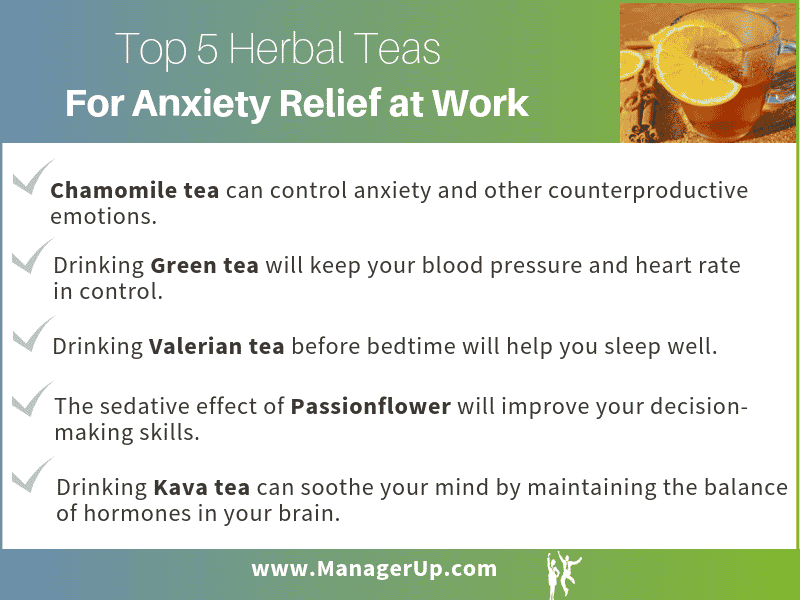
Top 5 Herbal Teas For Anxiety Relief at Work

Using teas for anxiety can help them avoid nervousness, and jittery feelings and improve their self-confidence.

Anxiety is a feeling that all of us have experienced several times in our life. It’s a feeling of some unknown fear that makes us nervous and uneasy. We all have experienced butterflies in the stomach before examination during our school days.

Even today, we feel the same when we have to make a presentation or appear for a job interview. Even the top level executives are not spared from this feeling. Even if you have given enumerable presentations in the past, you do feel jittery before meeting a new client or when you are trying to strike an important deal. But there’s a way out to beat your nervousness by drinking teas for anxiety.

According to a report published by the World Health Organization or WHO, the mental health of employees is a crucial determinant of their productivity. Excessive anxiety and poor mental health can increase the risk of burn-out among managers. It can seriously affect their ability to contribute to their professional and personal lives.

Having a cup of tea prepared from herbs before a meeting can help you avoid anxiety. Find out more here. CLICK TO TWEET

Studies have found that some teas can enhance your productivity and create a conductive atmosphere for all at the workplace.

Let us have a look at some of the scientifically proven herbal teas for anxiety you can drink before important meetings and presentations to stay calm and relaxed.

Executive Summary:

teas for anxiety

1. Chamomile

A cup of chamomile tea is what you need when experiencing a jittery moment just before an important meeting or interview. It acts as a great stress-buster and helps you calm down. According to the study published in the Alternative Therapies in Health and Medicine, Chamomile contains compounds that have the ability to reduce negative emotions by binding to the brain receptors.

You can drink chamomile teas for anxiety as and when needed, like before your performance appraisal. You can also drink it on a regular basis if you tend to get nervous about small things like asking leave from your boss.

It will correct the imbalance in your nervous system and inhibit the counterproductive emotions that could affect your ability to be bold and make rational decisions.

Want more tips that can help you avoid anxiety? Consider reading one of these top books on stress management and anxiety and learn to stop worrying and be more successful at work!

FREE YOURSELF FROM STRESS NOW!

2. Green Tea

Green tea contains an amino acid, L-theanine, which can produce a relaxing effect on your mind by controlling your blood pressure and heart rate.

Regular consumption of green tea can help to maintain the balance of chemical substances in your brain that plays a role in triggering anxiety and nervousness.

A report published in Biomolecules and Therapeutics has indicated that green tea can boost the production of feel-good hormones such as serotonin and dopamine thus promoting a positive attitude.

So, have a cup of warm green tea for breakfast if you know your day ahead at the office is going to be stressful and challenging. Have also a look at this amazing product and mist away anxiety and stress! This mist is portable and can help relieve anxiety and stress while promoting relaxation.

SPRAY ANXIOUS FEELINGS AWAY NOW!

3. Valerian

Valerian is a powerful medicinal herb that is specifically used to counter the effect of imbalanced levels of hormones and neurotransmitters in the nervous system. A study published in the LWW Journal has indicated that this herb can produce a soothing effect on the nerves and prevent anxiety.

It acts as a natural sedative and promotes sound sleep. Chronic insomnia can make you feel unrefreshed during the daytime and increase your anxiety. Lack of sleep can also reduce your productivity during the daytime resulting in mistakes, which can worsen your anxiety.

Valerian, by acting as a sedative, can help you sleep well and thus, prevent anxiety. However, since this herb can make you drowsy and decrease your level of alertness, you should avoid having tea during the daytime.

Simply drink Valerian teas for anxiety before bedtime to sleep well. You will get up feeling fresh, positive, and free of anxiety.

Extra tip: Combine your valerian tea with yoga and use bedtime to wind down. Relax, calm your mind… and get your best-ever body! We have compiled a list of best books on yoga and meditation with executives in mind.

CHECK OUT OUR LIST NOW!

4. Passion Flower

Passionflower can act as a natural sedative and calm the nerves. The results of a scientific research published in the Journal of Pharmacy and Therapeutics have affirmed that Passionflower can produce a soothing effect on the mind and body.

It prevents the negative impact of unfavorable circumstances on your decision-making skills.

You can drink passionflower teas for anxiety before meeting an important client to prevent feeling nervous, restless, and agitated.

5. Kava

Drinking Kava teas for anxiety can be highly soothing for your mind. A study published in the BioMed Central has proved that Kava tea can relax the mind and reduce anxiety.

It can help you to stay calm even during stressful situations like bidding for a huge, profitable project. It works by correcting the imbalance of hormones in the nervous system.

Most of these teas for anxiety are available in the forms of dry herbs and tea bags. You can brew the dry herbs in boiling water for 5 to 10 minutes, strain it and drink the tea. You can dip the tea bags in warm water for a few minutes and drink the liquid.

Anxiety can hamper your ability to think rationally. It may force you to make decisions that could be counterproductive for your organization as well as your own career.

On the contrary, staying calm and composed by drinking the teas for anxiety will allow you to deal with the challenging situations with better confidence and logical reasoning. This will improve your productivity and boost the chances of success.

GET MORE TIPS ABOUT HOW TO DEAL WITH ANXIETY AT WORK HERE!

Try these teas for anxiety and let us know how you felt. Leave a comment to share your experience with us.

How to Train Your Brain to Focus at Work

It is important to learn how to train your brain to focus so that you can use your precious time more productively. Your brain needs to be focused on a task like preparing for a meeting with a prospective client if you want to complete it successfully in a lesser time.

However, your mind may not allow your brain to focus. It can take your focus away from the details of the meeting with a client to the meeting with friends or an outing with family.

According to a study published in the Neuropsychiatric Disease and Treatment, there is a need to address the issues related to the decline in the executive functions of the brain such as focus, attention, and abstract reasoning to enable managers to work more efficiently.

In this article, we will learn some simple ways for how to train your brain to focus so that you can swift through your multiple responsibilities more efficiently. Some of the tips mentioned beneath are to be followed before you begin your work and some can be practiced while working.

Executive Summary:

how-to-train-your-brain-to-focus

1. Try These Strategies Before You Begin Your Day at Work to Improve Your Focus:

1.1. Find a Dedicated Area to Focus

Our brain tends to associate certain tasks with certain environments. For example, you feel like working out or doing weights training when you enter a gym even if you are there just to visit a friend.

Similarly, your mind immediately enters a serene zone when you visit a yoga center or a place of worship. This tendency of the brain can be utilized to your advantage to learn how to train your brain to focus.

You can pick a specific location that you want to dedicate to do tasks that need complete focus. This will be the location that your brain will get used to as an environment where no distractions can affect you. Make sure you work on all important tasks at this location. Over a period of time, your brain will recognize this area as a place where distractions are not allowed.

This will train your brain to focus and prevent it from wandering off.

Place a therapy lamp at the place you want to dedicate to focus. It has been found to produce an effect similar to that of antidepressants and boost moods. Researchers at the Harvard Medical School and the Mayo Clinic have recommended using a therapy lamp to manage seasonal disorders and restore balance.

1.2. Get Sound Sleep

Research conducted at the National Academies Press has shown that insomnia is associated with reduced focus, loss of memory and attention span. Inadequate sleep at night can reduce the ability of your brain to focus during the daytime.

Making sure you get a sound sleep of at least 8 hours every night will improve the functions of your brain and train it to focus better. Some simple ways to beat sleeplessness include setting a fixed time to go to the bed and aromatherapy with lavender oil using an aromatherapy diffuser.

1.3. Exercise Before Working

Exercises can stimulate the body’s senses and even improve the brain performance dramatically. Hence, performing exercises like walking, or even simple push-ups and sit-ups is recommended to improve your focus.

2. Strategies to Adopt While Working to Improve the Focus:

2. 1. Note the Thoughts in Your Mind

Your life is a mix of multiple commitments and varying experiences and situations. On some days, you may feel good for something positive happening in your life. On other days, you may feel nervous or frustrated due to an impending appraisal or a low rating.

Your mind is bound to be crowded with the positive or negative thoughts related to these circumstances. And once a specific non-work-related thought enters your mind, your brain takes it from there and keeps pondering over it.

This may land you in embarrassing situations if you are in the middle of a meeting and someone catches you smiling at yourself. Avoid it by taking note of the thoughts that enter your mind. Writing down your thoughts will allow your mind to stop worrying, daydreaming or thinking more about them. You know you have safely recorded your concerns, and you can address them later.

2.2. Turn Off Distractions

Your wandering mind is conveniently supported by the number of distractions surrounding you. Such as the notifications on your smartphones and even the news you read in the morning. So, even while trying to focus on the agenda for the meeting, your mind may actually be thinking of the upcoming elections or the soccer matches in the evening.

The email and social media notifications as trivial as a ‘late’ good morning message can take away your focus from the task. You can learn how to train your brain to focus by avoiding these distractions. Turn off the notifications while you are working on important tasks.

You can also shift your news-reading session to evening instead of morning to keep up your focus on the work during office hours. You can also use a mist to be able to focus better on hectic days.

2.3. Schedule Breaks

The attention span, or the duration for which your brain can focus, is about 50 minutes. According to the research conducted at the Aging Clinical And Experimental research, your attention span can reduce further with advancing age as your brain wears out.

You can plan ahead and learn how to train your brain to focus to prevent the age-related decline in your attention span. Take frequent breaks of about 15 minutes after every 40 to 50 minutes of work. That can help you stay focused and prevent the wearing out of the brain.

The focus is like a muscle. Just like you work out your muscles in the gym by lifting weights, you need to work out your brain to improve its ability to focus. Practicing these strategies for how to train your brain to focus will improve your concentration and help you be more successful in business.

You can also take a look at these books specifically meant for the executives to help them increase their focus and productivity.

books on productivity

You can try these tips and share your experience with us by leaving a comment below.

Caffeine and Stress: A Dangerous Workplace Combination

Let’s face it. Executives and entrepreneurs are under a lot of stress at work. Project deadlines and delays, managing subordinates, filling orders…things can get heavy.

Many managers are lucky to get through the day without being completely drained by the heavy and ominous load that they carry on their shoulders and a large majority of them see their faithful friend’s coffee as an essential part of keeping up with the pace.

But many don’t know that while coffee, and more specifically caffeine, can stimulate your brain, it can also enhance your negative physiological responses to stress, possibly contributing to some chronic health issues in the future.

A Gallup poll found out that about two-thirds of American adults drink every day on average 2.7 cups of coffee. The average worker has been shown to drink even more, averaging out at 20 cups per week.

Caffeine does have its benefits when it comes to production, evidenced by findings from researchers at the Department of Psychiatry and Clinical Psychobiology at the University of Barcelona, who found that caffeinated beverage that contains sugar improve “cognitive performance in terms of sustained attention and working memory.” But at what cost?

It is showed that caffeine consumption under occupational stress produced increases in serum cholesterol levels, blood pressure, and plasma cortisol levels

A study from the journal Health Psychology, the official journal of the Division of Health Psychology from The American Psychological Association, showed that caffeine consumption under occupational stress produced increases in serum cholesterol levels, blood pressure, and plasma cortisol levels.

Some of you may know what that means and some of you may not. Let’s take a look!

Executive Summary:

caffeine and stress

1. The Downside of Cortisol

Cortisol is the bad boy of hormones. It’s nice to have around when you need it but when you don’t it can cause you some problems.

Cortisol is released by the adrenal glands under periods of stress to enhance certain bodily functions that help you escape from danger, i.e. increasing blood glucose levels to provide energy to escape & enhancing your brain’s use of glucose so that you can think quickly.

This may have served us well when we were traversing the African savannahs and needed to get away from a charging water buffalo. Or even today when that big guy at the bar has had a bit too much to drink and takes exception to your fedora.

But cortisol is not meant to be in constant circulation as it is in so many of the general population as well as businessmen today due to our constant levels of stress.

When cortisol overstays its welcome it can have a wide range of negative health consequences all over the body leading to increased risk for health issues such as:

– Anxiety

– Depression

– Digestive problems

– Headaches

– Heart disease

– Sleep problems

– Weight gain

– Memory and concentration impairment

That is why it is important to try and keep blood cortisol levels even.

Try to practice meditation or yoga to beat down stress and reduce cortisol levels.

FIND OUT MORE HERE!

2. High Blood Pressure … The Executive Silent Killer

Another negative physiological response triggered by stress and caffeine was the increase in blood pressure among study participants.

Most people are a little more familiar with the theme and risks of high blood pressure than cortisol.

High blood pressure is known as the “silent killer” because it has no obvious signs or symptoms.

It comes on slowly over time and most people don’t even know they have it.

 According to the American Heart Association, high blood pressure increases the risk for serious conditions such as:

– Heart attack

– Stroke

– Heart failure

– Kidney disease or failure

– Vision loss

– Sexual dysfunction

– Angina

– Peripheral Artery Disease

So we already have a one-two punch for heart disease with cortisol and HBP.

High blood pressure is dangerous and definitely something to be avoided for executives at all costs, regardless of how good of a cappuccino your office Nespresso machine makes!

3. Chronic Stress And Poor Diet Cause Cholesterol In Executives, Which Contributes to Arterial Damage

Study participants also saw an increase in their serum cholesterol levels but cholesterol has been a bit of a muddy topic lately.

For decades a high cholesterol level was thought to be the leading contributor for cardiovascular disease risk.

As studies and evidence came out the direct link began to become less clear and cholesterol was broken down into two types, LDL (bad) and HDL (good).

It was thought that LDL cholesterols are bad because they build up in arterial walls decreasing blood flow or even completely blocking it to areas of the heart, all the while causing it to pump harder to try and deliver the blood. HDL cholesterols are thought to carry LDL particles out of the bloodstream and into the liver for other uses.

But as doctors prescribed more and more statin medications to lower cholesterol levels and Americans ate less and less fat, our incidences of heart disease increased.

In short, it was discovered that the elevated cholesterol was not causing the heart disease itself, but was an indication of a bigger underlying issue: arterial wall damage done by low-grade inflammation caused by chronic stress, high intake of refined sugars and other factors.

The cholesterol merely acts as a patch for the damage.

So, while it may seem on the cover that high cholesterol isn’t a concern, the chronic stress and poor diet that cause it is still a contributing factor to arterial damage and heart disease.

So while an espresso may give you the jolt you needed to start your day, and a green tea may carry you through your afternoon, they can really decrease the quality of life for executives and entrepreneurs in the long run and put you at risk for some pretty nasty conditions.

It doesn’t mean that you can’t ever enjoy the flavor and caffeine rush of your mocha late, just think of it as a treat or a reward for a good week of hard work.

It would be a better idea to adopt dietary changes that give you natural energy and incorporate habits that help you cope with and lower your stress for your long-term well-being.

healthy diet books

START EATING HEALTHY NOW!

Do you agree? Please leave a comment below.

Start Using Magnesium For Stress Today!

Stress is not a new phenomenon for the busy executives like you. If you accept stress and let it stay in your life permanently, it will invite with itself a long list of diseases, read depression, hypertension, diabetes, heart attacks, and so on.

If stress has become a frequent guest in your life, it’s time you start eating foods rich in magnesium for stress.

Whit magnesium at your disposal, you can chuck out stress from your life. Find out more here. CLICK TO TWEET

Magnesium needs no introduction. We all know that it is one of the essential minerals needed by our body. But, do you know why exactly we call it essential? It is because your nervous system needs it desperately to keep working at its best. Your brain needs it to stay calm and relaxed and your nerves need it to avoid irritation and agitation.

In short, you can use magnesium for stress to ensure this uninvited guest stops visiting you.

Executive Summary:

magnesium for stress

Benefit #1: Magnesium Reduces Stress Hormones

The deficiency of magnesium can increase the cortisol levels thus contributing to anxiety, brain fog, and panic attacks. You can avoid these symptoms by using Magnesium for stress.

This mineral can restrict the production and release of cortisol, a stress hormone. It can also help you avoid brain fog, a kind of mental block that destroys the creative thinking skills of executives.

Magnesium can reignite the brain functions and boost your creativity thus improving your productivity while reducing stress through its inhibitory effect on the cortisol production.

If you are getting too stressed, consider getting a bit of extra help. Spire is a stress management and activity tracker that reminds executives to control their breathing through alerts triggered by respiration patterns.

LOWER YOUR STRESS LEVEL TODAY!

Benefit #2: Magnesium Increases GABA Production

Magnesium for stress reduction works by binding to the GABA (gamma-aminobutyric acid) receptors in the brain. The results of a study published in Neuroreport have reaffirmed that magnesium has the potential to stimulate the activity of GABA, which is an inhibitory neurotransmitter.

A low level of GABA can cause you to feel easily overwhelmed even at the thought of attending a seminar or giving a presentation. It can cause irritation and anger, which are not positive virtues to have while interacting with your clients, colleagues, and other team members.

Benefit #3: Magnesium Produces Anti-Inflammatory Effect

Chronic inflammation can take hold of the healthy organs in your body, and that includes your brain. Brain inflammation can increase the risk of anxiety, depression, and memory loss.

Research published in the journal of immunology has confirmed the anti-inflammatory properties of Magnesium. This mineral can destroy the inflammatory messengers of the immune system called cytokines thus inhibiting inflammation in the brain. It can prevent cytokines from destroying the brain tissues and altering the functions of this vital organ.

This would help you avoid the symptoms of stress such as anxiety, memory loss, depression, apathy, irritability, slowed responses, and inability to focus.

Don’t you think these benefits of using magnesium for stress offer a great ROI for you?

Benefit #4: Magnesium Eliminates Heavy Metals

A study conducted by Italian researchers and published in the Magnesium Research to examine the role of magnesium in brain activities has shown encouraging results.

It was found that this mineral can reduce stress levels and improve your ability to cope with the challenges at your workplace and personal life.

It works by supporting the elimination of toxic, heavy metals like mercury, and lead from the body. These toxins can cross the brain’s filter called the blood-brain barrier and accumulate in this organ resulting in considerable damage.

Now that you have realized the immense potential of magnesium for stress reduction, you must be eager to find out the foods that contain this mineral. Below is the list of foods having a high amount of magnesium.

– Kelp

– Cashews

– Almonds

– Parsley

– Soy Beans

– Avocado

– Leafy greens

Conclusion

Have you been told to “relax” “calm down” etc. too often? If yes, you should take a chill pill! I mean, you should take magnesium supplements or increase your intake of magnesium-rich foods.

It will ensure the feeling of being calm and relaxed comes naturally to you. When this mineral enters your body in abundance, it improves your mental health and drives out stress and the diseases it brought in with itself.

Do you want to learn more about foods that fight stress?

foods that fight stress

IMPROVE YOUR STRESS RESPONSE WITH THESE NATURAL FOODS TODAY!

We want to hear from you. If you have started using Magnesium for stress, please share your experience with us in the comments!

Depression at Work and How to Cope with It

The intense pressure of a managerial position coupled with the repetitive nature of office work and the challenging personalities found in virtually every workplace can be a recipe for depression.

The occasional “bad day” where you feel frustrated or unmotivated is normal work fatigue; however, being unable to concentrate for days or weeks on end to the point that it is negatively affecting your personal and professional life could be a sign of depression at work.

If these symptoms sound familiar, you are not alone.

report prepared by the Centre for Organizational Health and Development at the University of Nottingham’s School of Medicine used data from the World Health Organization and other organizations to find that nearly half of the world’s population experienced some form of mental illness, such as depression, during their life that impacted their ability to function in daily life.

Staying engaged in as many of your regular daily activities as possible, including work, is an essential part of working through depression.

Unfortunately, this is easier said than done for many individuals suffering from depression. Those suffering from depression at work are often forced to accept reduced hours, responsibilities, and pay because of their symptoms.

The following are techniques that you can use to cope with depression at work.

Executive Summary:

depression at work

1. Recognize And Acknowledge

Feeling tired all of the time, increased isolation from coworkers, decreased productivity, crying spells, burying your emotions in unhealthy behaviors, and calling in sick can be signs of depression. If you have tried “powering through” and nothing seems to work, it is time to seek professional help.

A psychiatrist, therapist, or other mental health professionals can provide you with various coping mechanisms for dealing with your depression symptoms.

It is also important to realize that you are not alone. In fact, as many as 1 in 20 workers are dealing with depression at work at any given time.

2. Talk to Someone

Most of us are comfortable venting about our day-to-day work-related frustrations with friends, family, or even co-workers. However, we are often reluctant to discuss depression with others out of fear that it may be interpreted as a sign of weakness.

In reality, sharing your struggles with someone that you trust can make it easier to cope with your depression at work.

In certain situations, it may even be advisable to arrange a meeting with your immediate boss once you have an actual diagnosis and are actively seeking treatment. This will let your boss know that any changes that he or she may notice in your job performance are not the result of dissatisfaction. In fact, you are taking steps to improve the situation.

Do you need more tips to cope with depression at work?

HAVE A LOOK AT THESE GREAT BOOKS ABOUT MEDITATION AND ANXIETY 

3. Identify Depression Triggers

Most people experiencing depression at work will find that certain situations may trigger or exacerbate their symptoms. For instance, too many deadlines or a contentious meeting.

Take a moment to identify at least five scenarios that worsen your depression symptoms.

Once you have done this, create an action plan listing specific steps that you can take to either avoid the trigger or lessen its impact.

4. Take Time Off

Most executives and managers are highly ambitious and tend toward Type-A personalities. As a result, they are reluctant to take vacations or mental health breaks. Taking time away to unplug from the pressures of work is essential for your mind as well as your body.

Do not be afraid to take a few days of vacation if you feel your depression worsening. You should also make it a point to never leave vacation time unused. Allowing yourself time to recharge. You will return to work with renewed productivity and creativity that will make you a better leader for your organization.

5. Focus on Smaller Tasks

Depression can make it difficult to concentrate, which can make large projects seem overwhelming. Give yourself permission to say “no” to projects and additional commitments when possible if you feel yourself getting overwhelmed.

If you find yourself struggling to get started on a particular task, try breaking it down into small, manageable pieces or even delegating if that is appropriate for the task.

6. Learn Calming Techniques

Even with diligent treatment, you might find yourself experiencing an acute episode of depression while at work. In these instances, it is helpful to have a few self-calming techniques at your disposal to help you relax and reset so that you can get back to your work as quickly as possible.

For example, you can take a quick walk around the block or shut your office door so that you can meditate for five minutes.

Improve your meditation practice with Muse, by Gaiam, which encourages changes in the brain and helps you reduce stress and anxiety.

START RELAXING YOUR MIND NOW!

7. Personalize Your Workspace

Your physical workspace can have a significant impact on your overall mood. Start by making sure that there is plenty of light, which will automatically help you feel happier and more alert and focused. You can then add some colorful yet professional furnishings and accessories to make your office a more pleasant environment.

If you have dealt with depression at work, we urge you to share your story and coping strategies in the comments below.

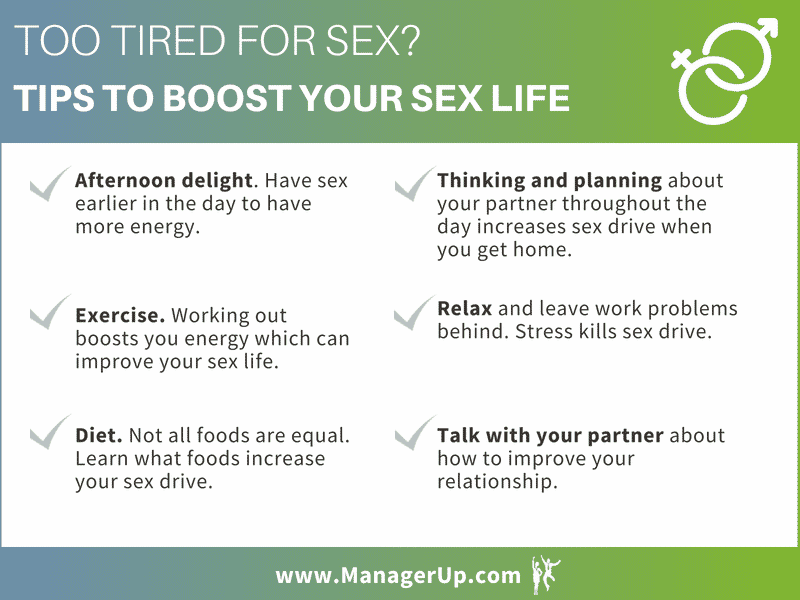
Too tired for sex. Powerful strategies for executives

If you get home in the evening too tired for sex, chances are pretty good that your business executive lifestyle is robbing of you the energy you need.

You spend all day confusing all your attention and energy on the job and that depletes your resources. All you can think about at the end of the day is some way to wind down, usually with a drink, and sleep. You can have it all, a great career and a great sex life.

Here are our top six suggestions to make sure you go back to having a great mattress adventure on a regular basis.

Executive Summary:

too tired for sex

1. Afternoon Delight

Sex is not an activity you must do just before dropping off to sleep. Get up a bit earlier in the morning before you have to leave for work. You’ve got energy then, use it.

Do not wait until you are too tired for sex. Come home from work, and jump in the shower together, then you just go with whatever happens from there.

Barry McCarthy, Ph.D., a Washington, D.C. sex therapist, “suggests changing your routine to accommodate meaningful sex and sleep. Try sex in the morning, earlier in the evening, after a nap, or while the kids are at dance class or soccer practice.

You plan business meetings. You used to plan dates. Plan for sex.


2. Exercise

Short and quick weight lifting can be the boost you need, says Everyday Health.“Weight lifting causes the body to produce testosterone, which is the primary precursor for the male sex drive,” Pete McCall, an exercise physiologist, to the magazine.

He says lift enough weight to that you feel the burn by the 10th rep. Good exercise will not leave you too tired for sex.

Writer Jan Sheehan said, “some studies have linked short intense exercise, such as weight lifting, with increased testosterone levels.

To improve your sex life, do some push-upssit-ups, and crunches.”

That’s an exercise you can do on your lunch break every day, a few minutes in the morning and a few minutes in the evening. You can even do it while watching TV. Being too tired for sex will become a thing of the past.

Get more fitness tips on our executive library. See how easy it is to get fit!

Watching what you eat is good for your body and good for what Shakespeare called “making the beast with two backs.” Eat This has a list of 20 foods that are will boost your sex drive.

The best food on the list as far as we’re concerned is dark chocolate. Oysters are not on this list.

libido boosting foods for executives


4. Put Some Thought into It

You plan big business decisions. You plot our strategies and ways to get the work done in the office.

Remember when you were dating? You planned dates, what to eat and where to go. Just because you are in a long-term relationship does not mean planning gets tossed out the window.

Even the Wall Street Journal says thinking about your partner and then putting those plans into action makes sex better.

When you plan for something, your body starts building the reserves needed to carry out that plan.

You will also consciously start making adjustments to your schedule and your habits so that you can meet the demands needed for a great mattress adventure.

Think about that feeling you get when planning a big deal. The closer it gets, the more excited you become. Anticipation builds desire. If you approach sex the same way, it can blow your mind.

Planning ahead tells your body to be ready and you will not be too tired for sex.

Are you a businesswoman? If you’re a professional woman with children, you have another layer of responsibilities weighing you down that demands your attention from dropping off the kids at school to reading bedtime stories. Learn how to improve your sex life.

5. More Than a Late Night Activity

Kevin Thompson writes about relationships and sex. His article “When you’re too tired for sex” says, “A couple should take every opportunity to have as much sex as possible at a time other than the end of the day.” Why? Because late night sex happens when your energy levels are at the lowest ebb.

If you have sex during other times of the day, when your energy level may be at its peak or somewhere between the high and low levels, you share more than just sex.

He suggests taking a long lunch, coming home early, getting up earlier or set things up so you can come in late once in a while.

He says this might require a change in your mindset.

You already know that success in business means adapting and changing. Just apply that to your sex life.


6. Remember, You Are Partners

HealthLine says good communication leads to better sex. Think about this from a business perspective.

You have to let your partners and your staff know what you are doing. Pulling last minute surprises throws everything into disarray and can lead to disaster.

The article quotes Kate McCombs, a sex and relationships educator, who said, “When you avoid those vital conversations, you might avoid some awkwardness, but you’re also settling for suboptimal sex.”

By talking about issues, you will find even on those days you feel a bit worn down, you are still not too tired for sex.

So what about it? Do you think these ideas will help put more bang into your intimate moments?

Do you have some ideas to share with our readers who are too tired for sex? We would love to hear from you.


Is a better sex life really linked to success in business? Experts say yes. Find out the relationship between sex and success: how one makes the other better.

sex and success

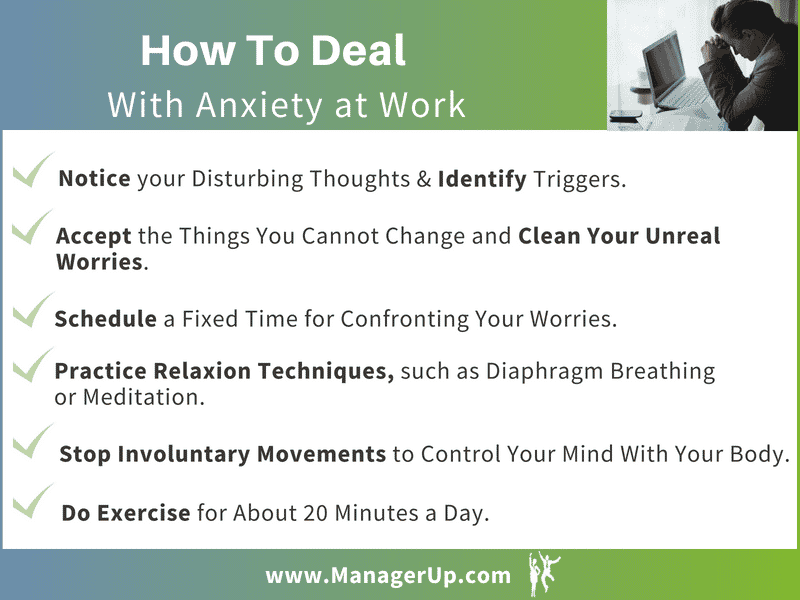
Important Tips For How To Deal With Anxiety At Work

It is important to learn how to deal with anxiety at work.

Anxiety can interrupt your chain of thoughts and speech. It can cause you to stumble or even stammer while giving important presentations or discussing project details with clients.

Getting anxious can also result in mistakes as your thinking is not entirely focused on the work you are doing. Ignoring the impact of anxiety can make employees short-tempered. They may even avoid participating in social gatherings and meetings.

Generalized Anxiety Disorder is a psychological disorder that is characterized by excessive and persistent worries about different things.

According to the Anxiety Disorders Association of America, one in four employees experiences persistent anxiety, which can impair his or her ability to function optimally at the workplace.

Some factors that have been identified as triggers for anxiety include excess work responsibilities, meeting deadlines and relationships with the people at work.

You can follow the tips mentioned beneath to learn how to deal with anxiety at work and reduce its effect on your efficiency.

Executive Summary:

how to deal with anxiety at work

1. Notice Your Disturbing Thoughts And Identify Triggers

Occasional anxiety is a part of life and is considered natural. For example, feeling anxious thinking about the deal you plan to crack with a new partner is bound to make you anxious and excited both at the same time.

Similarly, feeling anxious when you switch job is also common as there is uncertainty involved in the work environment and the new colleagues you have to work with.

But, when anxiety becomes too frequent and begins to interfere with your routine work, it can affect your work performance severely.

This form of anxiety is called generalized anxiety disorder (GAD) and involves feeling extremely worried or nervous over trifles. According to the Anxiety And Depression Association Of America, about 40 million adults in the US suffer from anxiety.

When anxiety becomes too frequent and begins to interfere with your routine work, it can affect your work performance severely.

According to research published in Medical News Today, a group of brain cells plays a role in creating these anxious feelings. It can cause you to get stuck with a repetitive feeling of worry.

This may result in some form of repetitive behavior such as turning in everything to your boss because you fear that if it’s not perfect, it would prove you don’t deserve the role.

This tendency to worry over trifles can reduce your self-confidence and even affect your overall impression during important meetings.

These feeling can be avoided by making conscious efforts to notice them when they come up and identifying the triggers for such disturbing thought.

Writing in a journal what you were doing when the feeling started will help you identify the preceding triggers.

Keeping a diary of your emotions will help you locate a pattern that correlates different situations that trigger anxiety. You can also have a look at our best books on stress, anxiety, and sleep and free yourself from anxieties right now!

READ MORE NOW!

2. Declutter Your Mind And Clean Worries

Take steps to declutter your mind and clean the worries that are not based on any objective truths or cannot be changed.

Research at the Behaviour Research and Therapy has proven that acceptance can help you avoid anxiety more easily than fighting the disturbing thoughts.

There are certain things about your job that you cannot change such as the attitude of your colleagues. You must realize that worrying about uncooperative colleagues will not help the situation get any better.

When you know you cannot change the attitude of your colleagues, accept them as they are or simply ignore their behavior when it doesn’t directly impact your work.

There are certain things about your job that you cannot change. Acceptance can help you avoid anxiety.

You also need you to identify the factors that create a sense of uncertainty or fear in your mind. Such feelings can make you more nervous.

For example, the fear of experiencing a mental block while delivering a speech can make you more anxious even though it may not actually happen. Just thinking that it might happen can make you more nervous and cause you to stumble while giving the speech. Such causes of fear and anxiety can be managed tactfully by making notes before the speech so that you know you can refer to them in case you have a mental block.

Similarly, most executives are anxious thinking they may be fired even after working hard and being successful at work. Analyzing such causes of anxiety will help you realize how unfounded your fears are.

When you notice these kinds of worries, be confident of your work and capabilities, and clean the anxious thoughts out of your mind.

Such causes of fear and anxiety can be managed tactfully by making notes before the speech so that you know you can refer to them in case you have a mental block.

Similarly, most executives are anxious thinking they may be fired even after working hard and being successful at work. Analyzing such causes of anxiety will help you realize how unfounded your fears are.

When you notice these kinds of worries, be confident of your work and capabilities, and clean the anxious thoughts out of your mind.

S.J. Scott and Barrie Davenport can also help you declutter your mind.

READ MORE NOW!

3. Schedule Worry Time

Once you have cleaned your unreal worries and accepted worries that cannot be changed, the rest of the causes of anxiety, which are based on factual circumstances that you can change, need to be tackled more carefully.

If anxiety due to such causes has become a routine activity for you, you can as well include it in your other daily tasks and schedule a specific time for worrying.

The idea is when you designate a specific day and time of a week for pondering or worrying over what’s happening in your life, you are less likely to think about them the rest of the time.

When you encounter a negative thought interrupting you while working on a project, write it down and tell yourself you can think over it during your next scheduled slot of ‘worry time.’

It is an effective way for how to deal with anxiety at work as it allows you to put aside your disturbing thoughts and focus on productive activities.

4. Relaxation Techniques

When you have just a few minutes left before an important meeting with a client and anxiety has taken over your mind, try relaxation techniques to deal with it.

Relaxation techniques such as diaphragm breathing that involves pushing out your abdomen, instead of chest, when you breathe is a great way to relax your mind and avoid anxiety.

To practice, place your hand on your belly and feel how the stomach moves while breathing.

Counting while breathing, meditation, and circular breathing that involves breathing in through the nose and breathing out through the mouth are also great ways to calm the anxious mind.

These techniques work instantly and ease your senses thus allowing you to face the client with a greater confidence.

You can also use the Meditation headband to keep yourself calm and relaxed and avoid anxiety.

TRY IT NOW!

5. Control Your Mind With Your Body

Your body has the power to control what’s going on in your mind. When you find it difficult to shrug off any nagging thought that has been interfering with your work, you can use the power of your body to control your mind.

When the anxiety-provoking thought refuses to go away, take a few seconds to identify your posture or body language.

Most often, you will realize you have been fidgeting your fingers, moving your legs, or rocking the chair in a restless manner. These movements occur at a subconscious level and reflect the turbulence in your mind.

Make a conscious effort to stop involuntary movements. Control your mind with your body.

Sit straight with your chin up. This posture marks a confident personality. It will instill a sense of confidence in your anxious mind and allow you to think with a positive attitude. Improve your posture while sitting.

FIND OUT HOW NOW!

You can also watch the Amy Cuddy’s talk about the power of body language to understand how changing your body language can help you avoid anxiety and be successful at work and in life.

6. Exercise

A study conducted to evaluate the Effects of Exercise and Physical Activity on Anxiety has proven that exercises can help reduce anxiety.

It was found that the anxiolytic (Anxiety-relieving) effect of exercises tends to last longer by instilling a sense of optimism.

This can be a great way to learn how to deal with anxiety at work while also improving your physical fitness.

BRAIN AFTER EXERCISE

According to the Anxiety and Depression Association of America, physical activities result in the release of chemicals called endorphins in the brain, which act as natural painkillers and reduce anxiety.

You can avoid anxiety by exercising for about 15 to 20 minutes a day. You can opt for simple walking or jogging or even try swimming, playing tennis or any sport to deal with anxiety. We have selected must-read books to exercise step by step.

Your anxiety can become easily evident to your clients, colleagues, and superiors as it causes trembling, affect the tone of your voice and increase sweating.

This may create an unfavorable impression about you at your workplace and reduce your opportunities for handling challenging projects or taking up better responsibilities.

Follow these techniques for how to deal with anxiety at work to feel confident and bag better projects and opportunities.

If you have any suggestions to deal with anxiety, leave a comment below to share them with us.

Basic Meditation Techniques for Beginners to Reduce Stress

According to a study published in the JAMA Internal Medicine, regular meditation can reduce stress and improve the overall wellbeing of a person.

Meditation is an ancient science that has its root in ancient India. Later, the Buddhists adopted meditation as a way to attain nirvana.

Gradually, it spread along the ancient silk routes to reach the rest of the world. In the modern age, the art of meditation has left the boundaries of spiritualism and become a powerful means of finding mental peace and calm.

The effects of meditation can be particularly beneficial for executives who experience high-stress levels due to constant work pressure, regular meetings, and job insecurity.

Meditation can improve the productivity of executives by improving their creativity, concentration, and cognitive skills.

Let us learn the meditation techniques for beginners that will help you stay calm, happy, and healthy.

meditation for beginners

Step by Step Meditation Techniques for Beginners:

Step 1: Choose a Convenient Place and Time

Meditation provides a great relaxing experience and hence, you must do it at the time and place that’s convenient for you. Hence, the first step for the meditation techniques for beginners is to choose a time when you are not likely to be disturbed.

You may practice it in the morning once you get up, or before going to sleep. You can also practice meditation for a few minutes between two meetings at the office.

The idea is to choose a quiet and peaceful place that can make the meditation experience more relaxing.

Step 2: Warm Up

Warming up before meditation can have a tremendous influence on your mind and help you to focus on your breathing. So, try to do stretching exercises for a few minutes before beginning your meditation session.

You can simply do a few sit-ups or walk briskly for a few minutes if that’s feasible for you. The idea is to loosen the muscles, reduce stiffness, and relax your body.

It is an important step for the meditation techniques for beginners as it will help you avoid numbness and tingling in the limbs while you sit still during the practice.

Physical activities like stretching will also improve the stress-relieving benefits of meditation and encourage your mind to concentrate better.

Even if you are practicing meditation at your workplace, warming up for a minute or two won’t be too difficult for you.

Step 3: Wear Comfortable Clothing

Dressing in comfortable clothing is an important step for meditation techniques for beginners. Make sure the clothes you wear are not too tight and the material is soothing.

Also, if the weather is too cold or warm, wear appropriate clothing to avoid discomfort because if you start sweating or feeling too cold, you will not be able to concentrate. This will hamper the benefits you can achieve.

If you practice meditation at your workplace, remove your tie and jacket before meditation as these clothing can cause some discomfort.

Step 4: Control Your Thoughts

Take a few deep breathes to provoke a meditative state. Try to remove unwanted thoughts from your mind. You can imagine a cloud over your head and put all your thoughts into that cloud.  Just imagine everything that’s in your mind passes through it.

This will clear your mind and help you enter a deep state of relaxation needed to begin your meditation session.

You can also try a meditation headband that monitors and improves your meditation practice and guides you to a calm mind.

Getting into the correct frame of mind may take a lot of time and effort initially. But, you will be able to achieve this state with regular practice.

Step 5: Meditate with Deep Breathing

Deep breathing in and out before meditation forms an integral part of the meditation techniques for beginners to prepare your mind and body. Deep breaths can bring your mind into a peaceful meditative state.

Take deep breathes. Continue breathing in and out while keeping your entire focus on the process. Put your hands on your belly and feel the air as it enters your body. Similarly, focus on the air moving out of the lungs.

Here is how to do it:

Initially, practice it for 5 to 10 minutes and increase the duration gradually as you gain better control over your mind.

If you find it difficult to focus on breathing, chant a mantra such as ‘Om’ slowly in an even tone. You can also switch on soft instrumental music to help you concentrate better.

These meditation techniques for beginners are of particular importance for the executives who practice it in the office where constant noise can distract their mind and prevent them from focusing. The music will nullify the noise and help you concentrate.

Find more advice on meditation in our list of books on yoga and meditation.

Simple Exercise for Meditation Beginners

Step #1: Sit Relaxed

Place a comfortable set or cushion in one room and sit relaxed.

Step #2: Check Your Posture

Note what both your legs are presently doing. Cross your legs in front (If seated on a cushion). If you’re on a chair, just rest your feet bottoms on the floor. Ensure you remain comfortable. Now straighten—but don’t stiffen– your upper body. Your spine will adopt a natural curvature.

Then, check what your two arms are doing. Set your upper arms to be parallel to the upper body while resting their palms on your legs at your most natural angle.

Drop your chin slightly and drop your gaze gently downward (but don’t shut your eyes). Simply let whatever appears in front of your eyes remain there without over-focusing on it.

Step #3: Listen To Your Breath

Listen to the natural physical sensations of your breathing as the air moves through your mouse/nose, the rising/falling of your chest and/or belly.

At some point, your attention will wander from the breath to other places. Notice this when it happens. Don’t judge/worry. Simply return your attention gently to the breath.

Be empathetic about your straying mind even if it’s doing so constantlythat’s normal anyway. Now, you don’t wrestle with your thoughts. Rather, you train to observe them without reacting then sitting back and paying attention.

Keep coming back to your natural breath time and again, without judging or expecting.

Step #4: When Ready, Slowly Lift Your Gaze

Take some moments and identify any sounds permeating the environment. Listen to your body. How does it feel right now? What thoughts and emotions are you experiencing?

Repeat as needed and re-learn.

Maybe you began meditating, but gave up on it, or may you haven’t even started because you’re skeptical about meditation in general.

Whichever the case, we recommend you reading “Unplug”. Meditations made easy! You’ll be meditating before you even finish the book.

Read More Now!

Common Mistakes Made by Meditation Beginners

You could be just starting off with an aim to cure your long-running stress at your firm.

Or you’re just experimenting in search of happiness after a flurry of team meetings, networking events, and business pitches.

The thing is, like in every other therapy, there are some potential pitfalls on your way. Give these a wide birth in your journey:

1. Choosing the wrong meditation for your work and body type: Determine what’s in line with your executive life and follow it.

2. Having unrealistic goals: Don’t over-expect. Sure meditation helps but truth be told, meditation is not a magic bullet to solve all your troubles.

3. You’re not consistent: You must be persistent.

4. Don’t overcomplicate matters: Stop aiming for the perfect. Nothing is. Do meditation for beginners simple.

5. Being conservative: Be ready to explore other techniques if things are not working out.

6. You keep comparing yourself with others: It should be about ME, not your fellow officials.

Conclusion

What do you desire the most in your life? Promotion? Success? Better salary? Well… Happiness is usually the most neglected choice. But, if you give it a thought, you will realize that all the other desires finally lead to happiness.

However, the paradox is executives never seem to find and retain happiness even when they consciously go after it, in spite of the money, position, and power they achieve.

This is exactly where meditation can step in as a practical solution.

If you have any suggestions to make the practice of meditation easier, please leave a comment to let us know.