5 Scary Work-Related Stress Symptoms You Should Know

Though stress is a very common consequence of a busy, successful career; most executives fail to recognize the work-related stress symptoms.

The impact of stress on their mental and physical health is diagnosed only when they suffer from complications such as depression, hypertension, or heart attacks.

The extent of stress in manager was evaluated by the American Psychological Association in August 2017. The findings of this survey were alarming. It revealed a significant rise in the number of Americans who experienced at least one symptom of stress within just one month prior to the study.

These symptoms of stress are not limited to your mental health.

They can turn bigger and engulf your life by affecting your physical health, your intelligence, your personal relations, and even your successful career.

This study has thrown light on the need for educating executives about how they can identify the symptoms of stress as they are more prone to develop these symptoms owing to constant work pressure.

Being aware of the warning symptoms of stress would help them take appropriate steps to reduce stress before they turn your life upside down.

Executive Summary:

work related stress symptoms

1. Dreading Work

The feeling of dread for work becomes evident when you develop a tendency to find excuses to avoid going to the office.

Falling sick too often, and trying to pass on the responsibilities to others may indicate this symptom.

There may be several reasons for you to start dreading your work. The unpleasant work atmosphere in your office, uncooperative colleagues, constant pressure to perform better, lack of job security, and unfair competition can reduce your interest in work.

You must love your work, if you want to progress.

Dreading work will increase your mistakes and also make you shun responsibilities and better opportunities.

Do you think your employer would be happy keeping you at the desk if you have this attitude? If you dread work, your employer may just show you the door!

You can avoid these work related stress symptoms by adopting a positive attitude.

You can try and be patient with your colleagues and have a hearty talk with them about how you feel.

Explaining to them that working in collaboration with each other might be a win-win situation for all will help you avoid unfair competition.

These strategies might help you to avoid the feeling of dreading your work.

2. Panic Attacks

If you have developed a tendency to panic at the slightest provocation, it may indicate work-related stress symptoms. Feeling a bit anxious before an important meeting or presentation is common.

However, in case, you experience palpitations, dry mouth, dizziness, profuse sweating, and faster breathing due to heightened anxiety, it could be a sign of panic attacks associated with stress.

Imagine what would happen if you panic in front of your client. He wouldn’t be too enthusiastic to award you the project.

If you keep losing projects due to panic attacks, you would just be a liability for your employer that must be gotten rid of at the earliest.

Additionally, panic attacks can also increase your risk of severe depression and suicidal tendencies.

You can avoid these symptoms by trying some simple strategies.

Get a meditation headband that monitors and improves your meditation practice, to help relax your mind.

This will calm your mind and help you achieve your goals with the scheduled meeting.

3. Angry Outbursts

Constant stress can make you impatient. Angry outbursts tend to be more common when you have to depend on others for the project completion and when you are racing ahead of time to meet the deadline. It can make you feel helpless resulting in outbursts of frustration that you might take out on others.

However, you must understand that getting angry cannot serve the purpose at all.

In fact, it might make the matters worse as you may just pass on the stress to others.

The angry outburst can backfire as your colleagues would no longer be cooperative with you. Angry outbursts can also create imbalances in the levels of hormones in your body and increase your risk of chronic diseases such as hypertension, diabetes, cancer, stroke, and heart attacks.

I am sure you know that these diseases are not something you can get rid of by taking medicines for a few days. They will stay with you lifelong.

Your impatience at the workplace will make you a patient of these diseases for the rest of your life.

Instead of getting angry, you can try to think with a calm mind and reschedule the tasks to be able to meet the due date.

You can explain the gravity of the situation to others and motivate them to work harder.

Take deep breaths or simply sit in a quiet place for a few minutes. Beat down stress with a stress management device.

These techniques would work and help you achieve your goals without feeling stressed.

4. Changes in Body Functions

Constant stress will have an effect on how your body works.

Stress could affect the regulatory processes that keep your blood pressure, heart functions, blood sugar levels, metabolism, and other functions in control.

If you ignore this, you are just waiting for a disaster to happen.

You can, at any time, fall down with paralysis due to stroke. You may just collapse at your workplace with extremely high or low blood pressure!

You might lose control of your vehicle if you feel a sharp, clutching pain in the chest while driving. Needless to say, it could be a heart attack!

You might not be able to recognize the changes in these functions while juggling between multiple responsibilities at work and your personal life.

Yet, it is highly important to pay attention to these work-related stress symptoms and make appropriate changes in your lifestyle and diet to avoid the complications of stress.

5. Tooth Grinding

Pressing and grinding of the upper and lower jaw against each other is one of the most common work-related stress symptoms. You may start doing it unknowingly. However, within a few minutes into it, you will realize you are grinding your teeth when your jaws and facial muscles start aching.

Teeth grinding can also occur due to other reasons such as improper alignment of the teeth.

You can identify the cause of this symptom by correlating the time and your mental state when you grind your teeth. If you do it even when you are sleeping or not under stress, it could be a dental problem.

However, if you do it more frequently when you are too busy with work or before or during an important meeting, it can be a sign of stress.

If you don’t take steps to control teeth grinding, you may lose your teeth one by one. Slowly, you would have no other option but to go for dentures.

Conclusions

The factors that cause work-related stress symptoms may be unavoidable for managers. However, it is definitely not difficult to recognize the symptoms of stress.

If you are experiencing these symptoms, you can adopt the stress-busting techniques such as meditation and yoga.

You can also check out our top books on stress management to free yourself from stress and anxieties!

stress management books

The idea here is to not wait for drastic complications to occur. The earlier you understand this, the better. If you choose to ignore these scary signs of stress, you can consider yourself as sitting on a volcano ready to erupt at any moment.

If you are aware of any other symptoms that could indicate stress at workplace, please leave a comment below to let us know.

5 Effective Strategies for How to Handle Pressure at Work

The two words, work, and pressure have become synonymous. A large percentage of managers regularly experience pressure at their workplace. Several factors such as attaining target, meeting project deadlines, cost constraints, and conflicts with colleagues create immense pressure on the managers. Hence, you must learn how to handle pressure at work to stay focused on your job with better motivation and satisfaction.

According to a study published in the British Medical Journal, work pressure can reduce the motivation of managers and affect their productivity. Works pressure is also associated with the lack of job satisfaction and a higher attrition rate.

This can not just help to prevent the psychological impact of work pressure on your health, but also improve your career prospects.

Executive Summary:

how to handle pressure at work

1. Understand What You Control

Stress occurs when we feel the situation is out of our control. This feeling creates a sense of helplessness and wears down our confidence and concentration.

Hence, the first thing to learn how to handle pressure at work is to differentiate between the situations you can control and those you cannot.

For example, if the project deadline is near, you know you have the ability to rework the schedule. You can break down the tasks and create a new schedule. The situation is still under your control and applying your management skills would help you navigate through it.

But, certain situations are beyond your control such as job insecurity, global recession, etc. Accept these situations and focus on improving your performance instead of feeling demotivated due to it. This will help you avoid losing your job as your performance would speak for itself.

Thus, identifying controllable factors from uncontrollable factors will help you take the proper decisions and move on in the right direction.

2. Control Your Breath Pattern

When you are anxious or under pressure, your breathing pattern tends to be faster and irregular. This can promote the release of a negative hormone that can worsen stress. So, whenever you feel like under pressure like before meeting your manager for appraisal, monitor your respiration and track the changes in the breathing patterns.

This will allow you to set in the right breathing rate and pattern and help you feel relaxed during the meeting.

TRACK YOUR BREATHING AND MANAGE YOUR STRESS NOW!

3. Eliminate Distractions and Interruptions

At your workplace, everyone is busy carrying out their individual responsibilities and no one really has the patience to wait for you to respond at the time suitable for you. Hence, you are bound to be distracted or interrupted by phone calls and emails popping up while you are working on an important presentation.

If you are worried thinking how to handle pressure at work, just take a few preventative measures to avoid such distractions.

For example; inform your colleagues that you will be available to answer the emails only during a certain window unless it is something really urgent. You can reply to the emails faster when you have a specific time devoted just to this task. This will enhance your efficiency and reduce pressure to meet the demands in a limited time.

Do not hesitate to keep the door closed while working on important tasks that demand complete focus.

4. Take Short Breaks

An effective way how to handle pressure at work is to take frequent breaks. At times, you will be hounded with multiple glitches in the project at the same time. Such situations often create a mind block due to which you are not able to think of any innovative ideas to deal with the problems.

At this juncture, what you need is a few minutes away from your desk.

Simply leave your desk and walk around for 5 minutes. Try to take your mind away from the situation by looking at something beautiful and pleasant like a park in your campus.

A study published in the BioMed Central Public Health has revealed that exposure to such restorative environments can improve your ability to concentrate and provide relief from negative emotions like pressure, stress, and fatigue.

This will freshen up your senses and unblock the network of confusion in your mind. So, by the time you return to your desk, you will be ready to think with a new perspective and find innovative solutions to the problems.

If it is difficult for you to go out, you can exercise in the office itself using an exercise ball for about 10 to 15 minutes. This will relieve pressure on your mind and allow you to focus better.

You can also avoid the negative thoughts stressing out your mind by using the meditation-headband to meditate at your desk and refresh your mind.

Meditating for a few minutes before any client meeting will help you avoid pressure and allow you to answer all their queries with confidence.

5. Be Flexible and Adaptable

As they say, the only thing that’s constant in the universe is change and this philosophy applies to your job responsibilities as well. Every day at your office is going to be different.

The market statistics, workforce, your colleagues, job demands and even your office hours can change frequently. This can prevent you from setting a routine and cause a feeling of uncertainty and pressure each time the change occurs.

You can avoid feeling extremely pressured by adapting yourself to the changes. You need to evaluate the new factors and determine how you can accommodate them in your routine. This will ease the pressure and help you perform better.

Extra tip:

Check out our books about productivity and focus selected with executives in mind and learn how to do more in less time. Become an expert in productivity at work!

books on productivity

I told you earlier that the two words, work, and pressure, have become synonymous. But, it is up to you to set apart the common links between these 2 words. Follow the tips given here for how to handle pressure at work. This will help you avoid undue pressure and improve your job satisfaction.

If you have any suggestions to avoid pressure at work, please leave a comment below to share the tips with us.

Staying Hydrated at Work in 7 Easy Ways

If a hectic workday finds you being pulled in a thousand different directions simultaneously, it is easy to push that slightly annoying thirst to the back of your mind by telling yourself that you will get something to drink when you finally get a break.

If you are like most managers and executives, that break is unlikely to come until the end of the workday when you can finally slow down a bit and breathe. Not only does this leave you in a constant state of mild dehydration, but failing to stay hydrated at work can also negatively affect your work productivity.

A few changes to your routine can help make staying hydrated at work fun and convenient. The following are simple tips that even the busiest executive can incorporate into their day to ensure that they stay hydrated at work.

Executive Summary:

stay hydrated

Why It Is Important to Stay Hydrated at Work

Your body is made up of approximately 60 percent water. This water is necessary for the proper functioning of virtually every body system, including digestion and kidney function, controlling body temperature, facilitating cell function, and cushioning and lubricating your joints. During the course of a day, you lose between 2 and 3 liters of fluid through perspiration, urination, respiration, and other functions. This amount can increase significantly depending on your level of physical activity and specific working conditions. According to the Institute of Medicine of the National Academies, men should consume 3.7 liters of water a day while women should strive for 2.7 liters of water a day.

When you become even mildly dehydrated, you can develop a headache, feel chronically fatigued, and have difficulty focusing and paying attention, which is a recipe for a non-productive day at the office. By making staying hydrated at work a priority, you will have the physical and mental energy that you need to power through your day.

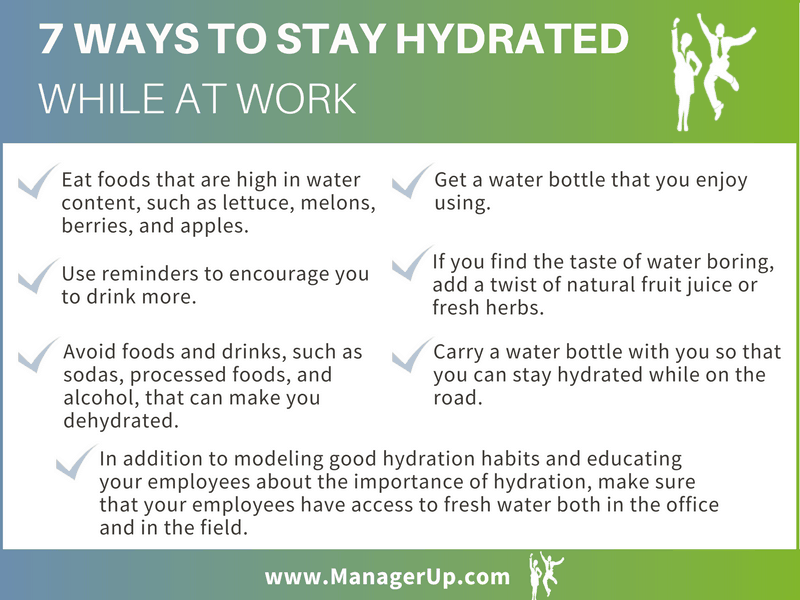
1. Snack on Hydrating Foods

While drinking water is the most effective way to stay hydrated, it is possible to get as much as 20 percent of your daily water needs from the foods that you eat. For example, the lettuce in the salad that you order at lunch is 95 percent water.

Instead of grabbing a snack of chips or cookies from the vending machine, celery, apple wedges, and fresh berries are a healthy and hydrating alternative that you can easily eat at your desk while responding to emails.

2. Use Incentives and Reminders

If you get so engrossed in your work that you forget to go to the water cooler or drink from the bottle sitting next to you on your desk, consider downloading one of the dozens of free apps that will remind you to drink more and help you track your water intake. Even an old-fashioned Post-it note can do the trick. Since the majority of managers and entrepreneurs are somewhat competitive by nature, try creating an incentive that will encourage you to drink more. For example, allow yourself a special treat or purchase if you meet your fluid intake goals for the entire week.

3. Skip Beverages That Can Contribute to Dehydration

Sugary sodas are often easier to find in offices than filtered water. While sodas may seem refreshing and you may crave the jolt of caffeine, they do little to help your hydration. Not only are sodas full of empty calories, but the body requires a significant amount of water to metabolize the sugar, which can actually worsen dehydration.

4. The Right Water Bottle Can Make All the Difference

It is a fact of human nature that if your water bottle is attractive and fun to use that you will be more likely to use it and increase your daily water intake. Look for one that is durable and stainless steel or BPA-free plastic. It should also be easy to disassemble so that you can clean all of the nooks and crannies to prevent the growth of mold and germs. If possible, have a morning and an afternoon water bottle that you mark with time-oriented goals to ensure that you stay on track during the day.

5. Infuse Your Water With Flavor

If your taste buds crave something more than just plain water, consider experimenting with your own infused waters. The idea of infusing water with fruits, vegetables, or herbs is one of the latest trends with designer brands popping up in various high-end grocery stores. Making your own infusions allows you to create your own blends and is much more economical. Some classic combinations include lemon with thyme and pear with fennel.

6. Staying Hydrated When Away From the Office

Staying hydrated at work can be even more of a challenge when you spend time away from the office traveling or in the field. Whenever possible, a super-sized water bottle should be your constant traveling companion. If you know that you are going to be out in the field, set an alarm on your phone to remind you to fill your water bottle so that you will not forget to take it with you.

When traveling by plane, make sure to buy a couple of bottles of water once you get through airport security and pack some hydrating snacks in your carry-on.

LEARN MORE TIPS ABOUT STAYING HEALTHY WHILE TRAVELING AND BOOST  YOUR PRODUCTIVITY AT YOUR DESTINATION!

7. Help Employees Stay Hydrated at Work

As a manager, you should take an active role in educating your employees about the importance of hydration at work. One way that you can do this is by implementing a hydration task force in your workplace that is responsible for ensuring that all employees have access to fresh water. A hydration task force can create educational materials for employees outlining the importance of staying hydrated, and finding fun ways to encourage employees to drink more water.

Do you have tips for helping yourself or your team stay hydrated at work? If so, let us know in the comments below.

Health Over 60…What a Busy Executive Needs to Know

With so much on your plate, basking in the glory of a long and illustrious career, it is seemingly impossible to find any spare time to integrate healthy habits into your busy schedule.

Health over 60 looks quite different than it did when you were in your 40s or 50s. Your body is trying to slow down, but your lifestyle will not allow it. As a senior executive, you’ve got deadlines that will not go away. People are counting on you. There is no time to back down.

This is the moment to race head first toward the finish line of excellent health over 60. Learn what happens to your executive body when you turn 60 and stay at the top of your game.

1. Battle of the Bulge

Your cells and organs are aging. As the metabolism slows, it becomes increasingly difficult to battle the bulge. Muscle mass decreases and bone density declines. But you can reverse these trends.

Your bones, joints, and muscles don’t move with the agility you possessed in your youth. This is why it is critical to keep them strong with resistance training and cardiovascular exercise. Nothing will age you faster than a sedentary lifestyle.

FIND OUT HOW TO BE FIT OVER 60 IF YOU ARE A BUSY EXECUTIVE


2. Bladder Bailout

Men and women in their 60s often experience various urinary issues, including benign prostatic hyperplasia (BPH)interstitial cystitis syndrome and urinary incontinence. Each of these conditions is directly connected to your hormones. Regardless of the severity of your issues, frequent bathroom breaks are a disruption to your day and productivity .

Urinary incontinence, in particular, is quite embarrassing and affects your body image, sexual life, and overall emotional state. Cutting back on coffee can help with this to a degree since it is a known diuretic.


3. Brain Boosters

Memory loss is a common symptom of age, and let’s be honest, you have far too much on your plate to let things slip.

Though you’ve mastered your executive status, you may notice that reasoning skills, overall attentiveness, multitasking, speed of processing new information and reaction time, in general, are negatively affected as you age. In fact, your brain actually shrinks with age, specifically the prefrontal cortex and hippocampus.

Neurogenesis, which is the growth of new brain cells, continues well into your 60s. You’ve heard that if you don’t use it you lose it. The same applies to your mind. Your brain needs exercise just like your body. This far along in your career, it would be easy and tempting to slide in autopilot mode and simply coast through each day. Seek out and take hold of new challenges both in and out of the workplace.

Complete mental puzzles, such as Sudoku or crosswords, to your day to keep your mind sharp.

Take advantage of technology by playing mentally challenging games with friends or even coworkers. Join a local chess club or sign up for language classes. Broaden your horizons by reading books outside of your typical genres of interest.

HAVE A LOOK AT OUR LIST OF BOOKS EXCLUSIVELY SELECTED FOR EXECUTIVES


4. Sensory Shift

Your vision and hearing will most likely suffer during this sixth decade of life. The rate of cellular turnover declines. Health concerns that you’ve never dealt with began to spring up all of the sudden. Consider hearing aids or altering the lighting in your office to boost productivity and maintain your professionalism.

Follow your doctor’s recommendations, and keep current with all prescribed age-appropriate tests for men and women. Inform your doctor of any noticeable changes in your health immediately. Embrace a teamwork mentality as you collaborate with your doctor to develop a plan to get and keep you on the path to your best health over 60.


5. Achy, Breaky Joints

You’ve earned your big office, but sitting for extended periods of time has detrimental effects on your health over 60. Cartilage begins to wear down, you lose lubricating joint fluid and your muscles become weaker and shorter with inactivity.

Keep moving to stave off the aches and pains that plague so many senior executives and get a desk exercise bike or a bike station desk. Practice yoga or Pilates. Add supplementation using collagen, glucosamine, MSM, and chondroitin.

Schedule regular chiropractic care and therapeutic massage, or even better, get an acupressure mat or a full body massager and minimize stress and the pain associated with it after a long day at the office without having to leave your home.

Age is merely a number, just a state of mind. How you think of yourself and perceive your abilities determines how your fare on your journey to great health over 60. Check your executive health and find out your gap to success now!


Share the wisdom you have gained with age and experience by leaving a comment on how you are taking hold of your health over 60.

How to Avoid Jet Lag? An Executive Survival Guide.

You don’t have to dread long-haul flights. Learn how to avoid jet lag.

You’ve spent a weekend preparing for a presentation in front of upper management. Midway through the presentation, after a long-haul flight, your mind begins to wander; you feel exhausted, and you stutter in annoyance as you try to capture your thoughts.

Jumping from time zone to time zone is never easy for business travelers who spend the extent of their weeks trading briefcases for suitcases and offices for airports.

Even if travel isn’t a regular occurrence, a long-haul flight that takes you to another continent for a special work obligation can take its toll.

Excessive sleepiness, insomnia and difficulty concentrating are among the pitfalls you face as a consequence of business travel.

Knowing how to fight jet lag is one of the most important skills you can acquire as an executive.

Because the stress associated with long-haul flights increases significantly for executives who fly more than six times a year, it’s essential for your health, and your company’s, that you discover successful strategies for how to fight jet lag.

Jet Lag: The Worst Side Effect of Business Traveling

Jet lag is a temporary disorder that causes headaches, fatigue, irritability, and insomnia in executives who travel across many time zones in a short period.

Jet lag upsets your body’s natural circadian rhythms, what we often call our “body clock.” It affects executives differently depending on age, stress level and overall health.

Also known as desynchronosis or time zone change syndrome, jet lag creates havoc with your body and causes indigestion, constipation, daytime drowsiness and difficulty with concentration; not exactly the things you want to experience as you’re prepping for a business meeting.

There are other factors that influence jet lag which are, the direction of travel (east or west) and how many time zones are crossed. Managers should consider them while traveling for work.

Find Out How These Factors Influence Jet Lag

How To Avoid Jet Lag

Fortunately, executives can learn how to fight jet lag so that they can reset their internal clock and have a productive trip.

The most efficient way to avoid jet lag is to get exposure to the sun, use melatonin to sleep during the correct hour in the new time zone and time your meals to eat during the correct hours and not when your body thinks its dinnertime. And you can do that before or during the business trip.

The changes to your daily routine can make a huge impact on avoiding jet lag.

Let me show you how to do it.

Beating Jet Lag Before the Business Trip

1. Consider Arriving a Day Ahead

As a successful executive, you know that a less-than-stellar performance can significantly affect your company.

Because flying across multiple time zones affects your ability to think critically, how to fight jet lag includes arriving at your destination early whenever possible.

Yael Klein, managing director of Airplus, says that “although it may be more cost-effective for a staff member to travel very early in the morning to make a 9 a.m. meeting, it might be more conducive for them to travel the evening before and stay the night in a hotel, as it may enable them to perform better on the day of their meeting.”

2. Do Not Start Your Trip With a Sleep Deficit

Ensure that you get a good night’s rest in the days before flying. Eat a healthy diet, hydrate, and exercise.

By maintaining good habits leading up to a flight, it will greatly reduce the chances of jet lag and allow your body to adapt to the new time zone faster than normal.

3. Start Adapting Your Sleep Patterns a Few Days Prior

For extreme time zone changes, slowly start adapting sleep patterns to your destination a few days before your trip.

For an eastward trip go to bed and wake up a couple of hours earlier than your normal schedule and for a westward trip go to bed and wake up a couple of hours later.

This helps your body anticipate and match a change in time zones. If needed try using melatonin pills to adjust your sleep habits before travel.

Another option is to adjust the timing of your meals. Normal days revolve around breakfast, lunch, and dinner so changing when your mealtimes are to that of your upcoming destination can help alleviate jet lag.

Beating Jet Lag During the Business Trip

1. Get Some Sun

When you travel across time zones, you get out of sync with the rising and setting of the sun.

Research suggests that spending 15 to 20 minutes in the sun, without sunglasses, as soon as you can after landing is a simple, effective way how to fight jet lag.

Since light affects how much melatonin your body produces, soaking up some sun before heading to your hotel or business meeting will help your body adapt its internal body clock to the new time zone.

 2. Take Melatonin Supplements

Melatonin is a hormone produced by your body that helps regulate your sleep-wake cycles; it’s also available in pill form as a supplement. This hormone can help you get the sleep you need to bring you’re A-game to the business at hand.

To adjust your sleep schedule, you must consider the direction of travel. If you are flying east, then you must phase advance your biological clock. Meaning that bedtime is going to come sooner than it would in your normal time zone. On the other hand, when flying west, you must phase delay your biological clock.

In these instances, melatonin pills can help you avoid jet lag by assisting you to sleep when you need to according to what time zone you are in.

It’s important to consider when you take the melatonin; if it’s taken too early in the day, rather than helping you adjust to a new time zone, it can cause sleepiness and delay your body’s ability to adapt.

If you are new to using melatonin, we recommend starting with 3mg, to not cause drowsiness and allow your body to adjust to using it.

For your body to use it correctly it is suggested to take melatonin after dark. Experts say take it on the day you travel and a few days after you arrive to allow your body to adjust to the new time zone.

Get More Information About How To Take Melatonin

 3. Adapt Your Timing Meals at Your New Destination

Eating is one of the zeitgebers for your body. By modifying your eating times it can help you to avoid jet lag.

For example, say you leave London at 8:30 am on a 10hour 30min flight to Dallas. It’s an important work trip to solve a legal problem with a new technological product. When you’re on the plane, you don’t eat breakfast or lunch according to London time but instead, eat your meals according to Dallas time.

Once you arrive in Dallas, your body will adjust easier since you still have to eat dinner at a reasonable time, as opposed to eating dinner on the plane in line with London time. You won’t feel as though you need to go to bed soon after but instead will be ready to tackle your work meeting and then have dinner before bed.

Planning mealtimes are an important way to avoid jet lag but, so is the type of food you eat.

Make sure to stay completely hydrated and drink plenty of water. Stay away from high fat and sugary food while gravitating towards low carbohydrate and fresh fruits and vegetables.

Don’t know what healthy snacks to eat?

Have a Look at Our Post With 50 Health Travel Snacks for Business Trips!

4. Fasting With No Food at all for About 16 hours

Research shows that if you don’t eat for 16 hours, you’ll adjust much quicker to the new time zone. If you do have to eat, stick with a lighter meal such as a salad or fruit and vegetables.

Avoid eating for at least two hours before your flight and fast for at least 16 hours in total.

Conclude your fast with breakfast (or lunch/dinner) at your new destinations.

This tactic is easier when you have previous experience with fasting, however, some executives find it impossible to renounce the business class meals.

Other Tips Apart from Sun, Melatonin and Timing Meals

5. Avoid Alcohol During Your Business Trip

By the time you’ve dealt with traffic on the way to the airport, checked in your luggage and navigated airport security checkpoints, you may be tempted to head for the airline lounge for a bit of liquid refreshment. Be careful with what you choose.

Avoid alcohol at any time during your business trip, including during the flight.

According to the Natural Sleep Foundation, alcohol may interrupt your circadian rhythm by affecting levels of chemicals that tell your body when it is time to sleep or wake up.

Jet lag is bad enough. Drinking on a plane and the effect it has on a body makes the situation worse.

Find Out Why

6. Keep Caffeine at a Minimum

Similar to alcohol, caffeine dehydrates your body; because it is a stimulant, it causes problems with your ability to sleep.

Dehydration and interrupted sleep patterns both aggravate the symptoms of jet lag and prolong your recovery time, something you can’t afford when conducting business.

Along with interrupted sleep, caffeine can cause stress and perpetuate anxiety. Avoid stress and jet lag by nixing the caffeine.

To be honest, caffeine can help combat jet lag if you’re groggy and need a pick me up to get your juices flowing. This is a good option once you’ve landed at your destination.

But avoid caffeine during your flight and after 4 pm the rest of the days. If you sip a latte at 4 pm, half of the caffeine will still be in your system at 10 pm which will continue to mess up your circadian rhythm.

7. Get Some Exercise

Exercise is generally more helpful when you’re traveling so that you exert more energy and can continue a steady workflow. While it has a little direct impact on your internal clock, it can increase the length and quality of your sleep during the adjustment period.

It is always helpful to exercise while traveling, but it is especially helpful when traveling west. In this instance, only exercise in the evenings to block the production of melatonin and delay sleepiness.

Research shows that outdoor exercise specifically, can hasten synchronization to a new time zone and help you avoid jet lag.

If you’re short on time or need some inspiration, try one of our quick travel workouts!

The Best 30-Minute Workout for a Successful Business Trip

8. Protect Your Sleep

Use a comfortable 3D eye mask to help you sleep well and avoid jet lag, among other benefits.  This mask improves disrupted circadian rhythm.

The 3D shape of this mask allows you to open your eyes freely and enjoy the darkness, no light will go through the mask allowing complete blockage of any distractions that may disturb your sleep.

Earplugs and neck pillows are also essential to avoid noise and find some comfort while sleeping on an airplane.

Avoid eating heavy meals at night to not disrupt your sleep.

Use natural remedies to induce sleep such as herbs, lavender spray, warm showers or sleepy time tea.

Learn More Ideas of Natural Sleep Aids Now!

Other Ideas to Help You Avoid Jet Lag

While the following tips won’t fight jet lag, they will give you a healthy means to overcome it and help improve your performance at your destination.

1. Drink Loads of Water

Mild dehydration is common when traveling by air and can enhance the symptoms of jet lag. To prevent this, drink plenty of fluids before, during, and after your flight.

2. Do Stretches Every Hour During Your Flight

Lack of exercise not only makes a long flight uncomfortable, but it also sets you up for an extended period of jet lag.

Sitting in one position for so long leads to swelling in your legs and feet; sometimes the swelling is so severe that you can’t wear your regular dress shoes for that all-important presentation.

Knowing how to fight jet lag includes recognizing the importance of doing arm and leg stretches in your seat during your flight. Get up and walk the aisles every so often; take a stroll on layovers and stopovers, and avoid mobile walkways.

As an executive in today’s corporate world, business travel is a necessary part of your job. By learning how to fight jet lag, you’ll be alert, productive and able to optimize your performance once you arrive.

Do you have other strategies on how to fight jet lag? If so, we’re eager to hear your comments!

Health over 50. What Successful Business Executives Need to Know

As a busy executive, you are constantly on the go, both physically and mentally, but something is different. Once you hit 50, the changes that you had previously heard of and hopefully prepared for are no longer on the horizon. They have arrived.

For better or worse, these changes affect both your mind and your body. Here’s a look at what to expect during this banner decade. Take heart, it’s not all bad. You are in the driver’s seat when it comes to achieving your best health over 50.

health over 50

1. Major Changes Ahead

Signs of aging include positive notes, such as gaining wisdom and life experience. Negative age-related changes for busy executives are most often seen as the skeletal system breaks down, muscle mass decreases, vision and hearing loss occur, the metabolism slows and the immune system weakens. The organs and systems of the body decline at a greater rate as you enter your 50s.

Your heart slows down and weakens with age. The arteries become stiffer, putting you at higher risk for cardiopulmonary disease. Blood flow, muscle mass, organ function and the immune system all experience decline. Your heart is working hard around the clock to keep you going. Fast food lunches and a sedentary lifestyle are not doing your ticker any favors.

2. Nodding Off

In a business setting, a body that is slowing down can result in severe consequences, including reduced productivity. And while it is never easy to admit that you can’t do what you once did when you first joined the executive world, it is vital to be aware of the ensuing changes and inevitable transformations as you enter a new realm of health over 50.

When you aren’t getting enough quality rest, cognitive function declines. This applies to both the mind and body. Quantity and quality of sleep suffer if not properly addressed during this phase of life. Sleep might not seem like an integral part of being a top performer in the executive realm. But the reality is that getting quality sleep is essential to proper cognitive function, disease prevention and increase your overall energy and productivity levels.

If you feel that you don’t have time to sleep, you will end up losing countless hours of productivity to exhaustion, illness, and lack of mental clarity instead. Logging adequate hours of sleep (at least six to seven hours per night) and sleeping well are essential to maintaining great health over 50.

Here you have some tips:

– Leave work at work, and let your home be the place you relax and unwind.

– Dim the lights and cool the temperature about an hour before your intended bedtime. Use a sleep mask to wake up energized and refreshed.

– The office emails can wait; eliminate screen time from phones, tablets, TVs and other backlit devices at least two hours before you plan to sleep.

– Diffuse relaxing essential oils, such as lavender, to signal the body that it is time to unwind.

3. Inconveniently Embarrassing

Men are likely to battle erectile dysfunction, which can be paralyzing beyond the bedroom. Women can feel the effects of menopause, including hot flashes, stress, nausea and weight gain. Urinary incontinence is a pervasive problem for older executives regardless of gender. Yet, many busy executives fail to heed these realities and never make the appropriate changes to their lifestyle. Denying the existence of the issues only makes them worse. 

4. Cluttered Schedule Equals Cluttered Mind

In your 50s, keeping a schedule that is jam-packed from morning to evening with stressful activities can lead to serious health problems and mental as well as physical fatigue.

Here you have some tips:

– Cut out those working lunches and take time for yourself during your lunch break.

– Leave time between meetings for reflection and stress-relieving techniques or exercise. Start unplugging to get more things done now!

– Make sure that you are keeping a pace that will keep you from burnout and away from the hospital.

– Build relaxing times of enjoyable activities or hobbies into your schedule.

Conclusion:

No matter where you are on your journey to better health over 50, you will no doubt notice changes in your body as you age. Some might be barely perceptible while others may seem quite dramatic. The rate at which these changes occur as well as the damage they inflict is due in part to hormonal changes as well as genetics.

However, you can take an active role in determining how you will look and feel as you enter your 50s. Just because you have a family history of diabetes or heart disease does not mean that your fate is sealed. Step up, own your health over 50.

Feel free to ask questions or leave comments to encourage others on their journey to achieving their best health over 50.

The Best Natural Foods That Fight Stress

Do you know why it is important for you to eat foods that fight stress? The reason is simple. If there is one thing that is common in all executives; then, it’s stress.

You can blame the rising stress levels on your hectic schedule, hard-hitting deadlines, lack of leisure time, sedentary habits, and of course, an unbalanced diet.

Being under stress all the time can make you prone to several health problems and diabetes, hypertension, heart attacks, and cancer are just a few of them!

According to the American Psychology Association, nearly 40 percent of Americans report overeating as a result of stress. This only means your risk of obesity too is increased when you are constantly under stress.

Don’t you think it’s important to take steps to avoid mental stress and its consequences on your physical health? If yes, read on to find the best natural foods that fight stress in a safe and effective manner.

Executive Summary:

foods that fight stress

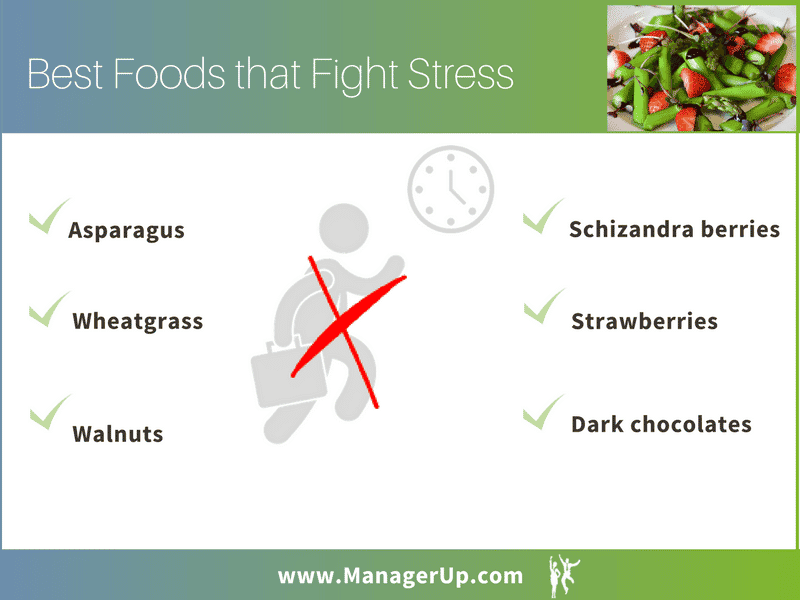
1. Asparagus

foods that fight stress

According to a study published by NCBI, asparagus is one of the best foods that fight stress. It is high in folate. This nutrient can keep your mind cool. It can soothe the nerves and help you avoid the effects of stress on your mind and body.

That’s not all! It also possesses natural antidepressant properties. So, if you ever feel depressed over a failed presentation, simply increase your intake of Asparagus. It will help you to avoid depression so that you can bounce back with a better presentation.

If you are getting too stressed, you need a bit of extra help. The muse brain headband, encourage changes in the brain with a natural relaxation response.

2. Wheatgrass

foods that fight stress

Wheatgrass is one of the best foods to fight stress, thanks to the high amount of vitamin K and magnesium in it. It can stabilize the hormonal balance in your nervous system and improve your moods.

A study published in Pharmacognosy Research has concluded that Wheatgrass has a unique ability to prevent stress-induced depression and its manifestations such as chronic fatigue syndrome. It can prevent fluctuating moods and reduce your risk of stress, and anxiety disorders.

It is a powerful adaptogenic food, which means it can help you to deal with stressful situations such as meeting targets, managing difficult clients, and balancing personal commitments with ease.

To consume, blend fresh wheatgrass to prepare juice and store it. You can add a small amount of it to water or fresh fruit juice. You can also add it to a smoothie.

3. Walnuts

foods that fight stress

If you have a line-up of meetings in succession for a day, we advise you to keep your pockets filled with a handful of walnuts. We understand how stressful it can be to juggle between 2 different projects, with 2 different clients, and their varied expectations.

research conducted to evaluate the effects of eating walnuts on the moods of young people showed that it could balance the moods effectively.

Eating just a few walnuts before the presentations will keep you from feeling stressed out.

Eating these foods that fight stress can also lower your blood pressure, and help you overcome the heat of the moment when the client’s demands exceed what you have prepared for.  It will keep your anxiety in check and gear you to meet the challenge.

Being anxious about your job responsibilities can reduce your confidence. Learn how to deal with anxiety by reading our post and reducing its effects on your efficiency.

foods that fight stress

Strawberries are the fruits we loved to eat during our childhood. Just the sight of these tiny heart-shaped, red fruits could improve our mood. Perhaps on our way to adulthood, we lost our innocence in finding pleasure in small things and started chasing bigger dreams!

But, now is the time to find the most pleasure. Strawberries can help you fight stress, not just with their attractive appearance.

They also act as an adaptogen and improve the body’s ability to adapt to stressful situations. The high amount of antioxidants in strawberries can even help to reduce the production of stress hormones called cortisol and relieve stress.

5. Schizandra Berries

Foods that fight stress

Research by the scientists at the Department of Pharmaceutical Sciences and Technology, India, to evaluate the medicinal powers of schizandra have shown encouraging results. Schizandra is another alternative for you if you love berries. It possesses powerful adaptogenic and antidepressant properties.

You can pack a few berries while leaving for your office every day. You can munch on them at any time as and when you like. These berries are very low in calories. So, you need not to worry about putting on weight.

Munching on these foods that fight stress will release a few bioactive compounds that will act on your nervous system and keep the cortisol levels low.

These berries can also prevent imbalance in the levels of neurotransmitters in the brain and help you fight stress.

So, do remember to include schizandra berries in your lunchbox and use it as a shield against stress whenever faced with a hard decision-making situation.

6. Dark Chocolate

foods that fight stress

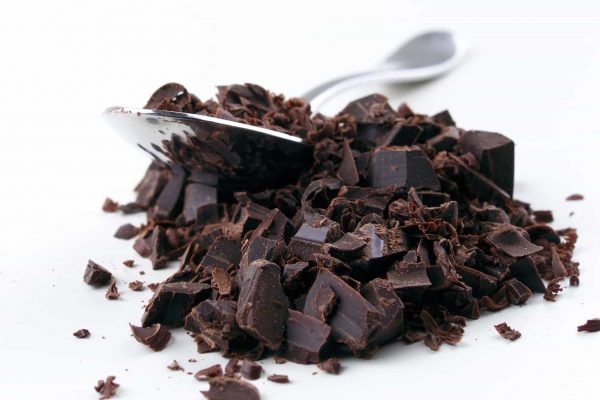
Clinical studies by the Journal of Proteome Research have proved the stress-reducing properties of chocolates. Dark chocolates are high in calories, especially the carbs. Hence, you need to be a bit careful with this and avoid going overboard with eating them.

Reserve a piece of dark chocolate as your emergency aid to fight stress.

The stress-busting properties of chocolate coupled with its high carbohydrate content will pep-up your energy levels and help you feel calm and relaxed.

Conclusion

All of these foods can help you overcome the effects of stress on your life. Including the foods that fight stress in your regular diet will improve your mental health, which, in turn, will have a positive impact on your productivity at the workplace. A happy and stress-free mind will also improve your personal relations and help you achieve a perfect work-life balance.

If you are finding it difficult to fight stress and are suffering from its effects on your productivity, physical health, or personal relations check out our stress management books for executives and entrepreneurs and find your peace.

stress management books
And don’t hesitate to share your stories with us in a comment!

The Best Stress Relief Toys for Busy Executives

Every manager or executive is familiar with the feeling of being so frustrated that they risk losing their composure and venting to a co-worker in a manner that would be counterproductive and inappropriate in a professional environment. You can only spend so much time away from your desk attempting to cool off, and traditional stress balls fail to stimulate the mind and maintain interest.

We have compiled a list of unique stress relief toys that will melt away your tension and frustration while entertaining, challenging, and stimulating your brain.

The following are our favorite stress relief toys that are both entertaining and attractive enough to display on your desk.


1. Cubebot

https://ws-na.amazon-adsystem.com/widgets/q?_encoding=UTF8&MarketPlace=US&ASIN=B00AKELEJM&ServiceVersion=20070822&ID=AsinImage&WS=1&Format=_SL250_&tag=healthymanage-20

This combination puzzle, action figure, and toy robot is made of natural wood and elastic bands that enable you to transform the toy into dozens of shapes and poses. The design takes its inspiration from Japanese Shinto Kumi-ki puzzles.

Transforming the toy into new and creative poses not only sparks the imagination, but it can also provide a moment of light-hearted fun when tensions start to run high at the office.


2. Magnetic Sculpture Toys

https://ws-na.amazon-adsystem.com/widgets/q?_encoding=UTF8&MarketPlace=US&ASIN=B074P6BVDN&ServiceVersion=20070822&ID=AsinImage&WS=1&Format=_SL250_&tag=healthymanage-20

One of the hottest stress relief toys on the market, magnetic sculpture toys allow you to transform a collection of metal ball bearings or cubes into anything that your imagination can conceive.

Transforming the toy into various shapes can also sharpen your hand/eye coordination and may even improve cognition and creativity.

Mr. Pen offers a functional desk toy with a hundred paper clips in a variety of colors that keeps the paper clips altogether and helps you relieve stress.

If you are looking for advice to break down stress in the office, we recommend you to read one of these stress management books and start your stress-free living now!

3. Desk-sized Sand Garden

https://ws-na.amazon-adsystem.com/widgets/q?_encoding=UTF8&MarketPlace=US&ASIN=B00005OUHD&ServiceVersion=20070822&ID=AsinImage&WS=1&Format=_SL250_&tag=healthymanage-20

Miniature sand gardens are designed to encourage meditation and relaxation in the same manner as a traditional Japanese meditation garden.

Most sand gardens come with rakes and brooms that you can use to create intricate patterns in the sand. Toysmith offers a version that measures 9 inches by 9 inches and comes with stones and ceramic cranes for visual interest as well as a meditation booklet.

IF YOU FEEL ANXIOUS, ADJUST THE STONES AND SMOOTH OUT THE SAND!


4. Cast Metal Brain Teasers

https://ws-na.amazon-adsystem.com/widgets/q?_encoding=UTF8&MarketPlace=US&ASIN=B0038BAHI8&ServiceVersion=20070822&ID=AsinImage&WS=1&Format=_SL250_&tag=healthymanage-20

Essentially 3-D jigsaw puzzles, cast metal brain teasers challenge you to separate the various components and then reassemble them back into their original shape.

Not only will these puzzles serve as a welcome distraction from the stress of work, but they also hone your hand/eye coordination and problem-solving skills.

Brain teaser stress relief toys are available in varying degrees of difficulty to ensure that you stay challenged.


5. Sand Art Pictures

https://ws-na.amazon-adsystem.com/widgets/q?_encoding=UTF8&MarketPlace=US&ASIN=B002YP3NNK&ServiceVersion=20070822&ID=AsinImage&WS=1&Format=_SL250_&tag=healthymanage-20

Sand art pictures simulate the gentle undulations of sand dunes caused by the wind. The toy creates a new picture each time you move it as the sand shifts to create new mountains and valleys.

Not only is the movement of the sand hypnotic, but sand art pictures also have a way of transporting you from the chaos of the office to the tranquility of the beach.


6. Perplexus Epic

https://ws-na.amazon-adsystem.com/widgets/q?_encoding=UTF8&MarketPlace=US&ASIN=B004H1V5RU&ServiceVersion=20070822&ID=AsinImage&WS=1&Format=_SL250_&tag=healthymanage-20

This classic desk toy challenges you to guide a small ball through an elaborate 3-D labyrinth toward a finish line. This model by Perplexus features 22 feet of track along with 125 barriers to keep you on your toes.

In addition to reducing stress, the puzzle will help improve motor skills, dexterity, hand/eye coordination, and spatial reasoning.


7. Nap Pillow

travel pillow


A short nap during your lunch break will not only help reduce stress, but you will be less likely to fall asleep during those long afternoon meetings.

To ensure that you do not wake up from your nap with a stiff neck, look for an inflatable nap pillow that provides the proper neck support. Inflatable pillows are also handy for those long airplane trips.

HAVE A DESK REST NOW!


8. Pin Art

https://ws-na.amazon-adsystem.com/widgets/q?_encoding=UTF8&MarketPlace=US&ASIN=B00MEIPKXS&ServiceVersion=20070822&ID=AsinImage&WS=1&Format=_SL250_&tag=healthymanage-20

This classic desk toy allows you to create 3-D impressions of virtually anything. Unleash your inner artist and imagination to create one-of-a-kind pin sculptures. The toy also serves as a great office conversation starter.


9. Newton’s Cradle

https://ws-na.amazon-adsystem.com/widgets/q?_encoding=UTF8&MarketPlace=US&ASIN=B071Z8HKTX&ServiceVersion=20070822&ID=AsinImage&WS=1&Format=_SL250_&tag=healthymanage-20

Perhaps the ultimate stress relief toy, Newton’s cradle is a device that demonstrates its namesake’s laws regarding conservation of momentum and energy. The toy consists of a series of metal balls suspended in a frame and has been a mainstay on executive desks since the 1970s.

When the ball on one end is lifted and released, its energy is transferred through the middle stationary spheres to push the end sphere upward.


10. Sports Toys

https://ws-na.amazon-adsystem.com/widgets/q?_encoding=UTF8&MarketPlace=US&ASIN=B001I912SQ&ServiceVersion=20070822&ID=AsinImage&WS=1&Format=_SL250_&tag=healthymanage-20

If sports are your favorite method of releasing pent-up frustration, consider adding sport-themed stress relief toys to your office.

miniature putting greenbasketball hoop, or even a desktop dart set can provide a welcome midday diversion. They may even help spark some healthy competition among your co-workers.

ADD SPORT-THEMED STRESS RELIEF TOYS TO YOUR OFFICE NOW!


Interested in working stress-free?  Check out our Books which are exclusively selected for executives who are looking for a calmer lifestyle.

stress management books

What are your favorite executive stress relief toys? Let us know in the comments below.

Health Over 40…What a Busy Executive Needs to Know

Maybe your colleagues made “over the hill” jokes at your 40th birthday party, and while you plastered on a smile, pretending to enjoy the laughs at your expense, you started to wonder if you’d already reached the pinnacle of your success. Truth be told, real aging starts at age 35, but the changes do not manifest themselves until after age 40. Your 40s usher in a period when the risk for a multitude of health conditions increases.

Fear not, friend; this is not the end.

You are at a crossroads, facing a critical decision: will you hold on and merely survive or will you thrive as a business executive, embracing your good health over 40? Simple changes will alter the way you function in your job, boosting your performance and sharpening your mental skills.

The choice is yours. Will you take charge of your health after 40?

1. Changes Ahead

Hormonal fluctuations coupled with genetics set your body up for some gradual but significant changes in your forties. These shifts can affect your performance as an executive. You might notice that you do not have the unlimited energy of your youth. Afternoons used to mean entering meetings in your power suit; now all you want after lunch is a power nap.


2. The Metabolic Crawl

Not to be confused with a hip dance move, the metabolic crawl is when your metabolism slows down. It does so by roughly two percent each decade, which means that health over 40 can seem like an uphill battle.

If you don’t address your slowing metabolism, it might eventually betray you, crawling along, burning the bare minimum to get you through your day.

Your metabolism affects your energy levels, which in turn correlate to your job performance. And you guessed it: a sedentary desk job makes it even harder to fight this slump.

Here are some metabolic booster tips:

– Commit to not sit for more than 30 minutes at a time.

– Set a timer on your phone if needed to remind you to stroll around the office and get the blood flowing.

– Take the stairs instead of the elevator.

– Park farther away from your office.


3. Lean Strength

Lean muscle mass decreases by about a pound each year. Muscle burns more calories than fat and is necessary for supporting your joints and posture, which is critical to support good health over 40.

Inactive muscles are prone to injury from everyday activities, such as lifting, bending and twisting.

Try to integrate strength training into your weekly schedule especially if you sit at your desk for extended periods of time.

11 IDEAS TO GET STARTED AND BE MORE ACTIVE IN THE OFFICE 


4. The Density Drop

Overall bone density drops by one percent each year, which could mean trouble for the future of your career. Osteoporosis may result in severe injuries that could prevent you from working and this can compromise your health. Your executive status might equal success in your career, but a sedentary lifestyle will result in the demise of your health.

Tight hips and lower back problems can cause pain that could decrease your productivity and can have you at the chiropractor more times than you’ll be at your desk.


5. Drive Dive

Libido diminishes during times of stress. And trouble at home will eventually manifest itself at the office. Take time for your most intimate relationships in order to safeguard your sexual and emotional health over 40.

GET SOME POWERFUL STRATEGIES TO BOOST YOUR SEX LIFE! 


6. A Mess of Stress

You might not be able to perceive elevated levels of stress, but as a busy executive, you are always on. Decisions and deadlines don’t bend at your convenience. High-stress levels lead to excess cortisol production. It produces belly fat and can increase the risk of depression.

Health over 40 is a multi-faceted issue that must be addressed from all directions. The time to act is now. CLICK TO TWEET


7. Medical Musts

The following exams should be on your calendar and given as much priority as the most important business meeting of the year.

– Eye exam every two to four years

– Blood pressure levels every two years

– Thyroid levels every five years

– Skin examination every year

– Blood glucose every three years after the age of 45

– Pap smear and pelvic exam every one to three years

– Mammogram every one to two years after the age of 45

– Prostate exam

– Testosterone levels

This list includes only the basic, bare minimum panel of tests.

Individual testing needs may vary depending on your unique family history. Some tests are gender specific. Consult your doctor during your yearly physical, and follow his or her recommendations. An hour with your doctor could amount to years of added productivity and enjoyment in your life.

12 IMPORTANT HEALTH TESTS FOR EVERY FEMALE EXECUTIVE

MEN’S HEALTH CHECK-UP. THIS IS WHAT MEN SHOULD KNOW


Conclusion:

A change in priorities could be all it takes to get you back on your game and feeling better than ever. Take a moment to stop the pace of your frantic executive life, and focus on your health over 40. Start your journey now; you don’t have a moment to lose.

Your health over 40 is in your hands. Now is the time to set yourself up with good sustainable habits. CLICK TO TWEET

Take time to assess, prepare and move forward into your best possible self with excellent health over 40.

YOUR BODY IS YOUR BIGGEST ASSET. FIND OUT HOW TO BE FIT OVER 40 


Leave a comment describing the steps you’ve taken to reclaim your health over 40.

Expert Advice On Eating Healthy While Traveling

If you are a middle or upper-level manager, sales executive, or a corporate trainer, frequent business travel is probably a part of your life. While the travel may provide a welcome change of scenery, eating healthy while traveling also poses significant challenges if you are trying to maintain a healthy diet and lifestyle.

From high-calorie snacks and fast-food restaurants at the airport to the inevitable snack spread in the meeting room and the expense account dinners with clients, healthy eating when traveling can seem almost impossible.

The best way to eating healthy while traveling is to create a game plan ahead of time just as you do when preparing for an important meeting.

The following are our favorite tips for eating healthy while traveling you can follow the next time you hit the road for work.

General Tips to Eat Healthy  on a Business Trip:

1. Bring Your Own Snacks

When you travel for business, you never know when you might encounter an unexpected delay at the airport or a meeting that suddenly goes into overtime. The best way eating healthy while traveling is to plan ahead. Therefore, pack your own healthy travel-friendly snacks in your purse or carry-on.

Healthy Snacks to Pack When Traveling:

Individual packs of pretzels, nuts, and dried fruit travel well, take up little room in your purse or carry-on, and won’t make a huge mess if you try to eat them on the plane or in your rental car.

HEALTHY TRAVEL SNACK IDEAS FOR YOUR NEXT BUSINESS TRIP

2. Choose Fresh Instead of Processed or Pre-packaged at the Airport

If you find yourself starving during an airport layover, try to steer clear of the ubiquitous airport chain restaurants. They typically have a scaled down version of their normal menu and tend to offer very few healthy items. Whenever possible, look for fresh options. Fruit, veggie cups, and yogurt are much lower in fat, calories, and sodium. You may be able to find a few healthy items, such as granola bars and packets of trail mix, at the airport gift shop or newsstand kiosk.

Healthy Food Options at Airports:

If you do have to resort to airport staples, such as Au Bon Pain, Panda Express, McDonald’s, or Starbucks, look for broth based soups and customizable salads and sandwiches. These options will keep the damage to a minimum and help you meet the purpose of eating healthy while traveling.

3. Choose a Healthy Breakfast

If you know your day ahead is going to be a hectic one with several meetings planned, you need to have a breakfast that is filling for your stomach.

You surely would not like your attention to be diverted to hunger pangs in the middle of the meeting. Also, the chances that you will get enough time between two meetings to have some healthy snacks are going to be less.

A Breakfast Idea for Business Trips:

For eating healthy while traveling, it’s advisable to eat a breakfast that can keep you full for longer. Oatmeal can is a great choice for your breakfast in such cases.

A research study published in the Journal of American College of Nutrition has shown that oatmeal contains a high amount of fibers.

This can create a sense of satiety and prevent hunger pangs for a longer duration.

GET MORE IDEAS ABOUT WHAT TO EAT IN THE MORNING TO START YOUR BUSINESS DAY RIGHT

4. Avoid the Pastries and Muffins Served at Meetings

Even a relatively small, healthy-sounding muffin can contain hundreds of calories and minimal nutritional value. They are also loaded with refined sugar and carbohydrates that will have you crashing by mid-morning.

Healthy Eating Strategies for Meetings:

Try to eat a sensible breakfast before a morning meeting so that you will be less tempted to reach for a muffin or doughnut during the mid-morning break. If that is not possible, throw a piece of fruit or a granola bar into your purse or briefcase that you can eat during a quick break.

GET MORE TIPS FOR HEALTHY EATING AT WORK MEETINGS NOW!

5. Keep things healthy and simple at group meals

Most business travelers would probably admit that their favorite part of traveling for work is being able to enjoy a nice meal on the company dime. Unfortunately, you are likely to wind up at a restaurant with a menu featuring super-sized entrees that are smothered in sauces, gravy, or cheese that can leave you feeling bloated and sluggish for the rest of your trip.

At such instances, you need to make wise choices to ensure your platter consists of healthier options.

Healthy Options While Traveling:

Instead of opting for foods that contain a high amount of fats or carbs, you can stick to simple and healthy options.

You can begin with eating salads to satisfy the hunger pangs. And once you feel adequately satiated, you can move on to the main course. Choose foods that are steamed, grilled, and poached. Also, skip heavy sauces and gravies as they contain a lot of hidden calories. This will minimize your calorie intake and also allow you to stick to eating healthy while traveling.

6. Choose the Right Restaurant at Your Destination

Go online to locate restaurants near where you will be staying and look over their menus ahead of time. Not only will you be able to offer a healthy dining option when your group is trying to decide where to go for dinner, but you will also be able to formulate a game plan for ordering.

Dinning Tips While Traveling:

Look for simple menu items that are baked, broiled, poached, or roasted. Also ask for any dressings or sauces to be served on the side. You can also keep portion sizes in check by combining appetizers or ala carte items to create your own meal.

7. Avoid Fatty Foods For dinners To Sleep Well

Adjusting your body’s sleep-wake cycle based on the new time zone can be difficult for managers who have to travel frequently. However, making the right choice of food for your dinner can help you sleep well.

What to Eat and What Not to Eat at Night:

You must avoid a heavy meal that contains a high amount of fatty foods for dinner. A study published in the Advanced Biomedical Research has proven that a fatty meal can worsen indigestion.

The symptoms of indigestion such as abdominal pain, and nausea can keep you awake.

You can, instead, opt for eating healthy while traveling by including foods that are easily digestible in your dinner. You can eat porridge, sandwiches prepared from Brown bread, fresh fruits and yogurts.

8. Keep Your Alcohol Intake in Moderation During the Business Trip

The last thing that you need while trying to power through an early morning sales presentation is the lingering effects of the previous night’s happy hour. Not only will a few too many drinks at dinner or the hotel bar leave you feeling fuzzy headed the next morning, but most alcoholic drinks are loaded with sugar and calories.

Healthy Choices for Happy Hour:

It is possible to enjoy unwinding with co-workers after a long day of meetings while also eating healthy while traveling. Choose low-calorie drink options, such as wine spritzers or a drinks on the rocks with club soda. It is also a good idea to drink a full glass of water in between each alcoholic drink to keep consumption in check.

Eating Healthy on the Plane:

1. Eat According To Your New Time Zone

The best way to eating healthy while traveling is to adjust your body’s internal clock according to the time zone of the destination country. Your body’s internal clock determines your sleep-wake cycle as well as meal times.

Once you are in the plane, you can set your watch to the time zone of the destination. You can have your meals to suit the time of the travel destination. Starting the same in the flight itself will allow your body to adjust to the meal times of the new zone much faster.

For instance, if you are traveling from New York to London and board the flight at about 5 PM, skip the dinner in the plane. The dinner served at about 6 PM in the fight based on the New York time zone will correspond to 1 am in London!

You can, instead, wait for the flight to land in London in the morning where you can have your breakfast. It will train your body to adjust to the new time zone faster.

2. Fasting

You can also try fasting to adapt your body’s internal clock to the new time zone. If you need to cross more than 5 time zones, you can fast for at least 16 hours during your traveling.

You can start your meals with a filling breakfast at your destination. This will allow you to adapt to the new time zone so that you can stick to eating healthy while traveling.

3. Limit Caffeine Intake

Your sleep-wake cycle is bound to get affected during your travel to a different time zone. Research published in the Science Translational Medicine has shown that caffeine can influence the human circadian timing.

Drinking a cup of coffee before your habitual bedtime can induce 40 minutes of phase delay of your circadian melatonin rhythm. Also, if you drink coffee at a time close to the nighttime at your destination, you may not be able to sleep well when you arrive.

An excessive consumption of coffee can also have a negative impact on the purpose of your business trip as well as your desire for eating healthy while traveling. A research published in Health Psychology has indicated that caffeine consumed while under occupational stress such as during a business travel, can worsen the cumulative stress response.

FIND OUT WHY CAFFEINE ENHANCES YOUR STRESS RESPONSES

4. Drink Water to Avoid Dehydration

The risk of dehydration is higher during air travel. All aircraft have an air circulation system to remove the carbon dioxide released by all the passengers while breathing.

At the same time, the air circulation system also takes in breathable air containing oxygen from the atmosphere outside the plane.

However, aircraft fly at a height of more than 35000 feet from the earth’s surface. At this height, the air tends to be extremely dry with hardly 10 to 20% of humidity.

Breathing in a dry air can reduce the moisture in your body while traveling and thus, cause dehydration.

Effects of dehydration on your business:

 If the dehydration is not addressed by drinking plenty of water during the flight, you may feel uncomfortable during the meetings you have to attend after arrival.

Dehydration can also increase your risk of indigestion and constipation during business travel. This can reduce your work productivity and keep you from attaining the purpose of business travel.

Research published in The Nutrients has shown that dehydration can affect your moods adversely and make you irritable. These symptoms can pose a risk of you creating a negative impression on the client.

Keeping yourself well-hydrated is essential while traveling.

5. Avoid alcohol on the plane

Alcohol can be highly disruptive for your sleep-wake cycle and prevent you from eating healthy while traveling. This is specifically important when you have a meeting to attend within a few hours of landing.

Research published in Substance Abuse has shown that alcohol may make you drowsy only for a short duration. However, the later effect of alcohol on your nervous system will result in the stimulation of your senses that will keep you awake. Consuming alcohol while on a flight can prevent you from getting any sleep.

Also, not getting enough sleep while on the flight may keep you drowsy later once the flight lands at the destination.

That’s not all. Consuming alcohol can also increase dehydration during the flight and dampen your daytime energy. This will make you feel exhausted and prevent you from putting your best views forward during meetings.

Thus, alcohol can lower your productivity and focus during the meetings scheduled for the day.  And this is definitely not what you would like to happen during your travel for a business purpose. That is why; managers should avoid alcohol during a flight.

GET MORE INFORMATION ABOUT HOW YOUR BODY REACTS TO ALCOHOL ON YOUR BUSINESS TRIP

What are your favorite strategies for eating healthy while traveling? Let us know in the comments below.