Experience Better And Peaceful Sleep With Mindfulness Meditation

Do you often wake up feeling tired, like you haven’t slept enough? It’s a common issue that many people experience, feeling groggy and finding it hard to start their day. The key to feeling rested isn’t just about the hours of sleep you get, but the quality of sleep. This can be particularly challenging for managers and executives.

Think about trying to lead a big meeting or make tough choices when all you can think about is sleep. A survey showed that 43% of leaders don’t get enough sleep. Stress, a busy mind, unpredictable work hours, and the pressure of making decisions can make it hard for leaders to sleep well. This lack of sleep can be very harmful to their health, happiness, and how well they do at work.

You may practice mindfulness in your daily routine to turn chaos into calmness, but have you ever tried it for sleep? Yes, it’s possible and you can too experience better and more peaceful sleep with mindfulness meditation. Read on to learn how mindfulness meditation can quiet your busy mind, release those nagging thoughts, and pave the way for a deep and rejuvenating sleep.

Poor Sleep Can Sabotage Your Success

Not getting enough sleep is not good, especially for managers and bosses. When you don’t sleep well, it’s harder to think clearly, you might feel grumpy, and your health can suffer. This can make you less productive at work, lead to bad decisions, and cause problems with people, both at the office and at home. Over time, not getting enough sleep can really hurt your career and personal life, so it’s important to find ways to sleep better.

Executives often have trouble sleeping in three ways:

  1. Trouble falling asleep: Stress and a busy mind make it hard to relax and fall asleep.
  2. Not sleeping deeply: Physical tension and a racing mind prevent deep, restful sleep.
  3. Waking up at night: Unusual work hours and the stress of decision-making disrupt sleep.

These problems make executives tired in the morning, and less productive, and can lead to health issues over time. Let’s find out how you can get quality sleep with mindfulness meditation. 

Sleep With Mindfulness Meditation

Mindfulness Meditation For Easily Falling Asleep

Sleep With Mindfulness Meditation
Click on the image to see a full infographic (opens in new tab)
  1. Focus on Your Breath: If falling asleep is hard, try focusing on your breath. Take slow, deep breaths and notice how the air feels as you breathe in and out. This simple practice helps calm your mind and body, preparing you for sleep. It also lowers stress and anxiety, which often makes it hard to fall asleep.
  2. Count Your Breaths: If your mind is racing, try counting your breaths. Slowly count each inhale and exhale as one cycle, up to ten. Then, start again. This helps to calm a busy mind and allows your body to relax, making it easier to fall asleep.
  3. Imagine Calming Scenes: If counting breaths isn’t enough, try visualizing a calming scene. Imagine yourself in a peaceful place, like a quiet beach or a serene forest. Engage all your senses – picture the sights, sounds, smells, and feelings associated with that place. This helps to distract your mind from stressful thoughts and creates a relaxed mental state that prepares you for sleep.
  4. Positive Imagery: If anxiety about the future is keeping you awake, try visualizing positive outcomes for upcoming events. This replaces anxiety with a feeling of calm and confidence, helping you relax and drift off to sleep.
Sleep With Mindfulness Meditation

Mindfulness Meditation For Sleeping Deeply

Sleep With Mindfulness Meditation
Click on the image to see a full infographic (opens in new tab)
  1. Progressive Muscle Relaxation: If physical tension is keeping you awake, try progressive muscle relaxation. Start at your toes and slowly work your way up your body. Tense each muscle group for a few seconds, then release and relax. This helps to release built-up tension throughout your body, making it easier to fall into a deep and restful sleep.
  2. Attention to Sensations: If you find yourself getting restless, try focusing on your body’s sensations. Pay attention to different parts of your body and notice any feelings or sensations you experience. Don’t try to change them, just observe. This heightened body awareness can help you release tension, and prevent discomfort and restlessness during sleep.
  3. Review Your Day: Spending a few minutes reflecting on the day’s events without judgment can help clear your mind and signal to your body that it’s time to wind down. This practice reduces the mental clutter that can keep you awake at night​.
  4. Gratitude Practice: Think of three things you are grateful for each day. This shifts focus away from stress and towards positive aspects of life, promoting a peaceful mindset before sleep. This can create a positive emotional state that is conducive to restful sleep. 
Sleep With Mindfulness Meditation

Mindfulness Meditation To Prevent Waking Up at Night

Sleep With Mindfulness Meditation
Click on the image to see a full infographic (opens in new tab)
  1. Digital Detox: If you find yourself waking up at night, consider a digital detox. Avoid screens, like phones and computers, at least an hour before bed. This reduces exposure to blue light, which can disrupt the production of melatonin, a hormone that helps regulate sleep. By limiting screen time before bed, you can help your body’s natural sleep-wake cycle, making it easier to fall asleep and stay asleep throughout the night.
  2. Mindful Reading or Journaling: If racing thoughts keep you from sleeping through the night, try mindful reading or journaling. Spending some time reading a calming book or writing down your thoughts can help your mind transition from the day’s activities to a more restful state. These activities can become a soothing ritual that signals to your body that it’s time to sleep.
  3. Regular Bedtime Routine: If you find yourself waking up during the night, try establishing a regular bedtime routine. Going to bed and waking up at the same time each day helps regulate your body’s internal clock. This consistent schedule can reduce the chances of you waking up in the middle of the night and improve your overall sleep quality.
  4. Create a Sleep-Conducive Environment: Ensure your sleeping environment is dark, quiet, and cool. Using blackout curtains, earplugs, or white noise machines can help create an optimal sleep environment, reducing the chances of waking up during the night.

Final Thoughts

Quality sleep is crucial for managers and executives to be at their best. If you struggle with falling asleep, staying asleep, or waking up feeling tired, mindfulness meditation can make a real difference.

The techniques we discussed above can help you fall asleep faster and sleep more deeply. Creating a relaxing bedtime routine, limiting screen time before bed, and sticking to a consistent sleep schedule can also improve your sleep quality.

By incorporating these mindfulness practices into your life, you can wake up feeling refreshed, energized, and ready to take on your day. Give them a try tonight and see how much better you feel! If you found these tips helpful, pass them along to colleagues and friends who might also need better sleep.

Time to flex your brainpower! Answer these quiz questions to see what you’ve absorbed.

0

Sleep With Mindfulness Meditation

Test how well you know about practicing mindfulness to get a quality sleep.

1 / 10

What is a common issue for many people that affects their sleep quality?

2 / 10

What is the first technique mentioned for falling asleep more easily?

3 / 10

How can counting your breaths help with sleep?

4 / 10

What is progressive muscle relaxation?

5 / 10

Why should you avoid screens before bed?

6 / 10

How can mindful journaling help improve sleep?

7 / 10

What is the purpose of a regular bedtime routine?

8 / 10

What is one benefit of practicing gratitude before bed?

9 / 10

How does a sleep-conducive environment help with sleep quality?

10 / 10

What is the effect of mindful breathing on sleep?

Your score is

The average score is 0%

0%

Sleeping at work: How a quick nap makes us more efficient

In the fast-paced and demanding business world, where productivity and performance are paramount, unconventional practices are often met with skepticism. However, recent research has brought attention to an approach that may seem counterintuitive at first glance but holds immense potential for enhancing employee well-being and organizational productivity: napping at work. 

While traditionally seen as a sign of laziness or unprofessionalism, studies have begun to uncover the numerous benefits of strategic workplace napping.

As an executive, you understand the critical role that employee performance and engagement play in driving business success. It is intriguing to consider that allowing and encouraging employees to take short power naps during the workday can significantly boost productivity, creativity, and overall job satisfaction. 

Research has shown that brief, controlled periods of sleep can help combat the adverse effects of fatigue, improve cognitive functioning, and enhance problem-solving abilities. In fact, studies have revealed that employees who engage in workplace napping demonstrate higher levels of alertness, concentration, and innovative thinking, which directly translate into improved performance and decision-making.

Moreover, fostering a napping-friendly environment can have far-reaching effects on employee well-being. Sleep deprivation and chronic fatigue have become prevalent challenges in today’s work culture, leading to increased stress levels, burnout, and decreased job satisfaction. By embracing the notion of workplace napping, executives can address these issues head-on, promoting a healthier work-life balance and creating a supportive atmosphere that values employees’ physical and mental well-being.

Power naps: The benefits of recharging the brain

An overly stressful environment can be counterproductive, leading to decreased efficiency, burnout, and health issues. Napping at work is a surprisingly simple and effective way to mitigate these issues. Taking a short, mid-day nap has been shown to boost cognitive function, improve mood, and increase productivity.

The concept of a “power nap” has gained traction over the years as an easy and efficient way to recharge your brain during the day. It’s about understanding our body’s needs and rhythm and using them to our advantage to maximize efficiency.

Organizations can cultivate a more energized, focused, and ultimately productive workforce by championing a progressive approach that acknowledges the significance of rest and recovery. Embracing workplace napping as a viable strategy demonstrates a commitment to employee wellbeing. It represents a proactive step towards optimizing performance and achieving sustainable success in today’s competitive business landscape.

It’s more than just a cultural thing

Recent research has shed light on the prevalence and impact of sleeping at work globally. A comprehensive study across multiple countries revealed that approximately 20% of employees admit to sleeping at work at least once a week. The research collected data from various industries, including offices, factories, and service sectors. 

Surprisingly, the study found that the highest rates of on-the-job sleep occurred in countries known for their stringent work cultures, such as Japan and South Korea, where around 30% of workers reported napping during work hours.

These findings have significant implications for both employees and employers. While some may assume that sleeping on the job indicates laziness or lack of commitment, researchers suggest that it could indicate more significant systemic issues, such as long working hours and sleep deprivation. 

In fact, the study found a strong correlation between the frequency of sleeping at work and the number of hours employees worked per week. Moreover, it was observed that individuals who engaged in workplace napping reported higher levels of job satisfaction and productivity when compared to those who did not. 

These insights highlight the importance of recognizing the role of sleep in employee well-being and productivity, urging organizations to consider implementing policies and practices that prioritize rest and work-life balance.

Understanding sleep: How the brain functions and why naps are beneficial

Understanding why naps are beneficial requires a brief understanding of how the brain functions. The brain has two primary states of sleep: Rapid Eye Movement (REM) sleep and non-REM sleep. REM sleep is the stage where dreaming often occurs and is believed to play a role in learning and memory processing. Non-REM sleep is a deeper sleep state that is restorative and helps with physical recovery.

A short nap of 20-30 minutes primarily contains non-REM sleep and can provide significant benefits. This type of nap, often called a “power nap,” can help increase alertness, improve mood, and enhance cognitive performance.

More extended naps that include REM sleep can contribute to creative problem-solving and improved memory. However, they also risk causing sleep inertia or grogginess upon waking.

The science of sleep

Sleep science has made it clear: quality rest is vital for our bodies and brains to function optimally. It allows our brains to consolidate memory, clean out toxins, process emotions, and restore its energy supply. 

Inadequate sleep can lead to poor concentration, impaired memory, decreased mood, and even adverse health consequences over time.

How much sleep do we need a day?

The amount of sleep needed can vary based on age, lifestyle, and overall health. However, the National Sleep Foundation recommends that adults aim for 7-9 hours of sleep per night. 

Despite this, many people fall short of this goal due to work, family obligations, or lifestyle choices.

Can we catch up on missed sleep?

Sleep debt, or the accumulation of insufficient sleep, is a common problem in our modern society. The idea of “catching up” on sleep over the weekend is common, but it’s not that simple.

While extra-long sleep can help reduce short-term sleepiness, it doesn’t fully address chronic sleep deprivation’s cognitive deficits and potential health impacts. Moreover, a fluctuating sleep schedule can disrupt your body’s natural circadian rhythm, leading to poorer quality sleep in the long run.

That’s where napping comes in. A nap during the day can help supplement short nighttime sleep, especially when improving alertness and cognitive function. However, it’s important to remember that naps do not replace a good night’s sleep. They are a tool to enhance performance and well-being, not a solution to chronic sleep deprivation.

Which companies are implementing napping at work?

Progressive companies across the globe have recognized the benefits of napping at work. They are incorporating this practice into their culture.

Renowned for its forward-thinking employee benefits, Google offers “nap pods” for their staff, recognizing that a quick nap can refresh and energize their employees.

NASA has long acknowledged the benefits of napping, especially for astronauts who often work in demanding and irregular schedules. Their research has shown that a 26-minute nap can boost performance by 34% and alertness by 54%.

Even traditional industries are embracing the nap-at-work culture. Insurance giant, Aetna introduced a wellness program that encourages employees to track their sleep and rewards them for getting seven or more hours of sleep per night.

How to nap at work

Napping at work can be beneficial if done strategically and in a manner that aligns with workplace norms. Here are some key considerations and guidelines to ensure a productive and effective nap during work hours.

Firstly, find an appropriate and comfortable space for your nap. Ideally, look for a quiet and dimly lit area where you can relax without disturbances. If your workplace has designated nap rooms or quiet areas, make use of those. If not, consider utilizing a break room, unused conference room, or even your own vehicle if it provides a suitable environment.

Secondly, be mindful of the duration of your nap. Aim for a power nap of around 10 to 20 minutes, as this timeframe has been found to provide the most rejuvenating effects without causing grogginess upon waking. Setting an alarm or using a sleep-tracking app can help you stay within the desired timeframe and avoid oversleeping. Remember, the goal is to refresh your mind and enhance productivity, not to enter a deep sleep cycle.

Additionally, it is important to communicate and seek approval from your supervisor or HR department before incorporating napping into your work routine. Openly discuss the potential benefits and present a well-thought-out plan that includes your nap’s designated space, timing, and duration. Address any concerns and assure them that you intend to optimize your performance and contribute to a healthier and more productive work environment.

By following these guidelines and engaging in open communication, you can integrate napping into your work routine responsibly and effectively, reaping the benefits of increased alertness, improved cognitive function, and enhanced job performance.

Optimizing nap time

There’s an art to napping effectively. Here are a few tips for getting the most out of your power nap:

Timing: The ideal nap length to boost alertness and cognitive performance is about 20-30 minutes. This duration is short enough to stay in the lighter stages of non-REM sleep, making it easier to wake up feeling refreshed rather than groggy.

Environment: Make sure your environment is comfortable and conducive to sleep. This could mean a quiet, dark room, a comfortable chair, or even a special nap pod if your workplace provides one.

Consistency: Try to nap at the same time each day to maintain a consistent sleep schedule. Early to mid-afternoon is typically the best time for a nap, as it aligns with a natural dip in our circadian rhythm.

Conclusion

Napping at work is more than just a passing trend; it’s a scientifically-backed practice that can improve productivity, mood, and cognitive function. As we move into a new era of work, it’s essential to recognize and prioritize the role of rest and rejuvenation in fostering a healthy, efficient, and satisfied workforce.

Although naps aren’t a substitute for a solid night’s sleep, they are an effective tool in our arsenal for combating fatigue, boosting alertness, and enhancing performance. So, next time you’re feeling that mid-afternoon slump, consider a quick power nap – your brain will thank you.

Incorporating napping into office culture successfully is not just about having the resources like nap pods or quiet rooms; it’s also about fostering a workplace environment that values and prioritizes employee wellbeing. As more and more companies follow suit, we may witness a seismic shift in attitudes towards rest and rejuvenation at work, where a quick nap is no longer a guilty pleasure but an essential part of a productive day.

The Real Reason Why You Are Struggling to Sleep at Night

Do you toss (and turn) for hours at night and perhaps can’t sleep until the wee hours of the morning?

Or you fall asleep as soon as your head hits the pillow but keep waking up throughout the night?

Well, you’re not alone. A lot of folks don’t get enough sleep and feel the negative consequences every day.

See, you can’t focus at work, have foul mood, feeling worn out, you’re throwing tantrums at every juncture, can’t learn anything new,… In short, your days feel like hell.

Now, what you don’t know is that the cause of all these troubles is the artificial blue light that’s in your beloved devices like your office computer and LED lights.

Shocked?

Well, stress may affect your sleep, but it’s not the only cause. Read on to understand the connection between blue light and sleep and how you can reclaim your sleep.

 Yes, stress may affect your sleep, but it’s not the only case. Find out why. CLICK TO TWEET 

1. Stress May Affect Your Sleep

Many of us at first think that its stress that’s causing our sleep to turn its back on us.

And conventional wisdom says so.

Indeed, according to the fabled American Institute of Stress, a staggering 80% of workers rate their jobs as stressing.

If you ask me, this is not at all surprising, considering the nature of work today.

For example, as an executive, your job’s taxing demands and worries including fearing that you could lose your job result in immense stress.

And, yes, study after study have shown that stress might cost you your sleep.

Having said that, we react to stress differently.

For instance, I personally have had no problems sleeping despite being in stressful positions my entire career- until in recent years.

This got me thinking especially since I didn’t notice any major changes in my reactions to stress.

That’s how I realized that indeed, something was happening in my life…

Guess what?

My continued exposure to artificial blue light had finally caught up with me- and was ruining my sleep.

Here is why.

2. Why Is Blue Light of Digital Devices Ruining Your Sleep? (And Not Stress)

Your sleep loss might not be linked to stress in anyway.

Instead, the monster that may be depriving you of your sleep is blue light.

Before we get deeper, blue light is simply the ‘unhealthy’ light that’s in your smartphone, tablet, TV, LED bulbs, etc.

It looks white, but it’s not and it’s terrible for our sleep.

Read More About What Blue Light Is

Since you now understand it better, let’s look at why I am insisting that you need to blame this light spectrum (not stress) for your sleep woes.

2. a) Studies Say That Blue Light Disrupts Your Sleep

According to a study by Harvard University scholars, blue light suppresses your brain’s ability to release melatonin– the sleep-inducing hormone- more powerfully than green light (the other hue that suppresses melatonin).

It also shifts our circadian system or internal clock by 3 hours, which is twice as long as green light (1.5 hours).

US National library of medicine also found that chronically exposing yourself to electrical lighting late in the evening interferes hampers melatonin onset and could potentially impact your sleep.

It’s worth noting that modern-day LED bulbs and fluorescent bulbs use artificial blue light.

Moving on, additional studies have suggested that encountering blue light late in the evening distorts the production of sleep-inducing brain waves later at night.

To make matters worse, it enhances the brain wavelengths associated with mental coordination, an action which makes you become more alert.

That explains why you sometimes suddenly arouse from your sleep feeling super alert (and subsequently take hours before falling asleep again)!

2. b) Executives Spend Most of the Workday Staring at Digital Devices

Your work requires that you constantly gaze at computer screens, iPads, iPhones and similar devices.

Of course, you have an LED TV (at work /home) besides other electronic gadgets like hand-held gaming consoles and LED digital clocks.

As a matter of fact, 90% of Americans often use technology in the hours before bedtime!

We also often carry work home (and continue using our laptops), checking and replying to work-emails, or even chatting with our teams.

In a nutshell, you’re constantly surrounded by harmful artificial blue light and its spoiling your sleep.

2. c) Many Executives Don’t Experience Stress Every Single Day at Work

Although many executives experience stress at work, they don’t experience stress every single day at work. However, they are exposed to blue light for long hours every single day.

Our jobs are not all gloom and there are days you experience joyous moments. For instance, you celebrate after landing a new big client or getting a promotion.

Does that mean that you’ll also sleep like a baby on such days?

Mostly not.

Chances are, you may as yet face long sleepless nights because you’re still suffering from the consequences of exposure to the shorter wavelengths from artificial blue light.

Bottom-line? As long as you are subjecting yourself to the detrimental blue light, forget about enjoying a good night’s sleep even when you’re in high spirits.

2. d) Blue Light Negative Effects on Sleep Are Silent

You see, you can easily tell whether you’re distressed.

That’s because stress symptoms such as feeling nervous, tense, anxious, and increased irritability are more conspicuous.

Unfortunately, this is not the case with blue light.

In fact, there is no known scientific method of testing whether your shut-eye difficulties are as a result of blue light.

To cut a long story short, blue light is a silent destroyer.

As you can see, all the factors I have mentioned strongly suggest that the real-trigger of your sleep tribulations isn’t necessarily stress.

It’s, rather, the hard-to-detect blue light.

Luckily, all is not lost, as you will see next.

3. Good News: You Can Still Reclaim Your Sleep!

While our eyes are pretty good at preventing other dangerous lights like UV rays from injuring us, their natural biological setup makes them helpless against blue light.

As a result, these type of light rays effortlessly pierce through and reaches the eye’s light-sensitive retina.

The retina then converts the blue light into neural form and forwards them to our brains for visual recognition,  sparking off confusion in our melatonin release timetable.

This is how our sleep issues start.

And so you have to take some precautions to help your eyes lower the harm arising from your continued contact with blue light.

Try the following:

3. a) Unplug From Tech Once Home

Looking at bright screens before bedtime baffles your circadian system (and messes up your natural melatonin release schedule).

To be safe, keep off the TV, computers, tablets, smartphones, and all such devices beginning at least two-three hours to bedtime.

3. b) Use Computer Glasses

We also advise you to wear approved computer glasses (with yellow-tinted or orange lenses) when at work.

These block the rays from penetrating (and wreaking havoc) in your eye and have already been proven to be effective.

For example, one University of Toronto research report concluded that you tend to emit more melatonin when wearing approved computer glasses than when you don’t during night shifts.

These glasses are usually available from your neighboring hardware store or from internet shops for a few bucks.

Combat Blue Light and Sleep Like a Baby!

4. Other Tips to Avoid the Negative Effects of Blue Light on Sleep

The surest way to rediscover your former undisturbed sleep pattern would be to totally stop using any artificial lights rich in the short wave “blue”.

But that’s like daydreaming if you carefully look at our modern lifestyles.

Nevertheless, there are quite several alternative practical ways that could help you.

Let me briefly take you through them:

4. a) Maximize Daylight Exposure

You can permanently fix your sleep struggles by exposing yourself to natural bright light during your day time hours.

A study team at the sleep health journal writes that this helps to calibrate your body’s circadian clock.

Creating time to bask in the morning before you get down to the days business is essentially a win-win since sunlight is also wonderful in easing workplace stress.

But sometimes we spend long hours in our offices making it impossible for you to access direct sunlight.

There is also the question of what you should do during winters.

Well, this is where a therapy lamp comes in.

By simulating natural sunlight,  these lamps help you make up for your sunlight deficiencies and could reinstate your biological balance.

4.b) Take Melatonin Supplements

The role of melatonin is to tell your body when its time to sleep. But with blue light exposure, your brain experiences subdued levels of this crucial hormone.

Consequently, you might have to cover this gap to sleep well.

Now, one of the best ways to cancel out this deficit is to consume melatonin supplements.

These supplements have been very beneficial even for busy managers suffering from stress symptoms.

Read on About How to Use Melatonin for Sleep

4. c) Tweak Your Lighting

Firelight contains the ‘safe’ yellow and red wavelengths and can save you.

You simply ask your technician to reconfigure your lighting system at home to mimic the firelight.

You can as well install dim red light bulbs at home seeing that studies suggest that they are less disruptive on our circadian pattern. This will keep your blue lights contact to a minimum after work and can promote good sleep.

Furthermore, you can procure smart home lighting solutions which set lights to either turn off at a specific time or gradually, to aid your body’s natural sleep/wake cycle.

Lastly, keep your rooms dark, as much as you can, and your regular bedroom pitch black.

You can achieve this, for example, by not leaving lamps on and getting blackout blinds to diminish outside light.

4. d) Use Anti-Reflective (AR) Lenses

These are lenses which have an additional antireflective (or anti-reflection) coating applied to help minimize the impact of stray lights like blue light on our visual systems.

The AR coating eliminates reflections making your eyeglass lenses appear nearly invisible enabling your colleagues to see your facial gestures more clearly. Moreover, the anti-reflective layer reduces glare so you see well even when driving from work at night.

Over and above that, these also beat back blue light from practically the entire environment, including your TV.


4. e) Use a Blue Light Filter

Technology makers are finally waking up to the reality that blue light could be bad for business as awareness about the trauma exposure to blue light causes skyrockets.

From Windows 10, Apple iOS, macOS, Android, and even Amazon’s Fire tablets, all the dominant operating systems come with a built-in blue light filtering option.

All you need is to activate it in your digital device.

Check for the instructions on the device’s website in case you are facing problems.

What if your gadget doesn’t have the filter?

Well, don’t panic. Simply use the myriad blue light wavelength obstructing tools as you will see next.

5. Specific Tools (Software) To Avoid Blue Light

For your computer (mostly those using order operating systems), download Flux.

It won’t cost you a penny and will adapt your PC’s screen to the actual time of day and then change its hue at sunset thereby becoming easier on your eyes.

And I love that the app is easy to install whether on Windows, Mac, or Linux.

If you’re on Android, Twilight should serve you as greatly as Flux.

It actually gives you more controls over the intensity and hue not to mention that you can set it to be coming on and going off every sunrise/sunset.

Away from software, you may choose to buy a suitable screen protector.

These again wage war on blue light at all times from your screen.

When it comes to deciding the very best, I suggest that you read the reviews left by others online to single out the most ideal screen protector brand.

Recap

That’s the end of our epic blue light and sleep discussion.

And as we have seen, since blue light is all around us, the best you can do is to take the protective measures we have highlighted.

In summary, unplug from tech after work, wear reinforced computer glasses, and also activate blue light filters in your gadgets (or download a functional app).

By the same token, put yourself out there in the sun whenever possible and take melatonin supplements.

Also, don’t forget the other helpful recommendations, like installing a screen protector.

This way, you will sleep the whole night and reap all the benefits of a good night’s sleep the following day at work.

Can’t Fall Asleep? 18 Bad Sleeping Habits To Kill

Tossing and turning all night, ruminating about tomorrow’s big presentation? Running your mind over and over again about how to complete your deadlines on time? Sometimes, it’s hard to shut off your mind to fall asleep, and coupled with bad sleeping habits, it can become nearly impossible.

Getting less sleep and inefficiency in the workplace go hand-in-hand. If you want to continue to be an executive at the top of your game, you’ll need to kiss your bad sleeping habits goodbye.

A proven link exists that shows a lack of a good night’s sleep creates unproductivity in the workplace. You can read more about sleep deprivation effects on workplace performance, and keep reading here to stop those bad sleeping habits that are doing you in so you can fall asleep.

 Get Rid of These 18 Bad Sleeping Habits and Definitely Get a Good Night’s Sleep. CLICK TO TWEET 

Bad Sleeping Habits to Avoid

Along with stress, there are some things you’re likely doing that are preventing you from getting a good night’s sleep. Read on to find out what they are so you can begin to form good sleeping habits and bring your A-game to work every day.


1. Exposure to Blue Light at Night

Burning the midnight oil isn’t helping, especially if you’re on your laptop, tablet, or smartphone until you go to bed. Blue light which you’re exposed to with your electronic devices keeps your brain alert. It takes your brain a few hours to wind down from that.

You should keep away from your electronic gadgets two to three hours before lights out to get a good night’s sleep.

According to an article published by Harvard, all lights suppress your release of melatonin, the hormone your body produces naturally to help you sleep. Blue light is more powerful though.

Harvard conducted a study that compared the effects of how 6.5 hours of blue light exposure versus green light exposure at the same brightness boded for participants. It showed that blue light suppressed melatonin two times longer than green light.

2. Watching Late-Night Television (Especially in Bed)

Another big blue light emitter is your television. If you want to fall asleep, you’ll have to break this bad sleeping habit fast. When you watch TV in bed late at night, it has the opposite effect you desire. Instead of making you sleepy, it energizes you.

With a TV in the bedroom, you will ruin your sex life too. That’s more reason to save TV time for earlier in the evening when you’re still in your living room.

3. Using Your Phone as Your Wake-up Device

Many people rely on their smartphones to wake them in the morning. And thus, the cycle of being tethered to our phones continues from the moment we rise. Likely though before bed, you’re probably checking to make sure your alarm is set, and then scrolling through messages and emails. Before you even realize it, you’ve spent another 10 to 20 minutes idly playing with your phone.

Just shut it off and use an alarm clock. Worried about a random power outage that would cause you to miss getting up on time? Invest in one that has a battery backup.

When you stop relying on your phone to wake you, you’ll have an easier time turning it off and tuning into a good night’s sleep.

4. Setting Your Alarm Clock Close to Your Bed

After getting that alarm clock set up, the next bad sleeping habit you likely have is keeping it right next to your bed. If you wake in the middle of the night and can’t fall asleep, having the clock right there can be a distraction. Likely when you wake, you may look at the time. You’ll shut your eyes and try to sleep, toss and turn, and then look at the time again.

Counting down how many hours you have left before you get up only creates more anxiety and makes it that much more difficult to fall back asleep.

Plus, having it too close can make it too easy for you to hit the snooze button when you need to get up and conquer your workday on time.

If you have trouble falling asleep or falling back asleep if you’ve woken up in the middle of the night due to stress, we can help you.

7 Ways to Sleep Better Even If Your Stress Is Eating You Alive

5. Working Before Bedtime

Some people take work home with them because they think they’ll get a jump on the next day. Let it wait. A good night’s sleep is more important because it allows you to refresh your mind and clear the stress away. You’ll be a better executive for it.

When you take work home and plug away at it until you turn out the lights, falling asleep becomes next to impossible because all those worries from your day coupled with that blue light will keep you up all night.

6. Working in Bed

Even worse than working before bedtime is working in your bed! Your brain gets the message that the bedroom is a place for work rather than sleep. If you’ve done it once, no need to fret, but don’t do it ever again. The more you keep up this bad sleeping habit, the more your brain forms this association, making it more focused and alert when presented with these stimulus and keeping you awake.

Your bedroom should be the place you reserve for relaxation and sleep.

If you have kept up this bad sleeping habit, retrain your brain by turning your bedroom into a center of calm. Don’t make lists for work or schedule your day out in bed either. Put everything work-related away and focus on yourself so you can fall asleep.

In time, you’ll find this makes you much more productive when you’re at the office.

7. Taking Long Naps During the Day

The lifestyle of an executive is certainly exhausting. Naps are a fantastic way to restore and replenish in the middle of the day. Research shows they benefit executives and result in greater productivity.

This doesn’t mean you can go to sleep for an hour or more though.

The ideal time-frame for your afternoon nap should be no more than 20 minutes.

To sleep any longer puts you in a deeper state which is harder to wake from and harder to get back into gear from too. Long naps will disrupt your sleep pattern at night too, so make sure to keep that nap short.

8. Keeping Odd Sleeping Hours Due to Your Job

Sleep routines aren’t just for small children. Hard-working executives need them too in order to get a good night’s sleep. If you attend a dinner meeting on Monday night and don’t get to bed until midnight, then go to bed at 9 pm on Tuesday, 11 pm on Wednesday, and then at 2 am on Thursday while preparing for a trip, you’re disrupting your sleep pattern, making it hard for you to fall asleep.

Surely some exceptions can’t be avoided such as travel times that must be accommodated. For everything else though, stick to getting in bed at the same time every night, so you get a good night’s sleep.

9. Sleeping Late on the Weekends

Some executives are fastidious about going to sleep at the same hour every day of the work week. And then on the weekends, they stay up late, perhaps going out to grab drinks with friends until 2 am on a Saturday night. Doing this can result in a condition known as social jetlag. This video on social jet lag will help you understand how you’re doing more harm than good.

Going to bed late on the weekends constantly resets your body’s clock to a different cycle. It’s basically like having jet lag every single Monday morning when you get up for work and is a bad sleeping habit you need to get rid of fast to fall asleep.

10. Taking Stimulants Before Bedtime

Whether you love coffee, chocolate, or are a regular smoker, taking in stimulants in these forms, especially 6 hours before bedtime (yes, 6 hours!), can keep you up at night and prevent that good night’s sleep.

A prominent study showed that caffeine takes up to 6 hours to wear off, a serious impediment to falling asleep.

Nicotine also causes sleep disturbances, particularly with sleep-related respiratory disorders. As chocolate also contains caffeine, it can keep you up at night, so stay away from your hidden chocolate stash!

11. Drink Alcohol Before Bedtime

The National Institute of Health found that drinking alcohol just prior to bedtime decreases how much time you spend in REM sleep. REM is that stage of deep and restorative phase that you need for a good night’s sleep. It’s the stage you want to avoid during that short afternoon nap, but the one you need at night.

Avoid drinking or at least limit it significantly during your company’s off-site events, sales meetings, or dinners with clients.

Reach out for non-alcoholic alternatives instead.


12. Being Uncomfortable in Bed

For executives, it’s tempting after a long day at the office followed by even longer dinner meetings to just climb right into bed without changing your clothes or removing makeup.

Take the few extra minutes to properly ready yourself for bed. Put on sleeping attire. Wash your face and moisturize it. Brush your teeth. And if you wear contacts, take them out, or you may increase your chances of waking up with an eye infection.

13. Having a Sedentary Lifestyle

According to Rodney Dishman, a researcher at the University of Georgia, “Staying active won’t cure your sleep complaints, but it will reduce the odds of them.” His research showed that adding exercise during the day adds 45 minutes of extra sleep each night.

Other studies show that it’s not just the duration of sleep time either. It also makes for better quality sleep.

14. Intense Workouts Late in the Evening

With that exercise though, it’s important to get it into your day early on.

If you want a good night’s sleep, that exercise shouldn’t be performed too late in the day, or it will interfere with your sleep.

That’s because it speeds up your metabolism. Studies confirm this stimulatory effect from exercise. It also makes you more alert and releases adrenaline. Hit the gym or the jogging trail early to avoid being kept awake.

15. Staying All Day in the Office Without Experiencing Daylight

You might think it’s healthy to avoid the sun, but your body needs daily sun exposure in a protected way. Getting in the habit of wearing sunscreen protects from dangerous UVA and UVB rays. When you stay long hours in the office and don’t get enough sun exposure, it can ruin your chance of getting a good night’s sleep. ç

Bad sleeping habits like this were exposed in a new study that found low amounts of daylight exposure for executives led to poor sleep, activity, and overall quality of life.

Get out there in the sun for a little bit, or put a therapy lamp in your office.

Light exposure in the workplace improves your sleep and vitality which will, in turn, improve your work performance.

Rebalance Your Sleep Cycle With Light Therapy Now!

16. Eating Unhealthy Food or Large Meals at Night

Good nutrition is always important for your best health. It can also affect your ability to have a good night’s sleep.

One of those bad sleeping habits you might have is eating large, heavy meals before bed. If you’re eating lots of refined carbs before bed and your meals are more like big feasts, you should change your eating habits.

Ideally, you should eat dinner earlier. Avoid eating 2 to 3 hours before you go to sleep.

Large meals before bed kick your metabolism into gear, and that affects your ability to fall asleep and stay that way. Plus, it’s uncomfortable to lie down with a full belly. Late-night eating not only impedes the release of melatonin and HGH but studies additionally showed it causes problems with obesity that will lead to other health issues.

17. Trying to Force Sleep

If you can’t fall asleep, don’t stay in bed staring at the ceiling.

If you can’t fall asleep within 15 minutes, get out of bed and try something relaxing.

In dimmed lighting, sit in another room and read a book unrelated to work. Listen to relaxing music or try a yoga sequence for sleep. After a relaxing activity, get back to bed, and it should be much easier to get a good night’s sleep.

Discover more sleeping tips to help you fall asleep fast.

20 Simple (Yes, Simple) Sleeping Tips that Will You Make Sleep Like a Baby.

18. Having Too Warm of a Bedroom

Your body sleeps better at colder temperatures. Ideally, the best setting is anywhere from 60 to 67 degrees Fahrenheit. Therefore, open your window before bedtime to let some fresh, cold air in or blast the air conditioning, so your bedroom is cold when you sleep.

What’s your trick for getting a good night’s sleep? Tell us in the comments!


7 Ways to Sleep Better Even If Your Stress Is Eating You Alive

Do you wish to find out ways to sleep better? Are you often tossing and turning in bed at night not able to fall asleep? Or awake in the middle of the night with racing thoughts? And what is actually keeping you up in the dark? Do you replay the stressful parts of your day? Are you anxious about the strategic project you are responsible for or about meeting the deadlines or about the growth prospects of your company?

Perhaps, the thought about an upcoming meeting with your boss is paralyzing you or you are panicking about tomorrow’s important presentation.

In those moments the only thing you want is to calm down, stop being worried and fall asleep! You know that sleep deprivation will make you tired and less productive the next day…Do you know that your sleepless nights could be avoided? Do you know that there are many ways to sleep better?

If you have trouble falling asleep or falling back asleep if you’ve woken up in the middle of the night due to stress, we can help you.

In this post, we will discuss what to do when you can’t sleep at night. Get a good night’s sleep so you can wake up feeling ready to take on the day.

There are many ways to sleep better. Keep reading for seven easy strategies to help you sleep at night! You just have to decide what strategy is best for you!

 If you suffer from sleeplessness due to stress at work, just decide which one of these strategies is best for you to sleep better at night. CLICK TO TWEET  

 Strategy 1: Use Relaxation Techniques

One of the best ways to sleep better at night is to use relaxation techniques. These techniques allow your body and mind to progressively relax which in turn allows you to fall asleep.

According to an article by the Institute for Quality and Efficiency in Health Care, relaxation techniques reduce physical tension and interrupt the thought processes that can affect sleep. The goal is to stay out of your head by stopping the thoughts and worries long enough to fall asleep. If you need it, write down your worries and postpone worrying and brainstorming until the next morning.

These techniques will not only help you fall asleep initially but will also help you fall back asleep if you’ve woken up in the middle of the night.

1. Deep Breathing Method

Taking slow, deliberate breaths are a great way to sleep better. First, try just slow intentional breathing to start to calm your mind. Slowly breath in fully through your nose then slowly and fully breathe out through your nose. Slow and steady, in and out through the nose.

This is a good relaxation breath you can do anywhere or in any stressful situation!

Next try the 4-7-8 breathing method by breathing in for four seconds, retaining the breath for 7 seconds, and then slowly breathing out for eight seconds. While doing this breath, breathe in through your nose and out through your mouth. Place your hands on your abdomen so you can feel the breath moving in and out of your belly.

There are so many other breathing techniques to try, so use a few to find the one that works best for you.

2. Progressive Muscle Relaxation

This is another technique to ease you into sleep while allowing tension to leave your muscle and your mind.

Lay on your back in bed and close your eyes. Choose one’s spot and tense the muscles there, hold for a brief second and consciously relax them. Begin at your head and move down to your toes.

For example, focus on your eyes and squeeze them to create tension there. Hold that tension for a couple of seconds and then gently relax the whole area. Continue to do this throughout your whole body checking in with your mouth, neck, shoulders, chest, back, stomach, arms, hands, hips, buttocks, legs, calves and feet.

Once you have finished your body will feel light and tension free and ready to fall asleep.

3. Autogenic Training

Autogenic training is similar to progressive muscle relaxation, but you’re using the same technique to relieve yourself of mental and emotional stress.

Start the same way as above, going from head to toe releasing any tension in your muscles.

Instead of tensing the muscles one by one use your breath and focus on releasing the heaviness in those areas.

Your mind controls so much of your body that you will be surprised just how relaxed your muscles can be without doing anything physical.

This technique is a great way to fall asleep if you can’t sleep at night.

4. Guided Imagery

Guided imagery is a self-induced mind-body experience that can take you anywhere.

For a way to sleep better use this to think of something especially relaxing. For example, imagine yourself lying on a beach (or wherever your happy place is). Allow yourself to feel all the sensations that make you so relaxed at the beach. The sun, sand, sounds of waves, or the carefreeness that you feel. Imagine that you’re there, in that place.

As executives, sometimes it’s hard to leave the stress of the day behind, but guided imagery can take you out of your head every single night and allow you a way to sleep better.

Strategy 2: Re-Associate Bed with Sleep Instead of Arousal

For many people going to bed is what to do when you’re tired and ready to fall asleep. For others, the stillness of bed is hard to deal with and can cause feelings of anxiety and stress. You lay there and go through the to-do list in your head. This can be especially hard for executives coming off a busy or stressful day of work.

To re-associate bedtime with sleep instead of arousal you use something called stimulus-control therapy as a way to sleep better.

To achieve this only use bed for sleeping and sexual activity. Stop using digital devices in bed. It may be tempting to check your email before falling asleep. But this can cause stress for what’s to come in the morning, and the blue light from screens can block melatonin production.

You should also only go to bed when you are tired or sleepy. Lying in bed for too long can make your thoughts start to run wild which will have the opposite effect that your bed should have. When you’re unable to fall asleep after 20 minutes, get up and do something relaxing. Try reading or drinking warm tea (not in bed!) and then go back to bed once you are sleepy.

Strategy 3: Use Natural Sleep Aids

Natural sleep aids may not be a magic pill that you take to fall asleep every night but, it could be a beneficial way to sleep better. Try drinking decaffeinated tea as a way of winding down before bed. Sleepytime tea, passionflower tea or a warm glass of milk are all natural sleep aids.

According to a study done by Phototherapy Research, drinking passionflower tea just before bedtime can improve quality of sleep. It has been shown that the tea has a sedative and soothing property to invoke a good night’s rest.

Similarly, drinking milk at night has the same relaxing effect due to the protein Lactium. Lactium lowers blood pressure and relaxes the muscles, which can, in turn, make you tired and fall asleep.

If you feel the need for something more substantial instead of tea or milk, try a light evening snack. A study conducted by Advance Nutrition states that low-fat snack at nighttime can promote better sleep. Foods such as low-fat yogurt, berries, kiwis or bananas can help promote better sleep.

Find out More About Effective Natural Sleep Remedies

Strategy 4: Use Melatonin Supplements

Melatonin is a hormone naturally produced in our bodies and is released as night approaches. A lack of melatonin is linked to disturbed sleep.

The use of melatonin pills is beneficial for executives who suffer from loss of sleep.

Melatonin pills work by promoting the body’s circadian rhythms. They allow you to fall asleep faster and prevent waking up in the middle of the night. Research has also shown that ingesting melatonin lowers the production of the stress hormone cortisol. This is beneficial for executives due to the stress of everyday executive life.

When using melatonin take it about 30 minutes before going to bed. This allows you to bypass the extended time it usually takes you to fall asleep.

Use Melatonin for Sleep and Rest Well Before a Busy Business Day!

Stratgey 5: Follow Bedtime Rituals

Following a bedtime ritual is a definite way to sleep better.

A nighttime ritual will help you ease into relaxation by creating a routine where the end result is going to be sleep.

This nighttime ritual could include reading for pleasure, yoga, self-massage, a warm bath or shower.

Never do something that will have a stimulatory effect such as making to-do lists or read work reports. Tasks like these can increase alertness instead of having a calming effect.

Do you need more tips on sleeping better?

Master Your Executive Resting Time with Bedtime Rituals

Strategy 6: Change Your Daily Habits

As executives, we know that our daily schedules are important to have success throughout our workdays. This same principle can be applied to help you foster more ways to sleep better.

Try re-scheduling your sleep patterns or fixing your sleeping times. Waking earlier in the morning will allow you to get tired earlier in the evening with a better chance of falling asleep without trouble.

Getting outside and taking a walk during the day will help get a quick burst of physical activity and expose you to sunlight.

Exposure to natural light helps to regulate the bodies production of melatonin secretion and your circadian rhythm.

Diet and exercise are part of this equation because what you eat and how much you move play a part in how well you sleep.

As a busy executive, you may be sitting for hours at a time or eating at luncheons every day. This is part of the job so make your choices wisely. According to epidemiology research done at the University of Leeds, the higher your fruit and vegetable intake the better you will sleep at night. The assumption here being to consume fewer carbohydrates and fatty foods.

Looking at these daily habits is essential in figuring out how to fall asleep better.

Strategy 7: See A Therapist

Part of being a healthy executive is also knowing when you need help.

If you have tried all the strategies above and are still not finding relief, a therapist can be beneficial.

Stress is a constant in our lives and sometimes hard to cope with so therapists can offer more guidance.

Cognitive behavioral therapy is beneficial as it focuses on challenging and changing unhelpful behaviors. If this type of treatment does not work, in extreme situations, medication may be prescribed to induce sleep.

Keep in mind that if your sleeping problems are due to chronic pain, depression or other medical issues then this post is not for you. In such case, you should also seek help from your healthcare provider.

Conclusion

Sleep is an important and necessary daily function and a good night of it can make or break a productive workday. Stress from an executive’s busy schedule can negatively affect sleep and in turn, promote poor work performance.

There are ways to sleep better but, just like everything you must put in the work. The seven strategies explained above will help promote and foster healthy sleep cycles by practicing them on a daily basis.

Keep in mind that our sleep schedules aren’t just affected by our nighttime routines but also by the time we wake up, the food and drinks we consume, and of course the stress of our daily lives.

By examining this picture as a whole, you can decide what strategies would help you fall asleep better at night.

Have you tried any sleep strategies? Let us know what works for you!

20 Simple (Yes, Simple!) Sleeping Tips that Will Make You Sleep Like a Baby

Do you always feel like sleep is something elusive that’s just out of your reach? You’re not alone. Many executives face stress that keeps them up at night, work long hours, and travel frequently, which translates to sleep troubles.

Fortunately, you don’t have to take it lying down. You can master the art of sleep with these sleeping tips that will make you see more of the back of those eyelids. These sleeping tips will make all the difference in allowing you to get the rest you need so you can be on top of your game every day of the grind!

Master the art of sleep with these sleeping tips and be on top of your game in the office!  CLICK TO TWEET 

What to Do during the Day for a Good Night’s Sleep


1. Experience Daylight

 It might sound counterintuitive when you can’t sleep well at night. However, exposing yourself to bright daylight during wakeful hours is one of the best ways to kick insomnia to the curb.

According to one study, doing so helped people fall asleep 83% faster. In another study, older adults that exposed themselves to 2 hours of light during the daytime were able to increase sleep duration by 2 hours and boosted sleep efficiency to 80%.

Trapped in the office with no way to indulge in bright daylight? Then try a therapy lamp. It helps make up for the lost sunlight you’re not getting while you work away. Using it regularly can regulate your circadian rhythm, enhance your memory and cognition, and increase energy.

A therapy lamp may even diminish the impact of fatigue and jet lag when you’ve been traveling.

Combat Insomnia and Restore Balance Now!


2. Change When and What You Eat in the Evenings

It’s hard with all those long hours, but one of the best sleeping tips is to eat your dinner earlier in the evening. There was a study that found that having a low-carb diet improved sleep.

Healthy sleepers who engaged in eating very low calories over a short term had a greater percentage of deep sleep compared to those that ate a mixed diet.

Researchers surmised this might be due to metabolism and fat content.

That being said, for better sleep, change what you eat in the evenings. Avoid consuming rich, heavy foods in those 2 hours prior to going to bed. Spicy and acidic foods must be avoided during that time frame. They could cause you stomach trouble, including heartburn, which could keep you up at night.

You can also check out what to eat at night to have energy in the morning so that you perform at your peak while in the office!


3. Do More Exercise

One of the best sleeping tips for executives lies in the power of exercise. In fact, the more vigorous, the better. However, even if you just have time for a quick 10-minute walk each day, this can greatly improve your sleep quality.

You’ll need to stick to it over several months though in order to get the full benefits. It’s a good idea to put your focus on building exercise habits that really stick to become a good sleeper.

Still not convinced that more exercise can lead to better sleep? In one study, older adults that engaged in 30 to 40 minutes of daily exercise averaged about 41 more minutes of sleep nightly.

Those with severe insomnia gained more benefits from exercise than by taking sleep-aid drugs. In the study, they fell asleep 55% faster, while total night wakefulness dropped by 30%. Additionally, anxiety fell by 15% and sleep time increased by 18%.

No time to exercise? Workout at work!

11 Ideas to Get Started and Improve Your Sleep Quality!


4. Stick to a Sleep Schedule

Every day, even on the weekends, follow the same sleep schedule.  Your body’s clock regulates when you stick to a schedule for sleep and it could hold the key to helping you fall asleep and stay asleep every night.

Consistency in sleep is essential as studies show poor sleep patterns are the result of going to bed later on weekends. Other studies have also shown that getting irregular sleep patterns causes trouble for your melatonin levels and affects your circadian rhythm.


Ritual 1 Hour Before Bedtime: De-stress

According to a research study published in the Behavioral Sleep Medicine journal, mental stress has an adverse impact on the quality of sleep and affects circadian rhythm.

Knowing this, sleeping tips for the executive that can’t sleep should include a daily ritual you perform an hour prior to going to sleep.


5. Use Melatonin Supplements

Melatonin is a hormone your body naturally produces that aids in sleep. Sometimes when your schedule is out of sorts or from aging, your body doesn’t produce enough of it to help you get those coveted Z’s.

Fortunately, you can get more of it in supplemental form. Check out our other post on melatonin for sleep to find out how to take them to your advantage.

Rest Well Before a Busy Business Day With Melatonin!


6. Practice Yoga or Easy Stretches

 You don’t have to be an expert to reap the benefits of yoga. It helps improve flexibility, reduce stress, and even get better sleep.

According to a 2012 survey conducted in the US by the CDC, over 55% of people that practiced some form of yoga got better sleep. The study also mentioned that 85% of those that engaged in yoga reduced their stress.

If stress is what is keeping you up at night, this sleeping tip is a smart move. Yoga or easy stretches can help you push the negativity out of your body and welcome in deeper, more peaceful sleep.

Get Started With Yoga at Home


7. Practice Meditation

Engaging in meditation is another sleeping tip you should try, one that proved to quell the symptoms of anxiety and stress, leading to better sleep.

If you’re not sure how to meditate, you can use this meditation headband. It helps steer your overworked mind in the right direction with weather sounds that become more and more peaceful as your mind quiets.

If you’ve never meditated before, this can help any executive master the mind by improving stress responses, allowing natural relaxation responses, and reducing stress and anxiety.

Start Relaxing Your Mind and Fall Asleep Fast Every Night!


8. Try Acupressure

Another one of the best sleeping tips for busy executives is to try acupressure.

It can reduce stress and tension while increasing your ability to relax and sleep.

Georgetown University Medical Center conducted a study that proved acupressure decreases stress hormones and leads to a better state of mind. It can improve all your body’s systems including digestion and circulation as well as sleep cycles.

No time for an acupressure appointment? No problem! You can enjoy the benefits of acupressure at home by using an acupressure mat!

Get Better Sleep by Stimulating Pressure Points Now!


9. Try a Relaxing Massage

Massages on the regular can really help you relax and improve your sleep quality. Studies showed that massages promoted sleep in those that were ill. In fact, this therapy has benefits for those that aren’t necessarily ill too!

Without getting enough sleep, your health could soon be affected. Why not take the relaxing route and improve your circulation, help with relaxation, and get the sleep you need?

Again, if you have no time to schedule a massage, try using a full body massager or a  foot massager at home.

Massage Stress Away Every Night! 


10. Take a Warm Bath

Baths aren’t just for babies. They’re for busy executives like yourself that need an extra boost to sleep. In fact, the older you are, the better it is for your sleep! Study after study has shown this is one of those sleeping tips you shouldn’t ignore. A hot bath before going to bed improves the quality of deep sleep.

No time for a big bath? According to research, if you don’t have the time you can soak your feet with the same results!


11. Wind Down with Your Favorite (and Calm) Hobby

 If you have a relaxing hobby, that hour ritual before going to bed is the ideal time to practice it. It could be reading, writing, word puzzles, playing music, sewing, or really anything you adore, so long as it is calming.

Anything that serves to overstimulate you should be done during wakeful hours.


12. Have Sex

 As if you needed an excuse! Sex is a great way to get better sleep.

According to the National Sleep Foundation, it releases oxytocin, the hormone that helps you feel that love buzz with your partner. It also lowers cortisol, the stress hormone. Once you have an orgasm, prolactin is released which causes a relaxed and sleepy feeling, putting you in a drowsy state that is primed for sleep.

In fact, sex can make you perform better at work too.

Find out How Sex Makes Success Better in Business!


13. Drink Passionflower Tea or Milk to Relax

While alcoholic beverages can actually interfere with your sleep, certain beverages can promote a relaxing effect that allows you to sleep like a baby.

For example, drinking passionflower tea or a warm glass of milk can have that soothing effect you’re looking for. The Journal of Medicinal Food found that milk harvested at night contains high levels of tryptophan and melatonin. And the Nordic Journal of Psychiatry found that melatonin-rich milk aided the elderly in better sleep.

You might not be keen on sleep aids in drug form, but we have a post about natural sleep aids that can help you get the sleep you need to really rise and shine without any ill effects!

Effective Natural Remedies To Beat Insomnia Nights After Nights


What to Do in Bed for a Good Night’s Sleep

And now as you pull the covers up, try these sleeping tips to maximize your executive sleep cycle for a better tomorrow.


14. Practice the Deep Breathing Method

Deep breathing can help put you in a relaxed state.

The key is to inhale through your nose for 4 seconds while slowly exhaling out your mouth for 7 to 8 seconds.

This type of breathing engages the abdominals and the chest. Put your hands on your stomach to feel if it is moving along with you as you breathe. Engaging in this method will help you finish winding down.


15. Read Something for Fun

Another marvelous sleeping tip is to pick a novel and read it each night before bed. Reading can be a wonderful way to relax and ready yourself for sleep.

Just be sure you choose something of the fiction variety and never anything that’s related to your job.


16. Listen to Relaxing Music

Music is one of the best sleeping tips of all. Of course, it should be of the relaxing variety. This isn’t the time for heavy metal.

Classical music or anything ambient can really help, according to studies conducted where students listened to classical, audiobooks, and a group that received no intervention.


17. Try Aromatherapy

The Hainan Medical University found that aromatherapy had great health benefits, impacting the nervous system in a positive way. Alleviate indigestion, insomnia, and pain by using essential oils.

One way to accomplish this is to get an aromatherapy diffuser and use it in your bedroom as you sleep.

Diffuse Tension and Sleep Better at Night with Aromatherapy.


18. Try a Change in Sleep Position or Sleep Equipment

Perhaps the way you’re lying in bed could be to blame, or even your mattress. If your mattress is uncomfortable, you should look into buying a new one.

A study found that by buying a new mattress and sleeping on it for 28 days, it reduced back pain and improved sleep quality.


19. Optimize Your Bedroom Environment

 If you’ve recently changed your mattress, or even your bedding, consider taking other measures to ensure good, deep sleep.

Blackout curtains can help a great deal, blocking out street lights and even curbing sounds. Eye masks are another option if you can’t do anything about the window treatments, especially when you’re traveling for work. Earplugs can help tune out street sounds and snoring partners (or pets!).

Additionally, make sure your room is cool enough to sleep. The right temperature matters!


20. Be Close to Your Family in Bed

 As a busy executive, finding the time to spend with family can be challenging. Welcome all those hugs, snuggles, laughs, and chats just prior to bed.

When the whole family piles on, it makes the bed a happy place, one where you can relax and find the dreamworld for a refreshing sleep that lasts all night long.

Read our infographic on the related topic by clicking on image below:

Have you tried any of these sleeping tips? Tell us how they worked for you in the comments!


Natural Sleep Aids To Sleep Better and Be More Productive

By the time your head touches the pillow, your deep desire for getting some rest and sleeping peacefully vanishes. As you switch off the lights, the invisible light in your mind switches on.

It keeps reminding you of the presentations you have to make the next day, the meeting you have to attend and the targets you have to meet!

This can affect the quality of your sleep due to which you end up feeling tired and drowsy throughout the day.

As a result, your productivity and efficiency are hampered.

According to the study published in the Neuropsychiatric Disease and Treatment, a good night’s sleep can improve your decision-making skills, memory, and creativity.

Your body uses sleep time to repair the damaged cells and refreshes the mind so that the next morning, you get up feeling rejuvenated and relaxed.

It will keep you energized throughout the day so that you can breeze through all your meetings, and presentations easily.

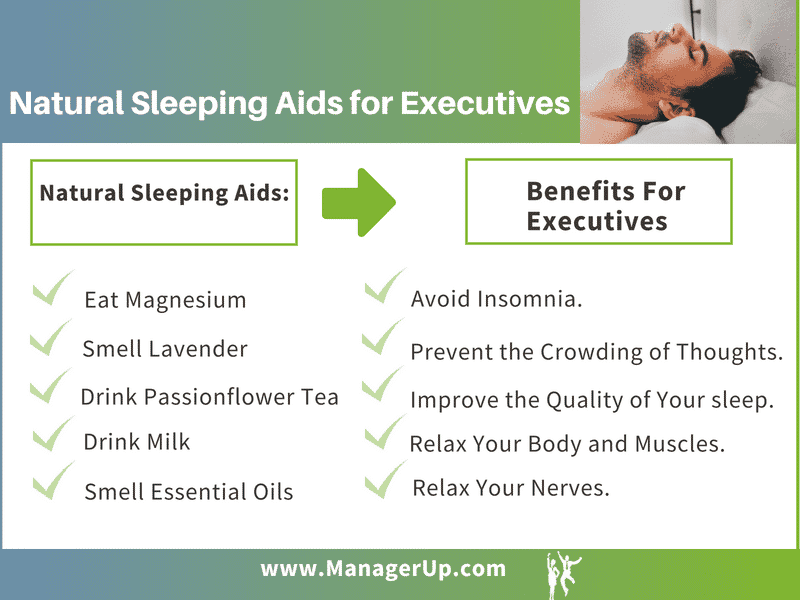
If you want to gain these benefits of a sound sleep, try using these natural sleep aids to ensure your well-deserved 8-hours of sleep is not disturbed by the unwanted thoughts crowding in your mind.


Executive Summary:

natural sleep aids

1. Eat Magnesium-Rich Foods

Magnesium is not just an essential mineral, but also one of the best natural sleep aids.

It is involved in several processes occurring in the body, and inducing sleep is one of them.

According to a study published in the Journal Of Research In Medical Sciences, this nutrient can regulate the body’s biological clock. A high level of this mineral can produce a relaxing effect on your mind and body and help you sleep well.

Magnesium can also increase levels of gamma-aminobutyric acid (GABA) in the brain, which produces a calming effect and improve the quality of your sleep.

You can beat insomnia by including the natural sleeping aids containing a high amount of magnesium such as dark leafy greens, beans, whole grains, dark chocolate, and yogurt in your diet.


2. Smell Lavender

Research published in the Evidence Based Complementary and Alternative Medicine has proven the soothing and relaxing properties of Lavender oil.

Simply smelling lavender oil before bedtime can be enough to enhance the quality of sleep. It can calm the nerves and prevent the crowding of thoughts in your mind.

This will help you enjoy an undisturbed sleep. So, make sure you have the natural sleep aids handy so that you can just smell lavender for a while for a restorative, and undisturbed sleep.

If you are struggling with getting a sound sleep for a few hours, make sure you keep a bottle of Lavender oil next to your bed or an aromatherapy diffuser with lavender oil.


FIND OUT MORE NOW!


3. Drink Passionflower Tea

The word passionflower is misleading. Most people think that these flowers can make them passionate about something. But, you will realize the real potential of this flower once you learn its scientific name, which is Passiflora incarnate!

As the scientific name aptly suggests, passionflower can pacify your nervous system and mind and put you in sleep mode.

The sleep-promoting effects of passionflower have been demonstrated in a study conducted at the Phototherapy Research.

The findings of this research have indicated that drinking passionflower tea just before the bedtime could improve the quality of your sleep with its sedative and soothing properties.

You can prepare the tea by adding one teaspoon of the dried passionflower herb in a cup of boiling water. Let it infuse for about 15 minutes. Strain the liquid and drink it to enjoy sleepy nights.


4. Drink Milk

I am sure you know milk contains calcium. It is an important mineral that could keep your bones and teeth in good health. You will be surprised to know that calcium also plays a role in inducing sleep.

A study published in the Medical New Today has provided evidence that calcium can affect the sleep cycle by stimulating the production of melatonin in the brain.

Melatonin is a hormone that works by calming the nerves and creating a natural sedative effect. It can allow you to sleep peacefully.

So, its time you relive your healthy habits and start drinking a glass of warm milk before going to bed.

Drinking milk can provide you another remarkable benefit. According to a report published in the Psychology Today, milk contains a protein called Lactium.

It produces a relaxing effect on the body. It works by lowering blood pressure and relaxing the muscles.

Additionally, milk also contains tryptophan, which can regulate moods through its effect on serotonin production.

These properties of the compounds in milk can promote the feelings of calmness, and relaxation, and thus, induce sleep.


5. Essential Oils

Essential oils like patchouli and bergamot can be highly relaxing for the anxious and stressful mindsets of the executives.

According to studies published in the National Institutes of Health, patchouli and bergamot essential oils can reduce stress, anxiety, and depression.

Patchouli and Bergamot oils can be used as aromatherapy to induce a calmer state of mind.


FIND OUT MORE NOW!


They work by encouraging the release of serotonin. Smelling a small amount of these oils will relax your nerves and promote better sleep even after a stressful day at work.


Conclusion

Getting sound sleep every night is incredibly important for keeping in good health.

That is why; using natural sleep aids to beat insomnia is considered the key to a healthy, active, and successful life.


Do you want to learn why your sleep is broken and how to fix it?


FIND OUR MORE NOW!


Do you have any suggestions to avoid insomnia and sleep better? Feel free to leave a comment to share your thoughts.

Natural Remedies for Sleep Apnea in Executives

Your level of alertness or wakefulness during the daytime determines how well you can contribute to the tasks at the office. However, the alertness levels can reduce considerably when you are not able to sleep well at night.

Sleep apnea has emerged as one of the leading causes of loss of productivity in managers.

According to the National Sleep Foundation, more than 18 million adults in America suffer from sleep apnea. And this adult population largely comprises of executives whose work performance has been affected adversely due to the lack of sound sleep at night.

Sleep apnea is a common sleep disorder in which the breathing is interrupted during sleep briefly, yet repeatedly.

The breathing pauses may last for about ten seconds causing you to wake up abruptly gasping and chocking. The incidence of this disease is more common in the obese individuals and is marked by snoring.

The natural remedies for sleep apnea given below have been found to be effective in improving the sleep quality and preventing the effect of this disorder on your work life.

Executive Summary:

natural remedies for sleep apnea

1. Honey

If you love honey, you will be glad to know that it can help control the symptoms of sleep apnea.

Sleep apnea can become worse if there is an obstruction in the air passages due to the swelling in the throat.

According to a study published in the Jundishapur Journal of Natural Pharmaceutical Products, honey can produce a natural anti-inflammatory effect and reduce swelling in the throat. Just add a tablespoon of honey to a glass of warm water and drink it before the bedtime.

So, when you go to the bed after a hectic day in the office, the soothing effect of honey would let you sleep well without frequent awakening.

It will also reduce snoring by acting as a lubricant and allowing for the smooth passage of air through the airways.

Using these natural remedies for sleep apnea on a regular basis will help you stay fresh and be more productive during daytime and improve your ability to focus on the tasks.

2. Prebiotics

If falling asleep while attending meetings and presentations has become a regular problem for you, include prebiotics in your regular diet.

According to the research conducted at the University of Colorado at Boulder, including prebiotics in your regular diet can be a great way to avoid sleep apnea.

Prebiotics can influence the brain functions and improve your sleep pattern.

Prebiotics are dietary fibers found naturally in certain foods such as chicory, leeks and onions.

Prebiotics can influence the brain functions and improve your sleep pattern. It can enhance the sleep quality and prevent drowsiness while at work.

A regular intake of these foods can also improve the gut health and prevent obesity, which is a common precursor to sleep apnea.

3. Garlic

Garlic offers another potential natural remedy for sleep apnea. You can consume 2 to 3 cloves of garlic once a day, preferably the first thing in the morning. It would keep your airways open by reducing swelling and inflammation.

Research conducted at the Journal Of Immunology Research has indicated that the anti-inflammatory properties of this herb would open up the airways for easier breathing.

Additionally, the anti-stress properties of garlic can help you avoid mental stress at workplace and sleep peacefully without any disturbing thoughts.

This would allow you to perform to the best of your capabilities at work during the daytime. Garlic can also help to reduce weight thus naturally eliminating obesity that can otherwise worsen sleep apnea.

If you need to boost energy naturally in the office and increase mental clarity, but you don’t like garlic, take a look at this amazing mist with Citrus and Eucalyptus oils now!

Learn more stress free strategies that actually work now. Check out our Books on anxiety and stress. Work stress free, sleep well, free yourself from anxieties.

4. Lavender

Sleep apnea may also occur due to the contractions of the muscles in the throat. You can avoid this by using natural remedies for sleep apnea like Lavender oil.

Simply put a few drops of the oil on a clean towel and place it under your pillow before you sleep or, even better, diffuse lavender oil in your bedroom with an aromatherapy diffuser.

A study published in the Perceptual And Motor Skills has revealed that the fragrance of lavender will soothe your nerves and prevent muscle contractions thus inhibiting obstructions in the throat.

The fragrance will put you into pleasant sleep so that the next morning you can face the challenges at the workplace with a fresh and active mind.

5. Turmeric

A study published in the Journal of Chiropractic Medicine has indicated that adding a tablespoon of turmeric to a glass of warm milk and drinking it before the bedtime can help control sleep apnea.

The anti-inflammatory effect of curcumin present in turmeric can promote sleep by reducing obstruction or swelling in the airways.

Moreover, the soothing and sedative properties of this spice will improve the sleep quality and ensure you can feel fresh and confident during meetings and presentations at the office.

Most people find heavy snoring to be funny. However, it could be a sign of sleep apnea, which, if ignored, can be potentially life-threatening.

It can reduce your wakefulness and prevent you from concentrating on your work during the daytime.

Feeling sleepy while behind the wheels can also be highly dangerous for your and other’s life. Hence, you must never ignore the signs of sleep apnea.

Use the natural remedies for sleep apnea given here to stay fresh and alert throughout the day and contribute positively to your organization.

If you are aware of other effective natural remedies for sleep apnea, please leave a comment below to share them with us.

8 Ways How Sleep Deprivation Affects Your Performance at the Office

Have you been experiencing an increase in moments of being short-tempered and a reduction in your focus and concentration at work? Do you always feel like you are dragging yourself out of bed each morning to work, without any real motivation? Have you ever wondered if this might be due to sleep deprivation?

Even though seven to eight hours of sleep is recommended for adults by the American Academy of Sleep Medicine, a survey found that most professionals sleep for an average of just six hours and 28 minutes! It’s no surprise then that just like you, so many executives and high level CEOs experience lack of energy, poor focus and lower concentration while at work.

Sleep deficiency not only affects a person’s health but also their efficiency and performance at work. It can affect an individual’s image in an organization and their growth.

Today, we will share about how sleep deprivation can significantly impact our cognitive performance, affecting your comprehension, memory, knowledge, judgment, reasoning, problem-solving, and decision-making skills.

Sleep is essential for a bright, innovative and focused mind at work. Find out what happens when you don’t sleep enough. CLICK TO TWEET


Sleep Deprivation Effects at the Workplace


Insufficient sleep can hamper your productivity by affecting the following factors:


1. Sleep Deprivation Effects on Memory

Many animal as well as human studies suggest that the duration and quality of sleep has a direct impact on your memory and learning ability. Learning and memory can be described as:

 1. Acquisition: Introduction of new information to the brain, e.g., learning information.

2. Consolidation: The process of stabilization of the information, e.g., retaining the information.

3. Recall: Accessing the already stored information, e.g., reproducing the stored information during a test or when needed.

Although acquisition and recall occur only when you are awake, consolidation happens during sleep by strengthening the neural connections that are related to the formation of our memories. The exact mechanism of consolidation during sleep is unknown, but many researchers think that it is due to specific characteristics of the brainwaves.

Therefore, lack of sleep affects your neural connections in the brain in the long term and hampers your memory. So if you are not getting enough sleep, you are actually harming your brain in the long run!


2. Sleep Deprivation Effects on Thinking

Logical reasoning is the foundation of human rationality, which is the outcome of a methodical thinking process. Insufficient sleep directly dampens your logical reasoning and generating newer strategies, which is a necessity for higher order executive and managerial responsibilities.

A research study published in the Sleep Medicine determined the effects of insufficient sleep on an individual’s thought process. The statistical analysis of the self-made reports of 26 healthy participants indicated that there was a decrease in positive thinking ability after insufficient sleep.  The reduced ability of thinking impairs your creativity, problem‑solving skills, decision-making ability, increasing the number of errors you make. It’s important to sleep enough to think on your feet!


3. Sleep Deprivation Effects on Concentration and Focus

Complete concentration and focus are what make your work perfect; however, insufficient sleep can disrupt your concentration and focus by reducing your attention span and causing daytime sleepiness. You may start feeling drowsy during important meetings with a client, negatively impacting your image as well as that of your organization. Sleep deprivation also makes you clumsy and easily distracted from work. Forgetfulness due to insufficient sleep and microsleeps (brief episodes of sleep) in a conference or during presentations or seminars can affect your performance to a significant extent.

The Institute of Clinical Neurophysiology, Slovenia, studied the effects of sleep deficit on concentration. It included a study of sleep deprivation on nine healthy individuals by applying pre and post sleep deficiency attention test. Researchers concluded that acute sleep deprivation causes mood swings and long-term chronic sleep deficiency affects concentration and performance at work.

So if you have been feeling like you have been dropping the ball while juggling multiple tasks at work, you need to ensure you get your fill of sleep and amp up your focus and concentration!


4. Sleep Deprivation Effects on Energy

A study conducted on a group of women-only participants concluded that the energy intake during sleep deprivation increased by about 20%, equivalent to 415 kcal. Additionally, another recent study found that sleep promotes the storage and conservation of energy. Sleep deficiency saps stored energy in the body during sleep deficit periods, thereby lowering your energy level during your working hours. This is bound to reflect in your productivity during a work day.

So if you want to achieve everything you plan for your day, you need all the energy you can muster. Sleeping for 7 hours is the very first step for a power-packed day at work!


5. Sleep Deprivation Effects on Mood

Sleep deprivation directly affects your mood. Studies have proved that both partial and complete sleep deficiency immediately impact your mood and cause irritability and stress. The increase in irritability may affect the way you talk and respond to others, thus creating a negative impression before your team and organization.

Sleep deficit affects you emotionally too, making you upset, angry, and mentally exhausted. It makes you emotionally vulnerable, and you may explode at the slightest cause at work, become less empathetic toward your coworkers, or become socially avoidant, jeopardizing your relationship with your colleagues and boss.

Sleep deprivation also affects your social skills at work. If you thought you were not nice to your team-mate for no real reason, think again, maybe you are right! It could have been simply the result of a sleep-deprived you, nothing more!

A published in-lab study in Nature Communications included 18 healthy adult volunteers. The study was performed with one night of complete sleep and one night of sleep deficit and the results were then compared. The result of this research indicated that sleep deprivation lead to social withdrawal and increased socially avoidant behavior.

If you find yourself lacking enthusiasm for more than one office party or client meeting, you must stop and think where the problem really lies. Lack of adequate shut-eye might be the culprit behind such reclusive behavior.


6. Sleep Deprivation and Anxiety

Sleep deficiency increases anxiety and can affect your ability to perform a new or challenging task at work as a high level executive or cope with trying situations with colleagues.

A paper published in Emotion studied the relationship between insufficient sleep and anxiety. The participants were allowed to sleep for a maximum of six and a half hours on the first night, two hours on the second night, and rest for seven to eight hours of sleep in the next two nights. The result of this research indicated that the participants suffered from greater anxiety in the sleep-deprived condition in comparison to the rest period. The study supports the previous reviews conducted and published on the effects of sleep deprivation.

If you have been experiencing anxiety before meetings, presentations, or before other tasks at work, you know that the sleep deprivation is beginning to show! Get your dose of shut eye to cut down on the unnecessary anxiety you have been experiencing.


7. Chronic Sleep Deprivation and Depression

Sleep deprivation can make you feel irritated and reduce your enthusiasm level, which, along with feeling sad and empty, are clinical signs of depression.

Research has proved that individuals with insomnia who get insufficient sleep are 10 times more likely to suffer from clinical depression. Increased insufficiency in the quality and duration of sleep leads to an increased risk of clinical depression.

Obstructive sleep apnea, in which the quality and quantity of sleep are impaired, is also associated with depression. A study with 19,000 participants indicated that the risk of depression is five times higher in individuals with obstructive sleep apnea.

Depression affects your performance and productivity at work. Feeling tired and sad all of the time make it difficult to meet deadlines and other obligations in the office.

IF THIS IS YOUR CASE, REGAIN CONTROL WITH THESE COPING STRATEGIES


8. Chronic Sleep Deprivation and Serious Health Problems

Prolonged sleep deficit affects your physical health, can weaken your immune system and make you prone to illnesses, leading to burgeoning absenteeism and hampered productivity.  Serious health concerns like obesity and weakened immunity are often the gateway and a major risk factor for a host of other medical conditions like diabetes, high blood pressure, high cholesterol, cancer and heart disease. Chronic diseases like these are difficult to reverse and nearly impossible to cure. Prevention remains the method of choice to live without them.

In addition, scientists from UC Berkeley’s Sleep and Neuroimaging lab have discovered that sleep deprivation increases the concentration and accumulation of certain proteins in the brain. These proteins are responsible for causing dementia. Sleep deprivation automatically increases the risk of dementia.

Recent research also indicates that just one sleepless night can cause an immediate increase in the concentration of the beta-amyloid protein in the brain, which is responsible for a neurodegenerative disorder called Alzheimer’s disease, the most prevalent form of dementia. Imagine what persistent sleep deprivation can do to your mind! The very memories you are striving so hard to form, might turn to wisps of smoke.

So if you are not sleeping enough, even though you might be eating well, exercising regularly, you are doing injustice to your body and mind.


Conclusion

As we can see, effects of sleep deprivation are not just skin deep- they go beyond the groggy eyes and a slow day at work. Persistent sleep deprivation affects the body and the mind leading to fairly serious adverse effects. It hampers your memory, focus, concentration, decision-making and rational thinking, energy levels as well as your general temperament and mood at work. It is the threshold to a wide spectrum of health concerns like dementia, heart disease, diabetes, anxiety and depression, to name a few.

Your sleep deficit can become easily visible to your colleagues, superiors, and clients through the after‑effects of chronic sleep deprivation. Although you are sacrificing sleep for work, your inability to shoulder responsibilities with complete concentration and focus may lead to errors, creating an unfavorable impression at the workplace- the very thing you strive so hard to prevent.

Being well rested you are sure to be able to achieve more in a shorter day than you will achieve despite longer hours with a sleep deprived blunt mind and exhausted body. A few hours of shut eye do more for the mind, body and career than we realize.

Sleeping well is like pressing the reset button on the body and mind; giving them time to absorb everything that happened through the day, and repair.

Get more information about sleep deprivation and a normal sleep cycle.

Or you can watch this interesting video:

You can also read our infographic by clicking on image below:


Feeling burned out? Here’s how to diagnose it.

If you have any questions about sleep deprivation, its effects on your performance, and how to address this issue, please leave a comment for us and we will be happy to help!

Melatonin For Sleep: The Ultimate Guide For Executives

The impact of stress is so immense in managers that they often wake up in the middle of the night and then, find it impossible to sleep. Other managers experience difficulty in falling asleep due to the stress and anxiety related to their job. As a result, they wake up in the morning feeling tired and unrefreshed.

Sleep deprivation or lack of adequate sleep due to stress is a common precursor to the declining work performance of executives. Mental stress linked to job pressure or other factors has been found to be the trigger for the disturbed sleep pattern.

A research study published in the Behavioral Sleep Medicine has proven that mental stress can have an adverse impact on the quality of sleep and affect the body’s circadian rhythm.

A research published in the Neuropsychiatric Disease and Treatment has indicated that sleep deprivation can affect the memory and decision-making skills of a person. As a result, corporate managers, and CEOs, who are often sleep deprived due to their hectic lifestyle, experience a reduced memory, attention span, and concentration.

This leads to a decline in their cognitive performance thereby resulting in errors of judgment, lack of ability to conduct a SWOT analysis, and several other problems that can have an unfavorable impact on their work performance and the profits of the organization.

The quality of the executive sleep depends among others on the level of melatonin (a sleep-promoting hormone) in the blood. The studies showed that stress may negatively affect the melatonin level and significantly decrease the sleep quality.

Find out how the appropriate use of melatonin for sleep can restore a healthy sleep pattern and improve the work performance of managers while promoting your health and fitness.


1. What Does Melatonin Do?

Melatonin plays a major role in improving the quality and duration of your sleep. It is a hormone naturally produced in the Pineal gland in the brain.

The secretion of this hormone varies at different times of the day. The melatonin production is regulated by the amount of light your body is exposed to, as well as other factors such as your daily schedule, emotional health, and seasons.

For example; as darkness approaches during the late afternoon and evening hours, the body starts to prepare itself for sleep by stimulating the production of melatonin. On the other hand, during the early morning hours, the melatonin production is lowered to prepare the body for wakefulness.

The changes in the melatonin production, thus regulated by the light exposure, are governed by the suprachiasmatic nucleus. It passes the signals to the pineal gland to release melatonin at night and suppress its release during the daytime.

The higher levels of melatonin at the night can help you sleep well while the reduced levels of the same in the day can keep you alter and wakeful.


FIND OUT EVERYTHING ABOUT THE SLEEP HORMONE: MELATONIN !


2. The Importance Of Using Melatonin For Sleep By Busy Executives

Executives have to juggle between multiple responsibilities at their workplace and they are under constant pressure to excel at each of them.

Whether it is making a presentation about your product range to a new client, or attending meetings with an existing client, you are expected to crack the deal for your business each and every time. And these expectations form the basis for immense stress that executives have to bear with.

Apart from this, managers also experience anxiety due to job insecurity, fluctuating business profits, and competitive market conditions. These factors can create an imbalance in the melatonin production by contributing to their stress levels.

A research conducted at the International Journal of Tryptophan Research has indicated that mental stress can not only lower the melatonin production but also make this hormone less effective. This can further worsen the quality and duration of sleep of managers as a result of which they often spend their daytime feeling drowsy and unrefreshed.

Hence, the use of melatonin for sleep is recommended for managers. It can restore the healthy melatonin levels and help them get a sound sleep every night.

Also, a research conducted at the Revista Médica De Chile has shown that melatonin pills can help managers to get a sound sleep by lowering the production of the stress hormone called cortisol.

Hence, managers who find it difficult to go back to sleep after getting up in the middle of the night due to stress are advised to use melatonin. Also, busy executives who tend to be restless in the bed for several hours before they can fall asleep due to the stressful thoughts about work can also benefit from using melatonin for sleep. These pills can lower the cortisol production in the nervous system thereby providing relief from mental stress and the resulting sleep deprivation.

The use of melatonin for sleep can provide several other benefits as discussed beneath.

Click on the image to see a full infographic (opens in new tab)

3. What Are Melatonin Benefits For Executives?


3.1. Melatonin for Sleep Improves Focus And Alertness

A research published in the Biological Psychiatry has shown that the use of melatonin for sleep can enhance your work performance by improving your focus, and alertness levels.

This would allow you to provide quick, yet constructed replies to the queries of the client about your project or proposal and help you win their confidence without feeling stressed due to the lack of sleep or other job-related factors.


3.2. Melatonin for Sleep Promotes Cognitive Skills

Mental stress and lack of sleep can have an adverse impact on the cognitive skill of managers and prevent their ability for logical reasoning. A scientific investigation conducted by the Eksp Klin Farmakol has proven that the use of this hormone can improve the cognitive skills that hold high importance for the managers working under stress and job pressure. It can promote their decision-making skills, memory, and concentration levels thereby allowing them to contribute to the growth of the organization.


3.3. Melatonin for Sleep Boosts Job Performance

A research conducted in the Medscape General Medicine has shown that the use of melatonin for sleep can have a positive impact on the social interactions of a person.

Melatonin supplements can also prevent the stress-linked deficiency of this hormone thereby restoring their ability to interact in the social and professional settings with higher confidence.

This effect can be beneficial for the managers who would like to improve their professional network and reach across countries to expand their client and consumer base.


4. When Should I Take Melatonin?

Since melatonin is a sleep-regulating hormone, it is imperative that managers use the supplements at the right time to suit their routine and the time they need to sleep in contrast to the time they need to be more productive.

If you often have to struggle to fall asleep due to the stressful thoughts crowding in your mind, you can take melatonin for sleep about 30 minutes before bedtime. This will allow you to avoid the long hours for trying to fall asleep thereby ensuring you can wake up early feeling fresh and rejuvenated.

You also need to consider your sleep habits, particularly if you are a night owl to an early bird. These are basically chronotypes, which determine the rhythm the body follows for performing and maintaining various functions.

Night owls are the people who tend to stay awake till late hours in the night and hence, also have a tendency to wake up late in the morning.

Early birds, on the other hand, are the people who prefer to sleep early like by 9 pm and wake up at about 5 am or so.

If you are an early bird, it is advisable to take melatonin supplements in the morning. This will allow you to stick to your healthy sleeping habit.

However, it is important to note that early birds may take melatonin pills only if they have a tendency to wake up two hours before the time to get up. Using melatonin for sleep, in that cases, can delay the sleep phase and allow managers to sleep for the next two hours. Otherwise, it is best for the early birds to avoid using melatonin pills.

If you are a night owl, you can still manage to get sound sleep and maintain your body’s circadian rhythm by taking melatonin pills 2 hours before the expected bedtime. This can advance your sleep schedule and allow you to fall asleep earlier.


5. What Is The Recommended Dose Of Melatonin?

The usual recommended dose of melatonin for sleep is about 2 to 5 mg once a day. A scientific study published in the Pharmacy and Therapeutics has indicated that the administration of melatonin supplements in a dose of about 3 mg can promote sleep.

However, it should be noted that the effect of melatonin for sleep can vary among different users. Also, the time of onset of action of melatonin and the extent of its sleep-inducing effect can also vary among different managers. Hence, it is advisable to start using it in a lower dose of about 1 to 2 mg a day.

Also, it is not advisable to start taking melatonin for sleep before an important day at the office, like when you have an important meeting scheduled. Managers are advised to begin using melatonin on the days when getting up a bit late or early due to the varying effects of this hormone would be manageable.

For example; starting the use of melatonin on weekends would be a viable option as it won’t interfere with your workplace performance. Also, it will give you a chance to assess the effect of the supplement on your sleep pattern so that you can adjust the dosage as well as the time to take melatonin for sleep at night and a better productivity during the daytime.


6. Is Melatonin Safe?

Since Melatonin is naturally produced in the body, it does not cause any serious side effects. However, in rare cases, melatonin has been reported to produce some mild side effects, according to a research published in the Clinical Drug Investigation. These side effects are nausea, headaches, dizziness, drowsiness, and irritability.

In rare cases, it may cause skin pigmentation and increase the risk of thrombosis (abnormal clotting of blood), especially when the supplement is taken in a very high dose.


Conclusion

The importance of sound sleep of 8 hours every night for improving your work performance cannot be emphasized enough. It is particularly more important for the managers who experience severe mental stress since the melatonin production in their body is lowered.

Hence, the use of melatonin for sleep is highly recommended for executives to restore the quality of their sleep. It can enable them to focus on their meetings and other tasks with an improved alertness, memory, and cognitive skills.

The use of melatonin pills can also be beneficial for the executives who suffer from a loss of sleep due to melatonin deficiency. For instance, managers who have to travel frequently to different time zones have melatonin deficiency. Due to the repeatedly changing schedule, their body fails to regulate and maintain their internal body clock.


FIND OUT THE USAGES OF MELATONIN PILLS FOR EXECUTIVES NOW!


If you have any queries about the benefits of melatonin or better ways to use this supplement, please leave a comment below and share your thoughts.