Is a better sex life really linked to success in business? Experts say yes. Sex and success are two of the most widely studied human activities on earth. Research on how the two are linked is showing surprising results. The short result is, more and better sex leads directly to becoming better at business. Here’s why.
Sex releases all sorts of hormones, including endorphins and other body-produced chemicals that improve your mood. If you are in a good mood, you’ll be better at work. The recipe is sex and success.
Ladies, science says sex does a lot of good for you. An article at Chatelain says, “…studies have found that semen does contain several mood-altering hormones that can reduce depression, testosterone, estrogen, follicle-stimulating hormone, luteinizing hormone, prolactin, and several different prostaglandins. Some of these changes have been detected in a woman’s blood within hours of exposure to semen.” Sex and success is a perfect combination for women.
But do these substances really make you better at work? IdeaFit says yes. The blog references a study in the journal Psychoneuroendocrinology. The blogger summarizes part of the study saying,”… women were generally found to be more creative when their levels of estrogen and luteinizing hormone increased.”
Gentlemen and ladies, oxytocin is something you need. Having sex makes sure you get a dose. “Oxytocin is released throughout the body, and it relaxes you and makes you feel closer to your partner. It’s also been recently found that this hormone enables cognitive flexibility pathways, fostering creative thinking and problem solving,” says an article at Inc Magazine. Want better business results? Punch up some Barry White on the stereo and have a helping of sex and success.
2. Better Sex – Sleep Better
The National Heart, Lung and Blood Institute says poor sleep and sleep deprivation is dangerous. “If you are sleep deficient, you may have trouble making decisions, solving problems, controlling your emotions and behavior, and coping with change. Sleep deficiency also has been linked to depression, suicide, and risk-taking behavior.” Risk-taking behavior of the bad kind, that is. Trying for the winning combination of sex and success is not risky.
Sex will help you sleep. “Yes, sex can actually make it easier to fall asleep. This is mostly because of the hormones that are released during the act. Sex boosts oxytocin (a hormone that makes you feel connected to your partner) and lowers cortisol (a stress-related hormone). Plus, having an orgasm releases a hormone called prolactin, which makes you feel relaxed and sleepy. All of that leads up to a nice, drowsy state that’s perfect for cuddling up and falling asleep.” says The National Sleep Foundation.
Sex can help you sleep better, which leads you to make better decisions. Yet another reason why sex and success are linked.
3. Better Sex – Less Stress
Every article that talks about the benefits of sex always lists stress relief as a reason to have sex. It is hard to be stressed while having sex. Stress just seems to melt away afterward. Plenty of studies show that the stress-reducing hormones hang around for a while. Stress hormones are more or less washed out. Less stress is a winner for you so sex and success needs to be a part of your business plan.
Sex and stress reduction is the most studied “sex and” correlation. Psychology Today takes a look at how sex reduces stress and how stress can actually limit sex. “Chronic stress affects the concentration of all sex hormones because the body produces stress hormones such as cortisol at the expense of sex hormones like testosterone. To fight stress, our body shuts down sex mechanisms so that we’re better able to deal with more urgent and immediate needs. This change, called the stress-shift in hormone production, helps us respond to life-threatening situations by focusing on hormone production for survival.” The article also has tips on how to overcome stress-related sex drive killers.
You’re going to perform better at work when you are not stressed. Sex and success continue to be a solid combination.
4. Better Sex – Better Immune System
Being out of work because of illness is a productivity killer. Sex boosts your immune system. The same articles and studies that give reasons for having sex also point to the boost to your ability to beat the bugs. Forbes refers to several studies in the article “Is Sex Necessary?” Having sex twice a week, according to the magazine, bumps your immunoglobulin A up by 30 percent. That’s not as much as 30 percent, but a solid 30 percent hike. That’s a healthy return on investment. We do not apologize for the pun.
Sex and success go together like a, well, yeah. As simple as that.
5. Better Sex – Feel Better
Sex leads to feeling better. When you feel better, you are going to perform better at work. A study of 40,000 people who had regular sex showed they also performed better at work. Business Insider even says regular sex can improve your chances for promotion. Certainly, the boost of creativity-spurring hormones is going to give your system a brain boost.
“10 Reasons to Have Sex Tonight” is a report on CBS News that covers the five points mentioned above and five more reasons. Science is still finding more evidence than sex and success go hand-in-hand.
You have the data from both sides of this equation. Think like a businessman and put the information to work. Your body and your business will certainly thank you.
Let us know what you think of this article. Got something you want us to write about? Drop us a line.
Work environments can be demanding on your body both physically and mentally. It’s no surprise that as a busy executive you often find yourself reaching for your coffee mug or soda bottle as it can be difficult to see the benefits of drinking water. These beverages can provide a quick shot of caffeine and sugar needed to perk back up and stimulate the brain in order to get more done. However, drinking caffeinated and sugary beverages can lead to crashes that leave you feeling worse than before your first sip of joe.
At this point, you might be wondering how you could possibly fuel yourself and feel fresh in a healthy and efficient way. The simple (and perhaps surprising) answer is water! The benefits of drinking water are abundant.
Recent studies have pointed out the link between the higher intake of water and its positive effects on the person’s health, weight, performance, and productivity.
For the executives, drinking plenty of water can result in some particularly important benefits like improved brain functioning, a boost in energy, and even weight loss. Read on to learn the benefits of drinking water and its impact on your overall health, fitness, and efficiency at work.
Executive Summary:
1. Aids in Proper Brain Functioning
Recent research out of The University of East London has proven the cognitive benefits of drinking water. It showed that adequate water intake can improve brain functioning by up to 14 percent. This increase in the brain’s ability to properly function is due to the relief hydration provides to your brain from signaling for thirst. When your body thirsts, it is sending an almost constant signal to the brain to hydrate. Drinking enough water alleviates this and therefore opens the pathways of the brain up to be used in more productive capacities.
If you’ve ever been distracted by a personal life problem while at work, then you know exactly how this feels. Your focus is fuzzy, attention span short, and distractions are easy to follow. Avoid these productivity drags by drinking enough water to keep your body fully hydrated and your brain working at peak performance.
2. Hydration Equals Energy
Similarly to how proper hydration helps the brain perform better, your entire body will function better when you drink enough water. Dehydration is taxing on the body. Energy levels plummet, tiredness and dizziness can set in, and headaches can be frequent. Remember, according to a study of the Defence Institute of Physiology and Allied Sciences in India, it only takes a loss of 1-2 percent of your body water to cause some of these unpleasant symptoms.
Drinking water throughout the day will keep your body energized in a more consistent and reliable manner than stimulants like sugars or caffeine. These products can put you on a rollercoaster of sugar highs and dreadful crashes. Caffeine can enhance your negative physiological responses to stress too.
Clinical research has revealed that drinking water can support the cognitive abilities of the brain and improve your memory, attention span, concentration levels, and problem-solving skills.
Drinking a few sips of water before presentations would prepare your brain to respond to the unexpected queries of the client. Just imagine you are in the middle of a meeting and someone pops up a question to you. Maintaining the hydration of the body by drinking an adequate amount of water will improve your reaction time and help you reply to the client’s queries in the most appropriate way.
Research studies have found that adequate water intake can enhance the attention span and prevent the involuntary wavering of thoughts.
4. Drinking Water and Weight Loss
Perhaps one of the most tangible benefits of drinking enough water is the likelihood that your clothes will fit better and you’ll see lower numbers on the scale. A small study by Dr. Brenda Davy showed that drinking 2 cups of water before meals resulted in fewer calories consumed. If this finding is applied to the workplace, drinking plenty of water throughout the day will result in fewer calories coming from snacks we crave when we are actually thirsty.
Weight loss is one of the most revered benefits of drinking water. In a recent study, a strong correlation was found between improper hydration and elevated levels of obesity and higher BMI totals. This benefit of drinking water is directly linked to the fewer calories consumed due to curbed cravings as well as the increase in energy provided by drinking enough water.
All of the aforementioned benefits culminate in an overall healthier lifestyle which almost always results in a lower body fat percentage and a healthier BMI. Looking and feeling your best is essential to projecting confidence in the workplace. With these improved health benefits of drinking water, you’re sure to be sending a message of health, vigor, and vitality.
5. Improves Mood
It is common for executives to feel frustrated due to work pressure, undue demands of the clients or non-cooperative colleagues.
A recent scientific experiment has revealed that drinking water can have a positive impact on the hormonal balance in the body and improve your moods.
Keeping your body well hydrated will help you avoid negative emotions such as anger, frustration, irritability and aggressiveness at the workplace.
On the contrary, you might be able to turn the tables around by getting your uncooperative colleagues to cooperate with you by your cheerful mood and positive approach towards handling their unfriendly gestures.
Meeting Your RDA
Exactly how much water your body needs to be hydrated is impossible to know. Generally, it is recommended that adult men drink about 3.7 liters per day and adult women drink about 2.7 liters per day. However, it is important to keep in mind that every person is different. Some people may need less or more than these recommendations to remain properly hydrated.
Conclusion
No matter how far you take your water consumption challenge, know that the benefits of drinking water will be noticeable. From a sharper brain to a better BMI, drinking water will have you feeling fit and energetic enough to meet the day’s demands.
There are several methods to deriving the benefits of drinking water. Try drinking a glass of water before any other beverage or meal to keep you from accidentally going most of the day without water. Alternatively, you can challenge yourself to go a full week replacing all beverages with water to see clearly the impact proper hydration can have.
By the time your head touches the pillow, your deep desire for getting some rest and sleeping peacefully vanishes. As you switch off the lights, the invisible light in your mind switches on.
It keeps reminding you of the presentations you have to make the next day, the meeting you have to attend and the targets you have to meet!
This can affect the quality of your sleep due to which you end up feeling tired and drowsy throughout the day.
As a result, your productivity and efficiency are hampered.
According to the study published in the Neuropsychiatric Disease and Treatment, a good night’s sleep can improve your decision-making skills, memory, and creativity.
Your body uses sleep time to repair the damaged cells and refreshes the mind so that the next morning, you get up feeling rejuvenated and relaxed.
It will keep you energized throughout the day so that you can breeze through all your meetings, and presentations easily.
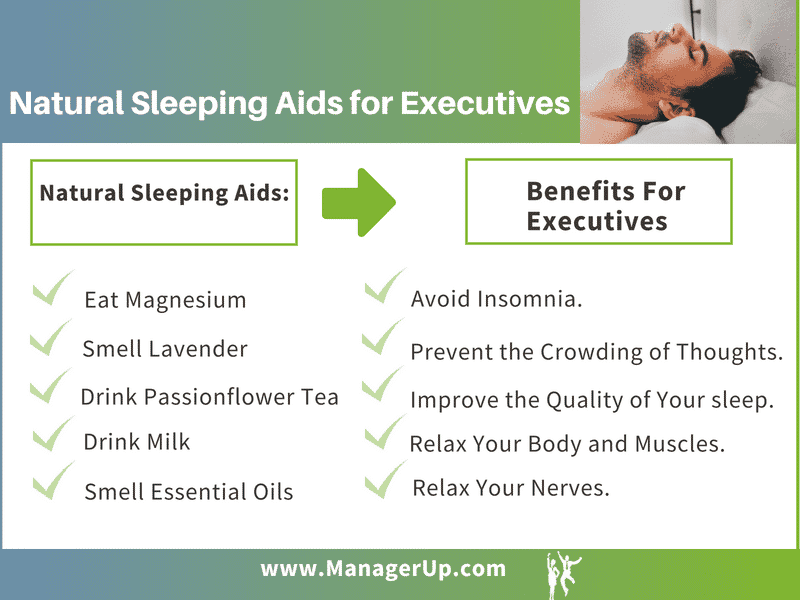
If you want to gain these benefits of a sound sleep, try using these natural sleep aids to ensure your well-deserved 8-hours of sleep is not disturbed by the unwanted thoughts crowding in your mind.
Executive Summary:
1. Eat Magnesium-Rich Foods
Magnesium is not just an essential mineral, but also one of the best natural sleep aids.
It is involved in several processes occurring in the body, and inducing sleep is one of them.
Magnesium can also increase levels of gamma-aminobutyric acid (GABA) in the brain, which produces a calming effect and improve the quality of your sleep.
You can beat insomnia by including the natural sleeping aids containing a high amount of magnesium such as dark leafy greens, beans, whole grains, dark chocolate, and yogurt in your diet.
Simply smelling lavender oil before bedtime can be enough to enhance the quality of sleep. It can calm the nerves and prevent the crowding of thoughts in your mind.
This will help you enjoy an undisturbed sleep. So, make sure you have the natural sleep aids handy so that you can just smell lavender for a while for a restorative, and undisturbed sleep.
If you are struggling with getting a sound sleep for a few hours, make sure you keep a bottle of Lavender oil next to your bed or an aromatherapy diffuser with lavender oil.
The word passionflower is misleading. Most people think that these flowers can make them passionate about something. But, you will realize the real potential of this flower once you learn its scientific name, which is Passiflora incarnate!
As the scientific name aptly suggests, passionflower can pacify your nervous system and mind and put you in sleep mode.
The sleep-promoting effects of passionflower have been demonstrated in a study conducted at the Phototherapy Research.
The findings of this research have indicated that drinking passionflower tea just before the bedtime could improve the quality of your sleep with its sedative and soothing properties.
You can prepare the tea by adding one teaspoon of the dried passionflower herb in a cup of boiling water. Let it infuse for about 15 minutes. Strain the liquid and drink it to enjoy sleepy nights.
4. Drink Milk
I am sure you know milk contains calcium. It is an important mineral that could keep your bones and teeth in good health. You will be surprised to know that calcium also plays a role in inducing sleep.
A study published in the Medical New Today has provided evidence that calcium can affect the sleep cycle by stimulating the production of melatonin in the brain.
Melatonin is a hormone that works by calming the nerves and creating a natural sedative effect. It can allow you to sleep peacefully.
So, its time you relive your healthy habits and start drinking a glass of warm milk before going to bed.
Drinking milk can provide you another remarkable benefit. According to a report published in the Psychology Today, milk contains a protein called Lactium.
It produces a relaxing effect on the body. It works by lowering blood pressure and relaxing the muscles.
Additionally, milk also contains tryptophan, which can regulate moods through its effect on serotonin production.
These properties of the compounds in milk can promote the feelings of calmness, and relaxation, and thus, induce sleep.
5. Essential Oils
Essential oils like patchouli and bergamot can be highly relaxing for the anxious and stressful mindsets of the executives.
According to studies published in the National Institutes of Health, patchouli and bergamot essential oils can reduce stress, anxiety, and depression.
Patchouli and Bergamot oils can be used as aromatherapy to induce a calmer state of mind.
They work by encouraging the release of serotonin. Smelling a small amount of these oils will relax your nerves and promote better sleep even after a stressful day at work.
Conclusion
Getting sound sleep every night is incredibly important for keeping in good health.
That is why; using natural sleep aids to beat insomnia is considered the key to a healthy, active, and successful life.
Do you want to learn why your sleep is broken and how to fix it?
Your level of alertness or wakefulness during the daytime determines how well you can contribute to the tasks at the office. However, the alertness levels can reduce considerably when you are not able to sleep well at night.
Sleep apnea has emerged as one of the leading causes of loss of productivity in managers.
According to the National Sleep Foundation, more than 18 million adults in America suffer from sleep apnea. And this adult population largely comprises of executives whose work performance has been affected adversely due to the lack of sound sleep at night.
Sleep apnea is a common sleep disorder in which the breathing is interrupted during sleep briefly, yet repeatedly.
The breathing pauses may last for about ten seconds causing you to wake up abruptly gasping and chocking. The incidence of this disease is more common in the obese individuals and is marked by snoring.
The natural remedies for sleep apnea given below have been found to be effective in improving the sleep quality and preventing the effect of this disorder on your work life.
Executive Summary:
1. Honey
If you love honey, you will be glad to know that it can help control the symptoms of sleep apnea.
Sleep apnea can become worse if there is an obstruction in the air passages due to the swelling in the throat.
According to a study published in the Jundishapur Journal of Natural Pharmaceutical Products, honey can produce a natural anti-inflammatory effect and reduce swelling in the throat. Just add a tablespoon of honey to a glass of warm water and drink it before the bedtime.
So, when you go to the bed after a hectic day in the office, the soothing effect of honey would let you sleep well without frequent awakening.
It will also reduce snoring by acting as a lubricant and allowing for the smooth passage of air through the airways.
Using these natural remedies for sleep apnea on a regular basis will help you stay fresh and be more productive during daytime and improve your ability to focus on the tasks.
2. Prebiotics
If falling asleep while attending meetings and presentations has become a regular problem for you, include prebiotics in your regular diet.
According to the research conducted at the University of Colorado at Boulder, including prebiotics in your regular diet can be a great way to avoid sleep apnea.
Prebiotics can influence the brain functions and improve your sleep pattern.
Prebiotics are dietary fibers found naturally in certain foods such as chicory, leeks and onions.
Prebiotics can influence the brain functions and improve your sleep pattern. It can enhance the sleep quality and prevent drowsiness while at work.
A regular intake of these foods can also improve the gut health and prevent obesity, which is a common precursor to sleep apnea.
3. Garlic
Garlic offers another potential natural remedy for sleep apnea. You can consume 2 to 3 cloves of garlic once a day, preferably the first thing in the morning. It would keep your airways open by reducing swelling and inflammation.
Research conducted at the Journal Of Immunology Research has indicated that the anti-inflammatory properties of this herb would open up the airways for easier breathing.
Additionally, the anti-stress properties of garlic can help you avoid mental stress at workplace and sleep peacefully without any disturbing thoughts.
This would allow you to perform to the best of your capabilities at work during the daytime. Garlic can also help to reduce weight thus naturally eliminating obesity that can otherwise worsen sleep apnea.
If you need to boost energy naturally in the office and increase mental clarity, but you don’t like garlic, take a look at this amazing mist with Citrus and Eucalyptus oils now!
Learn more stress free strategies that actually work now. Check out our Books on anxiety and stress. Work stress free, sleep well, free yourself from anxieties.
Sleep apnea may also occur due to the contractions of the muscles in the throat. You can avoid this by using natural remedies for sleep apnea like Lavender oil.
Simply put a few drops of the oil on a clean towel and place it under your pillow before you sleep or, even better, diffuse lavender oil in your bedroom with an aromatherapy diffuser.
A study published in the Perceptual And Motor Skills has revealed that the fragrance of lavender will soothe your nerves and prevent muscle contractions thus inhibiting obstructions in the throat.
The fragrance will put you into pleasant sleep so that the next morning you can face the challenges at the workplace with a fresh and active mind.
A study published in the Journal of Chiropractic Medicine has indicated that adding a tablespoon of turmeric to a glass of warm milk and drinking it before the bedtime can help control sleep apnea.
The anti-inflammatory effect of curcumin present in turmeric can promote sleep by reducing obstruction or swelling in the airways.
Moreover, the soothing and sedative properties of this spice will improve the sleep quality and ensure you can feel fresh and confident during meetings and presentations at the office.
Most people find heavy snoring to be funny. However, it could be a sign of sleep apnea, which, if ignored, can be potentially life-threatening.
It can reduce your wakefulness and prevent you from concentrating on your work during the daytime.
Feeling sleepy while behind the wheels can also be highly dangerous for your and other’s life. Hence, you must never ignore the signs of sleep apnea.
Use the natural remedies for sleep apnea given here to stay fresh and alert throughout the day and contribute positively to your organization.
If you are aware of other effective natural remedies for sleep apnea, please leave a comment below to share them with us.
Do you suffer from lower back pain? Tight hips from sitting all day? Hamstrings so tight you can’t touch your toes? Whether you have one of all of these symptoms now is the time to do something about it. Lower back stretches at work can help!
According to Joan Vernikos, former NASA scientist, sitting for prolonged periods of time leads to back soreness. This is caused by muscle deterioration, nerve damage, rounding of the upper back, and lumbar disc compression. Sitting is inevitable but back pain from sitting is preventable.
For many executives our job likely requires us to be seated for the majority of the day, so by implementing lower back stretches at work, we can help stop the effects of this.
To stretch the lower back, we must first realize why there is pain or tightness there. This could be from compressed discs in the low spine or, it could be from tight muscles in the hips and legs. Likely, it is a combination of both.
To help combat this in the office setting we can use a standing desk. As executives, most of our day is spent seated performing our daily tasks.
By utilizing a standing desk, we can continually strengthen and tone muscles, support the spine by counteracting pressure on the spinal discs. Standing desks can improve posture and any low back issues that may stem from it.
A great stretch for the lower back and hamstrings and can be done seated or standing!
When the hamstrings are tight they start to pull on the muscles of the lower back and create tension and/or pain. Start by taking off your jacket to allow yourself some relaxation.
Begin in a standing position and slowly hinge at the hips reaching for the toes. Try to keep the spine long and not round at the shoulders. Take five deep breaths here.
Try doing this (or any low back stretch) before an important meeting or presentation, you’ll be surprised by how much this lower back stretch at work can help calm stressful feelings.
2. Seated Twist
Twists are a great stretch for the upper and lower back. They can release tension in tight muscles and relieve some discomfort from sitting.
Sit up tall in your chair, bring your left hand to rest on the outer right knee, right hand comes to the right hip or armrest. Inhale and sit up a little taller to lengthen the spine, exhale and gently twist toward the right side looking out over the right shoulder. Continue for five deep breaths. Repeat on opposite side.
*Pro tip- Make this stretch even more effective by adding heat!
Try a heated neck and back massager that goes right in your office chair and you can turn on whenever you need some additional relief. Adding some heat to stretches is great because it helps the muscles relax and open.
This stretch helps to lengthen the low back and side muscles that become cramped from sitting and slouching at our desks.
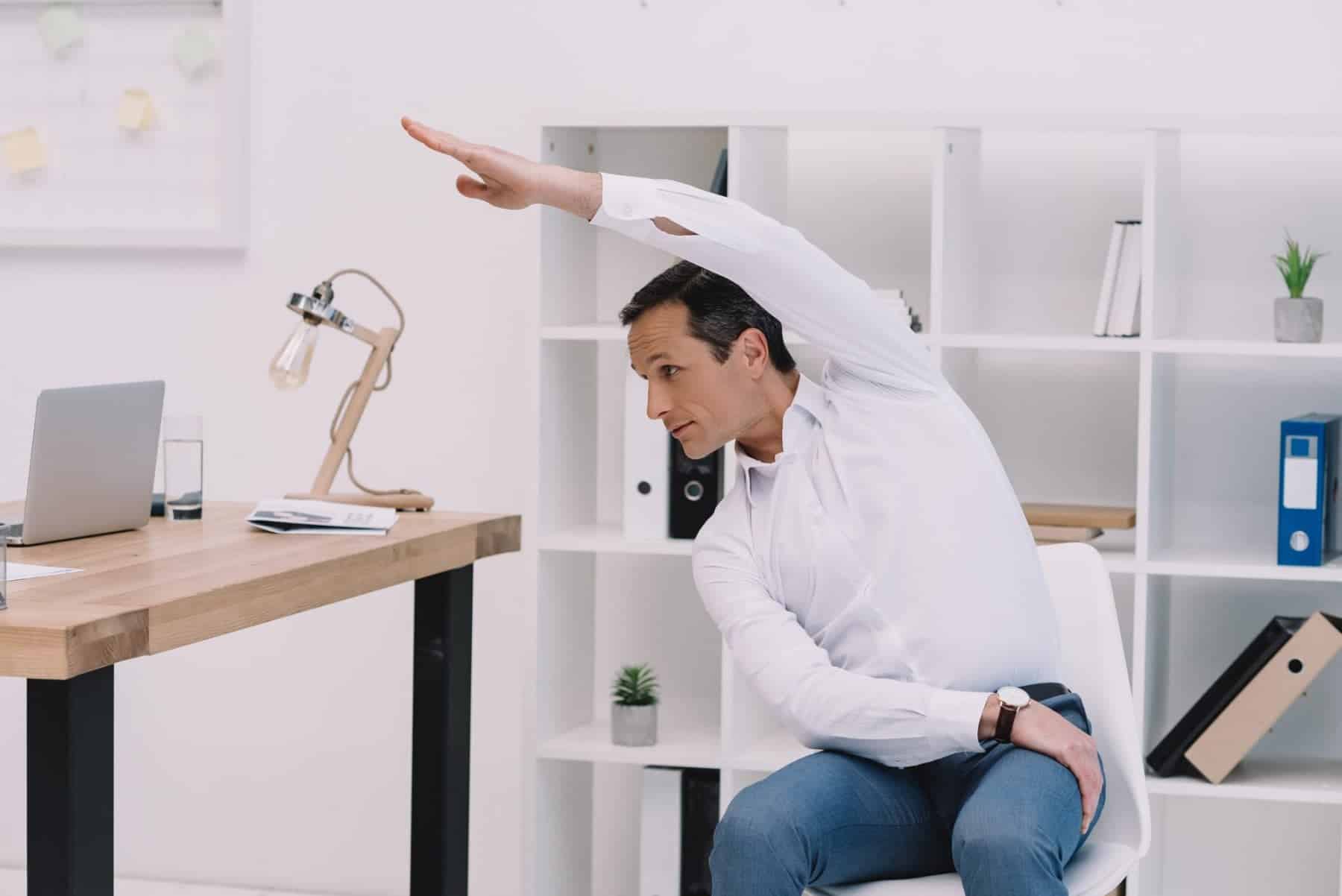
Inhale and reach the right arm up and over the head slowly bending to the left, left arm hangs by your side. Take five deep breaths.
Don’t bend too far or else more tension will be put on the lower spine!
Repeat on opposite side. This can be done standing or seated.
4. Quad Stretch
Don’t forget to stretch the front of the body! Tight quads and hip flexors can create tension and pain by pulling on the low back muscles. Standing, ground into the left foot and start to pull right heel up towards your glute (can have left hand on the desk for balance). Continue for five breaths and switch sides.
5. 90 Degree Lat Stretch
Place hands on desk or table at work, take a step backward as you bend forward with hands still on the desk. Continue moving feet backward until hips are stacked directly over heels and back is flat, hips should be close to 90 degrees.
The goal here is to lengthen the leg and low back muscles. Hold the stretch for five deep breaths.
6. Seated Figure 4 Stretch
This stretch is a holy grail hip opener. When the hip flexors and glutes are tight they can cause tension or pain in the lower back by pulling on the muscles.
The figure 4 stretch can release much of that tension.
Begin seated in office chair, keep left knee bent at 90 degrees and cross right ankle to come atop left knee making a figure 4. Keep right foot flexed to protect the knee, sit up tall and lengthen the spine. Take five deep breaths here and repeat on left side. To make this a more intense stretch start to fold forward, hinging from hips, while creating the figure 4.
Conclusion
All of these low back stretches can easily be implemented into your daily workday routine. By doing these low back stretches at work we are able to combat the effects of sitting and help relieve some tension and stress in the process.
Need extra encouragement? Try utilizing a posture coach! This small device is worn near your collarbone to help you sit taller and stand straighter. One of its main benefits is to reduce back pain.
Do you find it difficult to effectively and efficiently manage your day? Are you having difficulty retaining information you read in a short amount of time? Between distractions, multitasking, too little time and too little of you to go around, each second of your day is invaluable.
The good news is that you can learn how to concentrate on reading more effectively with these quick and easy-to-follow tips to save time and money.
How to concentrate on reading best practices begin with the elimination of distractions to optimize your time most effectively. Find a quiet place with good lighting and a good chair that is free of distractions. Get away from your desk if it is not an option for interruption-free reading. Be sure that you also turn off all phone notifications, including your emails and online dating matches.
Notifications are equally as much a distraction as human interruptions. You might also consider some lyric-free music that will help you to concentrate on the reading material at hand. Once you find your sweet spot, try to return to the same spot each time you need to read something with intense focus on how to concentrate on reading in an efficient manner.
2. Ideal Time of Day
The time of day you read is important to how to concentrate on reading. You do not want to read at a time when you are prone to being drowsy. This will be different for everyone. If you become slightly comatose and zombie-like after you eat, do not plan to read after lunch.
– Midday is ideal for activities such as errands and busy work;
– Late afternoon and early evening is best for applying new information.
She also goes on to say that these times may shift earlier or later based on whether or not you are a morning or night person.
3. Reading Intervals
Another top methodology on how to concentrate on reading includes reading in intervals.
The book “The Effective Executive,” by Peter Drucker, who is often considered the father of business management, states that the ideal amount of time for focusing on a single task, such as reading, is 50 minutes. After this amount of time, it is essential to take a 10-minute break for your brain to maximize efficiency.
If you try to power through, you will begin to lose concentration and your will no longer be able to absorb information as effectively. Get more tips about productivity reading some of these books. Read them and start training your attention now!
Another way on how to concentrate on reading is that during your breaks, try to participate in activities other than work such as checking those matches, chatting with friends, working out, cooking or participating in any other personal task you wish to tackle to keep your mind free from work stresses.
4. Clear Your Mind
Try to take a minute or two prior to the start of your reading session to meditate.
A clear mind is a sure way of how to concentrate on reading most effectively. It is recommended that you meditate prior to an intense reading session. If you only have a few minutes to decompress, close your eyes and take several deep breathes which will allow you to clear your mind from clutter and distractions. And, focus on one task at a time and breakdown the reading material into more manageable pieces when the content is technical and complicated.
If you need help to relax your mind in your executive lifestyle, try a meditation headband.
Meditation has been scientifically shown to reduce symptoms of anxiety and clear your mind. A meditation headband monitors and improves your meditation practice.
A few more essential best practices on how to concentrate on reading include scanning and setting goals. Read with a goal in mind. What is the purpose of the material and what do you hope to achieve by the end of your reading session? When you answer these questions before you begin, you will be able to more easily and more quickly spot relevant information and disregard the information that does not add value to your end goal.
And, be sure to scan the headings, titles and body of the material before you dive in without any idea of whether or not the material will be beneficial to your goals.
6. Exercise
A study at Leeds Metropolitan University revealed that the effects and impact of exercise during the day lead to greater productivity, more effective time management, improved relations with coworkers and enhanced levels of satisfaction upon the return home.
This could be as simple as taking the stairs rather than an elevator or walking around the outside of the facility for 20 minutes. Get more easy tips about how to get fit here.
It is imperative for your work productivity and job satisfaction to get up and move throughout the day.
Additional cognitive benefits also occur with the implementation of exercise on a regular basis that can maximize how to concentrate on reading such as:
– Elevate Mood
– Enhanced Creativity
– Faster Learning
– Improved Concentration
– Lower Stress
– Prolonged Mental Stamina
– Sharper Memory
Take advantage of the growth and success of the executive and entrepreneur community by sharing your how to concentrate on reading tips. Leave your ideas below and benefit from the strength of this dynamic community.
Do you feel as if your sleep has not been adequate enough to help you stay fresh throughout the day? Are work fatigue and tiredness affecting your productivity during the daytime?
If yes, you are not alone. According to a poll conducted by the YouGov, about 45 percent of the Americans have reported feeling fatigued or tired up to three times a week even after sleeping for 7 to 8 hours. This trend is alarming!
If you are not experiencing the benefits of sleep and suffering from work fatigue, you might be suffering from a disorder that must be identified. Here is a list of diseases that can cause work fatigue in executives and other working professionals.
Yes, diabetes! You might be thinking how diabetes can cause work fatigue. After all, this disease occurs due to the high blood sugar levels and so, this excess sugar should be able to serve as fuel to help you feel energetic.
Isn’t it? You are right, but only partially. Diabetes presents itself with high blood sugar levels. However, it doesn’t improve your energy levels, but actually decreases it. According to a study published in the Journal of Psychosomatic Research, high blood glucose levels cause due to diabetes can trigger inflammation in the blood vessels. As a result, immune cells such as monocytes enter the brain resulting in work fatigue.
High blood sugar can also make the blood sticky, thus preventing it from flowing easily through the capillaries. As a result, these capillaries do not bring enough oxygen to the cells making you feel tired.
Additionally, mental stress caused while trying to cope with diabetes could wear out your mind and cause stress. This can affect your sleep due to which you wake up feeling unrefreshed.
Also, keeping diabetes in control can be more difficult for busy executives due to their irregular meal times, thanks to the changing schedules of their meetings and client interactions.
As a result, you might develop severe fatigue and tiredness along with the common symptoms of diabetes such as increased thirst, a frequent urge to pass urine and delayed wound healing.
Controlling diabetes by using your antidiabetic medications regularly, following a healthy diet, and exercising regularly are advised to reduce your blood sugar levels and avoid work fatigue.
If you usually wake up feeling as if you haven’t slept at all, you might be suffering from sleep apnea. According to a study published in the Journal of Clinical Endocrinology and Metabolism, sleep apnea is commonly associated with work fatigue and daytime sleepiness.
Executives are more prone to develop sleep apnea due to their higher risk of associated disorders such as obesity. Obesity is common in managers due to their sedentary habits or lack of physical activities.
Sleep apnea can affect the quality of your sleep by causing frequent disruptions in the sleep. Frequent awakening can prevent you from entering the deep restorative stage of sleep thus negating the benefits of sound sleep.
Use of CPAP devices or simple recommendations such as changing your sleeping position to sides can help you to minimize the symptoms of this disease. This will help you to sleep well and avoid work fatigue.
3. Hypothyroidism
Hypothyroidism, a condition caused due to an underactive thyroid gland, is another common cause of work fatigue in working professionals.
Your body needs certain hormones including thyroid hormones for the production of energy. A drop in the levels of these hormones, as what occurs in hypothyroidism, can result in lower energy levels. This can make you feel weak and exhausted even after sleeping well or eating a wholesome meal. You may also develop other symptoms of hypothyroidism such as weight gain, hair loss, constipation, brittle nails, and dry skin.
You can check your thyroid hormone levels for the diagnosis of this disease. Regular use of thyroid medications can restore the balance of hormones in your body and minimize work fatigue. It will help to restore the balance of hormones in your body and allow you to meet your professional commitments with ease.
4. Depression
Depression and work fatigue have an unfortunate connection. Depression is not a stranger to executives. Constant work pressure, higher expectations from superiors, strict deadlines to meet, and job insecurity can cause severe stress in managers and make them prone to depression.
It can make you feel less interested in doing any task, and even affect your focus and concentration at work. Some other symptoms of depression include lack of interest in daily activities, loss of appetite, and explained weight loss. Depression can also cause insomnia, thus worsening fatigue and weakness during the daytime.
Practicing effective stress-relieving techniques such as yoga and meditation can help you to control stress and depression. This will also allow you to work with a positive attitude and help you feel energetic.
There are other techniques that you can use to regain control so that you can get back to your work as quickly as possible.
Fibromyalgia is one of the lesser known causes of work fatigue in managers. Fibromyalgia is characterized by pain and tenderness in multiple points along with stiffness. These symptoms make it obvious why a person with fibromyalgia could suffer from work fatigue.
Fibromyalgia can cause severe restriction of movements and even prevent you from sleeping well due to the pain and discomfort in the joints. These symptoms can make you feel tired all the time.
These symptoms are worse in executives as they have to sit at one place for prolonged hours without much physical movements. This can worsen the stiffness in the joints.
You can use the pain-relieving medications and practice aerobic exercises like walking or cycling to obtain relief from the symptoms of this disease and avoid work fatigue.
Conclusion
Ignoring the root cause of work fatigue can not just lead to a delay in the diagnosis of the underlying disorder, but also worsen your career prospects. If you want to stay fully dedicated towards attaining your professional aspirations, you must avoid work fatigue. This will help you carry out your duties and responsibilities to the best of your abilities and take your career several notches higher. However, this journey can begin only if you make an effort to find why you are experiencing tiredness at the workplace.
If you agree with this, please leave a comment below to let us know your thoughts.
Are you a senior manager who must travel frequently? Is a plane your second home and you always have a travel bag ready to fly out for another meeting at the drop of a hat? If you nodded yes to any of these questions, then the effects of flying on the human body are something you need to factor into your travel plans.
Airplanes maybe the fastest mode of transport and a fundamental need for business expansion; however, they are not without their pitfalls. “In 1997, the World Bank sponsored a detailed study that discovered that significantly higher rates of health insurance claims were filed by employees who traveled compared with those who did not,” says the report in the New York Times.
Flights pose numerous hidden health risks that most of us are unaware of. The effects of flying on the human body vary from mild skin dryness to more severe problems like deafness. Flying increases the risk of catching a cold, dehydration, aging faster, reduced alertness, increased risk of diseases like cancer, fuzzy thinking, and many others.
As a senior executive, maybe you cannot avoid flying, as it is a part of your job. However, to manage these health concerns successfully, a few hacks might go a long way even as you jet across the world.
Today we take a look at some of the effects of flying on the human body and the health risks that accompany flying.
Seemingly safe, an airplane is a hostile environment as far as health is concerned for every executive who travels by plane. The in-flight environment is different than at home, at the office or in the car. It is a completely manmade and highly controlled environment. This means that there is a lot that is beyond control as well.
Some of the challenges that we face are caused by conditions created by a high altitude and changes in atmospheric pressure. Others are caused by an attack on our immunity due to too many people in a closed environment and disruptions in our routine.
Let’s take a look at the most common issues we can face during a flight. It can help us tackle them well.
1. Changes in the air pressure while taking off and descending
Being a CEO who needs to fly for business meetings and conferences regularly, you might have often experienced a popping sensation in the ears or abdominal discomfort while the plane takes off and lands. As the plane takes off and the altitude rises, the gases in the air cabin expand due to decreased air pressure. Before landing, as the plane descends, the air pressure starts increasing, due to which the gases start contracting.
These changes in air pressure may affect body parts in which air is trapped, for example, causing a popping in the ears due to the trapped air inside the ear.
2. Lower air pressure than at sea level and low oxygen level
Airplanes fly at high altitudes where the air pressure is lower than the air pressure at sea level. Therefore, pressure changes are made in the cabins to equalize it to the atmospheric pressure on the ground and maintain a comfortable environment for us. Despite these changes in cabin pressure, it is hard to replicate the pressure on the ground.
As per the World Health Organization (WHO), the pressure in the plane at an altitude of 36,000 to 40,000 feet is similar to that of atmospheric pressure at 6,000 to 8,000 feet above sea level. This creates discomfort, and the low oxygen level can lead to difficulty breathing.
3. Dry air and low humidity
The humidity inside an airplane is very low, which leads to dry air. The dry air dries up the mucous membranes, thereby increasing the risk of contracting infections.
4. Cosmic (UV) radiation
Cosmic rays are the radiations from the sun and other elements in the universe. At sea level, we remain protected by the atmospheric shield. But at higher altitudes, such as on flights, there is increased exposure to cosmic rays that increases the risk of health problems caused by these rays. As a frequently traveling executive, you are at a higher risk of exposure to these rays compared to others.
5. Turbulence
Although turbulence is usually not felt except during take-off and landing, some of us experience motion sickness during these periods. Choosing the mid-section seat while booking flight tickets can help avoid such experiences that occur due to in-air turbulence.
6. New time zone
Are the after-effects of traveling more difficult than traveling? This can be true because of the disturbed circadian rhythm. Changes in time zone affect your sleep cycle, which greatly affects your overall health and, consequently, your productivity at work.
7. The concentration of germs
Air vents in the plane circulate air. However, cabin air contains only 50% fresh air from outside, and the remaining 50% is the re-circulated air. We cannot open the windows remember! An airplane is a completely packed room with air vents as the only source of ventilation.
It leads to an increased concentration of germs in the air you breathe. These germs can survive for days or even weeks inside the plane! Airplane seats, handles, tray tables, and other surfaces on the plane can harbor bacteria. Repeated exposure to these microbes increases your risk of infection.
8. Unhealthy eating
The food provided in the airplane is mostly packaged. This means it contains a high amount of saturated fats – the bad ones. Being a frequently traveling executive often translates into greater consumption of such unhealthy food and increased health risks. Fasting while on the flight can save you from such food. Keep you healthier in the long run by averting high cholesterol and the risk heart disease, diabetes, and stroke.
9. Contradictory signals from the vestibular system and the eyes
Our vestibular system consists of numerous tiny canals within the ear, which help the body maintain balance in relation to its surrounding. It can sense the changes in air pressure and the movement of the airplane as it takes off and lands. It can also sense if there is turbulence mid-air.
However, our eyes do not see any of these changes, leading to a state of confusion and mixed signals to the brain when you are flying.
10. Sitting for a long while in an uncomfortable position
So many times, we experience discomfort, swelling in the feet, and joint stiffness during or after a flight. This is because the blood flow is reduced, especially in the legs, while we are seated continuously for long.
11. Fear of possible technical failures and bad weather
Most flight phobics, although aware of the facts that a flight is safe and their fear may be irrational, are still debilitated with a fear of technical failures, bad weather, and even minor turbulence. This constant worry can be harmful to your work performance if you are a senior manager who must fly often.
Effects of Flying on the Human Body and the Risk of Health Issues
1. Executives are at a 100 times higher risk of catching a cold
What could be more discomforting than sitting beside a sneezing passenger? Due to the lower humidity, our mucous membranes dry up, making us more susceptible to a microbial infection.
If you catch a cold before reaching your destination, you might be too disturbed to focus on the goals of the trip. A bad cold may make it very difficult for you to give presentations and also focus on your business goals.
2. Executives are at an increased risk of breast and skin cancers
A study conducted by a group of researchers reported that extensive air traveling may lead to an increased incidence of breast cancer and melanoma. A study published by Di Trolio R et al. reported that cosmic rays could lead to various changes in the genes, which are the cause of these cancers.
However, it is unclear whether flying is the culprit behind other cancers too.
3. Hypoxia or low oxygen is a risk in executives who have existing medical conditions
As the plane goes higher, the air pressure and the amount of oxygen in the atmosphere reduce. The amount of oxygen available on the aircraft is sufficient for us to breathe comfortably when we are healthy.
However, those who are unhealthy are at a higher risk of suffering from hypoxia. It leads to less oxygen absorption in the blood and can lead to difficulty in breathing in managers with medical conditions. These medical conditions can be anemia or heart or lung diseases, such as coronary heart disease or pulmonary hypertension.
Executives who suffer from these diseases are unable to tolerate low oxygen conditions.
4. Low oxygen can cause fuzzy thinking and hamper productivity
Low oxygen at high altitudes alters the thinking ability. This is one of the reasons executives should rest instead of working on a flight.
This claim is supported by the fact that aviation regulations insist pilots wear an oxygen mask above a certain altitude is to keep them sharp and alert.
5. Flying can cause anxiety
Courage and frequent flying are the key necessities to overcome fear and anxiety on a plane. Anxiety feeds on fear. Instead of feeding the fear, we should focus on trying to make this journey a restful one that can lead to an excellent deal and organizational progress.
6. Flying increases the risk of formation of blood clots three times
When we are seated for long hours, the prolonged immobility can result in pooling of the blood in the body, especially in the legs, leading to swelling, stiffness, and pain in legs. A prolonged period of immobility may lead to blood clots in the veins, a condition known as deep vein thrombosis.
According to a research study by WHO, long-haul flights lasting four hours and above have a two- to threefold risk of causing deep vein thrombosis. Thrombosis is a condition where blood clots are formed in the deep veins.
The WHO Research Into Global Hazards of Travel reported that one out of 6,000 passengers will suffer from deep vein thrombosis due to a long flight.
7. Flying leads to swelling in feet
When we sit for long hours, our ankles and feet may swell due to the pooling of blood, which is generally harmless. Stretching the legs, walking intermittently, and wearing loose clothing can help prevent swelling.
8. Headaches are common during landing
A systematic review published in 2017 suggested that airplane headache attacks are clinically stereotyped and occur as a very severe form of pain. They happen mostly during landing and may last for about 30 minutes. The study suggests that changes in air pressure can be the reason for an airplane headache.
9. Bad breath can make you unsociable
On long flights, when our salivary glands do not produce enough saliva and the mouth dries up, bacteria that cause bad breath to grow inside the mouth. Bad breath may also occur when we fast during the flight.
Another reason for bad breath is a condition called tooth squeeze. Tooth squeeze or barodontalgia is a toothache due to changes in pressure while flying.
Being an executive, you need to speak confidently in public. But, bad breath can be a millstone around your neck, pulling down your confidence while speaking to people.
10. Bloating is real
Gases expand at a higher altitude, due to which we experience bloating in the body in areas where gases are trapped. The gases contract on landing, and the bloating subsides.
11. Flying can make you gain pounds
Regular travel may be a part of your job; however, being seated for long hours on a flight can lead to increased weight.
How is gaining pounds one of the effects of flying on the human body? Blame it on the combination of packed food and stress. As Men’s Health explains, “Not only are you within striking distance of the airport food court, but also the normal aggravation you endure when traveling fires up your body’s stress hormones—actually making you crave those sugary, high-calorie foods you find at the airport.”
12. The jet lag can pull you down
Jet lag is the most common disorder that occurs among regular travelers. As your job may need you to travel to different parts of the world several times a month to oversee regional offices, the changing time zone could lead to a disturbed circadian rhythm and cause jet lag. It is one of the most common problems you have to face as a senior executive.
Of the multiple stressors that cause us to age faster, the stress of our responsibilities as a manager, entrepreneur, or a business executive cannot be ignored. Extensive flying, which is part and parcel of a manager’s job, is also known to make us age faster. Physicist Chin-Wen Chou points out that when we are on a flight, we age a bit faster than when on the ground.
14. Flying can dehydrate our body
The low moisture content on a flight causes our nasal passages to dry up, which can make us prone to microbial infections. Executives may also become groggy and face reduced cognitive performance due to dehydration.
Although there is no evidence on internal dehydration, drinking plenty of water can help prevent these symptoms of dryness.
15. Cabin air can dry your skin
The humidity on a flight is as low as 20%, which is less than half of that on the ground (40%-70%). This low humidity on a flight results in drying of skin and chapped lips, which can lead to flaky and irritated skin. The oil glands in our skin secrete more sebum to compensate for the dryness, leading to oily skin, which is more prone to pimples.
As an executive who needs to be presentable at all times, it is necessary to take proper care of the skin. Using a moisturizer to keep the skin moist and healthy is the best way to prevent skin dryness and consequent skin breakouts.
16. In-flight environment can cause dry eyes
Dryness of the eyes is not as simple as drying of skin because eye dryness may lead to itching of the eyes and cause severe discomfort throughout the journey.
Dryness and itching of the eyes during important meetings or presentations can distract us, make us lose our focus, and affect our productivity and impact as a high-profile influencer. There is a lot that you need to pick up from business presentations and dry eyes can be a real spoilsport.
17. Executives may face dryness of the mouth
Often a sign of nervousness, a dry mouth can be a real dampener if you are flying to make presentations or conduct important meetings.
The dry in-flight atmosphere can cause severe dehydration of the mouth, making you feel thirsty. Carrying bottled water or drinking sips of fluids frequently during flights is important to overcome dryness of the mouth.
18. Executives may face “popping sensation” in the ears or ear pain
The popping sensation or ear pain is caused by pressure changes that occur with a change in altitude. While take-off, the air escapes from the middle ear and the sinuses and, while landing, it flows back to equalize the pressure.
Generally, this does not cause any problems except minor discomfort. We should avoid flying or take appropriate medications if we have a nose, ear, or sinus infection, as it may interfere with the pressure adjustment within the ears.
19. Flying can cause nasty tooth pain
Barodontalgia is a toothache experienced due to pressure changes in the environment while on the airplane. It is not easily predictable. However, we may experience it if we have a dental pulp disease.
20. Pressure changes in flight reduces the sensation of taste by 30%
Most times, we feel that the taste of food is bland while on a plane. An interesting fact is, it’s not the food, it’s our taste buds that are duller when flying. A professor of experimental pharmacology at Oxford University reported that food and drinks taste different depending on whether we have them while in the air or on the ground.
21. Flying can make you sleepy
Even when we are comfortably seated, long travel hours, an endless journey, and the niggling thoughts of having to work after such a long journey tend to make us very tired. The combination of sitting for long hours, unhealthy food, and dehydration can also result in fatigue, leading to sleepiness.
22. Alertness goes for a toss for managers
Executives who fly frequently may experience sleepiness, fatigue, hypoxia, dehydration, a popping sensation in the ears, or tooth pain on a flight. These factors can hamper alertness and mental sharpness during work hours post flight when you need them the most.
23. Constipation can cause serious trouble
Executives can experience constipation after a long flight due to dehydration, low physical activity on the flight, and low-fiber food during the journey.
24. Beverages are the culprits – coffee, caffeinated tea, and alcohol
As executives, we need to have better focus and concentration and a calm mind for the business goals we set out to achieve. But consumption of caffeine and theine, the constituents of coffee and tea, increase the stress level and affect our output at work.
Also, caffeine and alcoholic beverages cause frequent urination. As we are already dehydrated due to the low humidity on the flight, consuming such drinks will have an add-on effect, leading to excessive internal dehydration.
25. Motion sickness can make a business trip go down the drain
Severe turbulence or medical conditions may lead to motion sickness while on the flight, leading to nausea and vomiting. To prevent this, executives can consult a physician for medicines that help you keep nausea at bay.
You can check our infographic on the related topic by clicking on image below:
Be aware of the effects of flying on the human body, and learn how to cope with air travel. This will help you ace your business trips and make it worth your while.
Did you experience any challenges other than those listed above? Share them in the comments, and we will give you tips to manage them well.
Have you been experiencing an increase in moments of being short-tempered and a reduction in your focus and concentration at work? Do you always feel like you are dragging yourself out of bed each morning to work, without any real motivation? Have you ever wondered if this might be due to sleep deprivation?
Even though seven to eight hours of sleep is recommended for adults by the American Academy of Sleep Medicine, a survey found that most professionals sleep for an average of just six hours and 28 minutes! It’s no surprise then that just like you, so many executives and high level CEOs experience lack of energy, poor focus and lower concentration while at work.
Sleep deficiency not only affects a person’s health but also their efficiency and performance at work. It can affect an individual’s image in an organization and their growth.
Today, we will share about how sleep deprivation can significantly impact our cognitive performance, affecting your comprehension, memory, knowledge, judgment, reasoning, problem-solving, and decision-making skills.
Insufficient sleep can hamper your productivity by affecting the following factors:
1. Sleep Deprivation Effects on Memory
Many animal as well as human studies suggest that the duration and quality of sleep has a direct impact on your memory and learning ability. Learning and memory can be described as:
1. Acquisition: Introduction of new information to the brain, e.g., learning information.
2. Consolidation: The process of stabilization of the information, e.g., retaining the information.
3. Recall: Accessing the already stored information, e.g., reproducing the stored information during a test or when needed.
Although acquisition and recall occur only when you are awake, consolidation happens during sleep by strengthening the neural connections that are related to the formation of our memories. The exact mechanism of consolidation during sleep is unknown, but many researchers think that it is due to specific characteristics of the brainwaves.
Therefore, lack of sleep affects your neural connections in the brain in the long term and hampers your memory. So if you are not getting enough sleep, you are actually harming your brain in the long run!
2. Sleep Deprivation Effects on Thinking
Logical reasoning is the foundation of human rationality, which is the outcome of a methodical thinking process. Insufficient sleep directly dampens your logical reasoning and generating newer strategies, which is a necessity for higher order executive and managerial responsibilities.
A research study published in the Sleep Medicine determined the effects of insufficient sleep on an individual’s thought process. The statistical analysis of the self-made reports of 26 healthy participants indicated that there was a decrease in positive thinking ability after insufficient sleep. The reduced ability of thinking impairs your creativity, problem‑solving skills, decision-making ability, increasing the number of errors you make. It’s important to sleep enough to think on your feet!
3. Sleep Deprivation Effects on Concentration and Focus
Complete concentration and focus are what make your work perfect; however, insufficient sleep can disrupt your concentration and focus by reducing your attention span and causing daytime sleepiness. You may start feeling drowsy during important meetings with a client, negatively impacting your image as well as that of your organization. Sleep deprivation also makes you clumsy and easily distracted from work. Forgetfulness due to insufficient sleep and microsleeps (brief episodes of sleep) in a conference or during presentations or seminars can affect your performance to a significant extent.
The Institute of Clinical Neurophysiology, Slovenia, studied the effects of sleep deficit on concentration. It included a study of sleep deprivation on nine healthy individuals by applying pre and post sleep deficiency attention test. Researchers concluded that acute sleep deprivation causes mood swings and long-term chronic sleep deficiency affects concentration and performance at work.
So if you have been feeling like you have been dropping the ball while juggling multiple tasks at work, you need to ensure you get your fill of sleep and amp up your focus and concentration!
4. Sleep Deprivation Effects on Energy
A study conducted on a group of women-only participants concluded that the energy intake during sleep deprivation increased by about 20%, equivalent to 415 kcal. Additionally, another recent study found that sleep promotes the storage and conservation of energy. Sleep deficiency saps stored energy in the body during sleep deficit periods, thereby lowering your energy level during your working hours. This is bound to reflect in your productivity during a work day.
So if you want to achieve everything you plan for your day, you need all the energy you can muster. Sleeping for 7 hours is the very first step for a power-packed day at work!
5. Sleep Deprivation Effects on Mood
Sleep deprivation directly affects your mood. Studies have proved that both partial and complete sleep deficiency immediately impact your mood and cause irritability and stress. The increase in irritability may affect the way you talk and respond to others, thus creating a negative impression before your team and organization.
Sleep deficit affects you emotionally too, making you upset, angry, and mentally exhausted. It makes you emotionally vulnerable, and you may explode at the slightest cause at work, become less empathetic toward your coworkers, or become socially avoidant, jeopardizing your relationship with your colleagues and boss.
Sleep deprivation also affects your social skills at work. If you thought you were not nice to your team-mate for no real reason, think again, maybe you are right! It could have been simply the result of a sleep-deprived you, nothing more!
A published in-lab study in Nature Communications included 18 healthy adult volunteers. The study was performed with one night of complete sleep and one night of sleep deficit and the results were then compared. The result of this research indicated that sleep deprivation lead to social withdrawal and increased socially avoidant behavior.
If you find yourself lacking enthusiasm for more than one office party or client meeting, you must stop and think where the problem really lies. Lack of adequate shut-eye might be the culprit behind such reclusive behavior.
6. Sleep Deprivation and Anxiety
Sleep deficiency increases anxiety and can affect your ability to perform a new or challenging task at work as a high level executive or cope with trying situations with colleagues.
A paper published in Emotion studied the relationship between insufficient sleep and anxiety. The participants were allowed to sleep for a maximum of six and a half hours on the first night, two hours on the second night, and rest for seven to eight hours of sleep in the next two nights. The result of this research indicated that the participants suffered from greater anxiety in the sleep-deprived condition in comparison to the rest period. The study supports the previous reviews conducted and published on the effects of sleep deprivation.
If you have been experiencing anxiety before meetings, presentations, or before other tasks at work, you know that the sleep deprivation is beginning to show! Get your dose of shut eye to cut down on the unnecessary anxiety you have been experiencing.
7. Chronic Sleep Deprivation and Depression
Sleep deprivation can make you feel irritated and reduce your enthusiasm level, which, along with feeling sad and empty, are clinical signs of depression.
Research has proved that individuals with insomnia who get insufficient sleep are 10 times more likely to suffer from clinical depression. Increased insufficiency in the quality and duration of sleep leads to an increased risk of clinical depression.
Obstructive sleep apnea, in which the quality and quantity of sleep are impaired, is also associated with depression. A study with 19,000 participants indicated that the risk of depression is five times higher in individuals with obstructive sleep apnea.
Depression affects your performance and productivity at work. Feeling tired and sad all of the time make it difficult to meet deadlines and other obligations in the office.
8. Chronic Sleep Deprivation and Serious Health Problems
Prolonged sleep deficit affects your physical health, can weaken your immune system and make you prone to illnesses, leading to burgeoning absenteeism and hampered productivity. Serious health concerns like obesity and weakened immunity are often the gateway and a major risk factor for a host of other medical conditions like diabetes, high blood pressure, high cholesterol, cancer and heart disease. Chronic diseases like these are difficult to reverse and nearly impossible to cure. Prevention remains the method of choice to live without them.
In addition, scientists from UC Berkeley’s Sleep and Neuroimaging lab have discovered that sleep deprivation increases the concentration and accumulation of certain proteins in the brain. These proteins are responsible for causing dementia. Sleep deprivation automatically increases the risk of dementia.
Recent research also indicates that just one sleepless night can cause an immediate increase in the concentration of the beta-amyloid protein in the brain, which is responsible for a neurodegenerative disorder called Alzheimer’s disease, the most prevalent form of dementia. Imagine what persistent sleep deprivation can do to your mind! The very memories you are striving so hard to form, might turn to wisps of smoke.
So if you are not sleeping enough, even though you might be eating well, exercising regularly, you are doing injustice to your body and mind.
Conclusion
As we can see, effects of sleep deprivation are not just skin deep- they go beyond the groggy eyes and a slow day at work. Persistent sleep deprivation affects the body and the mind leading to fairly serious adverse effects. It hampers your memory, focus, concentration, decision-making and rational thinking, energy levels as well as your general temperament and mood at work. It is the threshold to a wide spectrum of health concerns like dementia, heart disease, diabetes, anxiety and depression, to name a few.
Your sleep deficit can become easily visible to your colleagues, superiors, and clients through the after‑effects of chronic sleep deprivation. Although you are sacrificing sleep for work, your inability to shoulder responsibilities with complete concentration and focus may lead to errors, creating an unfavorable impression at the workplace- the very thing you strive so hard to prevent.
Being well rested you are sure to be able to achieve more in a shorter day than you will achieve despite longer hours with a sleep deprived blunt mind and exhausted body. A few hours of shut eye do more for the mind, body and career than we realize.
Sleeping well is like pressing the reset button on the body and mind; giving them time to absorb everything that happened through the day, and repair.
If you have any questions about sleep deprivation, its effects on your performance, and how to address this issue, please leave a comment for us and we will be happy to help!
According to the survey conducted by the National Institute of Diabetes and Digestive and Kidney Diseases, difficulty in passing stools or constipation is a common gastrointestinal problem affecting approximately 42 million people in the United States alone. A large chunk of it is busy executives, especially women, who develop acute, and then, chronic constipation due to their unhealthy dietary and sedentary habits. Frequent traveling and the resulting changes in their daily schedule are also the common causes of constipation in them.
But using laxatives is not an option, at least not a healthy option. Laxatives do not offer a permanent solution to your problem and can cause side effects. Over a period of time, your body adapts to the continued presence of the laxative drug and stops responding to it as expected thus reducing its effectiveness.
Hence, it is advisable to try the foods that relieve constipation mentioned beneath to ease the discomfort without any side effects or dependency.
A study conducted by The Nature to evaluate the effect of a high-fiber diet on the colon health has proved that it can increase the stool output, and prevent constipation. A high-fiber diet supports the movements of the undigested foods through the gut. It also eases constipation by holding more water within its cellular structure.
Some of the foods that relieve constipation with their high-fiber content include fruits like citrus fruits, papayas, banana, and berries and fresh vegetables like broccoli, peas, and beans. Whole grains also offer a rich source of fibers. Make sure you include these foods in your regular diet for a long-lasting relief from constipation. Replace white bread with brown bread to give your gut the benefits of whole grains and ease the digestive movements.
If your job demands frequent traveling, you can always rely on bananas to ensure your body gets its supply of fibers to beat constipation.
A research published in the British Journal of Nutrition has proved the natural laxative properties of oatmeal. Oats are full of soluble fibers that quickly dissolve in water, and soften the stools. It also contains insoluble fibers, which increase the stool bulk thus easing the passage.
Oatmeal is considered one of the best foods that relieve constipation for another reason. It can also reduce the risk of colorectal cancer and inflammatory bowel diseases, which are the common complications associated with chronic constipation.
But, what makes oatmeal a practical option for you is you can prepare it in just a few minutes. So, how much ever busy you may be, taking out a few minutes to prepare healthy oatmeal won’t be a difficult task for you!
3. Eat yogurt
If you like yogurt, you are at an advantage because it has been proven to ease constipation. It is one of the best foods that relieve constipation. A study published in the American Journal of Clinical Nutrition has proved that eating probiotic foods like yogurt can offer encouraging results for patients with functional constipation.
Probiotics can improve the whole gut transit time and the stool frequency. Yogurt can also soften the stool consistency and prevent the discomfort caused due to constipation. So, the next time you reach out for a dessert after dinner, take a healthy turn and eat a bowl of yogurt instead.
4. Prunes
What are the things you never forget to take while leaving the home? I am sure they must include your wallet and cellphone. But, if you are suffering from constipation, I will advise you to add prunes to this list.
A research published in the Alimentary Pharmacology and Therapeutics has indicated the laxative effect of prunes. Prunes or dried plums promote healthy movements of the digestive tract and ease constipation. Prunes can also improve the stool consistency and prevent the pain and discomfort that you experience due to constipation. And it doesn’t even need any preparation or cooking. The all you need to do is put your hand in a jar and take out a handful of prunes to munch on as and when you feel like.
5. Extra tip: Drink Plenty Of Water
Drinking water is perhaps the easiest natural way to overcome constipation. The main benefits of drinking water come from its ability to boost the digestion. Drinking water, especially warm water, the first thing in the morning, is also a perfect remedy to flush out all the toxins from your digestive system and keep your body hydrated. You may squeeze half a lemon to the warm water for an added flavor.
It will enhance the digestive functions of your body and ease the symptoms of digestive troubles like constipation, bloating, and nausea.
It won’t be difficult at all to carry a bottle of water with you while traveling or leaving for office. Keep sipping water throughout the day to avoid constipation.
Want to get simple tips that even the busiest executive can incorporate into their day to ensure that they stay hydrated at work?
Chronic constipation can increase your risk of several diseases including hemorrhoids, ulcerative colitis, and colorectal cancer. Start eating the foods that relieve constipation before your digestive problem invites more complications. It will also protect you against the side effects and dependency associated with the long-term use of laxatives.
If you have suggestions about any other foods that relieve constipation, leave a comment to share them with us.
We use cookies to give you the best experience on our website, including personalised content and ads, social media features and to analyse traffic.
To alter the types of cookies we use click Cookie Settings.