20 Easy Tips on How To Accept Rejection Without Hurting Your Self-Esteem

Rejection at work can feel awful, like that disastrous date where you’re pretty sure the staff paid your date to leave. It can be your amazing idea getting ignored or a presentation that falls flat. It can make you want to disappear!

This constant rejection is tough on your emotions. It’s a mix of self-doubt, fear, and feeling like all you do is get rejected. It can make you question everything, from your abilities to your career path.

Even studies have proven that workplace rejection is a serious problem that, if left unaddressed, can lead to many adverse effects on a person’s company-wide level. Another study shows that social rejection activates brain regions associated with physical pain, highlighting its significant impact on emotional, cognitive, and physical well-being. It turns out that heartbreak from a rejection might hurt just as much as a broken bone.

But the thing is, it’s not easy to accept rejection, as it significantly affects an individual’s self-esteem and confidence, mainly if it’s in a professional setting​. So how do you do that? In this guide, we’ll help you learn how to accept rejection and even see it as a way to learn and grow as a leader. So, let’s move and see what rejection has to offer!

How To Accept Rejection Without Hurting Your Self-Esteem

Getting a ‘no’ when you’re calling the shots? It’s a gut punch. But this is where real leadership begins. It’s a cocktail of doubt, frustration, and a bruised ego shaken over ice.  But here’s the secret: how you handle that drink defines you as a leader.  This section is about turning that bitter taste into something useful: vulnerability without losing your edge, confidence without arrogance, and saving face publicly when things go sideways. 

Tip #1: Balance Vulnerability and Professionalism

How To Accept Rejection
Click on the image to see a full infographic (opens in new tab)

No one likes being rejected, not even important executives! It might feel bad to hear “no,” but guess what? That’s totally normal. Here’s the cool part: admitting you’re bummed doesn’t make you weak, it shows you’re human. 

Imagine a meeting where you say, “Wow, that rejection stings, but we’ll learn from it and try again!” Being honest like this builds trust way more than pretending you’re not bothered.

Tip #2: Be Open About What Went Wrong

How To Accept Rejection
Click on the image to see a full infographic (opens in new tab)

Instead of hiding the details after a rejection, talk about it with your team. Let them know that mistakes happen and it’s a chance to learn.  Think of it as figuring out a puzzle together, not as a punishment. Ask questions like “What went wrong?” and “How can we do better next time?” This turns a setback into a plan for success!

Tip #3: Keep Your Confidence High Even When Others Doubt You

How To Accept Rejection
Click on the image to see a full infographic (opens in new tab)

Think of doubters like mosquitoes: they’re bothersome but not deadly. To keep your self-esteem protected, imagine you have a mental shield against negativity. Tell yourself, “I can still handle this even after the rejection.” Make a habit of noting down your successes on sticky notes and attach them where you can see them often, like on your computer screen. 

The negative voices, those discouraging comments from others, will lose their power when you constantly remind yourself of your achievements. It will help you to accept rejection more effectively and, in fact, will help you stand more confidently. 

Tip #4: Make the Most of Criticism

How To Accept Rejection
Click on the image to see a full infographic (opens in new tab)

Not all feedback is helpful, but some of it can be really valuable. Your goal is to figure out which is which. Think of negative feedback as clues—it shows you where you can get better. 

Before getting upset, ask yourself: “Is this rejection is about my work, or is the person just being grumpy?” If it’s something you can fix, that’s your chance to improve!

Tip #5: Admit the Mistakes

How To Accept Rejection
Click on the image to see a full infographic (opens in new tab)

Getting rejected in front of people hurts! But remember, you’re a professional. Briefly admit the mistake, then change the focus. Say something like, “Okay, we didn’t hit our goal this time, but we’re always learning. Big improvements are coming!”  The point isn’t to hide the failure but to show how you handle it and bounce back.

Tip #6: Learn from Your Failure

How To Accept Rejection
Click on the image to see a full infographic (opens in new tab)

Even the biggest companies mess up. They made mistakes, but they learned and got better. Do you know Amazon? They initially faced rejection from traditional booksellers who doubted online sales and investors wary of its rapid expansion. 

However, Amazon overcame this rejection with an unwavering focus on customers, a long-term vision, and continuous innovation, ultimately proving its doubters wrong and becoming a massively successful company.

You can do the same! Read about other companies’ failures and how they turned things around.  These stories will inspire you and give you ideas to do better. Don’t think of a rejection as the end – it’s the start of something new!

Tip #7: Think Instead of Worrying

How To Accept Rejection
Click on the image to see a full infographic (opens in new tab)

Rejection makes your brain run in circles, asking, “What if?” and “Why me?” Stop this by focusing on the present moment. It’s okay to feel sad but don’t let those feelings take over. Say to yourself, “Okay, I feel bad. But I won’t let it ruin my day.”  Breathing exercises or a walk can help clear your head. 

Inhale slowly for a count of four, hold your breath for four, exhale to a count of four, and hold with empty lungs for another four. Repeat this cycle for a few minutes to calm your mind and refocus on the present moment.

Tip #8: Use a Journal to Get Smarter

How To Accept Rejection
Click on the image to see a full infographic (opens in new tab)

Don’t use a “Rejection Journal” just to complain. Use it to understand yourself better. Write down how you feel after a rejection, but then ask yourself why.  Do you get nervous during presentations? Do you argue with certain types of clients? 

Figuring out these patterns is like finding the enemy’s weakness. You can use your journal to turn your bad feelings into a plan to improve.

Tip #9: Ask For Feedback (Without Freaking Out)

How To Accept Rejection

Asking, “Why did we fail?” can be scary, but it’s a great way to learn.  Choose the right person to ask – someone who will give helpful feedback, not just criticism. Avoid asking right after a stressful time. Instead, make feedback a normal part of your work by having meetings to discuss what went well and what didn’t after every project.

Tip #10: Stay Calm When Criticized

How To Accept Rejection
Click on the image to see a full infographic (opens in new tab)

Think of criticism like hot sauce – a little enhances the flavor, but too much burns. It’s okay to feel a quick sting when someone criticizes you. But then, take a step back and analyze: Is the criticism really unfair, or are they pointing out something you need to improve? Criticism isn’t fun, but it can show you how to get better.

Tip #11: Your Support Team is Key

How To Accept Rejection
Click on the image to see a full infographic (opens in new tab)

It’s not just about having people cheer you up. Your support team should believe in you but also be honest when you’re messing up.  They’ll celebrate your successes AND help you learn from mistakes. Think of them like your own personal advisors – they give real advice, but they’re also your friends.

Tip #12: Your Network is Powerful (Use it!)

How To Accept Rejection
Click on the image to see a full infographic (opens in new tab)

Think of the people you know as tools to help you. Do you have a mentor who’s great at presentations? Ask for tips after a bad pitch. Join an online group of people with similar jobs. They’ve been where you are and can offer advice. Asking for help isn’t a sign of weakness – it’s the smart way to get better.

Tip #13: Don’t Take Rejection Personally

How To Accept Rejection
Click on the image to see a full infographic (opens in new tab)

Imagine rejection can’t stick to you – like you’re wearing special armor!  How? Instead of thinking rejection means something’s wrong with YOU, remember sometimes things just don’t fit. Think: “This wasn’t a good match, not that I’m bad.”  It takes practice, but it will make your life a lot less stressful.

Tip #14: Dealing with Rejection in a Positive Way

How To Accept Rejection
Click on the image to see a full infographic (opens in new tab)

Sometimes, when you get turned down for something, it can feel like you’re your own worst enemy. Your brain might tell you that you’ll never succeed. But here’s a trick: Instead of thinking, “I’m a failure!” try asking yourself, “What’s one thing I could do better next time?” This helps you take the negative feeling and turn it into a plan for improvement!

Tip #15: Developing a Thick Skin with a Soft Heart

How To Accept Rejection
Click on the image to see a full infographic (opens in new tab)

We don’t want you to become uncaring! It’s totally possible to handle rejection without turning cold.  Imagine your feelings have a layer of protection, like tough but flexible skin.  The tough part helps you bounce back from setbacks, but your heart is still soft underneath. This keeps you kind and understanding, even when things don’t go your way.

Tip #16: Emotional Intelligence in the Face of Adversity

How To Accept Rejection
Click on the image to see a full infographic (opens in new tab)

Imagine being able to feel bummed after a rejection, but instead of spiraling, you bounce back with a plan.  Emotional intelligence is basically a superpower in these situations.  Lets you analyze what went wrong without beating yourself up unnecessarily.  Turns setbacks into setups for the next win.

Tip #17: Turn Your Brain Into Your Biggest Cheerleader

How To Accept Rejection
Click on the image to see a full infographic (opens in new tab)

Your brain can either help you or hold you back. Visualization is like training your brain to be on your side. Imagine yourself succeeding – closing the deal, getting applause, whatever your goals are. Make the picture super clear in your mind, like a movie. This isn’t just daydreaming, it actually teaches your brain to expect good things so those rejections won’t feel as crushing.

Tip #18: Mental Practice = Real-World Confidence

How To Accept Rejection
Click on the image to see a full infographic (opens in new tab)

We all replay tough conversations in our heads sometimes. But if you do it on purpose, it becomes super helpful! Imagine yourself confidently walking into that meeting, delivering a great presentation, and even handling tough questions smoothly.  Picture what a “no” might look like and how you’ll respond with grace.  This mental practice doesn’t just improve your skills; it makes rejection less scary because you’ve already faced it (in your mind!).

Tip #19: Adopting a Growth Mindset

How To Accept Rejection
Click on the image to see a full infographic (opens in new tab)

Think of your skills like muscles – the more you use them, the stronger they get! Rejection is like a tough workout for your skills. It might hurt at first, but it makes you better in the long run.  Believing you can improve means you don’t give up after a setback. Instead of saying, “I suck”, you think, “Okay, I need to work on this specific thing”.  That way, you have a plan to get better!

Tip #20: Celebrating Small Wins on the Path to Acceptance

How To Accept Rejection
Click on the image to see a full infographic (opens in new tab)

Big goals are great, but it takes lots of little steps to get there. Celebrate those small wins to stay excited!  Made awesome slides even though the project didn’t work out? That’s progress! Handled tough feedback without getting upset? That’s growth!  These small wins prove that even when you hear “no”, you’re still moving forward.

Final Thoughts

Imagine rejection is like a bunch of blind dates set up by someone who means well but doesn’t know you at all. Some dates will be awkward, some might even be disasters, but hey, you learn from them! Eventually, you’ll find the right fit. That’s how it is with job pitches, projects, or going for that promotion.

So next time you get rejected, don’t stress. Think of it as a funny story in the making! Did you have a terrible interview or a proposal that totally bombed? Share it below! Let’s laugh about our rejections and learn from each other.  Because sometimes, the biggest lessons come from the funniest fails!

Time to see how far you’ve come! Take this quiz and see how well you understand the concepts.

0

Accept Rejection

Check if you know strategies to accept rejection.

1 / 10

What does constant rejection often lead to?

2 / 10

What is one effect of social rejection according to studies?

3 / 10

Why is it beneficial to be open about what went wrong after a rejection?

4 / 10

What should you do with criticism to make the most out of it?

5 / 10

What is a constructive way to admit mistakes?

6 / 10

How can mindfulness help in dealing with rejection?

7 / 10

How should you ask for feedback after a rejection?

8 / 10

What is a healthy way to respond to criticism?

9 / 10

Why should you not take rejection personally?

10 / 10

What does it mean to develop a thick skin with a soft heart?

Your score is

The average score is 0%

0%

5 Helpful Strategies On How To Stop Worrying And Start Leading Mindfully

Do you often find yourself unable to stop worrying about the future and struggling to live in the present? Maybe you stress about deadlines, money, or relationships. Worrying can take over our lives, leaving us anxious and making it hard to work or enjoy ourselves. All those “what ifs” and scary thoughts can leave us feeling exhausted and helpless.

Do you know that Up to 20% of adults are affected by anxiety disorders each year? And the major cause of this serious mental disorder is worry. Yes, according to experts When you worry excessively for 6 months, it can convert into a Generalized Anxiety Disorder (GAD). 

It is very important to put a halt to this worry. I know saying is easier than doing and stopping worrying seems to be a huge task. 

But what if I told you there are simple yet powerful ways that can help you stop worrying and lead in the best way? Continue reading to find out the valuable techniques for mindful and effective leadership.

Strategy 1: Mindfulness Meditation

Turn Down the Mental Noise

Imagine your mind is like a bustling airport, with thoughts constantly taking off and landing and worries circling overhead.  Mindfulness meditation is like finding a quiet corner in that airport. Sit comfortably and simply observe your thoughts as they arrive and depart without getting caught up in them. 

Notice any worries that linger acknowledge them, and then shift your focus back to your breath.  Your breath is like the airport’s PA system, a steady guide bringing you back to the present moment.  Remember, even short moments of mindfulness offer your busy mind a chance to relax and reset.

Digital Detox: Give Rest to Your Mind

Imagine giving your mind regular mini-vacations. Turn off those notifications for an hour – seriously, you’ll be okay!  Go for a walk, meditate, or even stare at the ceiling – anything but scrolling through the latest bad news. These breaks are like power naps for your brain – you’ll come back refreshed and ready to focus.

Mindful Tech Use

Tech is like that overexcited puppy – adorable but needs boundaries! Check your email at set times; don’t let it interrupt you constantly. This means you’ll work through information methodically instead of always feeling distracted. It puts you back in control of your mental space.

We’re not going off the grid! The goal is to be intentional about tech use. You want to use your tech tools, not let them use you.  This is how you create space for clear thinking and those legendary leadership moments!

stop worrying
Click on the image to see a full infographic (opens in new tab)

Strategy 2: Get Physical

Punch Stress in the Face

Picture your worries as… well, targets for your anger!  Okay, maybe don’t actually try that, but intense exercise lets you do it metaphorically. Running, boxing, or even a wild dance session—these turn stress into something useful. You’ll get sweaty, maybe even sore, but also feel amazing afterwards.

Yoga: Channel Your Inner Zen

Yoga is like stretching out a tense mind. It loosens up those anxiety knots and teaches you to breathe calmly even when it feels like everything’s going wrong. Think of it as making your mind as strong and flexible as your body will be.

HIIT: Quick Stress Relief

No time?  No problem! HIIT(High-Intensity Interval Training) workouts are amazing. 30 seconds of all-out sprinting followed by 60 seconds of walking. This cycle is repeated several times.

Short bursts of intense exercise give you a full workout. Expect sweating, maybe some cursing, and a major boost of happy brain chemicals to get you through those long meetings.

Don’t see exercise as a chore.  Find something you enjoy, even if it’s quirky (zombie apocalypse training, maybe?). This is about taking time for yourself, releasing that mental pressure, and becoming a stronger person overall. Because a healthy leader is the most effective kind of leader.

stop worrying
Click on the image to see a full infographic (opens in new tab)

Strategy 3: Scheduled Worry Time

Outsmart, Those Mental Telemarketers

Think of your worries as those annoying callers who always interrupt you at the worst moment. Scheduled worry time is like giving them a specific time slot: “Okay, I’ll panic about the time from 3–3:30 pm, but the rest of the time, leave me alone!” It seems weird, but this really does free up your mind to focus on the important stuff.

Clear the Fog for Better Decisions

Worry time is when you tackle those nagging decisions. Imagine a mental whiteboard: write down the problem, then honestly decide if you can solve it right now or not.  This simple act of sorting helps you focus on what you can control.

Instead of endlessly asking, “What if?” you’re making steps and setting deadlines. You’ve turned your worry into a plan, and that’s exactly what strong leaders do.

Stop worrying; Start Leading

This isn’t just about emotional relief; it’s about being a smarter leader. By giving worry a place and a time, you stop it from controlling your whole day. You can focus, give clear direction, and be the decisive leader your team needs. Scheduled worry time is the ultimate power move – you’re taming your mental chaos and becoming the leader everyone wants to follow.

stop worrying
Click on the image to see a full infographic (opens in new tab)

Strategy 4: Start Journaling

Create Your Journal

Think of your journal as a magical mirror. Instead of showing your face, it reveals your inner workings –  chaotic emotions transformed into organized thoughts.  Journaling reveals hidden truths, helping you navigate your own unique leadership journey.

Untangle those Emotions

Sometimes, leadership feels like an emotional rollercoaster (without the tasty snacks).  Journaling lets you step off the ride and examine it: “Why did that meeting make me so angry? What makes me lose patience?” Naming your emotions helps you take control of them.  Think of writing as a way to disarm those worry monsters.

Get More Deeper in Situation

Get even deeper with targeted journal prompts.  Ask things like “What made me feel proudest this week?” or “What emotions are toughest for me, and why?”.  This gives you an X-ray vision of your inner world, exposing patterns and triggers and how to manage them best.

It’s easy to focus on problems and miss all the good stuff.  Keep a gratitude journal to force yourself to notice even small wins: “Meeting went well, got great coffee, that client actually laughed at my joke…”. Shifting your focus builds resilience like nothing else– it’s basically optimism training!

Journaling isn’t just about venting; it’s about deep self-understanding. This awareness makes you a more compassionate, focused leader. So grab your favorite pen, make some tea (or something stronger!), and let your journal be where you discover your best leadership self.

stop worrying
Click on the image to see a full infographic (opens in new tab)

Strategy 5: Build Your Support Network

Think of work-life balance as a high-wire act. Your support network is the safety net below – there to catch you when you fall and give you the courage to take bold steps. Here’s how it works:

Tap into the Wisdom of Others

Imagine a secret club of executives who have this “balance” thing down. Support networks are just like that, minus the weird handshakes. You get honest tips, learn what works (and what doesn’t), and share those life-changing “aha!” moments. It’s your shortcut to the work-life balance cheat sheet.

Find Your Work-Life Yoda

Mentors are likewise guides. Seek out those whose life looks like what you want – successful and sane. They’ll help you steer clear of burnout traps, teach you to prioritize, and remind you that having a life actually makes you a better leader.

Your Tribe of Champions

Peer groups are your people. They understand the struggle, celebrate your wins, and help you stay on track when you slip into old habits.  This is about creating a space where work-life balance becomes a shared goal. It’s motivating, inspiring, and exactly what you need to keep going.

Asking for help isn’t a weakness; it’s smart leadership. Building a support network makes you more resilient, resourceful, and happier overall. So go find your tribe! They’re the ones who’ll help you master that high-wire act of work-life balance and maybe even enjoy the view along the way.

stop worrying
Click on the image to see a full infographic (opens in new tab)

From Worry Warrior to Zen Master

This isn’t just about stop worrying; it’s about unlocking your best leadership self.  Mindfulness, exercise, and strategic worry sessions are the tools that create the kind of leader people trust and follow.  A leader who’s present, adaptable, and has that calm, confident energy we all want at work.

Experiment! Some of these strategies will work instantly, but others will require time. Don’t chase perfection; chase progress. Every mindful moment, every action-focused worry session, every time you prioritize your well-being – that’s a win. This journey is yours, and the results will be amazing.

The Ultimate Result

Remember, mindful leadership isn’t just about you. You’re changing the whole vibe of your team. Imagine a workplace where clarity, creativity, and well-being are the standard. It starts with you.

As you start this awesome adventure, the only real worry should be whether your coffee is worthy of your newfound enlightenment!  Because guess what?  Mindful leaders make better coffee choices, too. Embrace this journey, embrace the changes, and let’s show the world what truly awesome leadership looks like.

Feeling confident in your understanding? Test what you’ve learned by taking this quiz on the main points of the article.

0

Stop Worrying

How will YOU stop worrying?

1 / 10

What does GAD stand for?

2 / 10

How long does excessive worrying need to persist before it can develop into GAD?

3 / 10

How does scheduled worry time help manage anxiety?

4 / 10

What type of exercise is recommended for quickly relieving stress?

5 / 10

How can journaling help manage emotions and reduce worry?

6 / 10

What role does a support network play in achieving work-life balance?

7 / 10

How can mentors help in mindful leadership?

8 / 10

How does physical exercise contribute to managing worry and stress?

9 / 10

What is the benefit of turning off notifications for an hour?

10 / 10

What is the purpose of mindful tech use?

Your score is

The average score is 0%

0%

What is a Prompt in AI? An Expert Guide for the Beginners To Be a Prompt Master

Imagine having a genie with the entire internet at its fingertips! This genie won’t grant wishes, but it will find anything you ask for and even create amazing things. That genie knows everything about your industry! It can find hidden trends, analyze competitors, and even come up with creative marketing ideas – all you need is the right set of instructions. That’s the power of AI prompts for business, but what is a prompt for AI?

Think of them like questions you’d ask a super-smart consultant. 

The way you ask those questions makes a huge difference – it tells the genie whether to write a quick report, design an eye-catching graphic, or brainstorm new slogans.  Learning this special language can feel tricky at first, but don’t worry! I am going to help you become an AI prompt expert. Get ready to discover how to ask the right questions and make smarter business decisions!

What is a Prompt in AI?

what is a prompt in AI
Click on the image to see a full infographic (opens in new tab)

In the world of AI, your prompts are like blueprints for a team of expert analysts. Think of them as instructions you’d give to crack data scientists and market researchers. Instead of simply saying, “Find me sales trends,” a great prompt focuses on the research: “Analyze sales data for the past 3 years, highlighting seasonal patterns and unexpected increases in our Southeast region.”  Just like blueprints, the more detail you provide, the better the results!

Whether you want a silly limerick, answers to complex questions, or a perfectly formatted spreadsheet, your prompt is how you communicate with the AI. It provides direction, hints at your desired outcome, and even suggests the style or tone of the result.

Crafting a Perfect Prompt to Become an Expert

Think of crafting the perfect AI prompt like mixing a magical potion. The right ingredients, combined in just the right way, will unlock incredible results! Let’s dive into three key strategies for powerful prompts:

1st Strategy: Crystal Clear Communication

what is a prompt in AI
Click on the image to see a full infographic (opens in new tab)

Even the smartest AI isn’t a mind reader. Your prompt is its guide, so make directions crystal clear:

Be Direct: Don’t be vague!  Avoid broad requests like “Analyze our marketing performance.” Instead, be specific for the best results: “Compare click-through rates on our email campaigns versus social media ads for the past quarter.”

Keep it Simple: Clear and concise prompts are the easiest to understand. Think of your AI as a focused expert – instead of vague requests like “Find ways to improve customer satisfaction,” give specific instructions like “Analyze customer reviews to identify the top 3 reasons for negative feedback.”  Clear prompts get clear answers, helping you make smarter business decisions.

Explain what format you want: Do you want a list, an explanation, or a creative piece? Tell the AI what kind of result you’re hoping for. 

  • List: “Generate a list of the top 10 competitors in our industry with their website links.” 
  • Explanation: “Explain the impact of rising interest rates on consumer spending in our target market.” 
  • Creative Piece: “Design a visually appealing infographic comparing our product features to the top 3 competitors.”

2nd Strategy: Context is Key

what is a prompt in AI
Click on the image to see a full infographic (opens in new tab)

Clarity gets you the right type of answer. Context helps the AI tailor it perfectly to your needs.

Provide Background: A few sentences of context go a long way in helping the AI understand your request.

Example: Product Description

  • Without background: “Write a product description for a backpack.”
  • With background: “My company sells outdoor gear for adventurous hikers. Write a product description for a lightweight, waterproof backpack with lots of pockets.”

Don’t Overshare: Avoid dumping too much information. Find the sweet spot between clarity and overload.

Example: Design Request

  • Oversharing: “I need a new website banner. My company provides IT consulting services for small businesses, and we want to look professional but also approachable. Our brand colors are blue and green, and it would be cool to incorporate some kind of technology theme without being too cliche.”
  • Refined: “Design a website banner with a professional look, using blue and green, and a subtle technology theme.”

3rd Strategy: Unleash the Unexpected

what is a prompt in AI
Click on the image to see a full infographic (opens in new tab)

AI models hold a wealth of knowledge and creativity – you just need to know how to tap into it! Experiment for truly surprising results:

Play with Formats: Try questions, commands, and even riddles. See how the AI reacts differently.

Example: Product Review

  • Question: “What are the pros and cons of the new XYZ smartphone?”
  • Command: “Summarize the top 5 features of the new XYZ smartphone.”
  • Riddle: “I have a screen that shines, a camera that sees all, and a brain faster than yours. What am I?”

Creative brainstorming: “Write a humorous email newsletter subject line to promote our quarterly report.” (Encourages playful and out-of-the-box thinking)

Embrace Surprises: Unexpected answers are often the most interesting. Use them to refine your prompts further.

Master these strategies, and your prompts transform from simple requests into power tools. You’ll get precise information and creative insights and maybe even discover that your AI has a hidden sense of humor!

Quick Tips to Tackle the Problems while Generating Prompt

Even with practice, the most skilled prompt wizards sometimes get a less-than-stellar response from their AI companion. Generic answers? Wild misunderstandings? Don’t despair –  these are just challenges to overcome! Here’s your troubleshooting guide to turn misfires into triumphs:

Problem: How to Spice Up Boring AI Responses?

Your AI starts sounding like it’s avoiding an honest answer. Time to spice up your prompt!

what is a prompt in AI
Click on the image to see a full infographic (opens in new tab)

Solution

Get Specific: Add detailed examples or narrow your question’s focus. Instead of “What is leadership?” ask, “What are examples of great leadership in times of crisis?”

Switch the Angle: Try a totally different way of asking the question. Get personal, be funny – shake those boring answers loose!

For Example

You ask, “What are some ways to improve team communication?” and receive a list of basic tips like “hold regular meetings” and “encourage open dialogue.”

Get Specific

“What are some creative team-building exercises that promote better communication?”

“How can I use technology tools or platforms to improve asynchronous communication for remote teams?”

Switch the Angle

“Tell me a story about a team that overcame a major communication breakdown. What did they do to turn things around?”

“If you were the team leader, what’s a funny or unusual icebreaker you’d use to encourage better communication in a meeting?”

ChatGPT has access to a massive amount of information. The more guidance and unique angles you provide in your prompt, the more likely you are to unlock interesting and helpful responses specific to your needs.

Problem: Your AI is Lost in Space

Suddenly, it seems like your AI is answering a completely different question. Let’s get it back on track!

Solution

Clarity is Key: Rephrase, simplify or add clarifying details. Sometimes, stating what the prompt ISN’T about can help redirect the AI.

For Example: 

You ask: “Can you help me write an email to reschedule a meeting?”

ChatGPT starts: “Meetings can be time-consuming, especially if they are poorly organized. Here are a few tips for running effective meetings…”

Be More Clear

Rephrase: “I specifically need help with the wording of an email to reschedule a meeting. Can you give me a few polite and professional examples?”

Clarifying detail: “I’d like to reschedule due to an unexpected scheduling conflict. Could you provide some phrases that express this?”

Use Every Response to Improve

Think of each AI response, good or bad, as a clue to crafting the perfect prompt.

  • Analyze & Improve: Why did that answer happen? Was your prompt too vague? Too odd? Use the feedback to refine your next attempt.
  • Experiment!: Change one thing at a time in your prompt and see how it affects the result. This is how you learn the AI’s language!
  • Embrace the Unexpected: Those misfires are sometimes the most insightful. Treat it like a puzzle, and you’ll learn something new each time.

Keep a Prompt Journal

Write down your prompts, the answers, and any changes you try.  You’ll quickly spot patterns and level up your prompting skills!

Level Up with these Advanced Tricks for AI Power

Think of basic prompts like learning simple magic spells. They’re useful, but wouldn’t you rather have even greater abilities? Time to unlock some serious AI wizardry with advanced techniques like prompt chaining, zero-shot learning, and few-shot learning.

Prompt Chaining: Unlocking Deeper Knowledge

what is a prompt in AI
Click on the image to see a full infographic (opens in new tab)

Imagine your AI is a super-smart helper. With prompt chaining, you ask a series of connected questions. Start with a broad topic, then use details from the answer to ask a more specific question. It’s like following a trail of clues, with each answer leading you deeper into a subject!

For Example

  • Scenario: You’re researching competitors for an upcoming product launch.
  • Prompt 1: “Give me a summary of our top three competitors.”
  • Response: [AI provides basic overviews]
  • Prompt 2: “Focus on [Competitor X]. What are their key strengths and weaknesses?”
  • Response: [AI analyzes competitor’s market position, product features, etc.]
  • Prompt 3: “How does [Competitor X]’s recent social media campaign align with their strengths?”
  • Response: [AI examines campaign messaging, target demographics, and links it to company strengths]

Zero-Shot Learning: When Your AI Surprises You

what is a prompt in AI
Click on the image to see a full infographic (opens in new tab)

Sometimes, you need your AI to do something totally new. That’s where zero-shot learning shines! Instead of lots of training, a good prompt is enough. The AI uses its existing knowledge to figure out what you want.

For Example:

  • Scenario: You usually use your AI assistant for scheduling and note-taking. Now, you need to analyze customer feedback.
  • Prompt: “Summarize the key themes in this spreadsheet of customer reviews. Categorize them as positive, negative, or suggestions.”
  • Response: While not specifically trained for this, the AI might recognize patterns and identify sentiments within the feedback.

Few-Shot Learning: Teach Your AI Quickly

what is a prompt in AI
Click on the image to see a full infographic (opens in new tab)

This helps your AI learn a specific style or task fast. Give it a few examples (“few-shot”), and it understands the pattern you’re after. 

You provide the AI with two sample news articles along with the ideal summary format.  This is the “teaching” part. Notice how the summaries give the key takeaway, not a rephrasing of the entire article. The Prompt is where you put the AI to work on a new task.  You would:

  • Provide a new article link.
  • Ask it to follow the established pattern using the prompt “Summarize the most important points from this news article [link].”

For Example

  • Scenario: You want concise summaries of industry news for a weekly team update.
  • Examples:
    • News Article 1: [Link]
      • Summary: New regulations to impact the tech sector focus on data privacy.
    • News Article 2: [Link]
      • Summary: Competitor launches AI-powered customer service tool.
  • Prompt: “Summarize the most important points from this news article [link].”

Quick Tips 

  • Start Simple: Experiment with basic versions of each technique before getting fancy.
  • Keep Notes: Track how changing your prompts changes the results.
  • Combine Techniques: Use them together for even more powerful results!
what is a prompt in AI
Click on the image to see a full infographic (opens in new tab)

Your AI Adventure Starts Now!

We’ve traveled far in the world of AI prompts. You’ve learned how to be clear, add helpful details, and be creative. You understand how to fix mistakes, use advanced techniques, and mix the perfect potion of detail and imagination! The future, where talking to AI is a normal skill, is getting closer every day.

But remember, the most important part is the journey!  Every strange answer is a funny lesson. It’s in trying, changing things, and studying the results that you become a true AI wizard.

So, here’s a final bit of encouragement: Every great prompt wizard started somewhere.  Don’t be afraid to play with prompts, make mistakes, and learn from those funny or surprising AI answers.

Now, share your stories! Did a prompt work amazingly well? Or go unexpectedly wrong? Did you learn something new about your AI friend? Sharing helps us all learn and get better.

Happy prompting, brave explorers! May your AI adventures be full of wonder, learning, and a little bit of playful messiness.

Think you know everything? Take this quiz to see how well you can create an AI Prompt.

0

Prompt in AI

AI Prompt Mastery Quiz

1 / 10

What is a prompt in AI?

2 / 10

What is a key component of a well-crafted AI prompt?

3 / 10

What is the benefit of providing detailed and specific prompts to AI?

4 / 10

Why is context important when crafting an AI prompt?

5 / 10

How can you make AI responses more creative?

6 / 10

What is prompt chaining?

7 / 10

How can you quickly teach AI a specific task?

8 / 10

What should you do if AI responses are too general?

9 / 10

What should you avoid when crafting an AI prompt?

10 / 10

What does "not oversharing" in a prompt mean?

Your score is

The average score is 0%

0%

5 Useful Tips You Need to Know on How to Use ChatGPT at Work to Boost Productivity

Imagine trying to be super productive at work is like a game show – you’re rushing around trying to finish everything before the time runs out. Using AI tools like ChatGPT sounds like a great idea. A study shows that participants assigned to use ChatGPT experienced a 40% decrease in the average time taken to complete tasks, and output quality rose by 18% for participants using ChatGPT.

But wait, there are some unexpected obstacles that usually arise because you don’t know how to use ChatGPT at work to boost productivity properly. Sometimes, there’s too much information, it’s hard to ask the right questions, and you secretly fear your brain is turning to mush as you outsource some heavy thinking.

Don’t worry! These challenges can actually help you become even more productive. This guide will teach you everything you need to know about using ChatGPT at work.  Think of it like training a new teammate.  Let’s work together to make sure ChatGPT helps you, not the other way around!
Here’s What This Guide Will Cover:

Tip #1: Work Smarter With this Smart Tool, Not Harder

Ever tried ChatGPT and found yourself more irritated than helped? We’ve all been there. It’s easy to expect a new tool to be a magic bullet, saving us tons of time. But sometimes, the results just aren’t what we envisioned, leaving us feeling frustrated and like we wasted time. However, that doesn’t mean the tool is useless! You might just need to learn how to use ChatGPT at work properly. 

Think of using ChatGPT at work, like hiring a super-smart but inexperienced new employee. They have tons of potential to make your life easier, but it’s going to take some training to make sure they don’t cause more work for everyone! Expect a little bit of a learning curve at first, both for you and for ChatGPT.

How to Use ChatGPT at Work
Click on the image to see a full infographic (opens in new tab)

How to Do It?

The best way to start using ChatGPT at work is to ease into it, just like you would with a new employee. Start by giving it simple, low-pressure tasks like writing routine emails, keeping track of your schedule, or summarizing easy reports.  

As you get used to how ChatGPT works, you can try giving it more difficult assignments. Before you know it, ChatGPT could become a helpful digital assistant, saving you and your team time to focus on the really important work.

Outcome

Expect a few funny mistakes when you first start using ChatGPT at work. Of course, when you hire a new employee, he doesn’t understand everything yet. You might ask for summaries of meetings that never happened or reports about weird topics.  

Companies that start slowly end up with happier employees because ChatGPT helps out with boring tasks.  Once it learns how things work, it’ll become an essential part of the team.

Tip #2: Recheck the Facts Twice

While ChatGPT can be a great assistant, there’s a crucial catch: it sometimes gets specific details wrong. This can be a major challenge, especially when dealing with important information. You can’t trust it blindly, just like with anything else. 

Using ChatGPT at work is a bit like trusting a new employee to do something important. They might surprise you and do an amazing job, or they might completely misunderstand what you want. In both cases, you won’t just blindly use that data. You are doubtful that the data they provided you is accurate; the same goes for this AI tool. That’s all part of the process when working with a powerful tool that’s still learning.

How to Use ChatGPT at Work
Click on the image to see a full infographic (opens in new tab)

How To Do It?

Imagine having a super-helpful new employee; they’re enthusiastic and ready to do whatever you ask, but they might make mistakes. Just like you wouldn’t blindly trust every report a new employee makes, you need to double-check ChatGPT’s work, too.  It’s great at finding information quickly, but that final touch of careful thinking is still up to you and your team.

Outcome

Think of ChatGPT as a super-fast helper who gathers information for you. It can find things much faster than a person could, but you still need to add your own expertise. Using ChatGPT at work isn’t about replacing yourself; it’s about working smarter!  

AI does the boring stuff quickly, and you add your knowledge for better, more accurate results. This way of working saves you time and helps you come up with unique ideas.

Tip #3: Craft Effective Prompts

You may encounter a situation in which you gave ChatGPT a seemingly simple instruction, only to receive a nonsensical response filled with random details that are irrelevant to your query. This can be incredibly frustrating, especially when you’re pressed for time and expecting a straightforward outcome. 

The problem might not lie with ChatGPT itself but rather with the way you’re communicating with it. 

Learning to write perfect prompts for ChatGPT is like mastering a secret code – it unlocks a whole team of super-efficient digital assistants.  But here’s the trick: it’s not just what you ask, but how you ask it. 

Think less like you’re talking to a person and more like you’re briefing a crack team of specialists ready to tackle your most tedious tasks.

How to Use ChatGPT at Work
Click on the image to see a full infographic (opens in new tab)

How to Do It?

Asking ChatGPT questions isn’t like talking to a friend – it’s more like making a wish to a work genie who’s a little bit weird!  To get the best results, you gotta learn how to wish effectively! Here’s a quick and quirky cheat sheet for making the most of this powerful AI tool at work.

  • Be Specific: Just like a new employee, ChatGPT doesn’t quite understand everything yet and wants to do a good job.  Telling someone new, “Get me coffee,” wouldn’t work very well, and it’s the same with ChatGPT. The more specific your instructions are, the better results you’ll get. This is the key to making ChatGPT really help you with your work.
  • Provide Context: ChatGPT doesn’t know everything on its own!  Just like you would explain a new project to a new employee, you need to give ChatGPT extra information so it can do a good job. Think of it like writing a short description of the task before you ask ChatGPT to do it.
  • Set the Tone: Just like choosing the dress code for a work event, you need to set the tone for ChatGPT. Do you need a serious, detailed report? Or a quick, informal brainstorming list?  The way you phrase your request helps the AI understand how to dress up (or down) its response.
  • Repeat in a Different Way: Didn’t get the ChatGPT response you were hoping for? Don’t sweat it!  Think of it like teaching a new team member – sometimes, you need to rephrase things a few times.  A little tweaking and suddenly…boom! Your AI assistant hits all the right notes.
  • End Goal in Mind: Using ChatGPT at work is like giving directions: if you don’t know where you’re going, neither will it!  Always start with your end goal in mind. Need a report summary? A list of ideas? The clearer your destination, the more efficiently ChatGPT gets you there.

Outcome

Learning how to ask ChatGPT the right questions doesn’t just save you time (which it does!). It also helps you come up with amazing new ideas! Think of it like brainstorming with a robot who knows a ton of stuff and never gets tired. This is how ChatGPT helps you take your work to the next level.

Tip #4: Don’t Share Your Most Confidential Details

You’re considering using ChatGPT to boost your productivity, but a nagging doubt holds you back. What if the information you provide ends up in the wrong hands? 

I know AI is cool, but it adds a new thing to worry about at work. ChatGPT is like someone who remembers everything you tell them but doesn’t always understand what’s a secret. This means you have to be extra careful about what you tell it, especially if you work with private information.

How to Use ChatGPT at Work
Click on the image to see a full infographic (opens in new tab)

How to Do It?

Using ChatGPT at work means changing how you think about sharing information. Think of it like office gossip – you wouldn’t share sensitive stuff with the breakroom chatterbox, right?  The same goes for your AI assistant.  Clear guidelines are key so you know what’s safe to discuss and what needs to stay under wraps.

Keeping company information safe with ChatGPT is important! Here’s how to  use this powerful tool without making mistakes:

  • Confidentiality First: Think of using ChatGPT safely at work, like protecting a secret hideout.  Step one is to know what your secrets are! Things like money information, employee details, and new projects have to stay completely hidden from ChatGPT.
  • Training and Awareness: Keeping ChatGPT safe at work means everyone needs to play by the rules! It doesn’t matter how careful you are if someone else tells ChatGPT something they shouldn’t; your efforts are useless. Make sure the whole team understands what they can and can’t talk to ChatGPT about.
  • Create a ‘Safe List’:The easiest way to remember what’s safe to tell ChatGPT is to write it down! Make a quick list of things you can ask ChatGPT about. This helps everyone know exactly what’s okay to share and when to keep things private.
  • Monitor and Review: Staying safe with ChatGPT isn’t something you set up and forget about. You need to check in regularly! Did someone ask it something they shouldn’t have? Time to remind everyone about the rules, just like you change your computer password sometimes.

Outcome

ChatGPT can be really helpful, but keeping your work information safe is the most important thing. Be careful about what information you share with it. Like any time you share important files or details at work, it’s all about trust. Make smart choices, and ChatGPT can be a powerful tool without causing problems.

Tip #5: Balance AI Use with Your Skills and Abilities

Take ChatGPT as an example of using GPS to get to work every day. It’s helpful in a pinch, but if you use it all the time, you might forget how to get there on your own! The same is true with AI at work. Use it too much, and you might forget how to do important things yourself. The key lies in using ChatGPT as a tool, not a replacement for your own skills and abilities. 

How to Use ChatGPT at Work
Click on the image to see a full infographic (opens in new tab)

How to Do It

Want to make sure your brain stays as strong as possible? Try going on an “AI detox” sometimes! Pick times when you won’t use ChatGPT at all, like important meetings or when you’re trying to come up with new ideas.

Outcome

Think of those times when you don’t use ChatGPT as a brain workout!  They help you stay smart and ready to solve difficult problems. This shows that even with amazing technology, your mind is the most important tool you have. Use ChatGPT carefully, and it will help you become even better at your job.

Final Thoughts

ChatGPT isn’t meant to take our jobs; it helps us work better! Think of it like a superpower – if we use it the right way, it makes us smarter, faster, and more creative. This is what work will look like in the future: people and AI working together.

Let’s keep talking about this! Tell me how ChatGPT is working for you (even the funny mistakes!). Learning from each other will help us all use this technology even better.  It’s time to work with AI, not be scared of it – and remember, our human brains are still the most important thing!

Let’s see how much you remember! Take this quiz and see how much you remember from our post.

0

ChatGPT at Work

Test your ChatGPT skills

1 / 10

What percentage of participants experienced a decrease in task completion time using ChatGPT?

2 / 10

What is the initial approach recommended for using ChatGPT at work?

3 / 10

Why is it important to recheck the facts provided by ChatGPT?

4 / 10

How can you improve the accuracy of ChatGPT's responses?

5 / 10

Why should you avoid sharing confidential details with ChatGPT?

6 / 10

What is one way to ensure ChatGPT doesn't compromise confidentiality?

7 / 10

Why is it important to balance AI use with your skills and abilities?

8 / 10

What can be the outcome of relying too much on AI tools like ChatGPT?

9 / 10

What is an "AI detox"?

10 / 10

How can ChatGPT enhance brainstorming sessions?

Your score is

The average score is 0%

0%

2 Powerful Strategies You Need to Know to Keep a Positive Mindset Under Constant Stress

Do you wake up dreading your day? Emails piling up, a to-do list that never ends, and feeling stressed before you even get out of bed? If so, you’re definitely not alone! So many of us feel trapped in this cycle of stress, and keeping a positive mindset when you’re stressed feels impossible. It’s like trying to find one good thing in a mountain of problems. Do you know stress could make you quit your beloved job? Yeah, it’s true; the studies say so. 

A study discovered that about 74% of executives are always tired, stressed, and unhappy. For 30%, the major factor is stress. This pressure is so bad that it’s causing a record number of CEOs and other top bosses to quit their jobs.

There are numerous challenges that stop executives from keeping a positive mindset due to stress. Stress messes with your hormones, making it hard to sleep and leaving you feeling exhausted all the time. It makes your brain fuzzy. You have trouble remembering things, concentrating, and making good decisions. It throws your emotions out of whack.  It makes you want to hide from the world. Long-term stress is terrible for your body. All of these things work together to make it incredibly difficult to stay positive, especially when the stress feels never-ending.

But guess what? You can fight back! There are powerful strategies that can help you turn stress into your superpower. This post will show you how – because who has time for a spa day when you’ve got work to do? Get ready to say goodbye to feeling overwhelmed and hello to a positive mindset that makes stress back down.

Strategy No. 1: Do Exercise Regularly

Think of staying positive in our crazy world like a superhero mission! Exercise isn’t just about looking good; it’s like a secret superpower for your brain. It busts stress, boosts your mood, and banishes bad thoughts. Exercise changes your brain to make you feel happier, giving you the energy to take on any challenge. Ready to learn how exercise unlocks your inner awesome? Let’s go!

Positive mindset
Click on the image to see a full infographic (opens in new tab)

Cardiovascular Exercises

Running, cycling, swimming… any activity that gets your heart pumping is like sending a happiness army to your brain! They boost serotonin and endorphins – your body’s natural mood boosters and stress-fighters. 

A Harvard study found that just 15 minutes of running or an hour of walking every day significantly lowers your risk of major depression.

Think of it as a double superpower that makes you feel great and helps you handle tough things. Get moving, and watch those worries melt away!

Positive mindset
Click on the image to see a full infographic (opens in new tab)

Strength Training

Lifting weights isn’t just about getting stronger; it makes your mind stronger, too! Ever finish a tough workout and feel like a total badass? That’s confidence-boosting your brain!  Strength training teaches you that you’re tougher than you think, both in the gym and in life. That feeling of “I can do this!” helps you handle any challenge.

Positive mindset
Click on the image to see a full infographic (opens in new tab)

Yoga

Yoga is like a secret weapon for both your body and mind! The breathing exercises and poses help you quiet those racing thoughts and find a sense of calm. Think of it like hitting the “zen” button in your brain. When you feel peaceful, it’s much easier to handle stress and stay positive.

Positive mindset
Click on the image to see a full infographic (opens in new tab)

Group Sports

Team sports aren’t just a workout; they’re a way to connect! Working towards a goal together and cheering each other on builds a strong bond.  Feeling like you belong to a team boosts your mood and makes you feel stronger. This proves that sometimes, the best way to stay positive is to have awesome people on your side!

Positive mindset
Click on the image to see a full infographic (opens in new tab)

Outdoor Activities

Spending time in nature is like an instant mood booster! Walking, hiking, or even just hanging out in a park helps to calm your mind.  The fresh air and sunshine somehow make your problems feel smaller. Science even proves it – being outside lowers anxiety and makes you feel happier.

Exercise is like the best medicine for stress! Every workout makes you mentally stronger, helps you think better, and makes you feel happier. Think of it like building a super-powerful brain that stress can’t break!

Strategy No. 2: Mindfulness Techniques for Inner Balance

Imagine your mind is a runaway train full of stressful thoughts.  Mindfulness is like hitting the brakes on that train and letting yourself relax for a while. It’s about being in the moment, calming yourself down, and finding a sense of peace. With mindfulness, you can learn to stay positive even when life feels totally overwhelming.

Mindfulness means taking a break from worrying about the past or future and focusing on the present moment. It helps you stay calm and not overreact to stressful things. When you practice mindfulness, you stop feeling panicked and start thinking clearly. This makes it much easier to find the positive in any situation. 

It makes sense that mindfulness leads to a positive mindset.  Studies show that it helps people feel happier, understand their feelings better, enjoy life more, connect with others, and feel hopeful about the future.

Let’s try some simple ways to get started!

Positive mindset
Click on the image to see a full infographic (opens in new tab)

Meditation

Meditation is like a secret weapon for your mind! Studies have proven that it lowers stress, makes you feel calm, and even boosts happiness.  Think of it as an exercise for your brain – the more you do it, the easier it gets to ignore negative thoughts and focus on the present. Meditation helps you feel peaceful and ready to take on challenges with a positive mindset.

Positive mindset
Click on the image to see a full infographic (opens in new tab)

Deep Breathing Exercises

Feeling stressed out? Deep breaths are your stress superpower! Taking slow, deep breaths helps calm your body and mind. It’s like telling your brain that everything is okay. This simple trick can help you feel better right away, making it easier to focus and stay positive.

Positive mindset
Click on the image to see a full infographic (opens in new tab)

Progressive Muscle Relaxation

Try this: Tense up all your muscles, then let them go completely loose.  When your body relaxes, it helps your mind relax, too!  This simple trick is a reminder that feeling calm physically can make you feel calmer mentally. That sense of peace makes it easier to keep a positive mindset.

Positive mindset
Click on the image to see a full infographic (opens in new tab)

Mindful Walking

Going for a walk can help you feel calmer and more positive!  Try paying attention to each step and how your body feels.  This simple exercise brings you into the present moment and helps you appreciate the good things. Mindful walking makes it easier to slow down, feel grateful, and focus on the positive.

Positive mindset
Click on the image to see a full infographic (opens in new tab)

Body Scan Meditation

A body scan is like taking a break to listen to your body. By focusing on each part, you notice where you’re tense and can let go of stress.  This helps you feel calmer and more aware of your feelings. When you’re relaxed and aware, it’s much easier to stay positive and handle tough situations.

Mindfulness isn’t just about feeling less stressed; it helps you become a happier and stronger person!  By learning to stay calm and control your emotions, you learn how to find the positive in any situation.  That’s what makes all the practice worth it!

Useful Tips to Implement the Above Strategies

Think of staying positive, like making your favorite recipe. Exercise and mindfulness are important ingredients, but how you use them is what really matters!  Here are three tips to make sure your recipe for staying positive comes out perfectly. 

Synergy Between Exercise and Mindfulness

Exercise makes your body strong, and mindfulness makes your mind calm. But when you combine them, you become unstoppable! Exercise helps your body handle stress, and mindfulness gives you the focus and peace to deal with tough situations. This powerful combination makes you super strong and ready to handle anything with a positive attitude.

Micro-Habits for Busy Executives

Nobody has time for a fancy spa day! But the good news is you don’t need one! Short bursts of exercise or mindfulness can make a huge difference. Try a quick meditation in the morning, a walk at lunch, or just a few deep breaths in between meetings.  These small moments of calm add up, helping you feel less stressed and more positive, even when life gets crazy.

The Ripple Effect of a Positive Mindset

A positive mindset isn’t just about feeling happier (although that’s great, too!). It makes your whole life better! You make smarter choices, have stronger relationships, and become an amazing leader. Positivity helps you tackle problems, become a better communicator, and inspire everyone around you. Basically, your positive attitude is powerful and changes the world!

Keeping a positive mindset isn’t always easy, but it’s definitely possible! Now that you understand why exercise and mindfulness work, you have all the tools you need to fight stress and feel happy. Get ready to become unstoppable!

Final Thoughts

Think of keeping a positive mindset as an adventure! Exercise makes you stronger and happier, while mindfulness helps you stay calm and focused. This journey isn’t about getting through a bad day; it’s about building a life where you feel amazing, tackle anything, and spread good vibes everywhere you go!

Ready to Feel Amazing? 

You can start right now!  You don’t have to run a marathon or meditate for hours.  Pick something small that sounds good: a quick jog, some deep breaths before a tough meeting, or just relaxing for a few minutes at night. Every little thing you do helps, and soon, you’ll be surprised how much better you feel!

This isn’t just about feeling less stressed; it’s about feeling amazing! By practicing exercise and mindfulness, you’re choosing a life full of happiness and energy. Think of this guide as your starting point – now it’s time for the real adventure! Go out there and build the positive mindset you know you can have!

Now, let’s test your knowledge with a quick quiz. Take a few moments to answer the following questions.

0
Created on By concordsoft

Positive Mindset

How Well You Know about Positive Mindset Strategies

1 / 10

What percentage of executives report being always tired, stressed, and unhappy?

2 / 10

Which type of exercise significantly lowers the risk of major depression according to a Harvard study?

3 / 10

How does strength training benefit your mindset?

4 / 10

What is the main mental benefit of practicing yoga?

5 / 10

Why are group sports beneficial for maintaining a positive mindset?

6 / 10

What is a key benefit of practicing mindfulness?

7 / 10

How does meditation benefit your mental state?

8 / 10

What immediate effect can deep breathing have?

9 / 10

What does progressive muscle relaxation involve?

10 / 10

How can you practice mindful walking?

Your score is

The average score is 0%

0%

Transforming Stress into Success: 15 Simple Mindfulness Exercises for Busy Leaders

Picture this: you’re a busy leader juggling deadlines, managing teams, and making high-stakes decisions while your inbox explodes and your phone never stops buzzing. Welcome to the executive hot seat! Feeling stressed? Maybe a tad overwhelmed? Don’t worry, you’re not alone.

Between the relentless workload and those pesky things like “a personal life,” life as a leader can get downright chaotic. 

But what if, instead of letting the stress control you, you could harness it? Think of it as the spicy kick that actually makes your success taste a whole lot sweeter. That’s where mindfulness exercises come in. Think of them as little mental resets – simple, quick, and perfect for busy executives like you. 

They’ll help you find calm in those chaotic moments, sharpen that decision-making muscle, and maybe even rediscover that elusive thing called work-life balance.

Ready to upgrade your leadership toolkit? Let’s dive into some practical mindfulness exercises specifically designed to combat stress and boost success. Get ready to transform from a frenzied executive into a focused, empowered leader!

Mindfulness Exercises to Beat Workload Overload

Let’s be honest: sometimes, your to-do list looks like it was written by a particularly ambitious toddler with a grudge. But fear not, stressed executive! There are mindfulness tricks to make even the most monstrous workload seem slightly less intimidating.

Click on the image to see a full infographic (opens in new tab)

Exercise 1: Task Prioritization Meditation 

Think of this as sorting your mental inbox. Sit down, close those tired eyes, and visualize your to-do list. Now, mentally file those tasks into these oh-so-helpful categories: 

  1. Must do NOW
  2. Kinda important, but it can wait a bit and 
  3.  If I never do this, no one will probably die. 

Feel that weight lift just a bit? Nice!

Exercise 2: Single-Tasking Focus 

Multitasking is a myth, my friend. Turns out our brains are like squirrels trying to concentrate in a room full of shiny objects. An analysis of 49 studies found that multitasking negatively impacted cognitive outcomes. 

“Individuals are not adept at multitasking; they are deceiving themselves if they believe otherwise,” noted neuroscientist Earl Miller. He also mentioned, “The brain excels at convincing itself of falsehoods.”

This exercise is all about giving ONE task your full attention. Set a timer (20-30 minutes) and silence all distractions. You might be amazed at how much you accomplish.

Exercise 3: Mindful Breaks 

Remember when your mom forced you to take a break from playing outside? She was onto something! Short mindfulness breaks can help reset your overwhelmed brain. Try simple breathing exercises (breathe in, hold, breathe out – you get the idea) or even a quick walk around the block. The goal is to give your brain a micro-vacation.

A study shows the efficacy of micro-breaks for increasing both well-being and performance

Mindfulness Exercises to Combat Chronic Stress

Stress is a pesky little shadow most executives can’t seem to shake. According to the American Psychological Association, chronic stress can lead to a variety of health problems, including high blood pressure, heart disease, and anxiety disorders. The cost of mental health conditions and related consequences is projected to rise to $6 trillion globally by 2030, up from $2.5 trillion in 2010, according to a study published by the World Economic Forum. By 2030, the cost of poor mental health is expected to surpass that of cancer, diabetes, and respiratory ailments combined.
Let’s turn those stress hormones into chill vibes with a few targeted mindfulness exercises:

Click on the image to see a full infographic (opens in new tab)

Exercise 4: Deep Breathing Technique 

This one’s a classic for a reason. Sit down, breathe in through your nose like you’re smelling the most fantastic croissant ever made, and breathe out like you’re trying to fog up a mirror. Repeat until your inner monologue stops screaming and starts… well, maybe not singing, but humming contently?

A study published in the International Journal of Stress Management found that deep breathing exercises were effective in reducing stress and anxiety symptoms.

Exercise 5: Progressive Muscle Relaxation (PMR) 

Remember how good it felt to flop on the couch after a tough day in 3rd grade? That’s PMR! Tense muscle groups one by one, hold the tension, then BAM! Let it all go, focusing on the sweet release of tension. Work your way through your body, and prepare to feel surprisingly boneless (in a good way).

A study confirms the effectiveness of progressive muscle relaxation, deep breathing, and guided imagery in promoting both psychological and physiological relaxation states. 

Exercise 6: Gratitude Reflection 

Turns out forced positivity can actually work! Take a few minutes each night to write down 3 things you’re grateful for. It can be as simple as “didn’t spill coffee on my white pants today.” Focusing on the good stuff helps retrain your brain away from the stress spiral.

A study published in the journal Personality and Social Psychology Bulletin found that practicing gratitude can lead to increased happiness and well-being. 

Mindfulness Exercises to Outsmart Decision Fatigue

Executives make about a gazillion decisions a day: “Which tie will best assert my dominance? Paper or plastic? Email or text that passive-aggressive threat?” (Okay, maybe not that last one…) Decision fatigue is REAL, and it can make the smartest leader feel dumber than a bag of hammers. A Journal of Personality and Social Psychology shows that decision fatigue is a real phenomenon that can lead to poorer decision-making. Combat this with mindfulness:

Click on the image to see a full infographic (opens in new tab)

Exercise 7: Mindful Decision-Making Process 

Before making a big call, pause. Take a few breaths – no one expects you to have an epiphany in under 3 seconds. Then, mindfully assess the situation. Are you too stressed, tired, or hungry to think clearly? Address those needs FIRST, then make your decision.

A number of studies have shown that mindfulness can improve decision-making skills. 

Exercise 8: Visualization for Outcomes 

Picture your decision and its possible outcomes. Do any make you feel particularly stressed, excited, or just plain “hmm”? Let those feelings be your guide.

A study highlights the importance of considering motivational factors, such as achievement goals, in enhancing the effectiveness of imagery techniques for performance improvement. 

Exercise 9: Intention Setting 

Start your day by asking yourself, “What kind of leader do I want to be today?” Write down a few words to guide your decisions (patient? decisive? the boss who brings donuts?). This simple intention-setting practice can streamline your decision-making process like a hot knife through butter.

A research paper shows that implementation intentions, as if-then plans, facilitate behavior change by linking goal-directed actions to specific situational cues, thus enhancing goal achievement. 

Mindfulness Exercises to Reclaim Work-Life Balance

Oh, the elusive work-life balance. Most executives imagine it as a mythical unicorn, occasionally glimpsed in blurry photos but never in real life. Mindfulness can help you tame the imbalance, even if that unicorn remains out of reach.

Click on the image to see a full infographic (opens in new tab)

Exercise 10: Transition Meditation 

As you leave work, find a quiet corner and close your eyes. Focus on slow, deep breaths, and mentally say goodbye to work stress. A study shows that Daily deep breathing exercises can lead to beneficial physiological changes, and DBE is a feasible intervention option for improving health and productivity in the workplace. Visualize stepping into your home life fully present. Now, go be the best darn spouse/parent/dog-walker you can!

Exercise 11: Mindful Walking

Go for a walk on your break with zero purpose other than to, well, walk. Feel your feet on the ground, look at trees instead of your phone, breathe. That’s it! Surprisingly effective at separating work-you from awesome-home-you.

A study suggests that mindful walking may effectively reduce perceived psychological distress, offering a promising avenue for stress management with minimal cost and ease of implementation.

Exercise 12: Family or Personal Time Intentionality 

Schedule time for the people you love, LIKE your most important meeting. Turn off your phone. Resist the urge to answer “just one more email.” Be present. Be engaged. The emails can wait, but those precious moments with your people? Can’t get those back.

Time management specialist Laura Vanderkam advises that to ensure quality time with loved ones, it’s crucial to proactively plan and schedule these moments ahead of time.

Mindfulness Exercises to Resolve Interpersonal Conflicts

Disagreements in the workplace happen. But with a little mindfulness, you can avoid full-on gladiator mode and try something a bit more civilized – like an emotionally mature chat! The research on team mindfulness suggests its significant role in reducing team conflict and social undermining, thus highlighting its potential as an intervention for fostering positive team dynamics and improving overall team functioning.

Click on the image to see a full infographic (opens in new tab)

Check out these techniques:

Exercise 13: Empathetic Listening Practice 

Pay full attention to the other person. Don’t just wait for your turn to talk; really hear them out. Summarize what you understood to avoid misunderstandings. Basically, be the kind of person you’d actually WANT to talk to!

According to a journal, supervisors’ active, empathetic listening significantly contributes to employees’ work engagement, emphasizing its importance in promoting supportive leadership and enhancing organizational well-being.

Exercise 14: Response Pause Technique 

Feeling flustered? Take a breath before you say something you’ll regret. This simple pause gives you a chance to calm down and choose your words wisely, potentially saving you (and your colleague) from future HR meetings.

Based on the extensive research presented, it is evident that self-control plays a crucial role in organizational settings, affecting various aspects of behavior and performance. 

Exercise 15: Common Ground Meditation 

Remind yourself of the goals you shared with your colleague. Picture working together successfully towards that goal. According to research, participants who were encouraged to work collaboratively persisted with their tasks 64% longer than those working alone, reporting higher levels of engagement, less fatigue, and greater success rates. Additionally, these effects continued for several weeks.

Sometimes, just focusing on the “why” behind the work can help diminish that urge to go full-on WWE on them. Well, slightly diminish it, maybe.

Conclusion 

Think of these mindfulness exercises as power-ups for your executive brain. They won’t unlock a secret level where work magically disappears (sadly), but they CAN help you handle the relentless boss battles of leadership with more zen-like calm. Whether your nemesis is a never-ending to-do list, chronic stress, or that colleague who always “just wants to pick your brain” for an hour, these techniques offer an edge.

The best part? You don’t need to retreat to a mountaintop or wear anything resembling yoga pants to practice mindfulness. These exercises are designed for busy leaders like you. So experiment, find what works, and customize them to your own leadership style. Who knows, maybe you’ll discover your inner calm is surprisingly good at making tough decisions, calming chaotic meetings, or just getting through the day without wanting to scream into a pillow. That, my friend, is the ultimate executive success.

Let’s see how well you understand this post. Take a few minutes to attempt this quiz and evaluate your understanding.


0

Mindfulness Exercises

Check Your Understanding of Mindfulness Exercises

1 / 10

What is a key benefit of mindfulness for leaders?

2 / 10

Which exercise involves organizing tasks by priority?

3 / 10

What is a common misconception about multitasking?

4 / 10

Which exercise gives your brain a quick rest?

5 / 10

What is the purpose of the Mindful Decision-Making Process?

6 / 10

How does practicing gratitude benefit executives?

7 / 10

Which exercise helps you mentally leave work stress behind?

8 / 10

What is the goal of Common Ground Meditation?

9 / 10

Which method helps reclaim work-life balance?


10 / 10

How can leaders help reduce stress in the workplace?

Your score is

The average score is 0%

0%


“HOW To Deal With A Conflict?”- Finding the Perfect Balance Between Avoidance and Aggression

We’ve all been there. That moment, a disagreement ignites, transforming your sharp-suited colleagues into a feuding cast of reality TV stars… minus the cameras and potential endorsement deals. You know conflict is unavoidable in the business world, yet somehow, you always feel caught off guard, wishing for a rewind button or maybe a trapdoor for a quick exit. 

Do you know, according to a study, people with higher job positions often deal with conflict issues that can make them feel really stressed over time? 

Workplace conflict. It’s the awkward, tension-filled elephant in the room (sadly, not the kind that brings party favors). 

It makes your stomach churn, messes with your focus, and can turn a harmonious team into a cage match of competing agendas. And let’s be real, sometimes you just want to avoid the whole mess…or maybe unleash your inner Hulk. 

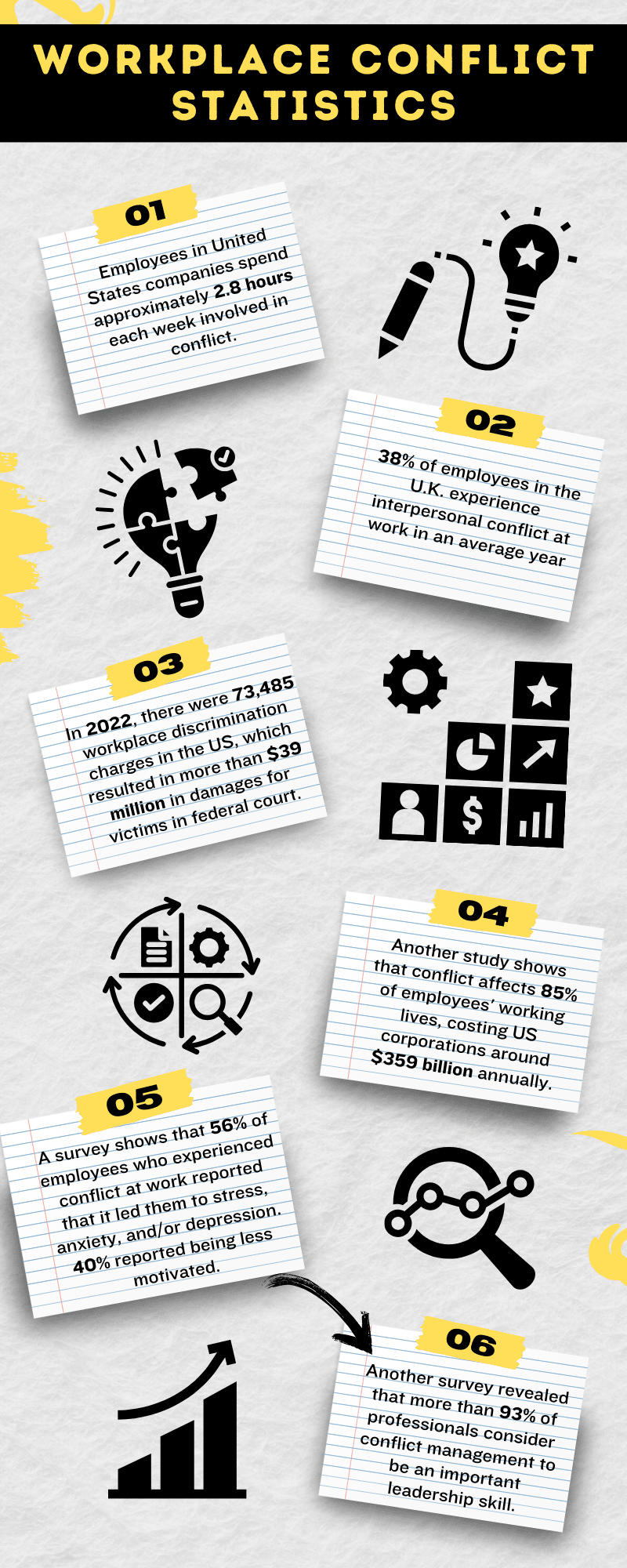
Another study shows that conflict affects 85% of employees’ working lives, costing US corporations around $359 billion annually.

HOW To Deal With A Conflict

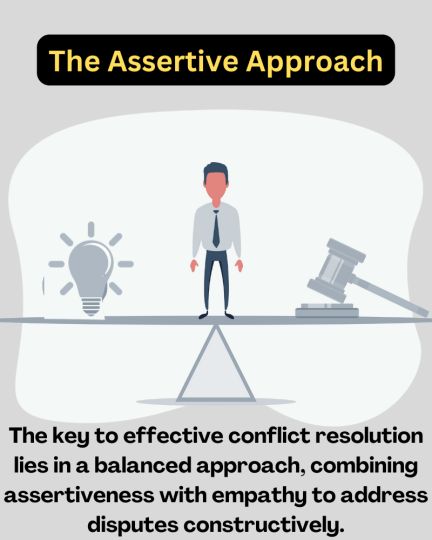
So, how do you learn to face conflict head-on and come out stronger on the other side? It’s not about becoming an aggressive negotiator or a timid wallflower. The secret to successfully dealing with conflict is finding the perfect balance – a way to assert yourself without steamrolling others. 

This post is your guide to finding that sweet spot. Let’s ditch those imaginary superhero suits and learn how to deal with a conflict in a way that makes you proud of the leader in the mirror.

The Ostrich vs. The Bulldozer

The Ostrich Approach: When Problems Magically Disappear (They Don’t)

Picture this: You’ve got a simmering conflict with a colleague. Your natural instinct is to do the corporate equivalent of sticking your head in the sand. Emails go unread, eye contact becomes an Olympic sport, and you secretly hope the whole issue will just…go away.

Unfortunately, conflicts don’t play by those rules. They’re more like toddlers throwing tantrums – the more you ignore them, the louder they get. Unresolved issues fester, stress levels skyrocket, and suddenly, that minor disagreement has become a full-blown crisis. It’s the reason projects get mysteriously delayed, teams become dysfunctional, and the office atmosphere feels about as pleasant as a root canal.

A study shows that 56% of employees who experienced conflict at work reported that it led them to stress, anxiety, and/or depression. 40% reported being less motivated.

The Bulldozer Method: Winning the Battle, Losing the War

HOW TO DEAL WITH A CONFLICT
Click on the image to see a full infographic (opens in new tab)

On the opposite end of the spectrum, we have the Bulldozer. This executive sees conflict as a personal challenge and responds with overwhelming force. Opinions are flattened, feelings are collateral damage, and the boardroom becomes less a place of collaboration and more a battlefield.

Sure, the bulldozer might get things done in the short term, but the aftermath is messy. Relationships are damaged, reputations are tarnished, and everyone starts tiptoeing around for fear of triggering the next outburst. This is the kind of environment where innovation dies, and employees start quietly updating their resumes.

An average of 485,800 employees resign each year due to conflict, and the cost of recruiting replacement employees amounts to £2.6 billion yearly.

So, what’s the alternative?

The truth is, successfully navigating conflict isn’t about burying your head or bulldozing your way through. It’s about finding that sweet spot between ostrich and bulldozer, a place where you can address issues head-on without sacrificing respect or relationships. Think of it as the “assertive ninja” approach – strategic, respectful, and focused on positive outcomes.

A survey revealed that more than 93%of professionals see conflict management as an important leadership skill. 

Key Takeaway: Avoiding a problem doesn’t make it go away, and aggression only creates new ones. But learning how to deal with a conflict effectively? That’s a leadership superpower.

Your Conflict Resolution Toolkit 

Talk Less, Understand More: The Superpower of Active Listening

HOW TO DEAL WITH A CONFLICT
Click on the image to see a full infographic (opens in new tab)

Forget flashy gadgets; your most potent conflict-buster is already inside your head: active listening. Think of yourself as Sherlock Holmes – every word, every pause, every frustrated sigh is a clue leading to the heart of the issue. Active listening means focusing less on crafting your clever comeback and more on truly understanding the other person.

How to turn into a listening ninja:

  • Paraphrase Power: Prove you’re paying attention by summarizing what you’ve heard. (“So, you feel like the project deadline is unrealistic…”)
  • Ask the Right Questions: Open-ended questions dig deeper than a simple “yes/no.” (“What would make this project timeline more manageable?”)
  • Eye Contact = Respect: Don’t let your gaze wander. This shows you’re engaged and value the other person’s thoughts.

The Mind Meld: Walking a Mile in Someone Else’s Shoes

HOW TO DEAL WITH A CONFLICT
Click on the image to see a full infographic (opens in new tab)

Sometimes, the best way to resolve a conflict is to temporarily ditch your own shoes. Empathy, the ability to feel with someone, helps you see things from their perspective. It might not change your opinion, but it does dissolve that stubborn “us vs. them” mentality that gets in the way of solutions. Think of yourself as a less pointy-eared Vulcan.

A post from Michigan State University emphasizes that by prioritizing empathy, active listening, and collaborative problem-solving, individuals can cultivate a culture of understanding and constructive conflict resolution.

How to boost your empathy skills:

  • Role Reversal Rumble: Argue the opposite side of what you believe. It forces you to consider different angles.
  • Empathy Map It Out: Draw a simple chart with quadrants labeled “Says,” “Does,” “Thinks,” and “Feels.” Fill it in as if you were the other person.

The Chess Game: Negotiate Your Way to Success

HOW TO DEAL WITH A CONFLICT
Click on the image to see a full infographic (opens in new tab)

Not every conflict is solved with a warm hug and a “let’s all agree” moment. Sometimes it takes careful negotiation to reach a win-win. Think less “checkmate!” and more “how does this benefit everyone?”.

Tips for mastering conflict chess:

  • Preparation is Key: Don’t just wing it. Know what you want and what you’re realistically willing to compromise on.
  • “What If…?” Wins: Brainstorm potential solutions before the meeting, even unlikely ones. It sparks creativity.
  • It’s a Process, Not a Race: Sometimes, you need several sessions to reach that sweet spot of agreement.

Key Takeaway: Dealing with a conflict isn’t always about being right. It’s about doing right by yourself, your team, and the company.

Leveling Up Your Conflict Toolkit (When Things Get Tricky)

Mindfulness: The Not-So-Secret Weapon

HOW TO DEAL WITH A CONFLICT
Click on the image to see a full infographic (opens in a new tab)

Imagine your typical conflict: raised voices, tense shoulders, and a general sense that everyone’s blood pressure is spiking. Now, picture yourself in the middle of it…but feeling remarkably calm. That’s the power of mindfulness.

According to a study, mindfulness can be an effective tool for promoting constructive conflict management in organizations by increasing collaboration and reducing conflict avoidance. 

Mindfulness isn’t about chanting mantras or levitating above your desk (though that’d be a cool boss move). It’s about being present in the moment, even when that moment is stressful. Think of it as creating a tiny gap between “thing happens” and “you blow your top.”

How mindfulness beats conflict:

  • Breathe In, Stress Out: Simple, focused breathing before a tough meeting keeps you centered.
  • The Mindful Stroll: Stuck? A quick walk around the block can clear your head like a power nap.
  • Anger Translator: Mindfulness helps you see your emotions, not be ruled by them.

The Digital Peacemaker: When Tech Lends a Hand

HOW TO DEAL WITH A CONFLICT
Click on the image to see a full infographic (opens in new tab)

From AI-powered chatbots to fancy conflict resolution platforms, tech is stepping into the ring. These tools can be surprisingly helpful:

  • The Neutral Zone: Online platforms give everyone a safe space to air their grievances.
  • Data-Driven Diplomacy: Some tools track past conflicts, helping to spot patterns and prevent future ones
  • Emotion Detector 5000: OK, not yet, but some tech can analyze tone, reminding everyone to keep things civil.

Important Note: Tech is a sidekick, not a replacement for good human judgment!

The Global Diplomat: Building Bridges, Not Walls

HOW TO DEAL WITH A CONFLICT
Click on the image to see a full infographic (opens in new tab)

Today’s executives need to be a part business leaders part cultural anthropologists. Why? Because misunderstandings happen when different cultures collide, and that can create major conflict. The solution? Respect, curiosity, and a willingness to see things from a different angle.

According to oxford research, business anthropology helps leaders in a way of using ideas and ways of studying human societies to help understand and improve different parts of businesses, like how they organize, advertise, and design things, all while considering different cultures. It’s really useful because it helps businesses be more ethical (doing the right thing) and creative in how they work and solve problems.

Tips for navigating cultural complexities:

  • Do Your Homework: Learn about the cultural norms of the people you work with.
  • Communication is Key: Be clear and concise and double-check for understanding.
  • Seek the Common Ground: Focus on shared goals, even if the methods to reach them differ.

Key Takeaway: How to deal with a conflict at the office isn’t a one-size-fits-all answer. By mastering these extra skills, you’ll be ready for whatever twists and turns come your way.

Final Thoughts 

Let’s be honest; no one really enjoys conflict. But think of this whole guide as your transformation from someone who’d rather hide under a desk than face a disagreement to the kind of leader who tackles tension with confidence. 

It’s your key to becoming the person everyone else hopes is in the room when things get messy.

So, what’s the takeaway? Handling conflict well isn’t just about ending the argument; it’s about leveling up as a leader. It’s about becoming a better listener, a calmer negotiator, and a more empathetic problem-solver.

Here’s your action plan:

  • The Listening Challenge: Next time there’s a disagreement, truly listen. Summarize the other person’s points, ask questions…make it about them, not your counterargument.
  • Breathe Before You Burst: Feeling your temperature rising? A few deep breaths before a tough meeting can mean the difference between diplomacy and disaster.
  • See Conflict as Growth: This is hard, but try to view each tense situation as a chance to become a better version of yourself.

This stuff takes practice, and there will still be moments when you wish for that superhero cape. But remember, real power isn’t about steamrolling others. True power lies in handling the toughest situations with grace and respect.

Think of it this way: the next time a conflict emerges, you’re not facing a battle…you’re facing a boss-level challenge in the game of leadership. And with the tools we’ve covered, you’re well-equipped to beat it.

The Bottom Line

How to deal with conflict effectively is a skill that will benefit you far beyond the boardroom. It creates stronger teams and smoother processes, and most importantly, makes you the leader everyone admires (and maybe slightly fears in that good, respectful way). So go forth and conquer those conflicts!

Let’s see what you’ve got! Spend a few moments on this quiz to test your grasp of the material.

0

Deal With Conflict

Assess Your Approach to Handling Conflict

1 / 10

What is the Ostrich Approach to conflict?

2 / 10

What is the main drawback of the Bulldozer Method?

3 / 10

What is a key benefit of active listening in conflict resolution?

4 / 10

How can empathy help in resolving conflicts?

5 / 10

What should you do before a major decision to handle conflict effectively?

6 / 10

How can mindfulness help in conflict situations?

7 / 10

What is the benefit of using technology in conflict resolution?

8 / 10

How can cultural understanding help in conflict management?

9 / 10

What is a key strategy for navigating cultural complexities in conflicts?

10 / 10

What is the ultimate goal in conflict resolution according to the post?

Your score is

The average score is 0%

0%

How to Be Present in the Moment? 5 Minute Fixes With 5 Easy Strategies

Have you ever found yourself mindlessly waiting for your morning coffee, tapping away at your phone, only to realize you’ve scrolled through your entire day’s schedule without actually processing any of it? 

Welcome to the autopilot club, where we experience the waves but are not living in the present moment.

It’s a common problem, especially in the life of executives—our lives are overscheduled, and we’re constantly bombarded with distractions. Finding a few moments of peace and presence can feel impossible. 

But what if you could learn how to be present in the moment, even amid chaos? 

It could make you calmer, more productive, and better able to enjoy your life. And the good news is it doesn’t take a ton of time – just five minutes is a great place to start. That’s less time than it takes to get your morning coffee ready!

Let’s explore further into the essence of being present, offering practical, manageable strategies to weave mindfulness into the fabric of our daily routines, no matter how packed our schedules might seem. 

“Being Present” What Does it Actually Mean?

Being present, or mindful, involves a conscious focus on the here and now—acknowledging and accepting one’s feelings, thoughts, and bodily sensations in a non-judgmental way. It’s about letting go of the past, not worrying about the future, and simply being in the moment. This practice has roots in various meditation traditions, but its applicability goes far beyond.

The science behind mindfulness is robust, with studies highlighting its benefits for brain health, stress reduction, and overall happiness. Neuroscientists have found that regular mindfulness practices can alter the structure and function of the brain in ways that promote greater attention, clarity, and emotional regulation

However, without mindfulness, individuals may find themselves on a different path, leading to increased stress and, ultimately, burnout. This connection is not only intuitive but is also supported by a growing body of research. Let’s review some studies showing that burnout is real, and you’re not alone. 

Scientific Studies Showing Increasing Rate of Burnout

According to Harvard studies, about 47 % of people zone out of their present moment.  The scientist found it very distressing because a wandering mind is not a happy mind; it affects your mental and physical health and eventually leads to burnout. 

A recent study by Slack revealed a concerning rise in global burnout, with the United States experiencing the most significant impact. Middle managers reported the highest burnout rate among American workers, exceeding all other surveyed groups at a staggering  43%.

Another study revealed that a significant portion (74%) of leaders reported experiencing burnout. Furthermore, 93% of these executives believe burnout is negatively impacting their organizations. 

The statistics underscore a widespread issue affecting individuals at all levels within organizations, highlighting an urgent need for effective solutions. Rather than dwelling on these concerning figures, let’s pivot towards our 5-minute fixes.

As we face these challenges, it becomes imperative to seek innovative strategies that can mitigate the effects of burnout and promote well-being. Technology, often blamed for increasing our stress and detachment, surprisingly holds the key to unlocking greater mindfulness and presence. Let’s see how. 

First Strategy –  Technology as a Path to Presence

How to Be Present in the Moment
Click on the image to see a full infographic (opens in new tab)

It seems counterintuitive, but our tech-obsessed world can actually offer a gateway to mindfulness and being present at the moment. Mindfulness apps transform our devices from sources of distraction into tools for personal peace.

Harnessing Mindfulness Apps

A wealth of mindfulness and meditation apps can help you find calm and focus:

  • Headspace: Beginner-friendly guided meditations in a variety of focus areas make it easy to learn how to be present in the moment.
  • Calm: Soothing visuals and soundscapes provide a multisensory experience for mindfulness. Consider their sleep stories and masterclasses for extra support.
  • Insight Timer: This app offers a vast free meditation library, including quick five-minute sessions on topics like stress relief, perfect for squeezing some mindfulness into a busy day.

How to Leverage Technology for Mindfulness?

The key is integrating short meditations into your routine. A five-minute session between meetings can shift your entire mindset. It’s your on-demand tool for bringing yourself back to the present whenever you need it.

The Impact

Integrating mindfulness can sharpen your focus, ease stress, and boost your overall mental well-being, offering a path to a calmer and clearer mind.

Second Strategy – Creating Your Personalized Presence Practice

How to Be Present in the Moment
Click on the image to see a full infographic (opens in new tab)

Mindfulness isn’t one-size-fits-all. The best way to learn how to be present in the moment is to find techniques that work for you. Consider this section a guide to building your own custom “mindfulness mixtape” filled with quick, impactful practices.

Tailoring Your Breathing Exercise

Breathing is the ultimate tool for bringing yourself back to the present moment.

Here’s how to make this simple practice your own:

  • Find Your Natural Rhythm: Don’t try to change your breath; just notice the rise and fall of your chest. This awareness is the first step toward being present.
  • Gently Deepen: Slowly begin to lengthen your inhales and exhales. Find a count that’s comfortable, whether that’s a 4-count, 6-count, or something else entirely.
  • Make It Personal: Focus on the sensation of the breath, visualize calming scenery, or repeat a mantra like “peace” or “calm.”

These exercises are perfect for a mid-day reset when you need to find your center and release tension quickly. 

The Power of Gratitude

Gratitude shifts our focus to the positive. Here’s how to harness it to be present in the moment:

  • Three Things: Each day, take two minutes to identify three things you’re grateful for. Big or small, everything counts!
  • Go Deeper: Reflect on why those things matter. This strengthens the feeling of gratitude.
  • Seek Variety: Challenge yourself not to repeat items. It trains your brain to find the good even in ordinary moments.

Sensory Focus Exercise

Our senses ground us in the present. Here’s how to use them for a mindfulness boost:

  • Choose Your Sense: Pick one sense (sight, sound, etc.) to focus on for a full minute.
  • Observe Without Judgment: Notice details of the sounds you hear or the textures you feel. Don’t label them; just experience them, bringing your mind into the “now.”
  • Rotate: Change your focus each time. This keeps the exercise fresh and helps you notice different aspects of your environment.

How to Put it Together

These are just a few ideas. Experiment until you find a few practices that help you find presence and calm. You might use one technique daily or rotate between them depending on your needs. It’s about discovering what helps you connect to the present moment in the way that’s best for you.

The Impact

By making these practices a habit, you’ll improve your mental well-being and focus while also training your mind to find joy in the simple moments that make up your day.

Third Strategy – The Decision-Makers Detox – Finding Focus & Clarity

How to Be Present in the Moment
Click on the image to see a full infographic (opens in new tab)

Decision-making is an executive’s lifeline, but it’s also a major source of stress. 

According to a famous CEO and founder, Bryan Adams, societal expectations often place work challenges above personal well-being for CEOs, leaving many feeling overwhelmed. 

Leaders are increasingly expected to cultivate empathy, compassion, and kindness to be effective. However, achieving this balance between emotional intelligence and maintaining performance standards can be challenging for many.

To combat decision fatigue and ensure clear, focused choices, mindful pauses are crucial. Here’s how to use five-minute mindfulness practices to make better decisions.

Embracing Mindfulness Before Decisions

Before tackling a major choice, take a strategic pause. Consider:

  • Five-Minute Pre-Decision Meditation: Choose a technique that works for you – breathwork, a body scan, or simply observing your thoughts without judgment. This brings you to the present.
  • Setting Intentions: What principles are most important to this decision? What’s the desired outcome? Focus cuts through mental clutter.
  • Visualize the Outcomes: Not to predict the future, but to get grounded in the potential consequences of your choices.

Practical Tips for Integrating 5-Minute Fixes in Your Daily Routine 

  • Schedule It: Block out time for mindfulness, just like any meeting. Even five minutes marked on your calendar helps build the habit.
  • Reminder Notes: Prompts like “Pause, Breathe, Decide” on your desk or phone keep mindfulness top-of-mind.
  • Mindfulness Bell: Apps with occasional chimes remind you to refocus, especially when you anticipate a big decision.

The Impact

Mindful decision-making isn’t just about you. It creates a culture of thoughtful choices, prioritizing clarity over-reactivity.

By taking five minutes to practice how to be present in the moment, you’re not just making a decision; you’re cultivating a leadership style built on mindful success.

Fourth Strategy – Quick Strategies for Staying Present

How to Be Present in the Moment
Click on the image to see a full infographic (opens in new tab)

We’ve learned how to use tech, personalization, and decision-making pauses to be present in the moment. Now, let’s explore three simple techniques to help you stay grounded throughout your busy day.

Box Breathing: Calm Before the Inbox Storm

Box breathing balances your nervous system for better focus. Here’s how to do it:

  • The Technique: Inhale (count of 4), hold (count of 4), exhale (count of 4), hold (count of 4). Repeat.
  • When to Use It: Do a few rounds before checking your email. This centers you for whatever awaits.
  • The Effect: Box breathing reduces stress and helps you respond to your inbox with clarity, not reactivity.

Nature at Your Desk: A 2-Minute Window Recharge

Can’t escape to the woods? Bring the outdoors to you:

  • The Practice: Look out your window for two minutes. Focus on trees, the sky, and anything natural you can see. No window? A nature photo or screensaver works, too!
  • Mindful Observation: Notice colors, textures, and how things move. This brief dose of nature helps you find calm and focus.
  • The Benefits: Studies show even small glimpses of nature reduce stress and boost your mood, making you more productive!

Rituals for Resetting: Create Mindful Touchpoints

Simple rituals act as personal “pause” buttons throughout your day. Here’s how:

  • Crafting Your Ritual: Pick something simple – brewing tea, a quick stretch, or lighting a non-scented candle (be mindful of office safety!). Consistency is key.
  • Integration: Do your ritual at specific times – like before starting a new task. This marks a mental shift.
  • The Outcome: Rituals give you anchors of presence. They break up your day in healthy ways and improve focus.

How to Put It Together?

To integrate these strategies into your daily routine, consider their purpose and effect on your well-being.

  • Scheduling: Allocate specific times in your calendar for these practices, treating them with the same importance as meetings or deadlines.
  • Adaptability: Be open to adapting these strategies to fit your personal needs and the demands of your day. Flexibility is key to maintaining consistency in your mindfulness practice.
  • Reflection: Regularly reflect on the effectiveness of each strategy in helping you stay present. Adjust as necessary to find the right mix that keeps you centered, focused, and fully engaged at the moment.

The Impact

Reduced stress, better mood, and improved productivity. Rituals and nature engagement offer quick, effective ways to refocus and stay grounded.

Fifth Strategy – Energizing Your Day with Micro-Movements

How to Be Present in the Moment
Click on the image to see a full infographic (opens in new tab)

In a world where being constantly mentally engaged is the norm, micro-movements offer a refreshing path to mindfulness and presence. This approach involves integrating brief, straightforward physical activities into your daily routine, designed to be executed anywhere, anytime, within minutes. 

The essence of micro-movements lies in their simplicity and the immediate connection they foster between mind and body, steering your focus away from distractions towards the physical sensations of the moment.

Activating Body Awareness Through Stretching

  • Simple Stretches: Initiate with soft stretches that target various body parts. Extend your arms, elongate your legs, or gently rotate your torso. Pay close attention to the sensation each stretch evokes, especially the easing of tension.

Synchronized Breath and Movement

  • Breathing Exercises: Combine deep, deliberate breaths with straightforward movements such as raising your arms or rolling your shoulders. Inhale while lifting, exhale on lowering. This harmony of breath with motion significantly bolsters concentration and presence.

Facial Engagement for Mindfulness

  • Express Yourself: Work your facial muscles by adopting different expressions—smile, scowl, lift your eyebrows. Feel the effects of these movements across your face, a unique method for snapping back to the present.

Hand and Finger Movements

  • Fine Motor Skills: Engage in minor actions like finger tapping, hand squeezing, or wrist rotating. These are especially beneficial for those who type or write frequently, grounding you effectively.

Posture for Presence

  • Adjust Your Stance: Make it a point to enhance your posture periodically. Straighten up, broaden your chest, and take a deep inhalation. Proper posture instantly heightens alertness and connection with your environment.

Integration into Daily Life

  • Desk Breaks: Integrate these micro-movements into your breaks when working at a desk. They can serve as a physical and mental reset.
  • Morning Routine: Incorporate a series of micro-movements into your morning routine to awaken your body and mind.
  • Stress Relief: Use these movements as a quick stress-relief tool, especially in high-tension moments.

Making It a Habit

Set regular intervals throughout your day for micro-movement breaks. These can be brief pauses between tasks, serving as both a physical exercise and a mindfulness practice. Over time, you’ll notice an enhanced ability to stay present, grounded, and physically energized.

These strategies take mere minutes yet powerfully increase mindfulness. Think of them as tools to combat stress, make better decisions, and simply enjoy the present moment more, even in the most hectic workday.

The Benefits

This strategy not only helps reduce physical tension and improve circulation but also significantly boosts mental clarity by breaking the cycle of continuous thought and bringing attention to the present. It’s an excellent way to invigorate your body and refresh your mind, making it easier to focus on the here and now.

Final Thoughts: Mindfulness for the Busy Professional

We’ve seen that learning how to be present in the moment doesn’t require hours of meditation. Small, strategic practices can transform even the most hectic workday.

Mindfulness is about being fully here, now, without judgment. Busy professionals need this! It brings calm and clarity and helps you bounce back from stress faster. 

The strategies we discussed – using tech wisely, personalizing your practice, and those pre-decision pauses – make mindfulness accessible even when life feels like a whirlwind.

The Ripple Effect

These five-minute fixes aren’t just about you. Mindful leaders create mindful workplaces that are more focused, empathetic, and resilient. Think of how pausing to breathe together before a major meeting changes the entire energy of the room!

Mindfulness is a journey. It takes consistent practice to train your brain to truly be present in the moment. Those five-minute fixes are your training wheels. And don’t be afraid of a little humor along the way! 

When your coworkers see you taking a deep whiff of your coffee before a meeting, it might raise a smile. Explain what you’re doing – they might want to join in.

Your Next Steps

Every moment is a chance to practice how to be present in the moment – even while checking emails or just walking down the hall. Mindfulness can be playful!

It’s about finding what works for you. Keep trying different things until you have a set of quick mindful practices that help you refocus and de-stress.

Embracing mindfulness isn’t just about surviving your busy schedule; it’s about thriving in it. You can use mindfulness to navigate work’s challenges with clarity, calm, and even a bit of humor.

Time to test your knowledge! Take a few minutes to tackle this quiz and discover how well you’ve mastered the concepts from this article.

0

Being Present

Test your Knowledge of How to Be Present in the Moment.

1 / 10

What does being present mean?

2 / 10

How can mindfulness apps help you?

3 / 10

What is the first step in personalizing your breathing exercise?

4 / 10

What is a simple gratitude practice mentioned in the post?

5 / 10

Which sensory focus exercise is recommended?

6 / 10

What should you do before making a big decision?

7 / 10

How can box breathing help you?

8 / 10

What is a quick way to engage with nature?

9 / 10

How can simple daily rituals help you stay present?

10 / 10

What is the benefit of micro-movements?

Your score is

The average score is 0%

0%

How to Love Yourself: More Than Just a Buzzword for Business Leaders

Ah, the age-old adage: “How to love yourself.” It’s a phrase we’ve all come across in some form or another. And if you’re a business professional, you might just roll your eyes and say, “Not another soft skill talk!” But here’s the twist – it’s not just about soft skills. It’s about business resilience, leadership, and overcoming challenges in today’s ever-changing business landscape.

Common Misconceptions about Self-Love among Business Professionals

Let’s address the elephant in the room first. For many business professionals, there’s a misconception that self-love equates to being narcissistic or indulging oneself excessively. They might see it as the opposite of humility, or even as a sign of weakness. After all, isn’t business about being tough, making hard decisions, and sometimes sacrificing oneself for the greater good?

Here’s the catch. Self-love is none of that. It’s neither self-indulgence nor narcissism. In fact, real self-love means understanding and acknowledging your strengths and weaknesses, setting healthy boundaries, and nurturing personal growth. It’s the very foundation of genuine leadership.

Importance of Self-Love in Overcoming Business Challenges

The business can be volatile, uncertain, complex, and ambiguous. If you’ve heard of the VUCA world, you know what I’m talking about. It throws curveballs, and sometimes, those curveballs hit hard.

When faced with such challenges, a leader grounded in self-love is more resilient. They can bounce back from failures because they understand their self-worth isn’t tied to external validations or successes. They’re more creative, as they’re in touch with themselves, understanding their feelings and motivations better. This emotional intelligence, grounded in self-love, is a significant asset in the business world.

How Self-Love Transforms Both Professional and Personal Life

Professional life and personal life aren’t water-tight compartments. They spill over into each other. A leader who practices self-love can navigate this spill-over effectively. They become better listeners, communicate more empathetically, and handle conflicts with a balance of assertiveness and understanding. In personal relationships, this translates to more depth, trust, and mutual respect.

Moreover, embracing self-love means setting boundaries. This not only aids in achieving a healthier work-life balance but also prevents burnout. It makes you more present and engaged, both at work and at home.

Stories from the Hall of Fame: How to Love Yourself in Leadership

Let’s not just take my word for it. Here are some real-life stories that testify to the power of mindfulness and self-love in leadership:

  1. Arianna Huffington: After a burnout-induced collapse, the co-founder of The Huffington Post and founder of Thrive Global, made a drastic lifestyle change. She began practicing yoga, meditation, and maintaining a gratitude journal. Through this, she discovered a renewed sense of purpose, leading more effectively and championing the cause of self-care in the business world.
  2. Marc Benioff: Salesforce’s CEO has been an advocate of mindfulness for over a decade. He integrated it into Salesforce’s culture, creating mindfulness zones and hosting mindfulness events. This approach didn’t just benefit him personally but transformed the work culture, leading to a more engaged and holistic work environment.
  3. Padmasree Warrior: The ex-CEO of NIO U.S. and former CTO of Cisco embeds mindfulness in her daily routine. Starting her day with reading, exercise, and meditation, she emphasizes that self-care is essential for leadership, not a luxury.

The Consequences of Lack of Self-Love in Professional Context

It’s one thing to look at the benefits of self-love, but what happens when self-love is absent in your professional journey?

To start, let’s try this exercise. Imagine running on empty, trapped in a state of chronic exhaustion. This is burnout, a direct consequence of overworking yourself to prove your worth, without understanding how to truly love and value yourself. This cycle of exhaustion not only wears you down but also dims your productivity and heightens self-criticism.

Ever put in those long hours, only to feel like you’re achieving little? When self-love is lacking, it manifests as self-doubt. Every decision becomes a mountain of second-guessing and overthinking, stifling efficiency.

Your perception of yourself doesn’t stay self-contained; it radiates outward, influencing your interactions. Lacking self-love can lead to critical and dismissive behaviors, disrupting team dynamics and causing conflict. This absence also increases your susceptibility to chronic stress, driven by perfectionism and a desire to please. Moreover, without self-appreciation, motivation wanes, and decision-making becomes hindered, either by excessive caution or impulsivity.

In essence, understanding “how to love yourself” isn’t a mere feel-good mantra. It’s a bedrock for professional triumph and holistic well-being. With this foundation set, let’s now delve deeper into the nuances of genuine self-love and how it stands apart from self-indulgence and narcissism.

The Connection Between Mindfulness and Self-Love

Before we dive into some practical exercises, it’s necessary to understand how mindfulness and self-love are interconnected.

Mindfulness is the practice of paying attention to the present moment without judgment. It involves observing your thoughts, feelings, and sensations without getting caught up in them. This practice helps you develop self-awareness, which is the foundation of self-love. When you become more aware of your thoughts and feelings, you can start to question and change negative beliefs about yourself.

Self-love, on the other hand, involves treating yourself with kindness, compassion, and acceptance. It’s about acknowledging your worth and taking care of your physical and mental well-being. Mindfulness practices can help you cultivate self-love by:

  1. Increasing Self-Awareness: Mindfulness helps you become more aware of your thoughts, feelings, and bodily sensations. This awareness is the first step towards acknowledging and accepting yourself as you are.
  2. Reducing Self-Criticism: Mindfulness involves observing your thoughts and feelings without judgment. With practice, you can learn to treat yourself with the same kindness and compassion that you offer to others.
  3. Fostering Self-Compassion: Mindfulness practices encourage a kind and compassionate attitude towards yourself. This can help you to be more forgiving and understanding of your own mistakes and shortcomings.
  4. Improving Mental Well-being: Regular mindfulness practice has been shown to reduce stress, anxiety, and depression, all of which are obstacles to self-love.
  5. Enhancing Self-Regulation: Mindfulness helps you become more aware of your impulses and reactions, which can help you make more conscious choices and respond to challenges in a more balanced and controlled manner.

So, as you can see, mindfulness and self-love are closely related. Mindfulness practices can help you develop the self-awareness, self-compassion, and mental well-being that are essential for true self-love. Ready to put this into practice? Let’s dive into some mindfulness exercises in the next chapter.

Mindfulness Practices for Cultivating Self-Love

Now that we’ve covered off on the theory behind self-love, let’s explore some key mindfulness techniques that will guide you in mastering “how to love yourself” and elevate your leadership prowess.

  • Breathing Exercises: Start with the basics. Focusing on your breath can help calm your mind, reduce stress, and increase self-awareness. Try taking slow, deep breaths, inhaling for a count of four, holding for a count of four, and exhaling for a count of four. Practice this daily to enhance your self-love by being present and attuned to your needs.
  • Gratitude Journal: Take a few minutes each day to write down things you are grateful for, including positive qualities and accomplishments. This practice helps shift your focus from what you perceive as lacking or wrong to acknowledging and appreciating the good in your life and in yourself.
  • Self-Compassion Meditation: Practice speaking to yourself with kindness and compassion. Sit comfortably, close your eyes, and imagine a situation that causes you stress or discomfort. Offer yourself kind words and affirmations, just as you would to a friend. This practice helps you cultivate self-compassion, an essential component of self-love.
  • Body Scan Meditation: Pay attention to different parts of your body, from your toes to your head, noticing any sensations, tensions, or discomfort. This practice helps you become more aware of physical sensations and can lead to a deeper sense of self-care and self-love.
  • Mindful Walking: Take a walk outside and focus on the sensations of your feet touching the ground, the rhythm of your breath, and the sights and sounds around you. This practice helps you stay present and grounded, fostering a sense of connection with yourself and the world around you.
  • Positive Affirmations: Create a list of positive affirmations that resonate with you. Repeat them daily to reinforce positive beliefs and boost your self-esteem. Examples include “I am enough,” “I am resilient,” and “I am deserving of success and happiness.”
  • Setting Healthy Boundaries: Practice saying no when necessary and express your needs and desires assertively. This practice reinforces your self-worth and helps you cultivate healthier relationships with others.
  • Self-Reflection: Take time regularly to reflect on your actions, decisions, and feelings. Acknowledge your achievements and mistakes without judgment and consider how you can grow and improve. This practice helps you develop self-awareness and a growth mindset, key components of self-love.
  • Mindful Listening: Practice actively listening to others without interrupting or planning your response while they are speaking. This practice fosters empathy and strengthens your relationships with others, contributing to a sense of self-worth and connection.

Remember, the key to these practices is consistency. Incorporate them into your daily routine, and over time, you will notice a positive shift in your self-perception, resilience, and leadership skills.

How to Love Yourself With Practical Mindfulness Exercises

Additionally, here are some mindfulness exercises that are quick-wins and easy to adopt.

Breathing Exercises:

  • Instructions: Sit or lie down comfortably. Close your eyes and start to focus on your breath. Inhale deeply through your nose for a count of four, hold your breath for a count of four, and then exhale slowly through your mouth for a count of four. Repeat this cycle for 5-10 minutes.
  • Impact: This practice enhances your self-love by being present and attuned to your needs, reducing stress, and increasing self-awareness.

Mindful Walking:

  • Instructions: Find a quiet space where you can walk without distractions. Stand still for a moment and take a few deep breaths. Start walking at a slower pace than usual, focusing on the sensation of your feet lifting off, moving through the air, and making contact with the ground. Notice the rhythm of your breath and the sights and sounds around you. Practice for 10-15 minutes.
  • Impact: This practice helps you stay present and grounded, fostering a sense of connection with yourself and the world around you.

Mindful Listening:

  • Instructions: Find a partner for this exercise. Sit facing each other and decide who will speak first. The speaker will share something on their mind while the listener pays full attention without interrupting or planning a response. After a few minutes, switch roles.
  • Impact: This practice fosters empathy and strengthens your relationships with others, contributing to a sense of self-worth and connection.

Remember, the key to these practices is consistency. Incorporate them into your daily routine, and over time, you will notice a positive shift in your self-perception, resilience, and leadership skills.

Benefits Beyond the Boardroom

The power of self-love and mindfulness reverberates far beyond the confines of the boardroom. When you embrace self-love and weave mindfulness into your everyday actions, you trigger a cascade of positive shifts in all facets of your life.

By nurturing kindness and compassion towards yourself, you’ll naturally begin to treat those around you with the same kindness. This newfound demeanor makes you a more attuned listener, fosters empathy, and curtails impulsive reactions, fortifying and enriching your personal connections.

Additionally, true self-love guides you to establish firm boundaries and prioritize self-care. The result? A harmonious work-life equilibrium that shields against burnout, empowering you to immerse fully, both professionally and personally.

Mindfulness practices have been proven to reduce stress, anxiety, and depression, and improve mental well-being. A healthy mind also boosts physical health and overall outlook on life.

In essence, self-preservation isn’t an act of self-indulgence. By mastering “how to love yourself” and incorporating daily mindfulness exercises, you’re paving the way to a life that’s more joyous, wholesome, and harmonized.

How to Love Yourself: Taking the Leap of Self-Love in Business

Incorporating self-love and mindfulness isn’t about sitting cross-legged and humming mantras before a board meeting. It’s about tuning into oneself amidst the chaos, making decisions with clarity, and leading teams with empathy.

So, the next time someone mentions “how to love yourself”, remember it’s not a frivolous buzzword. It’s a game-changer in the business world.

To all the business professionals out there, here’s my advice: Dive deep into understanding self-love. Your professional trajectory, your teams, and most importantly, you, will thank you for it.

Mapping the Future: Where Do You See Yourself in Five Years?

Ever found yourself in the middle of a work meeting, thinking about where you might land professionally in the coming years? Or, have you had that tricky interview question thrown at you: “Where do you see yourself in 5 years?” Guess what? You’re in a sea of like-minded individuals! We all find ourselves grappling with these curious thoughts, figuring out the maze that is our future.

But planning our future isn’t just a fun daydream; it’s like a compass that helps us make important career decisions. Locke and Latham, renowned researchers in the field of goal theory, affirm that having clear and ambitious goals boosts our performance and motivation.

And achieving those goals brings immense happiness and drives us to do even better!

Now, let’s explore why we should ask ourselves, “Where do you see yourself in five years?” and how we can use it as a strong foundation for future success!

Decoding the concept behind the question: “Where do you see yourself in 5 years?”

Let’s begin by understanding the significance of the ‘five-year’ timeline in career planning.

Psychologists propose that this amount of time strikes the perfect balance between the immediate future and the more distant horizon, making it a sweet spot for goal-setting. It provides a realistic yet ambitious timeframe that allows for substantial growth and transformation.

Having a clear vision of our future selves empowers us to make informed decisions in the present, as supported by research by Dr. Tasha Eurich.

Professional Perspective: Charting Your Career in Five Years

Whether you are just starting your career, a mid-career professional, or a seasoned leader, the question of “Where do you see yourself in 5 years” is an important one. Let’s explore strategies tailored to each stage of your professional journey:

1. For Early Career Professionals

Just starting your career journey can be both exhilarating and overwhelming. As you embark on this path, the next five years are your chance to set a strong foundation for your professional development.

A research study by Callanan and Benzing suggests that one effective strategy is seeking mentorship within your organization or industry. They found that mentoring relationships can have a positive impact on career success. A mentor can provide guidance, support, and insights drawn from their own experiences.

2. For Mid-Career Professionals (1-5 Years Club)

At this stage, you likely have a better understanding of your strengths and areas for improvement.

Utilize Locke and Latham’s goal-setting theory to set clear and achievable career objectives. Setting career goals can serve as a roadmap for your professional development.

Regular feedback can also provide insights into your performance and how you’re perceived in your work environment.

3. For Seasoned Professionals (5+ Years Veterans)

With more than five years in your profession, you’ve probably established a solid skill set and started carving your niche. The key strategy at this stage is to stay updated.

An evidence-based review by Ng and Feldman emphasizes the importance of lifelong learning and skill development in career success and satisfaction. Consider pursuing advanced certifications or professional development courses to stay competitive.

4. For the Industry Shifters

Switching industries is a significant move that can unlock a world of new opportunities. Ensure you have a clear understanding of your target industry and identify transferable skills to leverage during this shift.

5. For the Senior Leaders

As a senior leader, your vision for the next five years isn’t only about personal growth. It’s about leading your team or organization towards a collective vision.

Executive leadership programs can provide you with the latest leadership strategies and a platform to exchange ideas with other leaders. Studies, such as the one by Leslie and Canwell, have shown that these programs can lead to increased leadership effectiveness and strategic decision-making.

Navigating Uncertainty: The Key to Resilient Planning

As meticulously as we may plan our future, life has a way of tossing in a few surprises. Personal circumstances, market shifts, global events – all of these can necessitate a revision of our five-year plans.

Adaptability in the face of change, as evidenced by clinical psychologist Bonanno’s research, is a key trait of resilience and leads to better outcomes. So, keep your plans flexible and be prepared to adjust as needed.

Conclusion: Envisioning Your Future Success

As we come to the end, remember, asking “Where do you see yourself in 5 years?” is not meant to box you into a rigid timeline. It’s a tool to envision your future, ignite your ambition, and inform your actions.

Regardless of your career stage, a well-crafted five-year plan can serve as your guiding star. Embrace uncertainty, remain adaptable, and stay focused on your goals. The uncertainties of life often lead to its most rewarding adventures.

So here’s to the next five years, to all the possibilities they hold, and to us, turning those possibilities into realities! Let’s get planning!