Warning: You May Suffer from Computer Vision Syndrome

Are you suffering from eye fatigue, blurred vision or headaches? You may experience computer vision syndrome.

According to some statistics, as much as 59% of Americans suffer computer vision syndrome, also called eye strain symptoms, mainly blamed on the increased digitization of work.

You spend long hours trying to make sense of the spreadsheets, preparing presentations, analyzing Gantt charts, and more. These super busy schedules mean that you rarely take a break from your screens.

Executives suffering from computer vision syndrome can’t reach expected performance. Fortunately, this is a health problem you can easily overcome with home remedies.

Go through the following list of eye strain symptoms. Any of these symptoms may indicate that you suffer from computer vision syndrome. And if you have five or more symptoms the probability that you are already a victim of computer vision syndrome is very high. If so, read on our list of home-based self-care remedies for it.

Are you suffering from computer vision syndrome? Go through this list and find it out! CLICK TO TWEET 

Computer Vision Syndrome or Eye Strain Symptoms

1. Dry/Watery Eyes

This is one of the most common eye strain symptoms.

Tears are extremely important in maintaining the eye’s good health and providing clear vision. However, computer eye vision may lead to excessive tearing (watery eyes) or conversely, reduced excretion of tears (dry eye).

Either way, your performance at work may drastically diminish because you’ll be finding it difficult to attain full concentration.

2. Burning/Tired Eyes

A number of studies have shown that you normally blink less frequently when looking at your computer or other digital tools.

Digital tasks also increase ocular surface exposure considering the horizontal viewing of screens accompanying modern-day work.

This sometimes results in eye strain symptoms: your eyes feeling tired, itchy, dry, or as if they are burning.

3. Redness or irritation

Eye redness or blood-shot eyes come about when the sensitive vessels in our eyes become irritated or swollen.

Though there are other triggers like glaucoma, this can be because of eye strain-related symptoms such as those we have mentioned above: eye fatigue, overhearing, or dry eyes.

4. Double/Blurred Vision

Managers may feel that they can no longer see clearly after a visually taxing task like reading some fine print on a screen.

Besides the blurred vision, executives also suffer from double vision, for example, after working on the iPad for hours on end.

5. Pain in Areas Surrounding the Eyes, Shoulders, or Back

Pain and eye discomfort becomes frequent in and around the eyes, shoulders, and even on the back after spending time on digital screens.

6. Sore neck

Depending on the seriousness of your computer vision syndrome, you may sense soreness around the neck. This could be as a result of the strain that one applies to the area when trying to train the eyes better on the screen.

7. Sensitivity to Light (Photophobia)

Photophobia involves being hypersensitivity to light and it’s not an eye disease but a symptom of various conditions including eye strain that that can potentially irritate your eyes.

This puts a real strain on the eyes and makes you shy away from your computer despite its importance in your work.

8. Difficulties Keeping One’s Eyes Open

At times, keeping your eyes open becomes a massive fight as long as you’re interacting with your devices in the course of duty.

9. Vertigo

Anything that needs the various eye muscles to tighten up in order to precisely aim at an item on the screen can usher in dizziness.

In severe cases and especially during busy work periods, you may endure severe vertigo lasting for up to several minutes.

Prevention of Computer Vision Syndrome

Computer usage triggered eye strain causes headaches, eye fatigue, neck soreness, and such agonies ensure you no longer enjoy your work.

Because you are unable to focus and concentrate, computer vision syndrome may adversely impact your overall productivity.

Adapting your daily habits and the environment could be all it may take to prevent this vision syndrome.

Let us delve a bit deeper into this:

1. Adopt Eye-Friendly Habits

Preventing eye strain demands that managers develop eye friendly habits. You should blink more often to keep the eyes lubricated or wear the correct glasses, including computer glasses.

Find Out More About Computer Glasses and How You Can Combat Eye Strain

2. Upgrade the Working Environment

Tweaking the outlook of the office will also benefit you, particularly where sight issues are connected to environmental issues like sub-standard lighting.

Focus should be on modifying the whole setting so we advise you to pursue additional actions such as upgrading the air quality in your rooms.

Try to use humidifiers, set the thermostat right, and commit to such other necessary acts.

Read about all the eye-friendly norms in our article on how to protect eyes from the computer.

Home Remedies for Computer Vision Syndrome

Countless home-based self-care remedies are very helpful whenever you are suffering from eye strain.

Not only are most of these treatments straightforward but they are also inexpensive.

Crucially, you will see change not long after commencing them if you do everything right.

Let’s now focus on some of the most impactful:

1. Sunning

Strongly advocated for by Dr. William Bates, one of the pioneer Ophthalmologists, sunning involves directly gazing at the sun.

Affected officials are to expose their closed eyes to bare sunlight for a minimum of three minutes a day.

When starting, begin by practicing sunning exercises early in the mornings or near dusk. You can then gradually change to other hours when the sun is stronger.

You can even engage in sunning exercises during your lunch break so long as there is enough sun.

2. Use Artificial Tears

Artificial tears are excellent for preventing and relieving computer vision syndrome due to dry eyes. They not only keep the eyes well-lubricated but also averts a recurrence of related eye strain issues.

You can take some lubricant eye drops with you as you leave home and apply them during daytime as may be necessary.

3. Palming

The second of Dr. Bates suggested eye-relaxing remedies, palming uses one’s palms to ease the eyes.

In short, the palms are usually placed over the victims closed eyelids first. You should then visualize the black color while taking deep slow breaths.

Once you do this repeatedly and gently, the straining will lower and go off completely eventually.

4. Eye Massage

Doing a self-massage on tired eyes helps offset computer vision syndrome by boosting blood circulation to the eye area in addition to releasing eye muscle tension.

Use your middle finger, thumb, and index fingers depending on the part of the eye to massage.

5. Rosewater

Rosewater is a naturally relaxing for your tired eyes and helps to refresh them and beat fatigue.

It’s also packed full of nutrients that soothe the delicate skin around your eyes making it a useful weapon when battling computer vision syndrome.

You just soak two cotton balls/pad in the rosewater then place them strategically over your eyes for some minutes in a relaxed position.

Similarly, placing beauty regimens like cucumber slices or tea bags can help soothe your eyes.

6. Swinging

You execute this technique by standing upright, then making large 180° turns towards the right and the left in alternating turns.

As you do this, visualize the motions your eyes as they try to recognize the environment.

7. Natural Products

Some natural products are also possible remedies though studies have not been conclusive. You can start off with great examples such as omega-3 fatty acids as well as bilberry extracts.

8. Get Some Shut-Eye

Sleeping will relax your eyes tremendously. If you don’t have time, close your eyes and rest them for about five minutes.

9. Splash Your Face

Try splashing your face with ice-cold water if you can tolerate it. Do the same to the back of the neck for about three to seven minutes.

10. Do a Facial With a Steaming Towel (Warm Compress)

A ‘facial’ with a steaming towel can also allay computer vision syndrome.

If you can, prepare the towel with eucalyptus oil. It will be so refreshing and fast-acting.

You soak the cloth/towel in warm water, wringing out excess water, then, place the wet cloth on top of your eyes.


Get More Tips to Avoid Computer Vision Syndrome

Can’t Fall Asleep? 18 Bad Sleeping Habits To Kill

Tossing and turning all night, ruminating about tomorrow’s big presentation? Running your mind over and over again about how to complete your deadlines on time? Sometimes, it’s hard to shut off your mind to fall asleep, and coupled with bad sleeping habits, it can become nearly impossible.

Getting less sleep and inefficiency in the workplace go hand-in-hand. If you want to continue to be an executive at the top of your game, you’ll need to kiss your bad sleeping habits goodbye.

A proven link exists that shows a lack of a good night’s sleep creates unproductivity in the workplace. You can read more about sleep deprivation effects on workplace performance, and keep reading here to stop those bad sleeping habits that are doing you in so you can fall asleep.

 Get Rid of These 18 Bad Sleeping Habits and Definitely Get a Good Night’s Sleep. CLICK TO TWEET 

Bad Sleeping Habits to Avoid

Along with stress, there are some things you’re likely doing that are preventing you from getting a good night’s sleep. Read on to find out what they are so you can begin to form good sleeping habits and bring your A-game to work every day.


1. Exposure to Blue Light at Night

Burning the midnight oil isn’t helping, especially if you’re on your laptop, tablet, or smartphone until you go to bed. Blue light which you’re exposed to with your electronic devices keeps your brain alert. It takes your brain a few hours to wind down from that.

You should keep away from your electronic gadgets two to three hours before lights out to get a good night’s sleep.

According to an article published by Harvard, all lights suppress your release of melatonin, the hormone your body produces naturally to help you sleep. Blue light is more powerful though.

Harvard conducted a study that compared the effects of how 6.5 hours of blue light exposure versus green light exposure at the same brightness boded for participants. It showed that blue light suppressed melatonin two times longer than green light.

2. Watching Late-Night Television (Especially in Bed)

Another big blue light emitter is your television. If you want to fall asleep, you’ll have to break this bad sleeping habit fast. When you watch TV in bed late at night, it has the opposite effect you desire. Instead of making you sleepy, it energizes you.

With a TV in the bedroom, you will ruin your sex life too. That’s more reason to save TV time for earlier in the evening when you’re still in your living room.

3. Using Your Phone as Your Wake-up Device

Many people rely on their smartphones to wake them in the morning. And thus, the cycle of being tethered to our phones continues from the moment we rise. Likely though before bed, you’re probably checking to make sure your alarm is set, and then scrolling through messages and emails. Before you even realize it, you’ve spent another 10 to 20 minutes idly playing with your phone.

Just shut it off and use an alarm clock. Worried about a random power outage that would cause you to miss getting up on time? Invest in one that has a battery backup.

When you stop relying on your phone to wake you, you’ll have an easier time turning it off and tuning into a good night’s sleep.

4. Setting Your Alarm Clock Close to Your Bed

After getting that alarm clock set up, the next bad sleeping habit you likely have is keeping it right next to your bed. If you wake in the middle of the night and can’t fall asleep, having the clock right there can be a distraction. Likely when you wake, you may look at the time. You’ll shut your eyes and try to sleep, toss and turn, and then look at the time again.

Counting down how many hours you have left before you get up only creates more anxiety and makes it that much more difficult to fall back asleep.

Plus, having it too close can make it too easy for you to hit the snooze button when you need to get up and conquer your workday on time.

If you have trouble falling asleep or falling back asleep if you’ve woken up in the middle of the night due to stress, we can help you.

7 Ways to Sleep Better Even If Your Stress Is Eating You Alive

5. Working Before Bedtime

Some people take work home with them because they think they’ll get a jump on the next day. Let it wait. A good night’s sleep is more important because it allows you to refresh your mind and clear the stress away. You’ll be a better executive for it.

When you take work home and plug away at it until you turn out the lights, falling asleep becomes next to impossible because all those worries from your day coupled with that blue light will keep you up all night.

6. Working in Bed

Even worse than working before bedtime is working in your bed! Your brain gets the message that the bedroom is a place for work rather than sleep. If you’ve done it once, no need to fret, but don’t do it ever again. The more you keep up this bad sleeping habit, the more your brain forms this association, making it more focused and alert when presented with these stimulus and keeping you awake.

Your bedroom should be the place you reserve for relaxation and sleep.

If you have kept up this bad sleeping habit, retrain your brain by turning your bedroom into a center of calm. Don’t make lists for work or schedule your day out in bed either. Put everything work-related away and focus on yourself so you can fall asleep.

In time, you’ll find this makes you much more productive when you’re at the office.

7. Taking Long Naps During the Day

The lifestyle of an executive is certainly exhausting. Naps are a fantastic way to restore and replenish in the middle of the day. Research shows they benefit executives and result in greater productivity.

This doesn’t mean you can go to sleep for an hour or more though.

The ideal time-frame for your afternoon nap should be no more than 20 minutes.

To sleep any longer puts you in a deeper state which is harder to wake from and harder to get back into gear from too. Long naps will disrupt your sleep pattern at night too, so make sure to keep that nap short.

8. Keeping Odd Sleeping Hours Due to Your Job

Sleep routines aren’t just for small children. Hard-working executives need them too in order to get a good night’s sleep. If you attend a dinner meeting on Monday night and don’t get to bed until midnight, then go to bed at 9 pm on Tuesday, 11 pm on Wednesday, and then at 2 am on Thursday while preparing for a trip, you’re disrupting your sleep pattern, making it hard for you to fall asleep.

Surely some exceptions can’t be avoided such as travel times that must be accommodated. For everything else though, stick to getting in bed at the same time every night, so you get a good night’s sleep.

9. Sleeping Late on the Weekends

Some executives are fastidious about going to sleep at the same hour every day of the work week. And then on the weekends, they stay up late, perhaps going out to grab drinks with friends until 2 am on a Saturday night. Doing this can result in a condition known as social jetlag. This video on social jet lag will help you understand how you’re doing more harm than good.

Going to bed late on the weekends constantly resets your body’s clock to a different cycle. It’s basically like having jet lag every single Monday morning when you get up for work and is a bad sleeping habit you need to get rid of fast to fall asleep.

10. Taking Stimulants Before Bedtime

Whether you love coffee, chocolate, or are a regular smoker, taking in stimulants in these forms, especially 6 hours before bedtime (yes, 6 hours!), can keep you up at night and prevent that good night’s sleep.

A prominent study showed that caffeine takes up to 6 hours to wear off, a serious impediment to falling asleep.

Nicotine also causes sleep disturbances, particularly with sleep-related respiratory disorders. As chocolate also contains caffeine, it can keep you up at night, so stay away from your hidden chocolate stash!

11. Drink Alcohol Before Bedtime

The National Institute of Health found that drinking alcohol just prior to bedtime decreases how much time you spend in REM sleep. REM is that stage of deep and restorative phase that you need for a good night’s sleep. It’s the stage you want to avoid during that short afternoon nap, but the one you need at night.

Avoid drinking or at least limit it significantly during your company’s off-site events, sales meetings, or dinners with clients.

Reach out for non-alcoholic alternatives instead.


12. Being Uncomfortable in Bed

For executives, it’s tempting after a long day at the office followed by even longer dinner meetings to just climb right into bed without changing your clothes or removing makeup.

Take the few extra minutes to properly ready yourself for bed. Put on sleeping attire. Wash your face and moisturize it. Brush your teeth. And if you wear contacts, take them out, or you may increase your chances of waking up with an eye infection.

13. Having a Sedentary Lifestyle

According to Rodney Dishman, a researcher at the University of Georgia, “Staying active won’t cure your sleep complaints, but it will reduce the odds of them.” His research showed that adding exercise during the day adds 45 minutes of extra sleep each night.

Other studies show that it’s not just the duration of sleep time either. It also makes for better quality sleep.

14. Intense Workouts Late in the Evening

With that exercise though, it’s important to get it into your day early on.

If you want a good night’s sleep, that exercise shouldn’t be performed too late in the day, or it will interfere with your sleep.

That’s because it speeds up your metabolism. Studies confirm this stimulatory effect from exercise. It also makes you more alert and releases adrenaline. Hit the gym or the jogging trail early to avoid being kept awake.

15. Staying All Day in the Office Without Experiencing Daylight

You might think it’s healthy to avoid the sun, but your body needs daily sun exposure in a protected way. Getting in the habit of wearing sunscreen protects from dangerous UVA and UVB rays. When you stay long hours in the office and don’t get enough sun exposure, it can ruin your chance of getting a good night’s sleep. ç

Bad sleeping habits like this were exposed in a new study that found low amounts of daylight exposure for executives led to poor sleep, activity, and overall quality of life.

Get out there in the sun for a little bit, or put a therapy lamp in your office.

Light exposure in the workplace improves your sleep and vitality which will, in turn, improve your work performance.

Rebalance Your Sleep Cycle With Light Therapy Now!

16. Eating Unhealthy Food or Large Meals at Night

Good nutrition is always important for your best health. It can also affect your ability to have a good night’s sleep.

One of those bad sleeping habits you might have is eating large, heavy meals before bed. If you’re eating lots of refined carbs before bed and your meals are more like big feasts, you should change your eating habits.

Ideally, you should eat dinner earlier. Avoid eating 2 to 3 hours before you go to sleep.

Large meals before bed kick your metabolism into gear, and that affects your ability to fall asleep and stay that way. Plus, it’s uncomfortable to lie down with a full belly. Late-night eating not only impedes the release of melatonin and HGH but studies additionally showed it causes problems with obesity that will lead to other health issues.

17. Trying to Force Sleep

If you can’t fall asleep, don’t stay in bed staring at the ceiling.

If you can’t fall asleep within 15 minutes, get out of bed and try something relaxing.

In dimmed lighting, sit in another room and read a book unrelated to work. Listen to relaxing music or try a yoga sequence for sleep. After a relaxing activity, get back to bed, and it should be much easier to get a good night’s sleep.

Discover more sleeping tips to help you fall asleep fast.

20 Simple (Yes, Simple) Sleeping Tips that Will You Make Sleep Like a Baby.

18. Having Too Warm of a Bedroom

Your body sleeps better at colder temperatures. Ideally, the best setting is anywhere from 60 to 67 degrees Fahrenheit. Therefore, open your window before bedtime to let some fresh, cold air in or blast the air conditioning, so your bedroom is cold when you sleep.

What’s your trick for getting a good night’s sleep? Tell us in the comments!


Do I Have an Anxiety Disorder?

Anxiety at work can affect the way you think as your mind can go blank. It can affect the way you present your business to clients as you tend to stutter and stammer. It can give clients the impression that you lack confidence.

Anxiety at work also increases your chances of making mistakes as you are not entirely focused on what you are doing.

This can cause a strain in relationships as impatient employees can become short-tempered or easily irritated by your antics.

Some statistics from the Anxiety and Depression Association of America (ADAA) show that about 40 million people in the United States of America have different anxiety disorders every year.

According to the Anxiety Disorders Association of America, one in every four employees have persistent anxiety at work. Unfortunately, only one in three people having anxiety disorders are actually being treated for their disorders.

Do I Have an Anxiety Disorder? Read On and Find It Out to Cope With Anxiety at Work. CLICK TO TWEET 

Do I Have an Anxiety Disorder?

There are many subtle but important differences between everyday anxiety and anxiety disorder although they may both look the same at first.

One of the first questions you should ask yourself is, is my fear rational? Anxiety disorders usually manifest as a fear of irrational things.

People with anxiety disorders are afraid of things they should not normally be afraid of, or they are afraid of things they should be afraid of in an irrational way.

If you are worried about taxes or losing your job or a breakup in a difficult situation, then your fears are rational and understandable. This is everyday anxiety. However, if you are successful at work and you fear of dismissal, you may have an anxiety disorder because that is an irrational fear.

Here is a brief guide to determine whether you may be struggling with an anxiety disorder or not.

1. Your Anxiety at Work Is Disproportionate

Normal, everyday anxiety is usually directly proportional in intensity to the severity of the situation. For example, if there is a minor threat like a client getting out of control, then the experience of anxiety should also be minor.

However, executives with anxiety disorder tend to overreact and hence will show intense anxiety at work even for minor threats.

Therefore, if you notice that you tend to overreact for minor threats then there is a possibility that you have an anxiety disorder.

2. Your Anxiety Is Intense

It is possible for a manager without an anxiety disorder to have severe anxiety. However, this will only be limited to certain events.

For example, let’s look at what happened in 9/11 where two planes crashed into the world trade center. Any normal person would be severely afraid. However, this severe anxiety is usually transient and will reduce after the threatening situation has been resolved.

For anxiety disorders, however, this intense feeling of anxiety lasts for an unusually long time.

If you find that you have been having severe anxiety at work for longer than 3 months, you should see a doctor.

3. Anxious “About Everything”

In normal everyday anxiety, you are only worried when you are faced with a threat, and the worry gradually disappears after the threat is gone. However, an executive having an anxiety disorder is worried about everything.

If you find yourself unnecessarily worried about everything or you tend to have anxiety when you worry about having another anxiety attack, then you may be having an anxiety disorder.

4. “No Control”

There are many ways people cope with everyday anxiety when they are feeling anxious. However, people with anxiety disorders cannot control their anxiety at work. They do make attempts to keep their fears under control. But these attempts do nothing to control the anxiety, rather they affect their work activities adversely. This is medically called maladaptation.

For example, a sales rep having a social anxiety disorder may make a lot of excuses to avoid meeting a new client because he is afraid of social interactions.

Also, if you find yourself having severe, uncontrollable anxiety at work over everything and your mind usually goes blank anytime you are afraid, you may have a generalized anxiety disorder.

Read on Anxiety Symptoms, Types and Side Effects of Anxiety

Cause of Anxiety Disorders at Workplace

According to research published in the Medical News Today, a group of brain cells plays a role in creating these anxious feelings. Here are some causes of anxiety at work:

– Work-related stress such as meeting deadlines, the pressure to achieve business goals and work overload.

– The stress that comes with achieving career development like promotion opportunities. Also, try to stand out among coworkers, try to improve participation in decision making, and lack of job security.

– Problems in interpersonal relationships such as poor rapport with your boss or with other colleagues, difficulties in staff and human resource management, and difficulties in delegating responsibilities.

– Changes in work conditions such as having new commitments, making an initial presentation, going on a business trip, moving to the business headquarters, budget restrictions and so on.

– Inability to maintain a balance between work and family obligations.


Treatment of Anxiety Disorder

Some executives with anxiety disorders may find it difficult to tell their employers about their anxiety disorder because they may get fired. Business people with a social anxiety disorder or social phobias may turn down a promotion just because they do not want to have to go out and meet other people. Social gatherings in the workplace such as meetings may be a problem for these executives.

There are several treatments that can help you cope with anxiety at work.

Lifestyle changes are usually the first option to try before moving to medications and psychotherapy.

Daily exercises combined with good sleep, healthy eating, and less intake of caffeine and alcohol are all lifestyle changes that can decrease symptoms of anxiety.

Find Out More About the Treatment of Anxiety Disorders

There are other simple and effective tips for managing anxiety at work:

– Make sure you work hard – the more you work the less focused you are on the things that you are afraid of.

– Alternative or complementary medicine can be very useful for dealing with anxiety. Use acupuncture for anxiety. Stimulate a Better State of Wellness.

– Avoid toxic colleagues – this is the other side of the coin of telling a colleague. You have to avoid colleagues who can take advantage of your weakness and make your situation worse.

– Time management and planning – make sure you plan and organize your work in such a way that you can meet up deadlines and work effectively.

Learn to Deal With Anxiety at Work by Following Some Simple Strategies

7 Ways to Sleep Better Even If Your Stress Is Eating You Alive

Do you wish to find out ways to sleep better? Are you often tossing and turning in bed at night not able to fall asleep? Or awake in the middle of the night with racing thoughts? And what is actually keeping you up in the dark? Do you replay the stressful parts of your day? Are you anxious about the strategic project you are responsible for or about meeting the deadlines or about the growth prospects of your company?

Perhaps, the thought about an upcoming meeting with your boss is paralyzing you or you are panicking about tomorrow’s important presentation.

In those moments the only thing you want is to calm down, stop being worried and fall asleep! You know that sleep deprivation will make you tired and less productive the next day…Do you know that your sleepless nights could be avoided? Do you know that there are many ways to sleep better?

If you have trouble falling asleep or falling back asleep if you’ve woken up in the middle of the night due to stress, we can help you.

In this post, we will discuss what to do when you can’t sleep at night. Get a good night’s sleep so you can wake up feeling ready to take on the day.

There are many ways to sleep better. Keep reading for seven easy strategies to help you sleep at night! You just have to decide what strategy is best for you!

 If you suffer from sleeplessness due to stress at work, just decide which one of these strategies is best for you to sleep better at night. CLICK TO TWEET  

 Strategy 1: Use Relaxation Techniques

One of the best ways to sleep better at night is to use relaxation techniques. These techniques allow your body and mind to progressively relax which in turn allows you to fall asleep.

According to an article by the Institute for Quality and Efficiency in Health Care, relaxation techniques reduce physical tension and interrupt the thought processes that can affect sleep. The goal is to stay out of your head by stopping the thoughts and worries long enough to fall asleep. If you need it, write down your worries and postpone worrying and brainstorming until the next morning.

These techniques will not only help you fall asleep initially but will also help you fall back asleep if you’ve woken up in the middle of the night.

1. Deep Breathing Method

Taking slow, deliberate breaths are a great way to sleep better. First, try just slow intentional breathing to start to calm your mind. Slowly breath in fully through your nose then slowly and fully breathe out through your nose. Slow and steady, in and out through the nose.

This is a good relaxation breath you can do anywhere or in any stressful situation!

Next try the 4-7-8 breathing method by breathing in for four seconds, retaining the breath for 7 seconds, and then slowly breathing out for eight seconds. While doing this breath, breathe in through your nose and out through your mouth. Place your hands on your abdomen so you can feel the breath moving in and out of your belly.

There are so many other breathing techniques to try, so use a few to find the one that works best for you.

2. Progressive Muscle Relaxation

This is another technique to ease you into sleep while allowing tension to leave your muscle and your mind.

Lay on your back in bed and close your eyes. Choose one’s spot and tense the muscles there, hold for a brief second and consciously relax them. Begin at your head and move down to your toes.

For example, focus on your eyes and squeeze them to create tension there. Hold that tension for a couple of seconds and then gently relax the whole area. Continue to do this throughout your whole body checking in with your mouth, neck, shoulders, chest, back, stomach, arms, hands, hips, buttocks, legs, calves and feet.

Once you have finished your body will feel light and tension free and ready to fall asleep.

3. Autogenic Training

Autogenic training is similar to progressive muscle relaxation, but you’re using the same technique to relieve yourself of mental and emotional stress.

Start the same way as above, going from head to toe releasing any tension in your muscles.

Instead of tensing the muscles one by one use your breath and focus on releasing the heaviness in those areas.

Your mind controls so much of your body that you will be surprised just how relaxed your muscles can be without doing anything physical.

This technique is a great way to fall asleep if you can’t sleep at night.

4. Guided Imagery

Guided imagery is a self-induced mind-body experience that can take you anywhere.

For a way to sleep better use this to think of something especially relaxing. For example, imagine yourself lying on a beach (or wherever your happy place is). Allow yourself to feel all the sensations that make you so relaxed at the beach. The sun, sand, sounds of waves, or the carefreeness that you feel. Imagine that you’re there, in that place.

As executives, sometimes it’s hard to leave the stress of the day behind, but guided imagery can take you out of your head every single night and allow you a way to sleep better.

Strategy 2: Re-Associate Bed with Sleep Instead of Arousal

For many people going to bed is what to do when you’re tired and ready to fall asleep. For others, the stillness of bed is hard to deal with and can cause feelings of anxiety and stress. You lay there and go through the to-do list in your head. This can be especially hard for executives coming off a busy or stressful day of work.

To re-associate bedtime with sleep instead of arousal you use something called stimulus-control therapy as a way to sleep better.

To achieve this only use bed for sleeping and sexual activity. Stop using digital devices in bed. It may be tempting to check your email before falling asleep. But this can cause stress for what’s to come in the morning, and the blue light from screens can block melatonin production.

You should also only go to bed when you are tired or sleepy. Lying in bed for too long can make your thoughts start to run wild which will have the opposite effect that your bed should have. When you’re unable to fall asleep after 20 minutes, get up and do something relaxing. Try reading or drinking warm tea (not in bed!) and then go back to bed once you are sleepy.

Strategy 3: Use Natural Sleep Aids

Natural sleep aids may not be a magic pill that you take to fall asleep every night but, it could be a beneficial way to sleep better. Try drinking decaffeinated tea as a way of winding down before bed. Sleepytime tea, passionflower tea or a warm glass of milk are all natural sleep aids.

According to a study done by Phototherapy Research, drinking passionflower tea just before bedtime can improve quality of sleep. It has been shown that the tea has a sedative and soothing property to invoke a good night’s rest.

Similarly, drinking milk at night has the same relaxing effect due to the protein Lactium. Lactium lowers blood pressure and relaxes the muscles, which can, in turn, make you tired and fall asleep.

If you feel the need for something more substantial instead of tea or milk, try a light evening snack. A study conducted by Advance Nutrition states that low-fat snack at nighttime can promote better sleep. Foods such as low-fat yogurt, berries, kiwis or bananas can help promote better sleep.

Find out More About Effective Natural Sleep Remedies

Strategy 4: Use Melatonin Supplements

Melatonin is a hormone naturally produced in our bodies and is released as night approaches. A lack of melatonin is linked to disturbed sleep.

The use of melatonin pills is beneficial for executives who suffer from loss of sleep.

Melatonin pills work by promoting the body’s circadian rhythms. They allow you to fall asleep faster and prevent waking up in the middle of the night. Research has also shown that ingesting melatonin lowers the production of the stress hormone cortisol. This is beneficial for executives due to the stress of everyday executive life.

When using melatonin take it about 30 minutes before going to bed. This allows you to bypass the extended time it usually takes you to fall asleep.

Use Melatonin for Sleep and Rest Well Before a Busy Business Day!

Stratgey 5: Follow Bedtime Rituals

Following a bedtime ritual is a definite way to sleep better.

A nighttime ritual will help you ease into relaxation by creating a routine where the end result is going to be sleep.

This nighttime ritual could include reading for pleasure, yoga, self-massage, a warm bath or shower.

Never do something that will have a stimulatory effect such as making to-do lists or read work reports. Tasks like these can increase alertness instead of having a calming effect.

Do you need more tips on sleeping better?

Master Your Executive Resting Time with Bedtime Rituals

Strategy 6: Change Your Daily Habits

As executives, we know that our daily schedules are important to have success throughout our workdays. This same principle can be applied to help you foster more ways to sleep better.

Try re-scheduling your sleep patterns or fixing your sleeping times. Waking earlier in the morning will allow you to get tired earlier in the evening with a better chance of falling asleep without trouble.

Getting outside and taking a walk during the day will help get a quick burst of physical activity and expose you to sunlight.

Exposure to natural light helps to regulate the bodies production of melatonin secretion and your circadian rhythm.

Diet and exercise are part of this equation because what you eat and how much you move play a part in how well you sleep.

As a busy executive, you may be sitting for hours at a time or eating at luncheons every day. This is part of the job so make your choices wisely. According to epidemiology research done at the University of Leeds, the higher your fruit and vegetable intake the better you will sleep at night. The assumption here being to consume fewer carbohydrates and fatty foods.

Looking at these daily habits is essential in figuring out how to fall asleep better.

Strategy 7: See A Therapist

Part of being a healthy executive is also knowing when you need help.

If you have tried all the strategies above and are still not finding relief, a therapist can be beneficial.

Stress is a constant in our lives and sometimes hard to cope with so therapists can offer more guidance.

Cognitive behavioral therapy is beneficial as it focuses on challenging and changing unhelpful behaviors. If this type of treatment does not work, in extreme situations, medication may be prescribed to induce sleep.

Keep in mind that if your sleeping problems are due to chronic pain, depression or other medical issues then this post is not for you. In such case, you should also seek help from your healthcare provider.

Conclusion

Sleep is an important and necessary daily function and a good night of it can make or break a productive workday. Stress from an executive’s busy schedule can negatively affect sleep and in turn, promote poor work performance.

There are ways to sleep better but, just like everything you must put in the work. The seven strategies explained above will help promote and foster healthy sleep cycles by practicing them on a daily basis.

Keep in mind that our sleep schedules aren’t just affected by our nighttime routines but also by the time we wake up, the food and drinks we consume, and of course the stress of our daily lives.

By examining this picture as a whole, you can decide what strategies would help you fall asleep better at night.

Have you tried any sleep strategies? Let us know what works for you!

20 Simple (Yes, Simple!) Sleeping Tips that Will Make You Sleep Like a Baby

Do you always feel like sleep is something elusive that’s just out of your reach? You’re not alone. Many executives face stress that keeps them up at night, work long hours, and travel frequently, which translates to sleep troubles.

Fortunately, you don’t have to take it lying down. You can master the art of sleep with these sleeping tips that will make you see more of the back of those eyelids. These sleeping tips will make all the difference in allowing you to get the rest you need so you can be on top of your game every day of the grind!

Master the art of sleep with these sleeping tips and be on top of your game in the office!  CLICK TO TWEET 

What to Do during the Day for a Good Night’s Sleep


1. Experience Daylight

 It might sound counterintuitive when you can’t sleep well at night. However, exposing yourself to bright daylight during wakeful hours is one of the best ways to kick insomnia to the curb.

According to one study, doing so helped people fall asleep 83% faster. In another study, older adults that exposed themselves to 2 hours of light during the daytime were able to increase sleep duration by 2 hours and boosted sleep efficiency to 80%.

Trapped in the office with no way to indulge in bright daylight? Then try a therapy lamp. It helps make up for the lost sunlight you’re not getting while you work away. Using it regularly can regulate your circadian rhythm, enhance your memory and cognition, and increase energy.

A therapy lamp may even diminish the impact of fatigue and jet lag when you’ve been traveling.

Combat Insomnia and Restore Balance Now!


2. Change When and What You Eat in the Evenings

It’s hard with all those long hours, but one of the best sleeping tips is to eat your dinner earlier in the evening. There was a study that found that having a low-carb diet improved sleep.

Healthy sleepers who engaged in eating very low calories over a short term had a greater percentage of deep sleep compared to those that ate a mixed diet.

Researchers surmised this might be due to metabolism and fat content.

That being said, for better sleep, change what you eat in the evenings. Avoid consuming rich, heavy foods in those 2 hours prior to going to bed. Spicy and acidic foods must be avoided during that time frame. They could cause you stomach trouble, including heartburn, which could keep you up at night.

You can also check out what to eat at night to have energy in the morning so that you perform at your peak while in the office!


3. Do More Exercise

One of the best sleeping tips for executives lies in the power of exercise. In fact, the more vigorous, the better. However, even if you just have time for a quick 10-minute walk each day, this can greatly improve your sleep quality.

You’ll need to stick to it over several months though in order to get the full benefits. It’s a good idea to put your focus on building exercise habits that really stick to become a good sleeper.

Still not convinced that more exercise can lead to better sleep? In one study, older adults that engaged in 30 to 40 minutes of daily exercise averaged about 41 more minutes of sleep nightly.

Those with severe insomnia gained more benefits from exercise than by taking sleep-aid drugs. In the study, they fell asleep 55% faster, while total night wakefulness dropped by 30%. Additionally, anxiety fell by 15% and sleep time increased by 18%.

No time to exercise? Workout at work!

11 Ideas to Get Started and Improve Your Sleep Quality!


4. Stick to a Sleep Schedule

Every day, even on the weekends, follow the same sleep schedule.  Your body’s clock regulates when you stick to a schedule for sleep and it could hold the key to helping you fall asleep and stay asleep every night.

Consistency in sleep is essential as studies show poor sleep patterns are the result of going to bed later on weekends. Other studies have also shown that getting irregular sleep patterns causes trouble for your melatonin levels and affects your circadian rhythm.


Ritual 1 Hour Before Bedtime: De-stress

According to a research study published in the Behavioral Sleep Medicine journal, mental stress has an adverse impact on the quality of sleep and affects circadian rhythm.

Knowing this, sleeping tips for the executive that can’t sleep should include a daily ritual you perform an hour prior to going to sleep.


5. Use Melatonin Supplements

Melatonin is a hormone your body naturally produces that aids in sleep. Sometimes when your schedule is out of sorts or from aging, your body doesn’t produce enough of it to help you get those coveted Z’s.

Fortunately, you can get more of it in supplemental form. Check out our other post on melatonin for sleep to find out how to take them to your advantage.

Rest Well Before a Busy Business Day With Melatonin!


6. Practice Yoga or Easy Stretches

 You don’t have to be an expert to reap the benefits of yoga. It helps improve flexibility, reduce stress, and even get better sleep.

According to a 2012 survey conducted in the US by the CDC, over 55% of people that practiced some form of yoga got better sleep. The study also mentioned that 85% of those that engaged in yoga reduced their stress.

If stress is what is keeping you up at night, this sleeping tip is a smart move. Yoga or easy stretches can help you push the negativity out of your body and welcome in deeper, more peaceful sleep.

Get Started With Yoga at Home


7. Practice Meditation

Engaging in meditation is another sleeping tip you should try, one that proved to quell the symptoms of anxiety and stress, leading to better sleep.

If you’re not sure how to meditate, you can use this meditation headband. It helps steer your overworked mind in the right direction with weather sounds that become more and more peaceful as your mind quiets.

If you’ve never meditated before, this can help any executive master the mind by improving stress responses, allowing natural relaxation responses, and reducing stress and anxiety.

Start Relaxing Your Mind and Fall Asleep Fast Every Night!


8. Try Acupressure

Another one of the best sleeping tips for busy executives is to try acupressure.

It can reduce stress and tension while increasing your ability to relax and sleep.

Georgetown University Medical Center conducted a study that proved acupressure decreases stress hormones and leads to a better state of mind. It can improve all your body’s systems including digestion and circulation as well as sleep cycles.

No time for an acupressure appointment? No problem! You can enjoy the benefits of acupressure at home by using an acupressure mat!

Get Better Sleep by Stimulating Pressure Points Now!


9. Try a Relaxing Massage

Massages on the regular can really help you relax and improve your sleep quality. Studies showed that massages promoted sleep in those that were ill. In fact, this therapy has benefits for those that aren’t necessarily ill too!

Without getting enough sleep, your health could soon be affected. Why not take the relaxing route and improve your circulation, help with relaxation, and get the sleep you need?

Again, if you have no time to schedule a massage, try using a full body massager or a  foot massager at home.

Massage Stress Away Every Night! 


10. Take a Warm Bath

Baths aren’t just for babies. They’re for busy executives like yourself that need an extra boost to sleep. In fact, the older you are, the better it is for your sleep! Study after study has shown this is one of those sleeping tips you shouldn’t ignore. A hot bath before going to bed improves the quality of deep sleep.

No time for a big bath? According to research, if you don’t have the time you can soak your feet with the same results!


11. Wind Down with Your Favorite (and Calm) Hobby

 If you have a relaxing hobby, that hour ritual before going to bed is the ideal time to practice it. It could be reading, writing, word puzzles, playing music, sewing, or really anything you adore, so long as it is calming.

Anything that serves to overstimulate you should be done during wakeful hours.


12. Have Sex

 As if you needed an excuse! Sex is a great way to get better sleep.

According to the National Sleep Foundation, it releases oxytocin, the hormone that helps you feel that love buzz with your partner. It also lowers cortisol, the stress hormone. Once you have an orgasm, prolactin is released which causes a relaxed and sleepy feeling, putting you in a drowsy state that is primed for sleep.

In fact, sex can make you perform better at work too.

Find out How Sex Makes Success Better in Business!


13. Drink Passionflower Tea or Milk to Relax

While alcoholic beverages can actually interfere with your sleep, certain beverages can promote a relaxing effect that allows you to sleep like a baby.

For example, drinking passionflower tea or a warm glass of milk can have that soothing effect you’re looking for. The Journal of Medicinal Food found that milk harvested at night contains high levels of tryptophan and melatonin. And the Nordic Journal of Psychiatry found that melatonin-rich milk aided the elderly in better sleep.

You might not be keen on sleep aids in drug form, but we have a post about natural sleep aids that can help you get the sleep you need to really rise and shine without any ill effects!

Effective Natural Remedies To Beat Insomnia Nights After Nights


What to Do in Bed for a Good Night’s Sleep

And now as you pull the covers up, try these sleeping tips to maximize your executive sleep cycle for a better tomorrow.


14. Practice the Deep Breathing Method

Deep breathing can help put you in a relaxed state.

The key is to inhale through your nose for 4 seconds while slowly exhaling out your mouth for 7 to 8 seconds.

This type of breathing engages the abdominals and the chest. Put your hands on your stomach to feel if it is moving along with you as you breathe. Engaging in this method will help you finish winding down.


15. Read Something for Fun

Another marvelous sleeping tip is to pick a novel and read it each night before bed. Reading can be a wonderful way to relax and ready yourself for sleep.

Just be sure you choose something of the fiction variety and never anything that’s related to your job.


16. Listen to Relaxing Music

Music is one of the best sleeping tips of all. Of course, it should be of the relaxing variety. This isn’t the time for heavy metal.

Classical music or anything ambient can really help, according to studies conducted where students listened to classical, audiobooks, and a group that received no intervention.


17. Try Aromatherapy

The Hainan Medical University found that aromatherapy had great health benefits, impacting the nervous system in a positive way. Alleviate indigestion, insomnia, and pain by using essential oils.

One way to accomplish this is to get an aromatherapy diffuser and use it in your bedroom as you sleep.

Diffuse Tension and Sleep Better at Night with Aromatherapy.


18. Try a Change in Sleep Position or Sleep Equipment

Perhaps the way you’re lying in bed could be to blame, or even your mattress. If your mattress is uncomfortable, you should look into buying a new one.

A study found that by buying a new mattress and sleeping on it for 28 days, it reduced back pain and improved sleep quality.


19. Optimize Your Bedroom Environment

 If you’ve recently changed your mattress, or even your bedding, consider taking other measures to ensure good, deep sleep.

Blackout curtains can help a great deal, blocking out street lights and even curbing sounds. Eye masks are another option if you can’t do anything about the window treatments, especially when you’re traveling for work. Earplugs can help tune out street sounds and snoring partners (or pets!).

Additionally, make sure your room is cool enough to sleep. The right temperature matters!


20. Be Close to Your Family in Bed

 As a busy executive, finding the time to spend with family can be challenging. Welcome all those hugs, snuggles, laughs, and chats just prior to bed.

When the whole family piles on, it makes the bed a happy place, one where you can relax and find the dreamworld for a refreshing sleep that lasts all night long.

Read our infographic on the related topic by clicking on image below:

Have you tried any of these sleeping tips? Tell us how they worked for you in the comments!


Why You Should Use Prayer for Stress, According to Science

Stress in the working world is a problem for every executive, no matter how successful. But the more that stress builds up, the more damaging it is for your physical and mental well-being.

Time management techniques are often suggested, but getting into them can be stressful in and of itself. Common stress-busters that experts recommend are doing things like yoga, and meditation, engaging in frequent exercise and eating more healthfully.

There’s one lesser-known and scientifically-proven way to relieve stress prayer for stress. When we use prayer for stress, we take control of our situation and articulate our needs in a way that makes sense to us as individuals for our own views of spirituality.

There’s no need to be religious to engage in prayer for stress. Here, we discuss the ways you can channel this power of positivity for yourself and relieve your stress in the process.

Don’t hesitate to use prayer to beat stress in the workplace and take your career to the next level! CLICK TO TWEET

1. Why Executives Should Use Prayer for Stress

It’s important to note that whatever you believe is not the subject of discussion here, but rather how you use that spirituality and connection to elevate yourself to greatness. There are many religions and beliefs out there; whichever one you identify with is what you should use when using prayer for stress.

You’ll be in good company too. Many CEOs of some of the biggest brands, like Pepsi Co., Tyson Foods, Inc., and Loews Corporation, to name a few, use the power of prayer for stress, each of them identifying with their own beliefs.

In fact, an openness about faith, whether it is shared or differing from a business’s clientele, is important because it lends transparency. It gives a human touch to people that seem untouchable. No matter the faith or form of spirituality, openness about faith and prayer at the top level reflects well on the company.

As it turns out, there is a connection between faith and positive mental health. In 2002, researchers studied 147 different independently-conducted investigations that had worked with 98,000 subjects. What they found was that when a person had more faith, they had fewer depressive symptoms. In 2008, researchers found that after analyzing articles to determine if there was a connection between spirituality and things like anxiety and depression, 92% of the articles showed a major relationship between spirituality and better mental health.

More recently, in 2012, a study published in the American Journal of Psychiatry showed that spirituality made people less likely to experience a major episode of depression.

Do you still think that prayer for stress is not for you? There are many other unconventional stress reduction techniques. For instance, try mantras to reduce stress!

2. Benefits of Prayer for Stress for Executives

 You don’t need to have a certain belief or force yourself to do something you’re not into. However, finding spirituality within the world around you in nature and in yourself will help you benefit in your executive slot in life. When you use prayer for stress, you’ll find it helps you in many ways:

Benefit #1: Prayer Help You Establish Goals

Prayer for stress helps you set goals and live up to them. Praying about the tasks at hand and willing yourself to summon the strength it takes to overcome them creates positive energy within. You can leverage that energy to rise to the occasion no matter how high you set your bar.

Benefit #2: Prayer Strengthens Self-Confidence

We often have such ugly voices for ourselves. That negative energy is what keeps nourishing that stress. It’s that voice that says, “You can’t do it.” Or maybe it says, “You’ll never get that done.” It may even tell you, “You’re not good enough.”

When you use prayer for stress, it quiets that voice and replaces it with a louder, positive voice that stands up to the negativity. This voice says, “I can do it.” It brings calm and says, “I will get it done.” It reminds you that you are a worthy person and says, “I am good enough.”

Repeating this positive mantra each day will help strengthen your faith and spirituality in the universe and within yourself. When you find it’s solid, so too will your work, and your confidence will be unwavering.

Benefit #3: Prayer Boosts Mental Health

Stress and anxiety go hand-in-hand. This nasty couple gangs up on you when you least expect it, and definitely when you least need it. Then again, you need stress and anxiety as much as you need another hole in your head. When you use prayer for stress, it brings great relief. Even when you feel all alone and know everyone is depending on you, putting it into a prayer of faith or spirituality relieves that burden.

Simply saying it aloud lets it waft into the universe. They say positive energy in a psychological way is the key to mastering a successful life both in and out of the office, and the research seems to back it up. When we release our prayer for stress into the universe, it feels like it is being heard.

Benefit #4: Prayer Gives You Hope

When you’ve felt so hopeless that you want to give up, it’s hard to come out of it. Don’t let yourself hit that point where you feel like there is nothing to look forward to and nothing good around. Prayer for stress helps restore hope. The hope that someone or something is listening, the hope that simply uttering good things will shift the focus from negative to positive…

These are things you think about when you use prayer. With that hope, you regain your strength to keep going. It’s like a coffee break for the brain that refreshes your spirit and allows you to keep calm and carry on.

Benefit #5: Prayer Leads to Happiness through Social Support

There are many groups business executives can join to find social support to bring out their best with a prayer for stress. You don’t even need to be vocal. Prayer is a personal thing; some people find they do best quietly while others must speak it out loud.

Others still shy away from expressing themselves in front of others in the form of prayer. But when you join a social support network within your community, it brings you to others who are going through the same stresses. Sometimes knowing someone else is in it, too, makes your faith and spirituality that much stronger.

3. How to Fit Prayer for Stress in Your Busy Lifestyle

 Not sure how to do this whole prayer for stress thing? There are several ways to approach it and incorporate it into your daily personal mantra for business success.

For starters, you should choose a prayer method that feels comfortable for you. You can pray solo without anyone around. Keep it between you and your higher power. You can say it in your head, but saying it aloud helps it feel more real and true. Close the door to your office for some privacy and engage in prayer for stress solo.

You can also use prayer in your community. If you have a group you identify with or are a more social person, you may find this to be the most comfortable way to use prayer for stress.

Praying for others is good too. It takes the focus off of you and puts more positive energy in the world. Sure, Grandma wants to win the lottery, but when you think positive thoughts about her, it develops your empathy. It shifts you off the things that are stressing you out. It gives you a better perspective when you think about others and really makes you feel good inside.

4. Tips on Prayer for Stress

 Even if you’ve never before prayed except that time when your pants tore in the washroom and you prayed that no one would see a thing, you can start now.

Here are some helpful tips to help every executive use prayer for stress in an effective way.

– Pray Immediately When Something Worrisome Occurs

A client just pushed the deadline again, and you’re stuck pulling an all-nighter? Being forced to do damage control and fly out to another location to smooth things over? When you feel powerless over the things that come up at work that stress you out, use prayer for stress to overpower that powerlessness.

You might not be able to change the fact that you’ve now got to fly across the country to solve problems. However, you can pray for the best outcome, for your success in the situation, and for the calmness and serenity, you need to think about it rationally.

– Pray for a Specific Request

Your higher power, whatever it is, is definitely not a genie. You can’t wish for everything and expect things to change in your favor. You CAN, however, harness that positivity. You won’t get everything you pray for, especially if you pray for more clients than the competition. But you will get what you need if you bring that focus back onto yourself.

Use your prayer for stress to calm yourself and control your feelings. You have power over yourself and nothing else, and using prayer to grab that power back feels mighty good.

– Pray for Thanks

Sometimes we don’t need anything else. We’re so grateful for how things have turned out that we want to express that thankfulness and gratitude. There’s nothing like turning to your spirituality and reminding yourself of the good things in your life.

– Keep It Consistent

As mentioned, there is no magic genie ready to grant your wishes. Things will test your faith in yourself and the world around you. But prayer for stress keeps you grounded no matter how difficult these tests are to endure.

Keep it up and you will see that even when things in life are tough, you will stay strong and feel calm through it all.

5. Try It: Prayers for Success at Work

Now you’re ready to try prayer for stress at work to unleash your success potential. You can pray any way that makes you comfortable. However, if you’re not sure where to start, here are some examples of what you can say to harness the power of prayer for stress. Come out on top in the business world!

– Prayer for Stressed Executives and Managers

“I know that all the difficult situations I go through help me grow. Please give me the strength to find the best ways to beat this stressful situation. Please show me ways to calm my mind and bring the focus back to what is important in my life.”

– Prayer for Entrepreneurs

“I can do whatever I put my mind to and achieve my own business success. I am thankful for everything, especially my job and my family. I know all the blessings in my life. Please help me find the tools I need to keep me calm during moments of stress and reduce my fears so I can be even more successful.”

– Prayer for the Anxious

“Please help me conquer my fears, worries, and insecurities that are plaguing me at the office. Show me my strengths and help me retrieve my confidence so that I know I can do it and be successful in the things I put my mind to.”

Interested in other prayers? Have a look at this proposal:

The Ultimate Anxiety Prayers Guide for Busy People

We hope that you use prayer for stress to bring more positive changes into your life. Spirituality and faith are important things for your overall well-being and for your business career. You can read more about spirituality and stress. You can also find mantras to reduce your stress or use meditation.

Get a Beginner’s Guide to Meditation for Executives Now!

Tell us what you’ve tried for prayers in the workplace to revive your spirituality and take your career to the next level.

Stress Management: The Only Guide You Need

Are you an expert on stress management at work? If not, this post is for you.

The way we each deal with stress and how it affects us is a personal matter. Each executive deals with stressful situations differently. Think about how you currently handle stress. Do you get stress out easily? Are you cool, calm and collected most of the time? Are certain situations at work triggering you and causing stress? Do you leave work every day stressed to the max? These are good questions to ask yourself to see if you need help with stress management.

Stress is an automatic emotional, physical or mental response to daily events that happen every day. Your stress response will be positive or negative, depending on how you personally handle stressful situations.

Try a few different coping mechanisms listed below and see what works best for you!

18 Stress management techniques and how to utilize them in everyday executive life! CLICK TO TWEET 

Strategy 1: Work Smart

Stress Management Technique 1. Work Smart. Follow a balanced schedule, create a calming morning routine, take regular breaks and not over-commit to tasks. Prioritize tasks and delegate.

Click on the image to see a full infographic (opens in new tab)

Work smarter with time and task management. Time management ensues when you follow a balanced schedule, create a calming morning routine, take regular breaks and by not over-committing to tasks. These are all preventative stress measures that can help with stress management.

Task management takes place by prioritizing tasks, delegating, seeking clarifications, negotiating and compromising (when necessary). These techniques help take the stress out of your daily activities and can help break the workday up so it’s more manageable and less stressful.

Strategy 2: Track All Your Stressors

Stress Management Technique 2. Track All Your Stressors. Keeping a stress journal can help you track the stressors. Write about how you dealt with them.

Click on the image to see a full infographic (opens in new tab)

Knowing your stressors is an effective way for executives to maintain stress management. By tracking what exacerbates your stress you can learn the proper responses and even how to avoid these situations. Keeping a stress journal can help to track the stressors and even write about how you dealt with them. Another option is to use a stress tracker to track your stress response.

Lower Your Stress Level Today!

Strategy 3: Operate within Your Job Boundaries

Stress Management Techniques. Operate within Your Job Boundaries. Don't exceed your mandate and don't make promises you can't keep. That allows you to focus more wholly on your key work responsibilities.

Click on the image to see a full infographic (opens in new tab)

As executives, we are continually stretched thin by daily work engagements and responsibilities. Make it a priority to operate within your role responsibilities. Don’t exceed the mandate and don’t make promises you can’t keep. Maintaining these boundaries helps with stress management and allows you to focus more wholly on your own work responsibilities.

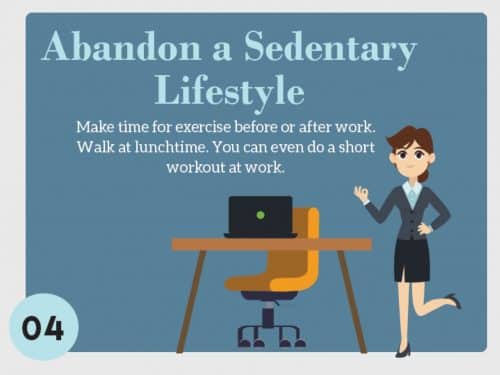
Strategy 4: Abandon a Sedentary Lifestyle

Stress Management Technique 4. Abandon a Sedentary Lifestyle. Make time for exercise before or after work. Walk at lunchtime. You can do even short workout at work.

Click on the image to see a full infographic (opens in a new tab)

Exercise has many therapeutic benefits and stress management is one of them, according to several studies. Exercise releases endorphins in the brain, which reduces stress and anxiety. Make time for exercise before or after work. Plan to talk for a walk at lunchtime. You can even do a short workout at work.

We know that being too sedentary is bad for your waistline but, it is also bad for your cognitive function. Even if you’re stuck in your office all day long there are still ways to get more movement in that can help with stress management.

Be Active While Sitting at Work and Reduce your Stress!

Strategy 5: Be Comfortable at Work

Stress Management Technique 5. Be Comfortable at Work. Invest in good ergonomically designed seats for comfort at your desk or even a massage chair for extra relaxation. Aromatherapy also helps.

Click on the image to see a full infographic (opens in new tab)

Comfort at work is important for stress management because it allows you some reprieve from an executive’s busy schedule. Invest in good ergonomically designed seats for comfort at your desk.

If you’re wanting to turn your desk chair into a stress-relieving spa try this massage chair for extra relaxation! Other ways to create a relaxing workplace ambiance are to use light therapy for a mood and energy boost or to utilize aromatherapy for stress relief.

Spray Anxious Feelings and Stress Away!

Strategy 6:  Be Proactive in Your Workplace Duties

Stress Management Technique 6. Be proactive in your workplace duties. Make sure you fulfill your tasks and meet deadlines. If needed, clarify your job description, ask for a transfer, change of duties or a more engaging job.

Click on the image to see a full infographic (opens in new tab)

Being proactive in your work duties is essential to maintain order, stay on task and meet deadlines. All of which are major stress triggers when not addressed. Talk to your seniors about workplace stressors. Clarify your job descriptions with them. If your creativity and drive need a boost, then request for a change of duties or a more engaging assignment. If needed, ask for a transfer. Your mental health is always a top priority so don’t be ashamed to ask for any of these adjustments.

Strategy 7: Practice Relaxation Techniques

Stress Management Technique 7. Practice Relaxation Techniques. Meditation, yoga and mindfulness are exceptional for daily stress relief. Deep breathing exercises can also calm your mind.

Click on the image to see a full infographic (opens in a new tab)

Relaxation techniques are great to do anywhere or anytime. They are perfect for the busy executive to help with stress management. Yoga and mindfulness are also exceptional for daily stress relief. Right when you wake up set an intention for your day or quickly for a few minutes at the office to reset and calm your mind. Deep breathing exercises can help calm your mind and ease the stress from the workday.

Meditation can also be useful for executives to set intentions on, particularly stressful days, before an important meeting or when you’re feeling unfocused and unproductive. Executives can try a meditation headband which can help improve stress response and reduce stress and anxiety.

Stat Relaxing your Mind with Biofeedback!

Strategy 8:  Stop Bad Work Habits to Decrease Your Job Stress

Stress Management Techniques 8. Stop Bad Work Habits. Resist Perfectionism. Stop negative thoughts, quit micromanaging. Avoid procrastination, appreciate feedback, see things from a humorous angle.

Click on the image to see a full infographic (opens in new tab)

A great way to incorporate stress management is to stop bad work habits. Resist perfectionism, stop negative thoughts, and quit micromanaging. Avoid procrastination, start appreciating feedback and even see things from a humorous angle.

These small but mighty shifts in perspective will lessen your stress from the workday. Allow you to actually enjoy the job and maybe even reward yourself on achievement.

Strategy 9: Reach out

Stress Management Techniques 9. Reach Out. Talk with others about what is stressing you. Getting it off your chest and airing grievences will help you not to feel alone.

Click on the image to see a full infographic (opens in new tab)

Simply put- talk about what is stressing you out. Sometimes just getting it off your chest can help the stress fade away.  Reaching out to others is a simple way to air grievances and not to feel alone!

Ask co-workers for support or lean on friends and family members. If you need to, establish new satisfying friendships. This can be great to feel a sense of camaraderie with other executives or to let your friends and family in on daily work life.

Strategy 10:  Check Your Nutrition

Stress Management Techniques 10. Check your nutrition. Make sure your diet includes vitamin C, complex carbohydrates, magnesium and omega-3 fatty acids. Reduce sugar, caffeine and alcohol.

Click on the image to see a full infographic (opens in new tab)

Proper diet helps to offset the impact of stress. When you eat well-rounded meals full of vitamins and nutrients, you strengthen your body’s immune system, your moods become more stabilized and blood pressure is reduced.

To help combat stress with nutrition make sure your diet includes vitamin C, complex carbohydrates, magnesium, and omega-3 fatty acids. Vitamin C is linked with boosting the immune system and lowering cortisol, the stress hormone. Complex carbohydrates such as whole grains induce serotonin production, which minimizes anxiety and stress. Proper amounts of magnesium also restrict cortisol and prevent inflammation in the brain. Omega-3 fatty acids found in fish and nuts have been found to reduce surges of stress hormones.

Just as healthy foods can diminish stress, unhealthy foods and maximize it. Reduce sugar, refined carbohydrates, caffeine and alcohol to lower your body’s stress response.

Stress Out? Find out the Best Foods to Fight Stress

Strategy 11:  Seek to Make Work Satisfying and Meaningful

Stress Management Techniques 11. Seek to make work meaningful & satisfying. Think about the ways your work benefits the world. Ask frequently for feedback to understand how you can make more meaningful contributions.

Click on the image to see a full infographic (opens in new tab)

Think about the ways your work benefits the world.  It can give your soul more purpose and, in turn, give you more drive to do your best.

Track your achievements. It will help you see the progress and the returns on what you do. Monitoring your success will always make you happier and is a great stress management technique.

Ask frequently for feedback. Your face-to-face interactions with clients and employees will help you understand how you can make more meaningful contributions to them.

Finally, don’t set unrealistic deadlines or expectations (to avoid disappointment and stress), and enjoy the moment!

Strategy 12:  Sleep Well

Stress Management Techniques 12. Sleep Well. Get the recommended 7-9 hours a night. If needed, melatonin supplements can help. Melatonin pills can improve sleep quality and duration.

Click on the image to see a full infographic (opens in new tab)

Not getting an adequate amount of sleep can lead to a stressful and unproductive day. Sleep deprivation can lead to irritability, lack of concentration and focus, increased errors and forgetfulness. All side effects that will surely lead to more stress for executives.

Therefore, getting the recommended 7-9 hours a night is beneficial for stress management. If needed, melatonin supplements can help. Melatonin pills can promote sleep onset and improve sleep duration.

Find out More about How to Use Melatonin Supplements to Sleep Well

Strategy 13: Challenge Yourself to Unplug (Me Time)

Stress Management Techniques 13. Challenge yourself to Unplug (me time). Pick a hobby that will keep you interested and engaged. Learn new language, sport or activity. Engage in community work or volunteering.

Click on the image to see a full infographic (opens in new tab)

Unplugging after every workday is something that all professionals should practice for self-care and mental health. If there is no downtime and your brain is always “on” this could cause you to be in a state on constant stress.

According to a study done by the Annual Review of Clinical Psychology persistent stress, particularly in older or unhealthy individuals, can damage health and cause disease.

A good way to prevent this from happening is to unplug from work daily. Pick a hobby that will keep you interested and engaged. Learn a new language, sport or activity. Engage in community work or volunteering.

Activities like this can help you gain new confidence and become more resilient.

Strategy 14: Focus on the Bigger Picture

Stress Management Technique 14. Focus on the Bigger Picture. Include your big important goals on the top of your daily to-do list. Ignore or delegate the tasks related to the small stuff.

Click on the image to see a full infographic (opens in new tab)

Focusing on the bigger picture can help you take your mind off the minute details that could be causing unnecessary stress.

Therefore, always include your big important goals on the top of your daily to-do list.

Focus on the tasks that matter and which are aligned with your big goals. Ignore or delegate the task related to the small stuff. That will allow you to advance your business and your career.

Concentrating on these big targets make the biggest difference in meeting goals at work. It is also a solid foundation for stress management at the workplace.

Strategy 15: Work-Life Balance

Stress Management Technique 15: Balance Your Work and Life; Create time for the people you love. relate to people who have different, non-executive jobs to get a different perspective on life.

Click on the image to see a full infographic (opens in new tab)

Create time for the people and things you love. Many executives love their work, but there is more to life than working. Allowing for a proper work-life balance will not hinder your performance but will actually enhance it. It also allows you to share your successes with people who are happy and proud of you.

Relate to others who don’t share the similar experiences of being an executive. It may be hard at the very beginning, it is important, however, to have others outside of that circle to get different perspectives on what is important in life. It is possible to have a successful career and a happy private life!

Get Powerful Strategies on Maintaining Work-life Balance

Strategy 16: Take Time off

Stress Management Technique 16. Take Time off. Take a day to yourself and recoup. Take a weekend getaway with teh one you love or even a trip with the family to refresh.

Click on the image to see a full infographic (opens in new tab)

Possibly the best stress management technique is to just take time off. Take a day to yourself and recoup (no checking emails for work texts!). Take a weekend getaway with the one you love or even a trip with the family to refresh.

Strategy 17: Change Your Job

Stress Management Technique 17. Change Your Job. If stress management isn't helpful for your regular work stress, then this is something you should consider.

Click on the image to see a full infographic (opens in new tab)

 If you’ve tried some stress management techniques and that just isn’t helping, try a career change. As executives, we should always be striving to be great leaders. Sometimes great leaders need a change in direction to keep the fire burning.

A permanent change in a career can be scary and thrilling all at the same time. If stress management isn’t helpful for your regular work stress, then this is something you should consider.


Strategy 18: Seek Professional Help 

Stress Management Technique 18. Seek Professional Help. Take part in a stress management training or take advantage of one-on-one psychology services.

Click on the image to see a full infographic (opens in new tab)

If you have tried all previous strategies and you still feel stressed and overwhelmed, then maybe it is high time you consulted a professional. Everyone needs help at times so seeking professional help can be the answer to your stress management. Take part in a stress management training or take advantage of one-on-one psychology services. It’s no secret that executives lead stressful careers so this extra help in dealing with stress can be supportive and nurturing.

Conclusion

Stress on the body isn’t always bad. Even so, as executives, we have our fair share of stressors hit us daily and the need for stress management in this career is necessary. This isn’t an easy career and we must put in the work to stay on top of our game. To maximize work productivity and promote overall wellbeing stress management must be a priority for all executives.

Staying on top of stress management is just as important as eating well and exercising. Good mental health makes for a happy and healthy executive. Try a few of the stress management techniques listed above and see what works best for you!

Do you have any stress management techniques? Please list them in the comments below.

40 Powerful Mantras for Instant Stress Relief

Daily stressors are a fact of life. Usually, corporate executives have high levels of stress due to the fast-paced nature of the job. To help ease some of this tension we can quiet the mind by using mantras to reduce stress.

While exercise is used to train our bodies, meditation and mantras can be used to train our minds.

According to Dr. Herbert Benson, president and founder of the Mind/Body Medical Institute at Harvard Medical School, those who chanted mantras experienced psychological changes. These changes ranged from reduced heart rate, lower stress levels, and slower metabolism. Benson also documented that repeating mantras can benefit the immune system and relieve insomnia, leading to reduced doctor visits.

The benefits of mantras are real, so why not use them to reduce stress? Mantras are free. There are no side effects. It is so simple and easy. Let’s now look at how to use mantras to reduce stress in just two minutes per day!


Reduce stress in just 2 minutes with these 40 mantras for executives! CLICK TO TWEET


1. What is a Mantra?

Mantra is a Sanskrit word. It is derived from two other words manas (mind) and tra (tool), literally translating into ‘a tool of the mind’. A mantra is any word, phrase or sound that helps keep your mind in focus. This act of prolonged repetitive verbal utterance is one of the most common mental practices in human culture.


2. How Mantras Can Reduce Stress


There are two elements that lead mantras to help us reduce stress:

– Repetition

According to a study done by the Department of Psychological & Alternative Medicine at Sri Balaji Clinic in India, by repeating a mantra to yourself it helps to improve concentration and steadiness, helps with mental rejuvenation. A mantra is fueled by the act of repetition.

In a study done by the Neurobiology Department at the Weizmann Institute of Science, mantras were found to have a sedative effect. According to their study, “repetitive speech may account for the long-established psychological calming effect associated with commonly practiced mantra-related meditative practices”.

Another study in Brain and Behavior shows that silently repeating a single word to yourself quiets the system responsible for your mind wandering. This system is called the default network. The default network of the brain is responsible for thoughts when you’re left alone and undisturbed. We know it as a “busy mind”, which happens when we don’t have anything to do and our mind wanders. The understanding behind how mantras reduce stress comes down to slowing down the thoughts and getting out of one’s head.

– Sound and rhythm

Mantras can reduce stress by combining sound, breath, and rhythm. This combination evokes a relaxing quality and allows for your mind to stop wandering and for you to just be still. As a result of the sound vibrations, different patterns of the mind rearrange themselves to become tranquil.

Over time, that vibration sinks deeper and deeper into your consciousness, helping you to eventually feel its presence. A powerful yet subtle force working inside each of us that carries into deeper states of awareness.


3. How to Practice Mantras to Reduce Stress


3.1. Consistency

The best way to learn and improve is through practice and repetition. Whether it’s playing an instrument, learning a new skill like painting or writing, or your job- there are no shortcuts. Success doesn’t happen overnight so utilizing mantras takes practice and patience.

Consistency is key regardless of your chosen mantra. The focus of bringing yourself back to the mantra, again and again, will eventually open the energy of the manta.

It will stop being just words and become living energy that you’ll feel shifting your inner state.

Several traditions suggest staying with one mantra for several months before switching to another, in order to deepen your practice and cultivate a sense of ease, presence, and peace.

3.2. Breathe

The simplest way to start this practice is to just breathe. Breathe is not a mantra, per se, but it is a great starting point to understanding how crucial this exercise can be to your mental health.

This video is a great tool for learning how to breathe and to understand why diaphragmatic breathing is so great for your mental and physical health:


3.3. Calm you down

To use the mantra to reduce stress stop whatever you’re doing and sit in a relaxed position. Start to take slow, deep breaths to calm the body and mind.

3.4. Repetition

Concentrate on keeping the mental chatter at bay. Start to repeat your mantra. When other thoughts and feelings start to enter your mind, just acknowledge that they’re there and return to your mantra. Check in with your thoughts, and then let them go.

See if you can set aside two minutes a day to practice this mental meditation using mantras.


4. How to Use Mantras to Reduce Stress in Daily Executive Life

Using a mantra is easy. Executives have likely found themselves in a high stress or nervous situation and have used their breath or words of affirmation to calm down. Think back to how you felt before you gave a big speech or presentation. Were you nervous? How did you calm yourself down? In this situation, many executives likely choose to take deep, slow and deliberate breaths or, possibly repeat ‘I can do this’ to oneself. This is, in essence, using a mantra to reduce stress!

The power of mantras comes from the sound and vibration of your voice.

The difference between motivational quotes and mantras is that the chanting helps to take you on a spiritual journey where the mind, body and soul become calm.

So, speak or chant your mantra, don’t just think of it!

Here’s how executives can try this out and use mantras to reduce stress:

– In the office: While you’re sitting at your office chair set a timer for two minutes. Plant your feet firmly on the floor, sit up tall, relax your shoulders. Breathe. Breathe deeply for 60 seconds and only concentrate on your breath, nothing else. Then, repeat your mantra for a minute.

You can easily carve out two minutes of your day to improve your mood and productivity while you’re at work! You will improve your stress response and focus on what’s important. You will also feel less stressed and you will calm your body, mind, and soul.


– In daily life:  Try using this technique while on your work commute, in the shower, or right when you wake up before you start your day. Put your cellphone away, close your eyes, and repeat your mantra. It’s just two minutes per day!


Now that you’ve learned how to use mantras to reduce stress, try some of the following mantras!


5. 40 Powerful Mantras to Reduce Stress

Now it’s time to take a look at some effective mantras to use to reduce stress!

Before you read through this list just remember that is does not matter what mantra you choose, none are better than the others.

Dr. Herbert Benson and his colleagues also tested many mantras and prayers. They decided that regardless of what the practitioner repeats the word or phrase has nearly the same effect: relaxation and the ability to better cope with life’s unexpected stressors. The beauty of a mantra is that you can set a specific intention according to your needs. Do you need to reduce stress? Calm your mind? Decrease anxiety? Mantras can help!

As executives, these coping mechanisms can greatly improve our attitudes, emotions and even work performance.

Take a look at our list of 40 mantras to reduce stress!


5.1. Mantras to reduce stress

1. Trust

2. One task at a time

3. Steady your nerves

4. I’ve survived all the difficult moments of my past life

5. Steady your reactions

6. Do it your own way

7. Focus on quality, service, and value

8. Be a leader

9. Trust the process

10. A vision is a dream with a plan

11. Progress is a process

12. Trust the path

13. Wherever you are, be all there

14. I control my emotions


5.2. Mantras to promote concentration, calm the mind and decrease anxiety

15. Om (and deep breaths)

16. Let it go

17. With every breath, I feel myself relaxing

18. Be here now

19. Have fun

20. I have control over how I feel, and I choose to feel at peace

21. Don’t major in minor things

22. I give myself permission to let go of what no longer serves me

23. Focus on what’s important

24. Clear the small stuff


5.3. Mantras to encourage self-confidence

25. Look how far I’ve come

26. All experiences are helping me grow and learn

27. This is only a paper tiger

28. Live life to express, not to impress

29. Perfectionism stunts progress

30. Good enough is good enough

31. There is no danger to run out

32. Be not afraid

33. Be confident

34. I will do better next time

35. Failure is normal, success is the ability to go from failure to failure

36. I can and I will

37. More does not mean better

38. Work for a cause, not for applause

39. There is no wrong decision

40. Be brave


And what is your own mantra: …………………………………..… ?


Pick a mantra and use it! Put your mantra everywhere. At the office, at your desk, at home. Put it anywhere so you can glance over at it when you get overwhelmed.


6. Conclusion

Corporate executives rarely get a chance to relax and unplug. Using mantras can be an effective fix for this. Executives in daily work or personal life can easily use mantras!

By repeating a thought or catchphrase, it gains suggestive strength and energy. This act of repetition can actually help us control stress and anxiety. Using mantras to reduce stress can help executives in stressful work settings and can redirect that energy into productivity and positivity.

Take two minutes each day to practice a mantra meditation and regain mental clarity and calmness!

Do you leave work every day stressed to the max?

18 Stress Management Techniques That Really Work

You can check out our infographic on related topic by clicking the image below:

mantras for stress relief cover


Do you have any mantras that you use to help reduce stress? Please comment below and let us know!

Proven Healthy Lunch Ideas for Work to Lose Weight

What would be your reaction if you are told you can prepare your own lunch, virtually every day, with some healthy lunch ideas for work to lose weight?

You will be surprised and may not even believe it! Because for any manager, every minute is precious and preparing own lunch and packing it for office, that too on a daily basis, Monday-Friday, can be considered as the waste of time for them.

But, it’s not! The recipes we will discuss here are not time-consuming and require minimal efforts.

In fact, if you look at it from the perspective of your health, you will realize you can actually save a lot of time by preparing your own lunch, lose considerable weight, and stay healthy.

Ignoring your diet and nutrition can increase your risk of obesity and related disorders. Eating healthy, low-calorie meals can help you lose weight while keeping your energetic at the workplace. CLICK TO TWEET

According to the study published in the Journal of Research of Medical Sciences, a poor diet and lack of nutrition contribute significantly to a higher risk of chronic disorders, including obesity and diabetes.

A chronic disorder like diabetes is definitely more time-consuming given the regular medications and insulin injections that need to be taken, frequent hospital visits, extended care needed to prevent complications, etc.

Hence, the need to follow a healthy diet and avoid obesity cannot be emphasized enough. If you agree, let us begin with learning healthy lunch ideas for work to lose weight for busy managers.


Healthy Lunch Ideas for Work to Lose Weight and Stay Healthy:

1. Quinoa Burrito Bowls

healthy lunch ideas for work to lose weight

Quinoa Burrito Bowls offer a perfect way to keep yourself full until the end of the working day.

Research conducted at the Comprehensive Reviews in Food Science and Food Safety had shown that Quinoa possesses a high amount of fibers that can improve satiety and control your food intake at work and at home.

Quinoa can also reduce your cholesterol levels, a common complication for executives and managers associated with obesity. It can also improve your energy levels and allow you to feel fresh until the end of the day by maintaining stable blood sugar levels.

Total preparation time: 20 minutes

Calories: 312 kcal

Ingredients:

For the dressing:

1/4th cup of olive oil

1 tablespoon of balsamic vinegar

1 to 2 cloves of garlic, minced

2 tablespoons of lemon juice

Black pepper and salt

1 teaspoon of honey

For the salad:

2 cups of quinoa, cooked

1 avocado, peeled and chopped

2 cups of spinach leaves, finely chopped

cherry tomatoes

2 green onions, finely chopped

1 cup of cucumber, chopped

Black pepper, and salt

To prepare:

In a bowl, add olive oil, garlic, vinegar, lemon juice, salt, honey, and pepper and mix well.

Set it aside.

In another bowl, combine quinoa, cucumber, spinach, tomatoes, green onions, and avocado.

Drizzle the salad with the dressing. Stir it gently so that the salad is well-coated with the dressing.

Sprinkle salt and pepper. Top with corn, if desired.

2. Zucchini and Eggs with Brown Rice

healthy lunch ideas for work to lose weight
Photo by Lum3n.com from Pexels

Brown rice offers a natural source of fibers. It also has a low glycemic index. Hence, on the days you have meetings lined up one after another, due to which you may not get even a few minutes of break to eat some snacks for the evening, you can pack cauliflower fried rice for lunch.

The higher fiber content of brown rice can stimulate the fat burning rate and help you lose oodles of weight from your desk!

According to research conducted at the European Journal of Clinical nutrition, brown rice has a slower gastric emptying rate, due to the presence of the bran layer. This means your stomach will feel full for longer and you will be able to breeze through all the meetings without experiencing hunger pangs.

Total preparation time: 25 minutes

Calories: 228 kcal

Ingredients:

1 cup of brown rice, soaked in water for 3 hours and then, cooked

3 tablespoons of unsalted butter

2 to 3 cloves of garlic

Half an onion

2 or 3 eggs

Half red bell pepper

A small amount of sea salt

4 to 5 cups of zucchini

To prepare:

In a large pan, heat butter. Add chopped vegetables and saute for about 10 to 12 minutes.  Keep it aside.

Meanwhile, whisk one or two eggs. Add sea salt. Boil the other egg and keep it aside.

Cook the whisked eggs for a few minutes in a pan.

In a large pan, add cooked eggs and vegetables and stir together.

Sprinkle a small amount of sea salt and cook for 5 more minutes. Serve with the boiled egg.

3. Turkey Taco Stuffed Avocado

healthy lunch ideas for work to lose weight

Avocado is a great addition to the healthy diet given its multitude of medicinal properties.

The potential health benefits of avocados for managers and executives are attributed to its high nutritional value.

According to a research conducted at the Critical reviews In Food Sciences and Nutrition, Avocados provide dietary fibers, minerals such as potassium, sodium, and magnesium, as well as vitamins like vitamin A, vitamin C, vitamin E, vitamin K1, and folate.

While living a busy life of an executive, ensuring your diet possesses all the essential nutrients can be too difficult. This recipe can ensure your health doesn’t take a backseat due to the lack of nutrients in your diet.

Total preparation time: 20 minutes

Calories: 210 kcal

Ingredients:

Avocados, cut into halves and pit removed

Juice of 1 lime

1 teaspoon of ground cumin

1 pound of ground turkey

1 teaspoon of garlic powder

1½ teaspoons of chili powder

1 teaspoon of ground coriander

Salsa for garnish

1 teaspoon of onion powder

1 teaspoon salt

½ teaspoon pepper

Half a cup shredded cheddar cheese

Sour cream for garnish optional

Chopped fresh cilantro for garnish

To prepare:

Brown the turkey and onion on a large skillet, until the turkey is no longer pink.

Add garlic powder, cumin, coriander, chili powder, salt, onion powder, and pepper.

Add the refried bean. Mix well.

Top each slice of avocado with a squeeze of lime juice.

Spoon the mixture of ground turkey evenly into the halved avocado.

Top with sour cream, shredded cheese, cilantro, and salsa.

4. Creamy Spinach Soup

Healthy lunch ideas for work to lose weight
Courtesy of Recipe photo courtesy of David M. Russell

Creamy spinach soup is the perfect recipe for lunch at work on the days you would like to avoid eating anything too filling or when you are suffering from digestive problems.

Taking a leave even on a day you are down with a digestive problem can be difficult for managers, especially when they are at the helm of an important project. On such days, you can still attend to your job responsibilities by packing for yourself a lunch of creamy spinach soup.

According to research conducted at The Journal Of the American College Of Nutrition, Spinach can support your weight loss goals. It promotes the release of hormones, which create a sense of satiety thus reducing your food intake.

Additionally, the high amount of iron present in spinach will prevent anemia and improve your general health to face your duties at work.

Total preparation time: 25 minutes

Calories: 130 kcal

Ingredients:

3 to 4 Leeks of greenish and White parts

3 cups of Spinach

4 cups of water

1 tablespoon of Olive Oil

1 Potato, cut into small cubes

2 tablespoons Parmesan Cheese

1 slice of Sourdough bread

2 tablespoons Cream

Salt and pepper

To prepare:

In a heavy pan, add butter. Add potatoes and the leeks. Sauté for about 5 minutes.

Then, add water, and let it cook for about 10 to 20 minutes.

Chop the spinach and add it to the pan and let it cook for a few more minutes.

Blend the ingredients using a handheld mixer to get a soupy texture.

Sprinkle the cheese on one slice of bread and toast it in the toaster for about 5 minutes.

Remove it from the oven. Then, cut it to make square-shaped croutons.

5. Rice and Beans

healthy lunch ideas for work to lose weight

Beans are often overlooked and underestimated, even though they are loaded with nutrients.

According to research conducted at the ISRN obesity, the high fiber content of beans can create a sense of fullness in the stomach and keep you full.

Beans also have a low glycemic index, which means, it will provide you with bursts of energy at regular intervals at work.

Hence, having rice with beans for lunch will help you avoid feeling sleepy or drowsy in your post-lunch meetings.

Total preparation time: 20 minutes

Calories: 260 kcal

Ingredients:

1 cup of cooked rice

1 can black beans

2 cups of water

1 tsp extra virgin olive oil

1/4th cup onion, chopped

1/4th cup pepper, diced

1/2 cup of coconut milk

1 tablespoon red curry paste

Salt to taste

Grated cheese

To prepare:

Add salt and curry paste to coconut milk. Set aside.

In a non-stick pan, saute pepper olive oil, and onion. Add beans.

Add coconut mixture and cooked rice. Combine well and heat through.

Garnish with grated cheese.

6. Chicken with Lemon and Rice

healthy lunch ideas for work to lose weight

This recipe is reserved for the days at work you deserve a treat! After all, a happy mind is the most productive at work.

According to the study published in the Food and Nutrition Research, the chicken should be a part of your balanced diet given its high nutritional value.

Chicken also provides a source of healthy fats that can ensure your body receives a steady supply of energy and allows you to keep working at your best throughout the day.

Total preparation time: 30 minutes

Calories: 250 kcal

Ingredients:

For the chicken:

skinless, boneless chicken breasts

2 teaspoons of Italian seasoning

1 tablespoon of butter

Salt and pepper to taste

For the Rice:

1 cup uncooked rice

2 cups of chicken broth

1 teaspoon Italian seasoning

Juice of 1 lemon

To prepare:

Melt the butter in a skillet. Then, add the chicken and season it with a pinch of salt and pepper, and Italian seasoning.

Let the chicken brown for about 2 to 3 minutes on both the sides. Transfer chicken to a plate.

Add chicken broth, rice, lemon juice, and Italian seasoning to the pan.

Place the chicken on the top, cover and let it simmer over low to medium heat for 20 to 25 minutes.

Garnish with cilantro or fresh parsley, if desired.

7. Baked Chicken with Sweet Potato and Mushrooms

healthy lunch ideas for work to lose weight

This recipe combines the goodness of sweet potatoes and mushrooms with the tasty addition of chicken.

According to a study published in the Mechanisms of Ageing and Development, sweet potatoes have a low glycemic index. This makes it a perfect ingredient to add to your lunch box when you want to avoid mid-meal snacking at the office and lose weight. It maintains your blood sugar levels within normal limits, thus preventing sluggishness and tiredness at work caused due to low blood sugar levels.

Mushrooms, on the other hand, can reduce cholesterol levels and improve energy levels. Mushrooms also have the ability to improve your concentration and attention span and help you focus better while at work.


Hence, this recipe is recommended for those working days you know are going to be hectic in the office with site visits, presentations, etc.

Total preparation time: 25 minutes

Calories: 280 kcal

Ingredients:

1/2 chicken breast, skinless

1 cup of mushrooms, sliced

1 tablespoon chives

1 tablespoon olive oil

1 medium sweet potato

To prepare:

In a 350°F oven, bake the chicken, topped with chives, mushrooms, and oil for about 15 minutes.

Microwave the sweet potato for 5 to 7 minutes as a side dish with chicken.

Conclusion

Somewhere along your quest to excel in your career, your health took a backseat. As you jump the ladder of success, your pay package increases and so does your waistline! Obesity, if not controlled and reversed, can invite to a range of disorders including diabetes, hypertension, heart attacks, and stroke.

These disorders can create obstacles in your career by causing mental stress and reducing your productivity at work.

Packing a home-cooked lunch for yourself with the healthy lunch ideas for work to lose weight, you can avoid obesity and the risk of disorders associated with it. Check more healthy recipes for lunch exclusively selected for executives!

cooking books

Get Recipes for Busy Working Days!

If you want to share a tasty and healthy recipe for weight loss, please leave a comment below.

50 Healthy Travel Snacks Every Manager Should Know

Whether you spend the majority of your time in airports flying to conferences and business meetings or consider your vehicle your primary office, it is important to have a selection of healthy travel snacks at the ready.

The right snacks will help you feel energized, focused and satisfied during your business trips. CLICK TO TWEET 

The following are eight healthy travel snacks that require minimal planning and preparation. Best of all, they are tasty and portable so that you can carry them with you no matter where your day may take you.

healthy travel snacks


Healthy Travel Snacks For Your Business Trips

Seeds:


healthy travel snacks
eating healthy while traveling

Seeds can make up for your perfect dry snacks you can carry during travel, especially if your stay is going to be for a longer duration.

Just like almonds and other nuts, seeds also have a longer shelf life. So, they can be your healthy travel snacks until the last day of your trip.

Seeds are an excellent source of fiber, magnesium, and omega-3 fatty acids. It only takes a couple of minutes to toast up seeds tossed with a little olive oil and your favorite seasoning. If you do choose to purchase pre-roasted seeds, be sure to choose varieties that are low or reduced sodium.

1.   Pumpkin seeds

What makes pumpkin seeds healthy snacks for executives is they offer a great protein punch. Also, a research study published in the African Journal of Traditional, Complementary and Alternative Medicine has shown that pumpkin seeds can maintain your blood pressure within normal limits.

So, if your hectic and stressful lifestyle has taken a toll on your health resulting in hypertension, you can carry pumpkin seeds with you during travel.

2.   Sunflower Seeds

Executives who have to travel frequently are at a higher risk of developing high cholesterol. They are deprived of freshly cooked home meals while traveling. The food offered by most restaurants is loaded with fats that increase their cholesterol levels.

If you are facing the same issue, you can try sunflower seeds for healthy travel snacks. A research study published in the Chemistry Central Journal has shown that Sunflower seeds have anti-lipemic properties that can help to control your cholesterol levels.

This will help you prevent the disorders linked to high cholesterol even though you need to travel frequently to meet your business commitments.

3.   Flax Seeds

Flax seeds can be roasted to create crunchy, protein-packed healthy travel snacks. It only takes a couple of minutes to toast up seeds tossed with a little olive oil and your favorite seasoning.

Flax Seeds are an excellent source of fibers, magnesium, and omega-3 fatty acids. If you do choose to purchase pre-roasted seeds, be sure to choose varieties that are low or reduced sodium.

Pumpkin, sunflower, and other seeds not only contain protein and healthy fats, but they are also mess-free for traveling.

Fruits:


When it comes to healthy travel snacks, fresh fruit is pretty much a no-brainer. Fruit is highly portable and requires little to no preparation. Grab an apple, banana, or clementines along with a couple of pieces string cheese as you head out in the morning and you are good to go.

4.   Apples

What makes apples perfect healthy travel snacks for traveling executives is this fruit is easily available. Also, just one apple can be quite filling for your stomach and keep you from experiencing hunger pangs until the end of the meeting.

So, if you have an important meeting scheduled for a day, just grab an apple and you would be good to go.

5.   Bananas

Just like apples, bananas can also be a great healthy snack for managers who need to travel frequently. Bananas are particularly beneficial for managers who often travel to different time zones.

When you travel from one time zone to another, your body’s internal clock or circadian rhythm is disturbed. As a result, your digestive processes and bowel habits can suffer. This can increase your risk of constipation and indigestion.

Research studies published in the Journal of Medicinal Food has shown that bananas have a rich fiber content. This can help to satisfy your hunger by creating a sense of satiety. Also, the fiber content can ease digestion and prevent constipation.

6.   Cherries

Cherries are loaded with vitamin C and natural antioxidants. Also, they are not messy to eat while traveling. You can even eat cherries for your breakfast while you travel to your client location from the hotel you are staying in.

7.   Plums

Plums are not particularly very tasty. Yet, they can add a unique flavor to your smoothies. You can also eat plums for your after-dinner desserts. You can eat them at any time, even to beat boredom between two meetings.

8.   Oranges

Oranges are low in calories and rich in nutrients. Eating oranges is also recommended for managers traveling to a country having hot weather. The juicy content of this fruit will keep you hydrated and prevent fatigue.

9.   Clementines or mandarins

Mandarin, just like oranges, are juicy and can allow you to stay hydrated. They also provide a rich source of flavanols that can improve your health by protecting your body against free radicals.

10. Papaya

Frequent traveling across different time zones can affect the digestive functions of your body. That is why; managers who have to travel frequently suffer from digestive symptoms such as constipation, bloating, and indigestion. Eating papayas during snack time will help you avoid tense digestive disturbances, thanks to the rich fiber content of this fruit.

11. Apricots

Apricots offer a natural source of vitamin A and C. These vitamins will protect your skin from the effects of mental stress that most managers experience, especially during their travel to the client location. It is one of the healthy travel snacks for managers as it can also prevent the damage to the skin due to pollutants and free radicals, thus reducing wrinkles and fine lines.

12. Grapefruit

Grapefruit makes up for healthy travel snacks for managers who need to travel frequently. It is easily available and just one grapefruit can create a sense of fullness in your stomach thus preventing hunger pangs during important meetings.

13. Avocado

Avocados are rich in several essential nutrients while being a good source of dietary fibers. Eating an avocado between presentations can help you feel satiated and allow you to focus on the discussion even when the meal time is missed.

14. Muskmelon

Muskmelons have high-water content, which makes them healthy travel snacks while traveling to warmer countries.

Berries:


The speed at which mental stress is rising in managers is alarming. Stress has also emerged as a common precursor for depression, hypertension, and heart attacks. Stress is more common in the managers who travel frequently because of a disturbed sleep-wake cycle and the higher pressure to fulfill the purpose of the travel.

If you want to protect yourself against the effect of a stressful routine, you can consume berries as your healthy travel snacks.

15. Grapes

Grapes contain compounds that can regulate the balance of hormones in the brain and improve your moods thus relieving stress.

Scientific studies published in the Integrative Medicine Research has shown that grapes can also protect you against the development of stress-induced diabetes.

16. Blackberries

Blackberries possess anti-degenerative properties that can protect talented managers from losing their decision-making skills even as their age increases. It can also reduce the risk of degenerative diseases such as Alzheimer.

17. Strawberries

Vitamin C and flavonoids in strawberries make them healthy travel snacks for managers. You can even fill your pockets with a few strawberries and eat a few during a short break between long meetings.

18. Blueberries

Just like strawberries, blueberries also contain a high amount of vitamin C and flavonoids that make this fruit healthy travel snacks. It can also prevent dark circles under eyes. Most managers develop them due to the lack of sleep as a result of their hectic lifestyle and frequent traveling.

19. Goji berries

Berries can also provide a natural source of antioxidants and fibers while being low in calories.

Dried Fruits:


Not only will a handful of dried fruit satisfy a late-afternoon sweet tooth, but it also provides fiber to keep you full and carbohydrates for energy.

Since the drying process concentrates the sugars in the fruits, it is important to make sure that the fruit does not have any added sugar. You should also keep the serving size to half a cup.

20. Raisins

Raisins contain a concentrated form of carbohydrate, which can maintain your energy levels for a longer duration. Eating raisins as your healthy travel snacks can prevent weakness and drowsiness that occur due to the lack of sleep or missed meal times.

21. Dried mango

Dried mango can be pleasing for your taste buds. The sweet and tangy taste of dried mango can help you feel fresh and energetic for several hours. Dried mangos can also keep you awake when someone else is giving a presentation.

22. Dried apricot

Dried apricots are healthy travel snacks for managers who suffer from a lack of sleep due to frequent traveling across different time zones. It can enhance the production of melatonin and also reduce stress thus improving the quality of sleep.

23. Dried cherry

Dried cherry can offer a great way to satiate hunger without adding too many calories to your diet. Cherries contain vitamin A and C, which can improve the health of your skin and immunity.

24. Banana chip

Banana chips can provide a tasty crunch of fiber. This can help satisfy your hunger by creating a sense of satiety while traveling for business.

25. Apple chip

Apple chips can be an alternative to banana chips as your healthy travel snacks if you suffer from anemia. The rich iron content of apples can replenish this mineral in your body and prevent anemia. Anemia may occur due to your irregular meal times or not eating balanced meals while traveling.

26. Dates

This dried fruit is a perennial travel snack favorite since it is easy to stash in a purse, carry-on, or in the glove box of a car. Dates also contain a high amount of iron and calcium needed by your body to function optimally. Iron can help to prevent anemia while calcium can improve the health of the bones and teeth.

Nuts:


Frequent traveling, especially across different time zones, can take a toll on your physical and mental health. It can hamper your general health and even reduce your strength and stamina.

If you often feel too weak and exhausted during your travel and even upon returning to your home country, you should eat nuts.

27. Almonds

Almonds are considered healthy travel snacks as they are loaded with several nutrients and fibers.

Clinical research published in the Journal of Agricultural and Food Chemistry has indicated that almonds have a rich content of monounsaturated fat, α-tocopherol, and minerals such as copper and magnesium. It also contains several other nutrients that can improve your energy levels and stamina.

So, almonds will allow you to attend all your meetings and presentations and impress your client with your enthusiasm and higher energy levels. This will surely help you meet the purpose of your travel.

Almonds can also improve your digestive functions, thus preventing digestive disturbances that might occur if your meal times are disturbed due to extended meetings.

28. Walnuts

If you are particularly looking for nuts that can protect your heart, walnuts would support your purpose. The incidence of heart disorders such as myocardial infarction is higher in busy managers due to the hectic lifestyle they lead.

The risk if much higher in the executives who need to travel frequently because they find it difficult to follow a healthy diet during their stay in a hotel.

Walnuts are considered healthy travel snacks for managers because these nuts are rich in Alpha Linoleic Acid. Research published in the Journal of Nutrition has indicated that walnuts can reduce the risk of heart attacks.  Alpha Linoleic Acid works by improving the blood circulation into the heart muscles.

29. Peanuts

Peanuts are healthy travel snacks for managers for multiple reasons. Peanuts can improve the functions of your brain and enhance your memory and cognitive skills. They can also create a sense of fullness in the stomach.

Peanuts are loaded with several vitamins and a mineral called folic acid that is needed by the brain to perform cognitive functions.

30. Roasted pine nuts

Roasted pine nuts are great for your taste buds. The calorie content of these nuts is lower compared to the fried nuts, which makes the roasted version the healthy travel snacks for managers who need to travel frequently.

31. Cashew nuts

Cashew nuts provide a sense of satiety and prevent the desire to eat for several hours. This can make them healthy travel snacks you can carry with you when you know your day is packed with several meetings with the client.

32. Pistachios

The unique flavors of pistachios can allow you to feel fresh and prevent fatigue even when your schedule includes traveling from one client location to another during an on-site visit.

33. Brazil nuts

Brazil nuts contain omega 3 fatty acids that can reduce your risk of heart diseases. It can also lower your cholesterol levels and keep you healthy.

34. Hazelnuts

You can pack hazelnuts in your travel bag and munch on them when you feel hungry. It will also improve your ability to respond to the queries of clients during meetings with spontaneous and quick thinking.

This would surely be a great virtue for you to possess if you want to climb the ladder for success in your career or business.

35. Trail Mix

There is no rule that says that you have to settle for just one snack. You can always combine several of your favorite healthy travel snacks into a custom trail mix. By choosing your own dried fruits, nuts, and seeds, you can control the salt and sugar content and experiment with unique ingredient combinations.

The sweet and salty combination of nuts and dried fruits provide plenty of nutrients as well as protein and fiber.

Veggies:


Vegetables are easily available healthy travel snacks as they offer a natural source of vitamins and minerals. Veggies like cucumber and radishes are low in calories but high in nutrients.

36. Boiled cauliflower florets

Boiled cauliflower florets sprinkled with the spices of your choice can keep your taste buds satisfied. Cauliflowers can provide a sense of satiety without adding too many calories to your diet.

37. Cucumbers

What makes cucumbers healthy travel snacks is this vegetable does not require any cooking. Also, it has a high water and fiber content that can help you stay hydrated and feel full.

38. Celery sticks

The aroma of celery sticks added to its unique flavor will help you feel fresh even when the day at the client location prolongs due to extended presentations and discussions.

39. Cherry tomatoes

Cherry tomatoes provide a rich natural source of vitamin C, which can prevent the signs of aging. It also contains a high amount of water, which prevents fatigue by improving your hydration. Moreover, you can eat them at any time as this veggie it does not require cooking.

40. Snap peas

Snap peas offer low-calorie snacks you can consume at any time during the day. It contains vitamin A needed to keep your skin healthy.

41. Baby carrots

Baby carrots have a high amount of vitamin A. Wrinkles are common in the managers who live a stressful life. Eating baby carrots as your healthy travel snacks will prevent your skin from developing premature signs of aging.

42. Radishes

Just like carrots, radishes are also rich in vitamin A, which can enhance skin health.

Radishes can also support hair growth and prevent premature greying of the hair and hair loss. Hair loss is linked to the lack of sleep and stress in the managers who have to travel frequently.

Whole Grains (cereals):


Complex carbohydrates, such as those found in whole grains, are digested slowly. This kind of carbohydrates provides a steady stream of glucose for both short and long-term energy during your business trip.

43. Snack Bars

Although snack bars sometimes get a bad reputation for having too much sugar and sodium, they can make healthy travel snacks if you know what to look for. Look for bars that contain whole, natural ingredients, such as fruit and nuts, fewer than 200 calories, 5-10 g protein, and that are low in sugar.

 Kind and Larabar are two brands that score high terms of offering plenty of fiber, vitamins, and minerals.

44. Whole grain crackers

Crackers made with natural ingredients and limited sugar always make healthy travel snacks.

45. Popcorn

Popcorn is perfect for those moments when you crave something salty and crunchy. Popcorn has less than 100 calories and provides 3,5 grams of dietary fiber.

Others:

46. Roasted Chickpeas

If you love hummus, consider a bag of high-protein roasted chickpeas as a travel-friendly alternative.

Not only are chickpeas loaded with protein, but they can also help lower your cholesterol. Although normally associated with hummus, chickpeas can be roasted to create a crunchy, satisfying snack that is easy to carry with you in a small container or baggie. You can even have fun by seasoning them up with your favorite spice or herb combinations.

47. Jerky

As long as you go for a low-sodium version, jerky is a healthy snack and will provide you with the protein that you need to power through those on-the-go days.

Jerky contains 9.4 grams of protein per ounce. If you pair your jerky with a little fresh fruit for some carbohydrates, you should feel full and energized until you are finally able to stop for a proper meal.

As an added bonus, jerky is a good source of iron and zinc, which can help boost your immune system.

48. Dark Chocolate

Cacao is a natural stress reliever and an excellent source of antioxidants and magnesium, which benefit cardiovascular health. Look for dark chocolate that is at least 70 percent cacao to get the most benefit.

Combine a handful of dark chocolate chips with some nuts or a cup of Greek yogurt for a satisfying, protein-packed snack that you can eat on the run.

49. String Cheese

String cheese can be your perfectly healthy travel snack as they offer a rich amount of proteins. It cannot just please your taste buds, but also support your overall health. Proteins repair and heal the damaged tissues of the body.

50. Boiled Eggs

A boiled egg is essentially pure protein and only has 70 calories. Par your egg with fruit or nuts and you have an easy healthy travel snack that you can eat wherever you go.

Are you interested in healthy eating? Read our post about healthy eating when traveling. And avoid the pitfalls that you may encounter from when you arrive at the airport to the post-meeting drinks with clients.


What are your go-to snacks for when you are on the go all day? Let us know your favorite healthy travel snacks in the comments below.