6 Reasons Why Vacation Is Important

“This vacation helped me re-enter the world as a healthy and well-adjusted human,” said Mr. A, a senior manager who I recently got to know a few weeks after he returned from a long-anticipated trip to Reykjavík.

His story has been the trigger that tempted me do a lot of research on “why is vacation important”. Despite his struggle with generalized anxiety disorder for most of his life, long before he even knew it had a name, his symptoms had been well controlled for years.

Perhaps this is why he proudly assumed he would be immune to the agony of the exhausting existence that is an “executive manager.” He believed he would be able to channel his daily stress into productivity.

That was until a couple of years ago when his anxiety insidiously crept back from the hinterlands of the amygdala, creating a constant and irrational loop in his mind of all the things that could go wrong. What if I make an idiot of myself at the party? Will I make it in time for the meeting? What if I screw up tomorrow’s presentation? Did I leave the heater on?

It is that kind of anxiety that makes you feel incredibly tired and overwhelmed when facing the simplest of tasks. The kind of anxiety that doesn’t stop even when you see the heater is off.

“After I’ve made it through the day, I go home,” said Mr. A. “I crawl under the covers and scrutinize each and every word, interaction and action that had taken place that day until I feel sick to my stomach.”

He admits that he always knew he could use some time off, but like many of you, he thought he had too much to do and would rather just spend the weekend home and stay in his cool dark room, distracting himself with mindless television shows.

Anxiety was keeping him from trying out anything that sounded remotely unfamiliar. Eventually, he made the decision to try and fight that shadow inside him.

According to him, travel and vacation have been a major component of keeping it at bay and helping cure his crippling anxiety.

No one argues that vacation is important for our minds and bodies, but the real problem is that no one thinks it is crucial enough to be a commitment.

Unfortunately, that makes it so much easier for the anxiety monster inhabiting our brains to provide endless excuses that kill any idea of going on vacation before it can be transformed into action.

According to a recent survey, the average U.S. employee only takes half of his permitted vacation time.

Furthermore, among those who actually do go on vacation, three in five admitted to doing some work while vacationing, and a quarter of them were contacted by a coworker or supervisor about a work-related matter.

Taking vacations on a regular basis isn’t a luxury or an option you can just skip. It is a priority and basic requirement essential to maintaining and promoting your physical and mental health.

It prevents a variety of diseases and helps you recover from the stress you face in your daily life.

Here are my top reasons, backed by scientific research, why vacations are important.


1. Vacation Reduces Stress and Depressive Symptoms

One of the principal reasons why vacation is important is the fact that they markedly reduce stress levels by removing people from the environment they associate with stress and anxiety.

Moreover, several scientific studies have concluded that vacation is associated with fewer physical complaints related to stress, such as headaches, back pain, and heart rate irregularities.   

In one study, data were collected from forty middle managers, after one week at a resort. The results indicated that one single short-term vacation has large positive and immediate effects on perceived stress, recovery, strain, mood and general well-being.

Interestingly, these effects were still detected six weeks after the managers were back from vacation!

Another study showed that taking a vacation is associated with lower stress on a molecular level by observing a decreased expression of FOXO3, a gene that orchestrates the stress response in the body. In fact, lower levels of FOXO3 are also proven to have a remarkable antidepressant effect.

Researchers suggest that even a short-term vacation might have beneficial effects on one’s well-being, strain level and stress.

In fact, it seems that short vacation of four nights is long enough to fully recover from daily work-related stressors, yet short enough to limit the pile of work you have to face upon your return, which is why it’s important to take periodic not overly lengthy vacations.


2. Vacation Can Cut Your Risk for Alzheimer’s Disease

This one is the probably the most interesting on this list. Vacation has been proven to reduce your risk of developing Alzheimer’s on a subcellular level!

One of the hallmarks of Alzheimer’s disease is the accumulation of hard, insoluble plaques between the nerve cells in the brain, a process that contributes in a major way to the dramatic neuronal degeneration observed in Alzheimer’s disease. These protein plaques consist primarily of Aβ40 protein.

A recent study measured Aβ40 levels after four days of vacation and found a significant reduction in its level in all participants!

The same study showed a decrease in the expression of CLU and PSEN1, two genes confirmed to be implicated in Alzheimer’s disease.


3. Vacation Improves Sleep

Good quality sleep is one of the major ways to help your body and mind recover if you suffer from stress at work. Unfortunately, job stress and poor sleep often go hand in hand. Stress leads to a loss of sleep and a loss of sleep leads to an increase in stress, which then becomes a vicious cycle that ultimately leads to less focus, less alertness, impaired memory, and a decreased quality of life. 

What’s even more alarming is the fact that the combined effect of work stress and impaired sleep is linked to a threefold higher risk of cardiovascular death in patients with hypertension.

Researchers say that vacations can help interrupt the factors that interfere with normal sleep, such as working late at night, drinking too much caffeine or checking work emails before bedtime.

Indeed, one study found that vacationers tend to show marked improvement in both sleep quality and quantity. Taking regular vacations is important to restore and maintain a normal sleep pattern.


4. Vacation Protect Against Heart Disease

Perhaps the best evidence of the benefits of vacations is highlighted in the landmark Framingham Heart Study, a long-term, ongoing cardiovascular study launched in 1948.

The study revealed that men who skipped vacation for several years were 30% more likely to develop heart attacks compared to men who took a vacation for at least one week a year.

Similarly, women who took a vacation only once every six years or less were almost eight times more likely to have a heart attack compared to those who vacationed at least twice a year.

Based on these findings, the study reported that skipping even one year’s vacation time may be associated with increased risk of heart disease.


5. Vacation Improves Productivity

Vacation is not about escaping or running away from one’s responsibilities. They are about being incredibly present and mindful in whatever new thing you may be experiencing, and that’s the real reason why vacations are important. 

This mindfulness and gratitude for the present moment helps to halt the wicked cycle of worry that sours our minds. Vacation time, in turn, restocks your energy stores, making work seem much easier when you get back to your office.

The professional services firm, Ernst & Young, conducted an internal study of its employees and found that for each additional ten hours of vacation time, their year-end performance ratings improved 8%.


6. Meditation While on Vacation =Loads of Extra Benefits!

Compared to simple rest and relaxation alone, engaging in mindfulness exercises while on vacation can have many superadded positive effects on health and well-being.

One study showed that individuals who practiced meditation during a four-day retreat significantly increased blood telomerase activity. Telomerase is an enzyme that functions to make our DNA longer. Hence it preserves cell DNA and literally increases cell survival and its ability to divide over time.

A shorter DNA length appears to be an indicator that predicts the onset of cardiovascular diseases, diabetes, stroke, dementia and other degenerative conditions such as osteoarthritis and osteoporosis, as well as certain cancers.

In other words, mediation works to combat ill health by increasing telomerase enzyme activity, slowing cellular aging and delaying the onset of the most common debilitating human diseases.

In addition, meditation and yoga boost immunity, increase the body’s defenses against viral infections and promote more complex genetic effects related to healthier aging.

So, what are you waiting for? Don’t overthink it. Plan your trip, pack your bags, and go!

You’ll understand why vacations are important and come back as an enhanced version of yourself; it’s all good for business!

The full body workout for desk potatoes that can save your life

Hello desk potato! Did you read the title carefully? This post is about a full body workout for beginners that can be a matter of life and death for you.

Sounds exaggerated? Maybe. But it is true!

If you have started reading, you are very likely a non-exerciser. So please memorize this: out of those who die over the age of 35, for 20% it is due to physical inactivity. Do you want to become a part of these statistics?

Of course not! The solution is very simple: you have to get moving!

Do you need specific and SIMPLE reasons to start? If so, you are in the right place. Here we will describe a full body workout for beginners. 

But first, let’s take a look at what being a desk potato can do to you.


But Who is a Desk Potato?

You must be familiar with the term “couch potato.” However, “desk potato” isn’t all that familiar, because this new “vegetable” is a product of recent times.

Desk potatoes are typically busy executives, managers or entrepreneurs who are stuck to their desks for hours on end. They only leave their desk perhaps to visit the restroom or go home.

Can you find yourself in this description?

Being a desk potato has given rise to a new word – “sedentarism.” According to well-known statistics, on average while at work, most Americans sit for about 11 hours a day. $24 billion is the amount estimated that gets spent annually on medical treatment related to a sedentary lifestyle.


What Health Problems Arise From Being a Desk Potato?

Leading a sedentary lifestyle as a busy executive stuck to a desk day in and day out can lead to:

Slouching

– Joint disorders

Low back pain

– Cardiovascular health issues

– Type 2 diabetes stress

– Eventually obesity


All these issues are interrelated. Importantly, our full body workout for beginners can help you prevent them.


Why Strength Training for a Sedentary Lifestyle?

Although it is very difficult to avoid long hours at your desk, there are some things you can do to counteract its adverse effects. Among several measures you can take, exercise is one of the most powerful.

There are three basic types of exercising: aerobic training (like jogging), strength training (like exercising with weights or your body weight) and stretching (for example yoga).

We recommend strength training for a sedentary lifestyle. In our opinion, it alleviates the health problems you are likely to experience from being a desk potato better than other forms of exercise.

There’s no point in telling yourself that you don’t have time to exercise. A relevant quote comes to mind by Earl Edward Stanley, a British nobleman of the late 19th century who served as Secretary of State for Foreign Affairs for his country. He said, “Those who think they have no time for bodily exercise will sooner or later have to find time for illness.” This simple but astute statement says it all.


What Is A Strength Training?

Strength training is a specialized form of exercise that uses resistance to promote muscular contraction.

Some people work with weights or use special machines, but the type of strength training we will focus on in this article is simply using your body weight. This is why our full body workout for beginners does not require any equipment. You can do it at home, outdoor and, of course, in the gym.


Before Beginning Our Full Body Workout

Since you are likely doing this for the first time or after a long break, you are probably not aware of what you need to get started. Here are a few useful tips:


1. Get Clearance From Your Doctor

Even if you aren’t aware of any underlying health issues, you need to ensure you are fit enough to undertake a full body workout for beginners. If you have problems like knee pain, a weak back or perhaps a frozen shoulder, all the more reason to consult your doctor.


2. Warm Up and Cool Down

It is crucial to increase the general mobility of your neck, shoulders, arms, torso, neck, hips and legs. Therefore, please make sure to do simple warming up exercises for at least 5 minutes before starting. Even better if you can invest 10 minutes in your warmup.

Importantly, warming up will help prevent injuries.

To cool down, go for a short walk or stretch your body.  Cooling down brings your body to the resting state, preventing dizziness or even fainting. 


3. Maintain a Diary

A good thing is to maintain a journal in which you record details of each training session and the progress you make.

Please write the dates, times, number of sets and repetitions.

You can use a paper notepad or record the information on your phone or computer. Many apps help you record data in an organized way.


4. If There Is Pain During Exercising, STOP

Don’t be too ambitious with your exercising initially. You may experience some pain or discomfort when you first start, which is normal.

However, if you feel pain in a particular area, stop that particular exercise.

You can try the exercise during the next training session. If the pain continues, please visit a health care professional.


5. Be Prepared for Muscle Stiffness Over the Next Day (s)

It is bad to experience pain during exercise, but it is normal 24-36 hours after.

The reason you experience pain in the days following a full body workout for beginners is that during strength training, tiny tears occur in the muscles. Your muscles grow when these tears form a knot.

Thus, take time between sessions is to give your muscles time to repair themselves.


6. Test Your Initial Strength

Our full body workout for beginners has seven different exercises. Six are typical strength exercises and one involves yoga.

The first week should be a test week for you.

Every day, test your strength performing only ONE strength exercise in order to find out how strong you are.

For example, on the first day, do as many pushups as you can and then note the number of push-ups in your diary.

Testing yourself will help you to monitor your progress and will motivate you as well.

Importantly, even if this is just testing, warming up is crucial!  The last thing you want is to injure yourself.


7. Give Your Body Time To Rest

It is not reasonable to work out every day. You need to give your body a resting period of at least 36 hours between workouts. I recommend pausing for two full days. A good idea is to exercise, for example, on

– Mondays, Wednesdays and Fridays, or

– Tuesdays, Thursdays and Saturdays

The gap between workouts gives your muscles time to grow and helps your body recover.


8. Be Patient and Start Small

Our full body workout for beginners is simple and easy. Still, it may be a challenge for those who have had a long break in exercising or suffer from significant obesity.

It took months or maybe even years to bring you to the current poor fitness and health level. The times when you were fit are long gone.

Do not expect to achieve a huge improvement over night.  It will take time. Be prepared for that and start small.

The first training session can be short. Even 5 minutes is better than nothing. Then slowly increase the duration.

It is best to exercise 3 times a week, but at the very beginning, even once a week will do.

The training must be challenging and should make you sweat; but it should not be too hard and demotivating.


9. Important Vocabulary: Sets, Repetitions and Rest Intervals:

In the exercise descriptions, we use notations that need clarification:

– Repetition (rep): This is when you complete a single exercise, such as one lunge or one push-up. In other words, one rep is the complete motion of one exercise.

– Set: This is a series of reps performed without pausing. For example, ten squats done without break counts as one set of that specific exercise.

– Rest interval: A rest interval is the time you take to rest your muscles to allow them to recover before you take up the next set or another exercise.


The rule of thumb is to do three-five sets of each exercise and, in every set, do 80% of the maximum number of repetitions you are able do.

You should rest one minute between sets and three minutes between two different exercises.


10. Do Not Make It Too Light

When undergoing the full body workout for beginners, it is essential to create enough resistance through your exercises to provide the right stimulus to your muscles.

There is an “overload principle” that applies to strength training exercise programs. For the creation of physiological changes, you need to employ an exercise stimulus with an intensity that is more than your body is used to. Thus, your muscles receive added stress.

If you exercise using the same number of sets and repetitions during each training session, you will not see fitness gains over time.

Therefore, try to increase the number of repetitions during the next training session.

In order to increase the resistance after 2-3 months, you may introduce weights to your full body workout for beginners.


11. Control Your Heart Rate

 Although it is not an aerobic exercise, your heart rate will increase during each exercise. Please make sure that you know your maximum heart rate and you should work-out at the 60% level of your maximum heart rate. 80% is the absolute maximum. Never go beyond.


Strength Training Exercises

The exercises we have chosen as part of our full body workout for beginners are simple and challenging at the same time.

They are simple because you probably know all of them. You don’t need any equipment. Most simulate standard, daily body moves.

They may be challenging because you are not used to exercising, and the first training sessions may be difficult for you. Be prepared for that!

Here is a description of the main strength training exercises:


1. Pushups


Although several variations exist, here are the steps to follow for the classic form:

STARTING POSITION:

– Bend on the ground, placing your palms shoulder-wide and flat on the floor.

– Kneel on your knees with your calves extended behind you, parallel to the floor.

– Ensure that your feet are perpendicular to the floor.


FINAL POSITION:

– Lower your upper body so that your chest is parallel to the floor.

– Do not rest your body on the floor.

– Ensure that your shoulders are in line with your arms.

– Keep your face parallel to the floor as well.

– Raise your body back into the original position.


REPETITIONS AND SETS:

Do three sets during your first training session. Pause 60 seconds between them.

– In the first set, do the number of repetitions equal to 80% of the maximum number of pushups you can perform.

– In the second and third sets, do as many as you can. Warning! It will be damn difficult!


DURING THE NEXT TRAINING SESSION:

– In the first set, try to do more pushups than you did in the first set of the previous training session.

– In the second and the third set, do as many as you can


2. Squat


The squat is a simple exercise you can do practically everywhere, and you don’t need much space.

STARTING POSITION:

– Stand with your feet about two feet apart.

– Extend your arms in front of you.


FINAL POSITION:

– Sit back as if you are in a chair.

– Straighten your legs back into the original position.


REPETITIONS AND SETS:

The same instructions as in the case of the pushups apply.


3. Crunch


This is an excellent exercise for strengthening the abs. However, incorrect crunches could damage the spine. so, follow the steps described here carefully to avoid a painful outcome:

STARTING POSITION:

– Lie flat on the ground, raise your knees and keep your feet flat on the ground.

– Press your back firmly against the ground.

– Place your hands behind your head as in the image below.


FINAL POSITION:

– Now, keeping the rest of your body firmly on the ground, raise your upper torso as much as it will go comfortably towards your knees. See the image below:

– Lower your upper torso, neck and head gradually back to rest on the ground.


REPETITIONS AND SETS:

The same instructions as in the case of the pushups.


4. Cobra Pose


This pose is based on the stance that a cobra makes when threatened. The cobra raises its body, facing the source of the threat. You can perform this exercise on a yoga mat or a rug.

This exercise is good for strengthening the abs. Although the cobra position is more of a yoga exercise, it is quite effective in preventing slouching and low back pain.

STARTING POSITION:

– Lie on your stomach, keeping your forehead flat on the ground.

– Press your feet flat on the ground with the balls of your heels facing upwards.

– Place your palms face-down on either side of your chest with your elbows bent and pressed against your sides.

– Ensure that your fingertips are in line with the tops of your shoulders.


FINAL POSITION:

– Gradually raise your chest above the ground, eyes looking forward.

– Raise your head further until your eyes are looking upwards, simultaneously raising your upper torso.

– Stick out your tongue and inhale at least five times.

– Now lower your upper torso until your body rests on the ground again.


REPETITIONS AND SETS:

– Repeat this exercise at least five times, which will be one set.

– Do three sets.

– You may increase the number of reps per set every time (10 being the maximum)


5. Plank


The plank comes under the category of “isometric exercise.” An isometric exercise is where you cause a static contraction of a muscle without moving, and the angle of the joint remains the same.

Planks are good for strengthening the muscles of the abdomen as well as those of the buttocks. The plank strengthens the “core” of your body, which includes the abs, back, hips, shoulders and chest:

– Get onto the ground as if you are doing a pushup.

– Rest your body on your elbows, keeping the line of your elbows. Keep your hands parallel to the ground and in the direction of your body.

– Ensure that your shoulders are perpendicular to your forearms.

– Your legs should be straight, and your stomach lifted.

– Your body should form a straight line from your head to your toes.

– Inhale and hold your breath for ten seconds.

– To come out of it, just lower down to your knees.

– Repeat this exercise at least five times, increasing the number daily.

– Increase the time that you hold your breath until you can do it for a minute at a time.


6. Lunge


The lunge is good for strengthening the knee muscles. Here is how to do a lunge if you are a beginner:

STARTING POSITION:

– Stand straight with your feet placed slightly apart, hands on the hips.


FINAL POSITION:

– Put one foot in front of the other and place the other one behind you.

– Let your arms hang down freely, but perpendicular to the floor, keeping your shoulders straight.

– Now drop your body straight down bending both your knees, until your back knee touches the ground.

– Raise your body back into the position where you started

– Ensure that your head and chest are straight and that you look forward.


REPETITIONS AND SETS:

The same instructions as in the case of the pushups.


7. Calf Raises


Calf raises are very beneficial to the muscles of the lower leg, specifically for the ankles.

There are different variations of calf raises. You can perform a calf raise standing up or while seated (see the above image). Here’s how to do a simple, standing calf raise:

STARTING POSITION:

– Stand with your feet flat on the surface of the ground.


FINAL POSITION:

– Raise your heels so you are standing on your tiptoes.

– Hold the position for ten seconds and then release your feet to the original position.

You can also do calf raises while sitting down. The steps are more or less similar. The only difference is that you sit while you perform the exercise. This version is excellent to do at your desk.


REPETITIONS AND SETS:

The same instructions as in the case of the pushups. 


Let Your Journey Towards Health and Fitness Start Today!

If you follow these simple strength training exercises, you will gain more stamina, get rid of excess fat, develop muscle tissue and become a healthier, more productive and successful person.

We hope you derived great benefit from reading this article and are able to begin your strength training program and the full body workout for beginners with effective simple exercises.

If you do, we would love to hear about your experience. And we would also like to know about any other exercises you include in your personal workout program. Start your strength training program today: there is no better time than now!

This Yoga Workout Will Make You A Better Decision Maker (Proven!)

Do you make good business decisions?

It’s an important question as good decision making is a trait of successful executives.

The quality of your business choices can determine if your new business initiative flies high or if you get promoted faster than your peers.

What qualities are actually needed to make good decisions?

Naturally, in order to make good business choices you need to have the right business information but, there are also some soft factors which can determine success or failure.  Namely, executives must have a sharp mind and be focused, positive, calm, and confident but, not overly confident.

Are you aware that a simple and specific yoga workout can improve all these soft skills?

According to several studies, yoga can help the decision-making process and allow people to make smarter choices. Yoga workouts not only strengthen your physical body but, strengthen and sharpen your mind. Both qualities that can help executives excel in business.

Very recently, yoga practice has even been suggested as mandatory for members of the British House of Commons! This is a great idea since yoga workouts can give them better judgement and allow them to make smarter decisions.

This yoga workout is designed to promote effective decision making at work. Some benefits this yoga workout will give you are to calm your mind, give you serenity, focus, concentration, a global vision and refresh your brain for creativity. Better decision making can start here, with this 30-minute yoga workout!

Start Practicing This Yoga Workout To Improve Your Decision-Making Skills and Stay on the Top of Your Game! CLICK TO TWEET


Yoga Workouts to Strengthen the Executive’s Business Making Skills

This yoga workout gives executives better decision making power but, it is not for beginners. If you’re new to yoga please read our article about beginner yoga routines as a starting point.

This 30-minute yoga workout is broken down into four types of yoga poses. Breathing poses are to help you gain serenity and focus on the present moment. Standing poses promote mental clarity. Balance poses promote concentration and focus. Inversion poses promote blood irrigation in the brain, which leads to increased creativity and new ideas.

If you’re ready to start making better decisions, let’s get started with the 30-minute yoga workout!


1. Easy Pose (Calm the Brain)

Easy pose is the natural starting point for this yoga workout because of the breathing mindfulness benefits for executives. By starting here, you will calm the mind and start to increase your focus on the yoga practice and, in turn, increase focus elsewhere in your life.

Start in a seated cross legged position that is comfortable for you, bring the hands to the knees with plams face up and body relaxed. Sit up tall with spine long and the crown of the head reaching toward the ceiling. Relax the shoulders.

Start to concentrate on your inhales and exhales, taking them slow and steady through the nose. Begin here with 15-20 breaths to start your workout.

Tip: If you have tight hips, sit up on a yoga block or a pillow to allow the knees to fall more comfortably to either side.


2. Pranayama (Breath Control to Increase Mental Strength)

Pranayama is the practice of specific breathing techniques. Prana is this Sanskrit word for “life energy” while ayama means “to extend” for a translation quite literally meaning breath.

For executives, practicing breath control is beneficial to increase mental strength.

It will also calm your nervous system and increase perception, which are essential in decisive decision making.

Start seated in easy pose and bring one hand towards your face, folding the three middle fingers down so that the thumb and pinky finger and extended.

Exhale completely and use your right thumb to close your right nostril. Inhale through your left nostril and then close the left nostril with your pinky finger. Open the right nostril and exhale through this side. Inhale through the right nostril and then close this nostril. Open the left nostril and exhale through the left side. This is one cycle. Continue this for 5-10 cycles.

Tip: This breath exercise takes patience and concentration, so don’t give up if you don’t control the breath right away. Practice overtime will increase it’s benefits.


3. Cat to Cow Posture (Creates Emotional Balance)

Cat/cow pose promotes emotional balance, necessary for effective decision making.

It is also a gentle stretch for the back, stomach and chest. This is nice for executives because it can help to open up the chest and counteract slouching and rounded shoulders from hours of deskwork. 

Start out on hands and knees with wrists directly beneath shoulders and knees beneath the hips. As you exhale press into palms while rounding the shoulders and tucking chin to chest, pressing the upper back towards the ceiling and pulling the navel in towards the belly button. This is cat pose.

As you inhale reverse the posture letting shoulders fall away from the ears and stomach drop towards the floor. Your belly should be more relaxed while your chest is opening up. This is cow pose.

Try doing this for 10-15 breaths to warm up the spine and continue controlling the breath with movement.

Tip: Put a blanket under the knees if they need more support or cushion. This pose should be gentle and comfortable!


4. Tree Poses (Enhances Confidence and Create a More Positive Level of Self-Esteem)

Tree pose is a standing posture that takes balance, confidence, and concentration to master. All key characteristics an executive must posess for good decision making.

By practicing this posture, it will enhance confidence and create a positive level of self-esteem.

Start by grounding into your right foot and making sure all four corners all pressed evenly into the ground. Once you feel balanced, bring the left foot off the ground and place the foot on your calf or thigh, do NOT place foot directly on the knee! Press thigh into foot and foot into thigh.

From here stand up tall, relax the shoulders away from the ears and keep your gaze steady. Hands can be placed on hips or in prayer pose at the heart. From here, just breathe! Stay in the pose for 8-10 breaths and then switch to the left side.

Tip: If your balance isn’t great, keep your toes on the gound and just lift the heel onto the opposite leg, using it as a kickstand.

As you start to gain confidence in the posture, you can slowly bring the foot up a little higher each time.


5. Warrior II (Develops Concentration and Energy)

Warrior II is a strong standing pose that will help executives develop concentration and energy, which are obviously needed in making critical decisions.

Because almost every muscle in the body is activated while holding this pose, it can help improve circulation while energizing the mind and the whole body.

It is a challenging posture!

To start, step your right foot back into a lunge but, instead of staying on the ball of your foot ground the right heel and have the toes face out at about 3 o’clock. You left knee will bend to a 90 degree angle (or whatever angle you can manage), and toes will stay pointed forward at 12 o’clock.

Bring your arms to a T position to that left arm is toward left foot and right arm is toward right foot. Keep your gaze forward, looking out past your left hand. While here remember to breathe! Stay like this for 8-10 breaths. Switch sides and begin again.

Tip: If you feel like this is awkward or painful for you back knee, turn the back foot to about a 45 degree angle. Right toes toward 1 o’clock or left toes toward 11 o’clock. This should take some pressure off the knee and allow you to fully express the pose and gain its full benefits.


6. Warrior III (Your Brain Thinks Sharp)

Warrior III is the second balance pose in this yoga workout. Just like tree pose, it takes patience, confidence, and concentration to master.

As executives, we will benefit from this pose because it will help to make the brain think smarter and sharpen our focus.

Start by grounding into the right foot pressing all four corners of the foot into the ground. Once you feel grounded, start to lift the left leg up while bending forward from the hips. Keep lifting your left foot up until it is at hip height and bring the chest forward, so it is parallel to the floor. Reach arms forward, bringing triceps by the ears. Keep your gaze steady and focus on your inhales and exhales. Stay here for 8-10 breaths and then swtich to the left side.

Tip: This pose takes a lot of shoulder and hamstring flexibility. To ease up on the hamstrings don’t lift the back leg so high. For tight shoulders, keep hands on hips or bring them to prayer at heart center.


7. Side Plank (Develops Your Concentration Skills)

Side plank is a major core and arm strengthing exercise.

Along with the strength gain, executives will see developments in concentration skills, which is helpful in making executive decisions.

This can be a challenging posture, so make sure to modify if need be.

Start on hands and knees, keep the right hand on the ground and reach left arm up towards the ceiling. Straighten both knees so that you’re balancing on the outer edge of the right foot and the inner edge of the left foot. Make sure your right wrist is directly under your right shoulder. Keep your feet stacked and hips and head in line with the spine. Also keep your core tight to maintain balance. Gaze can be up toward the ceiling or down to the ground. Stay here for 8-10 breaths and then swtich sides.

Tip: To modify this pose, bring your bottom leg to the ground resting the knee and shin. This will help with balance and take soe pressure off your wrist.


8. Wide Legged Forward Fold (One-Pointed Attention)

After practicing this inversion pose, executives will notice more focused attention and concentration.

When you focus on this pose, it cultivates an ability to shift from ‘executive brain’ to that of one-pointed attention. This focused state will allow other concerns to dissolve so that you can focus on the task at hand.

Wide legged forward fold is also a deep hamstring and lower back stretch

Start with feet wider than hip width apart, inhale, and reach the crown of your head toward the ceiling to lenghten your torso. As you exhale, start to fold forward at the hips reaching hands toward the ground. As you fold forward, let the crown of your head fall toward the ground. Stay here for 8-10 breaths. Slowing rise back to standing. Once you feel ready, repeat the forward fold 1-2 more times depending on how you feel.

Tip: If this pose makes you dizzy when you return to standing, try not folding over all the way. As you fold, bring hands toward the ground and chest parallel to the floor.


9. Shoulder Stand (Positive Energy to Your Body and Mind)

Shoulder stand is an inversion and should be practiced with caution.

Inversions increase blood flow to the brain, which can calm the mind, relieve stress, and mild depression.

This can also help improve memory and concentration. Overall it can bring positive energy to your body and mind.

Start lying on your back and bring feet towards the ceiling so that legs are straight. There can be a slight bend in the knee if needed. If you have high blood pressure stay here in the inversion. To proceed to shoulderstand, press hips into the air and rest them on your hands, elbows are still on the ground. Stay here for 8-10 breaths before slowly coming down to your back and staying there for a few moments before proceeding.

Tip: When you’re in this pose, DO NOT move your head from side to side, keep gaze toward the ceiling. Your neck is in a very vunerable position, so take caution.


10. Corpse Pose (Calm Your Systems)

Corpse pose or savasana is the normal way to end all yoga practices. By taking a few moments to consciously rest you allow yourself some serenity, calmness, a decrease in blood pressure and it will improve brain function.

This is especially beneficial for executives because calming the nervous system allows you to decrease anxiety and stress, which will help sharpen brain function.

For this pose, simply lay on your back and take rest. Palms go face up towards the sky, eyes close and body completely relaxes.

The only wrong way to do savasana is if it isn’t comfortable. Cold? Use a blanket to cover you. Lower back pain? Place a pillow under the knees.


Conclusion

This yoga workout will strengthen your body and your mind. As executives, we need to stay at the top of our game and decision making is something we do daily. Start practicing this yoga workout to improve decision-making skills ,concentration, and confidence.

Do you practice yoga? What poses help you with your decision-making skills and your everyday executive life?

Why You Gain Weight and Other Colleagues Don’t

Perhaps you’ve noticed others in your office who seem to have great energy, they’re in shape, and are nearly always in a good mood.

What’s their secret?

We’ll tell you: they eat right. They give themselves just a little more time to plan and prep to ensure this success.

Following just a few dietary recommendations will transform you and your performance at work. Here, we will cover eleven potential diet sins you may be committing and what you can do to get healthier.

You work hard. That’s no question. So, let us help you achieve more and feel better while doing it!

A few small tweaks in how you eat at work can lead to huge benefits and a smaller waist. Learn to eat right! CLICK TO TWEET


Control Portion Size and What You Eat


You think, ‘I just eat what I can, when I can.’

By not paying attention to what and how you eat, you are more likely to consume more calories than you need or get a balanced diet with the necessary nutrition your body requires.

What your slim colleagues do differently is they fill half their plate with vegetables and fruit and eat plenty of leafy greens.

The benefits are that these foods, in their whole form, provide the fiber you need to stay full. Not only that, the fiber helps offset the natural sugars these foods contain, especially in fruit. Leafy greens also help with concentration.

For more on improving concentration specifically, please read more on foods that improve memory and concentration.

One study found that diets that included prominently fruits and vegetables, among others (whole grains, nuts, seeds, and yogurt) were associated with less visceral fat.

From today on, control portion size and add vegetables or a salad into every meal to eat right.


Schedule Your Meals

eat right


You eat quickly. Sometimes it’s on the go. Other times it’s at your desk (you have no time otherwise!).

Even if you’re sitting at a table, you interrupt your meal for a call or email that comes in.

We get it.

There is always so much to do and there never seems to be enough time to do it.

Get imaginative with us for a moment. Your meal is an important client. It requires your full attention and just as it’d be rude to check your emails or answer your mobile while with a client, your meal should also get your full attention.

To eat right and avoid interruptions, please schedule your meals in the future.

Put them on your calendar and your waistline will thank you.


Slow Down for Faster Results While Eating

You’ve heard the idea, “time is money”.

While we won’t deny that, we do know that time AND money won’t matter without good health.

This includes slowing down when you eat.

We bet your slim coworkers with all the energy eat more mindfully and slower.

The benefits of chewing your food well and eating slower is eating less.

This is because we give our brain time to receive signals that the stomach is full. Then we are also less stressed, and we enjoy eating more.

If you do something as simple as slowing down and taking just a few extra minutes to eat and savor your meal, you’ll be pleasantly surprised what a positive difference it can make!


Eat a Healthy Breakfast at Home


You often skip your breakfast due to the lack of time or grab something from the vending machine at work.

You eat cupcakes, donuts, muffins, bagels, pastry…and feel awful half an hour later…and hungry again.

You’ve only been at work for an hour and already you’re distracted by your groaning stomach.

Your colleague who’s in great shape? That person likely eats a high protein breakfast like eggs, Greek yogurt, oats with nut butters, cottage cheese, etc.

Eat right and eat breakfast at home

We want you to conquer your tasks at work and impress your clients and coworkers – a breakfast high in protein will help you do this!

Eating a healthy breakfast, packed with protein, has been shown to reduce cravings and calorie intake throughout the day.

For tips on how to eat a healthy breakfast, read more here. And for the days you truly don’t have time in the morning, drink your breakfast!


For Lunch, Eat Lean Protein, Healthy Fats, and Veggies

healthy lunch ideas for work to lose weight


For lunch, you don’t control your food choices. You eat whatever you want: hamburgers, instant noodles, rice, potatoes, or hotdogs. Whatever you can get quickly.

But then the inevitable happens: by early afternoon, you feel sluggish and the temptation to take a nap is a growing.

Yet your energetic coworkers seem unphased.

Why?

They check what they eat because they take into account they have to return to the office and keep working after lunch.

Therefore, for lunch, they eat lean protein foods, omega-3 fatty acids, vegetables and fruits every day.

By doing that they will not only satisfy their hunger, but also get the energy they need to finish the workday without gaining weight.

As we’ve mentioned, protein gives you energy and doesn’t add unwanted calories. Examples of good protein are lean beef, turkey breast, chicken breast, seafood, beans, peas and eggs.

Healthy fats, like omega-3 fatty acids, help your body metabolize that protein and support feeling fuller longer.

Satiation prevents you from craving and gaining weight. This type of fatty acids can be found in fish like salmon, olive oil, walnuts and seeds.

The benefits of fatty acids go beyond satiation. They decrease heart disease, improve your memory and cognition, fight depression and anxiety, improve eye health (executives can suffer from eye strain or computer eye syndrome), inflammation, and more.

Whenever possible, bring whole food lunches from home. There are many ideas on what to pack, but here are a few to get you started.

Do you tend to eat lunch out often with clients? We also have some great tips on how to eat right at meetings.


Dinner: Eat Just Enough to Hold You Over

For dinner, when you are stuck at the office until well after dark working on a presentation, you eat something from the nearest fast-food restaurant, such as a greasy burgers and chips. It’s been a long day and you need something quick.

But halfway through eating, you feel awful and would much rather go to bed then keep working.

Yet you notice the light on in your coworker’s office and they’re happily finishing up their day. For dinner, when they are stuck at the office, they eat a yogurt, bananas, and apples with peanut butter as snacks in the office at night. Then, at home they eat some protein (fish or lean meat) with veggies. Notice how they eat just enough to hold them over, then round out their nutrition needs with a light meal at home.

So after work, eat right at night. Choose foods that are easy to digest (veggies and fish) and snacks at late hours at work that will help stabilize your blood sugar (legumes, yogurt, fruits and vegetables).

Don’t worry, we’ve got you covered with some healthy ideas for what you can eat when working late.

We hope you’re starting to see how a few small tweaks in how you eat at work can lead to huge benefits and a smaller waist.


Add a Lot of Fiber to Your Diet

fiber


You often have constipation issues as you eat white bread, refined carbohydrates, and drink fruit juices. All of these foods lack the necessary fiber your body needs to collect and push waste through your body.

Notice that smile on your coworker’s face when they come back from the water closet? They eat whole bread and whole fruits to get enough of that precious fiber.

They also avoid sugary foods: like pastries, cupcakes, white bread, fruit juices, condiments, sauces, chocolates – all of them are empty calories and will do your body no favors on keeping your waistline under control.

Beyond that, you may also have issues with your heart, cholesterol or type 2 diabetes and this is directly correlated to eating too much sugar.

Fortunately, it’s so simple to reverse these issues.

The best thing you can start doing now is adding fiber to your diet.

For instance, make at least half the grains you eat whole grains (always check food labels) and always eat fruit in its whole form as it contains all its own natural fibers.

There are still some fruits, even in their whole form, that should be limited because they naturally have a very high sugar content.

We have great resources to guide you on high fiber foods to add to your diet.


Battle The Vending Machine

During the workday, you often have a lot of work to do and sometimes you go to the office vending machine to kill hunger pangs because you have nothing at work to eat.

Eating these snacks only provide empty calories which lead to unwanted weight.

Your coworkers that seem to get through their day without their stomach groaning always have on hand yogurts, fruits, nuts, crackers or lean turkey to eat as a snack in the office.

Having healthy snacks at work will drastically reduce your waist circumference, boost your energy and save you from those overpriced vending machine options.

To eat right, keep up these healthy snacks when at work to help you stop the bad habit all together.


Avoid Drinking Sugar. Drink Water!

stay hydrated


You drink sugary drinks at work and at home, with or without meals. This can include fruit juices from the vending machine, sugar in your coffee, sodas, and more. These drinks have no benefits and will only grow your waistline.

Your healthy colleagues are drinking water. Water, water, and more water.

It has no calories, so drink lots of it!

To lose weight, you can also drink water a half hour before meals. One study showed that drinking water a half hour before meals increased weight loss by 44% over 3 months.

Water also has numerous benefits as it is our body’s ultimate hydrator.

Learn More About the Benefits of Drinking Water at the Workplace!


Say No to Alcohol 

At least when it comes to weight loss.

You often drink alcohol at lunch or at dinners with customers. It almost seems rude not to, right? It helps everyone relax a bit. But besides creating a large bill at the restaurant, alcohol creates a large waist.

Alcohol, in all forms, is high in calories and is best to avoid. It can also disrupt your sleep which hinders your work performance. Poor sleep quality is also linked to weight-gain.

Your slender coworkers pass on alcohol and choose water instead.

Like with the sugary drinks mentioned earlier, drinking water instead of alcohol will not only hydrate you but help you lose weight and stay in shape!

So stay confident when saying ‘no’ to alcohol when out with customers and enjoy your refreshing glass of water.


Eat Healthy Even When Traveling for Business

healthy travel snacks


During business trips, you eat premade sandwiches at the airport, candy bars, cookies, muffins, snack cakes or chips.

You drink alcohol served by the stewardess.

Then, at the hotel or during dinners with clients, you add a lot of sauces to your food.

All this processed, high calorie foods will only hinder your energy and add unwanted calories to your daily intake.

Maybe you don’t see what your healthy coworkers are doing when travelling for business, but we have some ideas of how they stay on track.

During business trips, they take their own healthy travel-friendly snacks to eat on the go.

During business dinners with clients, they say no to alcohol drinks and sauces, gravy or fatty foods.

They keep healthy snacks at hand, such as nuts, fruits, seeds or raw veggies.

And they certainly don’t drink alcohol on the plane as they understand the negative side effects just aren’t worth it.

Traveling can be tiring enough as it is, by following what your healthy coworkers are doing, you’ll feel your best even when on the move and you won’t gain weight when traveling for business.

At your destination, eat healthy:


– Choose fresh instead of processed food at the airport,

– Choose a healthy breakfast at the hotel,

– Avoid the pastries served at meetings

– Avoid greasy foods at night to sleep well.


If you’re wondering what this looks like specifically, here is more information about healthy eating when traveling. Please also have a look at our post about healthy snacks that will keep you feeling great and satisfied while traveling.


Now It’s Your Turn

Don’t be left out of greater business success and satisfaction you can obtain simply by making a few changes.

Let these simple tips be your go-to guide for not gaining weight and looking your best.

How you eat has a powerful impact!

Do you want to know more about how to eat right and healthy dieting? Please check out our shop of healthy diet books for executives and busy people.

And don’t forget to leave a comment below!

Why a Mediterranean Diet Is Good for You and Your Business

What if a diet not only kept you lean but also provided a healthy heart? Better yet, what if that same diet encouraged you to be more successful at work?

Of course, it sounds too good to be true! Nevertheless, a vast amount of research shows that the Mediterranean diet can do just that.

Read on to find out how simply making a few subtle adjustments to your diet can support better performance at work. Find out the benefits of the Mediterranean diet and improve your job success.

Understand the amazing benefits of the Mediterranean Diet. Start this ancient diet and notice positive changes in your productivity and cognition at work!eady your boss at work! CLICK TO TWEET 


What Is The Mediterranean Diet?

The Mediterranean diet isn’t just some new fad dreamed up by a weight-loss connoisseur as the new health standard. It’s a diet that’s rich and deeply rooted in history, dating back thousands of years.

People who have been living along the Mediterranean Sea have been reaping the health benefits of this diet, where natural and fresh foods are a massive part of one’s everyday life. Fruits, vegetables, nuts, fish and oils are all essential in the diet.

This may seem surprising because although the Mediterranean diet does incorporate fat, it’s the type of fat utilized that makes all the difference.

Lower in saturated fat but higher in omega-3 fatty acids and monounsaturated fats, the Mediterranean diet has ample health benefits hiding in all the right places.

Since most whole foods are consumed across the Mediterranean Sea region, unwanted trans-fats, typically found in fast food, are reduced at a much higher rate.

Many people state that one of the most challenging things about dieting is sticking with it long term. This is not an issue with the Mediterranean diet, because it is effortless to adopt and there are no specific requirements.

This is mainly due to the fact that the Mediterranean diet doesn’t ask you to make impractical changes in your eating unlike the radical demands of many other diets, which by contrast allows the person dieting to stay on the program long-term.


Benefits of Mediterranean Diet for You and Your Business

 1. The Mediterranean Diet Enhances Cognition

Studies show that participants in the Mediterranean diet benefit from improved memory and considerably more attention and concentration. In fact, the diet has been linked to significant improvements in language skills

This is undoubtedly crucial for executives who want to remain at the top of their game at work. You’ll experience better negotiation results and job performance  with more accomplishment on the job.


2. The Mediterranean Diet Can Help Reduce Stress

As an executive,  you derive stress from many sources. There is that constant pressure among co-workers, causing panic that wreaks havoc with your health, not to mention productivity.  

Chronic stress can damage your entire well-being as an inflammatory biomarker.

Experts avow that the Mediterranean diet can counteract these work ills. In other words, it  can help you avoid nervousness in an important meeting, make you feel more relaxed and even help you sleep better before a critical day at work.

When following the Mediterranean diet, you should also look to embrace other features of the Mediterranean lifestyle – like making mealtime a social activity, allocating more time to exercising and getting out in nature.

Following these guidelines will have an important impact on your health as you will be eating only nutritious foods. A positive view of life will follow.

This new lifestyle will provide you with the tools you need to handle life’s numerous stressors, leaving you more upbeat, carefree and refreshed.


3. The Mediterranean Diet Can Improve Your Relations at Work

It is all about the good fats and recognized probiotic foods in a new eating plan, according to Science. Let your body create more dopamine to keep your mood elevated and your brain functioning properly.

Happy executives create more favorable relations at work and show higher self-esteem, which helps them handle stressful situations.

These executives develop stronger connections with their colleagues, customers and bosses.


4. The Mediterranean Diet Can Assist You With Overcoming Anxiety and Depression

Executives who experience mental health issues like anxiety and depression can benefit from some of the brain-boosting advantages of the Mediterranean diet. A lack of dopamine can bring on these conditions that affect your thoughts, body movements and moods.

This rationale is behind psychiatrist and Well+Good Wellness Council member, Drew Ramsey, MD, advice to start a diet rich in vegetables and healthy fats as part of his method for treating patients with depression, anxiety or other mental health concerns.

The carotenoids in kale, spinach and eggs have been proved to increase the beneficial bacteria in your gut, and as a result your mood. A study discovered that when older adults undertook the Mediterranean diet, they were less prone to depression.

Medical treatments have their purpose, but adopting a diet like the Mediterranean is also a great counterpart to achieve optimal results. Some people find that they no longer require medication and therapy.

The bottom line is this: if you decrease your manifestations of depression and anxiety, you can more efficiently concentrate on your business.


5) The Mediterranean Diet May Improve The Way You Are Perceived at Work

There are a lot of biases towards obese people. These biases have been confirmed by many studies. Research demonstrates clearly that people who are overweight are perceived as less competent.

We tend to think that obese individuals are less intelligent and motivated. We doubt their morality and generally trust them less.

One of the important benefits of Mediterranean diet is that it promotes weight loss, since you tend to eat plenty of fruits and vegetables that are low in calories.

Following this diet, you will most likely lose weight. This will improve your quality of life and make you healthier.

Furthermore, as a fringe benefit, you will be perceived as more competent, more productive and more triumphant and successful.


6) The Mediterranean Diet Gives You More Energy

Unlike other trendy diets, the Mediterranean is largely based around whole grains and healthy carbs.

Complex carbs are a definite must. Think of buckwheat, wheatberries and quinoa for example. Lose the refined carbs to keep your blood sugar level even. You will experience more all-around energy.

Executives and managers like you have a tumultuous schedule; therefore having more energy at work is essential to being able to handle all your tasks and become fruitful within the work environment. 


7) The Mediterranean Diet Can Secure a Healthy Retirement

Another benefit of the Mediterranean diet is that it supports heart health. A stationary executive lifestyle makes you prone to strokes. The Mediterranean diet helps you avoid them since this it preserves the heart.

Heart disease is high on the list of killers with its numerous associated illnesses. It is lower in Mediterranean countries compared to the U.S. Why?

It seems to be about lowering the risk of cardiovascular episodes because of its impact on “bad” cholesterol.

Staying on the Mediterranean regimen will mean a stronger cardiovascular system.

There is also the factor of drinking. Red wine has a positive effect on heart health and it is certainly part of this regional diet. Of course, it must be consumed in moderation.


8) The Mediterranean Diet Helps To Retain Agility While Aging

The abundance of nutrients, minerals and vitamins you’ll be consuming on the Mediterranean diet will allow you to benefit from a decreased risk of contracting muscle weakness or the alternative symptoms of fragility.

For executives who plan to sustain an active lifestyle, even into later adulthood, consuming an abundance of fruits and vegetables can be a powerful way to guarantee lasting agility, thereby helping sustain mentally acuity and energy at work.


9) The Mediterranean Diet Enhances Durability

According to a study in 2000, an individual who “follows the principles” of the popular Mediterranean diet commonly enjoys longer rates of survival and lifespan.

There is plenty of research and statistics from 1960 to1990 documenting the health of individuals who live in the Mediterranean region, and much of it has pointed toward the diet as the key player in lifelong health.

You will encounter a healthier and considerably improved quality of life to allow you to really focus on your business and achieve long-term goals. Furthermore, it will enhance your lifespan tenfold, enabling you to truly enjoy those later years with friends and family.


Conclusion

Now that everything has been made clear and you have a better understanding of the benefits of the Mediterranean diet, you can begin making small changes to your program.

Start to follow a more nutritious and healthy protocol and become more successful at work!

The Mediterranean diet will allow you to take a step back from the usual, highly processed foods that are high in trans-fats and full off health-adverse substances, without being restrictive and hard-to-follow.

You’ll begin to enjoy the miraculous health advantages that show in your personal life and fitness; but, more importantly, you will notice positive changes in your productivity and cognition at work.

So, waste no more time with other fad diets that have been recently discovered and start  this ancient and proven dietary protocol that will have you feeling and performing better day by day.

Make the transition gradually over weeks or months so your new eating style becomes a habit and not a fad.

Do you know someone who could benefit from reading this article? If so, make sure to share it so that they, too, can understand the amazing health benefits of the Mediterranean Diet and how it will enhance work performance.

What about you? Have you tried the Mediterranean diet protocol before? Let us know about  your experience in the comment section below.

Natural Stress Relief: 32 Ways for Immediate Stress Reduction

No matter your age, stress can be your greatest enemy when working as a busy executive at a successful company. Knowing how to easily and naturally manage these feelings of stress can greatly benefit your life as well as your effectiveness in your work.

Implement natural stress relief techniques from the comfort of your desk or while at home to reduce any feelings of extreme stress!

 You are already your boss at work. Be the boss of your health too and learn some natural stress relief tricks! CLICK TO TWEET 

Breathing

natural stress relief

As a busy business executive, we know how stressful your line of work can be at times. Just looking at the number of emails in your inbox, or what seems to be the endless stack of paperwork on your desk can be enough to overwhelm even the most seasoned executive.

We find that taking deep, purposeful breaths, can be effective in immediate stress relief.

Increasing the blood flow to your lungs, and oxygenation to your brain with each breath is proven to reduce feelings of anxiety and improve feelings of positivity.

Managing that stress can be as easy as 1,2,3. Not only is it easy, but it’s also free.

1. Counting your Breaths

By counting your breaths, you can effectively combat stress while at home or on the job. You don’t even need to leave your desk.

When you begin to feel overwhelming stress starting to overtake you, take a moment to center yourself and count your breaths.

Make this the only mental task that you are conquering at that moment. The emails and the paperwork can wait.

Taking a moment to focus on your breathing may give you the feeling of being unproductive. But rest assured your productivity will improve tenfold once you can rid yourself of any feelings of overwhelming stress.

2. Visualization of Inflating a Balloon

There are a few other breathing exercises that you, as an executive, can implement. Take a moment to close your eyes and imagine that you have a balloon and your task it to inflate the balloon. Through the use of slow, purposeful breaths, make this take the only conscious thought in your mind for a few moments. Having a goal included with your breathing can help you better center your focus on this task.

We know that as an executive, it is difficult to slow your mind and put aside any thoughts about work.

By creating this mental image of a balloon may aid you in putting aside your thoughts about work and focus on the task at hand.

3. Stress Releasing

If using the visualization of inflating a balloon just isn’t working for you, consider that with each exhalation you are releasing the stress from your body. You are breathing out all of the office gossips, all of the unsigned paperwork, and all of the unopened emails. Rid all of the negative energy from your system, preparing your mind for a more productive, relaxed day.

“It’s not the load that breaks you down. It’s the way you carry it.” -Lou Holtz


Supplements

natural stress relief

As a business executive who is in charge of overseeing much of what goes on at a company, focus on your health often falls to the wayside throughout the chaos of your daily routine.

There are several supplements that you can take daily that improve not only health and well-being, but also promote feelings of stress relief.

4. Lemon Balm

This is a great example of such a supplement as natural stress relief. Lemon balm has been utilized in stress reduction since the time of the ancient Greeks. It is derived from the mint family and is reported to have an anxiolytic calming effect.

The data is there to support this supplement’s effectiveness. We say this because we know that you, as a business person have no time for supplements that do not live up to expectations.

Lemon balm is known for its calming effects as well as its ability to heighten alertness in those who take it.

Calmness, as well as alertness, are key components in being a successful business person who is on their A game.

5. Omega 3 Fatty Acids

You may be surprised to hear this one, but Omega 3 fatty acids are also known to support natural stress relief.

Studies have found that Omega 3 reduces the increased amounts of cytokines that are released when one is feeling stressed. Such as for an executive who is feeling nervous about an upcoming board meeting. This type of stressful situation will increase cytokine release.

6. Valerian Root

Valerian root (Valeriana Officinalis) is another option for natural stress relief in the workplace. If you, as an executive, find it difficult to keep your cool during stressful interactions, this natural stress remedy is just the one for you.

Valerian root has been proven to promote relaxation and ease feelings of anxiety during stressful situations.

7. Kava Kava

Kava kava is also another natural stress relief, maybe not well known, but an effective supplement. It’s used to significantly reduce stress levels in the busy executive.

This particular supplement can be taken in pill form or drank in the form of tea.

Kava kava is well known for its sleep-inducing effects. Meaning you may want to consider taking it before bed, in an effort to get the best night’s sleep possible.

Consider how helpful this supplement would be, especially on the night before a big, life-changing meeting with the board or another company who wants to merge with yours. All of these big events keep executives up at night in anticipation.

Interested in other supplements to sleep better?

Melatonin Supplements: How to Rest Well Before an Important Business Day.

8. Indian Ginseng

Another supplement that a busy executive can consider as natural stress relief is Indian Ginseng. We most commonly hear about ginseng being used in teas and other herbal concoctions. You can find ginseng supplements in your local pharmacy.

This supplement is well known for decreasing feelings of stress and anxiety as well as providing a significant mood boost.

Be mindful when considering using any of these great supplements, for they may interreact with certain common drugs, especially medications that are used to control blood pressure.

Natural Therapies

natural stress relief

Natural therapies such as aromatherapy and acupuncture have been around for hundreds of years, and more recently are making a big come back.

You can find aromatherapy with essential oils making its presence known from the bedrooms of teenagers to the rooms of sick patients in hospitals. According to Science, they are highly effective at providing a wide variety of therapeutic effects and also support natural stress relief.

As a business executive, you may find it beneficial to purchase an essential oil diffuser and set it up in your office for daily use. Not only will you benefit from making your office an area of serenity. Your employees who likely visit your office daily will also benefit from the stress relieving aroma.

Below you will find a list of common essential oils that produce natural stress relief:

9. Lavender and eucalyptus

May promote feelings of relaxation and decrease anxiety.

10. Cedarwood

Stimulates the limbic region of the brain, especially the pineal gland, which releases melatonin.

11. Roman Chamomile

Calms the central nervous system.

12. Neroli

Stabilizes the emotions and encourages confidence and a sense of peace.

13. Sandalwood

Balances and stabilizes the mind and helps to release negative emotions

14. Jasmine

Has a relaxing as well as an antidepressant effect.

15. Frankincense

Has an antidepressant and antianxiety effect by stimulating parts of the limbic system, including the hypothalamus, pineal gland, and pituitary gland.

16. Stress relief spray

If you’re unsure of which essential oil might be right for you, consider beginning with this stress relief spray. With all-natural stress-relieving ingredients feel your stress melt right out of your body.

Spray Anxious Feeling and Stress Away!

17. Music

We all have that song that immediately fills us with happiness the minute it starts on the radio.

Music is a natural and 100% effective stress relieving method.

A method that can be implemented right in your office or anywhere in your workplace for that matter. It’s okay if you need to take a “time out”, and go into an empty office space and just jam out for a few minutes to get rid of some stress.

18. Acupuncture

According to Science, acupuncture can also be highly effective in the reduction of stress levels.

Though some may not believe in such a therapeutic method, acupuncture has been utilized for stress relief, among dozens of other ailments for centuries.

The goal of sticking the needles into the skin is on the notion that there is a “blockage or disturbance in the flow of one’s energy.” The needles are placed into specific points that are correlated with stress and anxiety relief.

As an executive, you may be thinking you don’t have time for such a thing. If you are going just for stress-reducing therapy, you may only need to go to a session twice a month.

If you feel that your life may be too busy to take the time to visit an office frequently for this therapy, know that you can perform acupressure therapy at home with an acupressure mat.

Promote Healing Through the Body’s Pressure Points


Massages

natural stress relief

Who doesn’t love a great massage after a long week at the office, looming over one stack of paperwork after the next? Stress causes our muscles to become incredibly tense. At times we don’t even realize how tense we’ve become until a masseuse gets a hold of our shoulders.

After those long hours of sitting at your desk typing away at your computer, your muscles will speak for how stressed you’ve become throughout the week.

Having a massage can greatly promote natural stress relief and can be effective in reducing tension related to stress at work.

19. Swedish Massage

A Swedish massage is the most common, go-to massage of those who need just a bit of loosening up after a long week at the office. Or for those who have never seen a massage therapist before and don’t know which massage to try first.

This kind of massage uses long, gliding strokes along your muscle groups to promote relaxation throughout your entire body.

20. Trigger Point Massage

As an executive, you are familiar with the concept of someone “pushing your buttons”. You may feel as though all of your buttons have been pushed after a long, grueling week at work at times.

Trigger point massage therapy can be very effective in “un-pushing your buttons” if you will.

Having a massage therapist who specialized in pressure point work can greatly promote stress relief just through slight pressure on a few particular spots. Spots such as your hand, shoulder, and even your feet.

21. Chair Massage

Whether you stop by your local massage therapist’s office, or purchase an electronic chair massager, having a chair massage can be effective in reducing tension related to increased amounts of stress.

Consider the idea of the electronic chair massager if you feel as though your schedule cannot accommodate for any extra pit stops. You can keep your electric massager in your office and use it while in your chair while continuing through with your workday. Either way, chair massages can be an incredibly effective and easy way to reduce stress levels significantly.

Restore Your Body From Your Desk Now!

Check out a handy massage mat that can be easily placed on your couch, or where ever else you may feel most comfortable.

22. Thai Massage

Thai massage can have the same effect as a Swedish massage or chair massage, the only difference being the way it is executed.

A Thai massage is perfect for the busy executive who spends endless hours sitting at a desk every day. This technique is a natural stress relief from head to toe.

23. Hot Stone

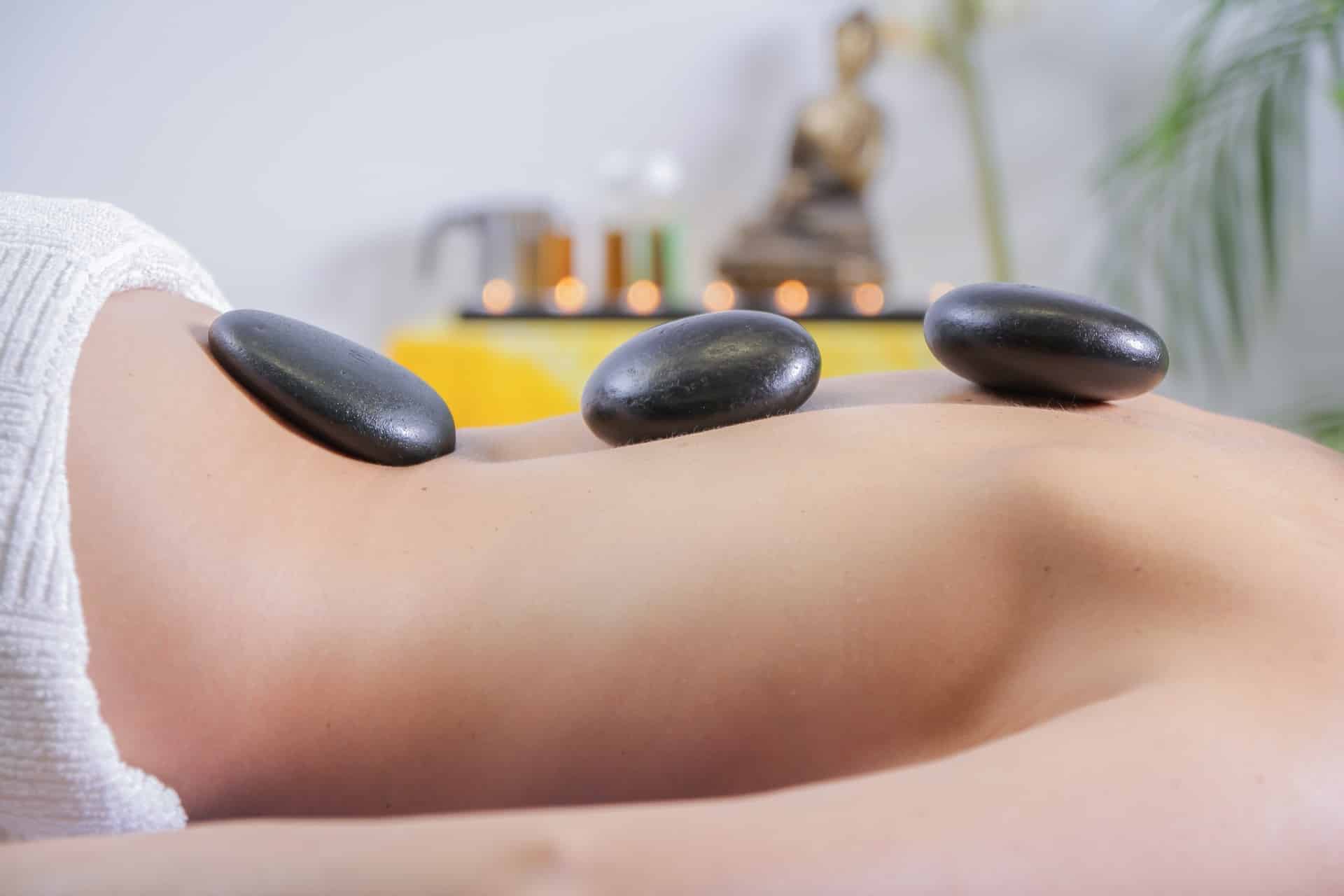
Hot stone’s may or may not sound like an enticing form of stress relief, but the science behind it begs to differ. As a business executive, you rely highly on the facts. The facts about hot stone massage are that melt away tension, ease away muscle tension that has built up after a long day in the office, and most importantly improve circulation and metabolism.

24. Foot Massage

Pedicures are not only for women, that is a fact. As an executive, you may spend just as much time standing on your feet as you do sitting at your desk. Our feet collect a lot of the stress and tension that we accumulate throughout the day.

You don’t have to get a pedicure to get a good foot massage but pampering one’s self and indulging in self-care of any form is never a bad thing either.

Decrease Your Stress Levels Starting at Your Foot!

25. Shiatsu Massage

Being a busy business executive, day in and day out can lead to chronic pains such as lower back pain. Shiatsu massages are highly effective at relieving chronic pains through the use the masseuse’s of fingers, palms, and even elbows or feet. This natural stress relief technique manipulates the body at specific points, depending on your specific needs.

Every variety of massage comes with its own unique benefits, beyond general stress relief.

Take a look at the various benefits of each kind of massage that way you can make an informed decision about which massage is right for you.

Herbal Drinks

natural stress relief

Herbal drinks, just like the previously mentioned supplements, can be an excellent natural remedy to decrease stress levels provoked by long days at the office.

26. Green Tea

Green tea, caffeinated or decaffeinated, has been used as an effective stress management tool. Being that you can get it with or without caffeine, this drink is perfect for any time of the day. Whether you want to get your day going or wind down before bed, green tea will help you achieve these goals while also reducing stress levels.

Among the drinks known to fight off feelings of stress, green tea definitely makes the top of the list.

27. Chamomile Tea

Another great tea that you can drink as natural stress relief is chamomile tea.

This particular tea is mainly used to promote rest while getting ready to turn in for the night, due to its sleep-inducing effects.

Executives are notorious for working late into the night and rising again at the crack of dawn after minimal sleep. Lack of sleep can contribute to increased stress levels.

So do yourself a favor and use chamomile tea to send you into a deep slumber, leaving you feeling refreshed and ready to go for a new day at work.

Green and chamomile tea aren’t the only two teas in existence known to produce stress relief. For some, certain teas are an acquired taste. With all of the known teas that produce stress relief, there’s one out there for every executive who needs a little pick-me-up.

There are also some foods you can eat that may help lower stress and anxiety.

Find Out the Best Natural Foods that Fight Stress Safely and Effectively

Natural Stress Relief Activities

natural stress relief


28. Physical Activity

It’s a well-known fact that participating in physical activity can promote a significant decrease in stress levels through the release of certain hormones.

As a busy executive, you may be thinking that this is another method that you may not have the time to participate in during your busy work week. When it comes to physical activity, this is one thing that you should be making time for, no matter what.

Aside from the incredible stress relieving effect that exercise has on the body, regular physical activity is crucial for overall health and wellness.

You don’t have to take up a cross fit class or sign up for an expensive gym membership to get an adequate workout on a daily basis. While also not using up too much of your time. For instance, you could take a walk around your neighborhood with your spouse every night after dinner.

Studies show that 60 minutes of moderate physical activity such as walking, weekly can greatly improve cardiovascular health, promote mood enhancement, and reduce stress.

29. Yoga

If you do find that you have time to put into taking a class, definitely consider putting yoga at the top of your list.

Yoga is another stress relieving technique that has been used for decades now. It is not in question whether practicing yoga has a significant effect on reducing stress levels or not. It does just that.

Learn How Yoga Helps You Excel at Work.

5 Ways in Which Yoga Can Benefit Your Career

30. Time with Animals

Spending time with your pet after a long, stressful week at work can work wonders at reducing stress as well.

Whether you take your dog for a walk around the neighborhood or enjoy a nap on the couch with your cat, animals can provide endless amounts of stress relief.

Cats and dogs aren’t the only animals that can effectively relieve stress. A study has shown that spending time with horses can be incredibly effective at alleviating stress.

31. Laughing

One of the easiest natural stress relief activities, especially when working such as stressful job such as being an executive, is laughing. Laugher is the best medicine they say. Nothing beats a good belly laugh at the end of a long, strenuous day at the office.

32. Gardening

There’s nothing more naturally therapeutic than spending some one on one time with nature in your own yard.

After being cooped up in an office space for hours on end as a busy executive, take some time to connect to nature.

Spend some time in your garden or create one if you don’t already have one.

Working as an executive is said to be among one of the most stress-inducing jobs out there. Learning how to manage this stress in easy ways is a 100% doable feat. Take part in these simple natural stress relief techniques and watch how it benefits your health as well as your performance at work.

Have you tried any of these natural stress relief tricks? Tell us how they worked for you in the comments!

Interested in Other Highly Effective Stress Relief Tools?

40  Powerful Mantras for Instant Stress Relief

The Best Stress Relief Toys for Busy Executives

12 Stress Relief Games Backed by Science That Will Keep Your Stress at Bay

The Myth of Fat Burning Foods

Even businesspeople believe in fairytales. We call it wishful thinking. It is particularly true when we think about our health. We believe in magic wands that can convert us into slim and good-looking executives with no effort on our part. 

One of the great myths we like to believe in is the existence of fat-burning foods.  Many health gurus tell us that we can burn fat just by eating the right foods. Well, let’s be clear: foods don´t have special fat-burning properties. Food can´t burn belly fat or any other type.  Fat-burning foods do not exist in real life.

However, we can still burn excess fat by eating certain things. Sounds like a contradiction?

Not really! Although there is no direct correlation between what you eat and fat burning, there is an indirect one. In some ways, the type of the food you eat may lead to faster internal fat burning.

This is the reason for the confusion of the general public regarding fat-burning foods. But first, you need to understand the fat-burning mechanism.

So, in this post we will explain the fat-burning mechanism and give you very clear advice which “fat-burning foods” you should eat to help your body lose fat fast.

Do “Fat Burning Foods” Really Exist? Find It Out. CLICK TO TWEET


1. The Fat-Burning Mechanism

Fat is burned when our bodies enter the fasting mode. After any meal, the insulin level in the blood goes up and our bodies starts the fat accumulation process.

After some time, this insulin level drops and the body enters the fasting mode. You can see this mechanism in the following diagram.

fat burning foods
https://weightology.net/insulin-an-undeserved-bad-reputation/comment-page-1/


So, when do you lose fat? It’s simple! Technically, it happens if the amount of fat burned during the fasting mode is higher than the amount formed during and after eating; so we experience a net fat loss.

The amount of fat burned during the fast mode depends on the length of the fasting period and your personal metabolic rate.

Another important factor is how quickly sugar enters the blood. The faster it enters, the higher the insulin spikes and the longer it takes the body to enter the fasting mode. The slower the sugar enters the blood, the better.

Therefore, in order to lose fat, we need to:

– Increase our metabolic rate

– Reduce our appetite and overall food intake

– Lower blood sugar levels by reducing the speed at which glucose (essentially sugar) enters blood circulation


The metabolic rate defines the number of calories your body burns in an average day. Obviously, the easiest way to increase the number of calories burned is with physical exercise. Another lesser known strategy to increase your metabolic rate is diet. Here, the so-called “fat-burning foods” come into play.

Now, let’s see which “fat-burning foods” you should eat. But please bear in mind that when we say fat burning foods, we either mean foods that increase your metabolic rate, reduce your appetite and your overall food intake or those that decrease the rate at which glucose enters the bloodstream.


2. Fat Burning Foods That Increase Metabolic Rate


The faster the metabolic rate, the easier it is to burn fat. And it is made more efficient by eating foods that increase your metabolic rate. Below are some options to include in your everyday diet:

– Protein-Rich Foods such as meat, fish, eggs, dairy, legumes, nuts and seeds can help increase your metabolism for a few hours. Some of these foods also contain zinc, iron and selenium that help the thyroid function, further regulating metabolism.

– Coconut Oil, because it’s made of medium chain fatty acids, goes straight to your liver when you digest it to be converted into energy or ketone bodies. This means it boosts your metabolism, increasing your metabolic rate to burn excess fat faster. Try incorporating 2 tablespoons of coconut oil into your diet every day.

 – Green Tea and oolong tea (a traditional Chinese tea) are purported to increase metabolism in the range of 4–10%. Drinking sufficient quantities means burning about 100 calories per day. The traditional oolong and green teas are known to help your body utilize stored fat to create energy effectively, thereby boosting your fat-burning ability around 17%.

 – Black Pepper contains piperine, a metabolic-boosting substance that also suppresses body fat accumulation. In the form of tea, it manages obesity a cup at a time.


3. Fat Burning Foods That Reduce Appetite and Overall Food Intake

Many foods create a prolonged feeling of being full that reduces appetite and overall food intake. Their mechanisms of actions range from regulating appetite hormones to lowering cravings.

Make sure that you integrate these seven foods into your diet:

Eggs are very filling. They’re packed with protein, fat, vitamins and minerals, making them incredibly nutrition dense. The more nutrient dense your food, the fuller you’ll get and the less you’ll need to eat.

 – High Protein, Low Calorie Yogurt. A study shows: foods like high-protein yogurt as a snack curbs appetite compared to other options like crackers and chocolate treats that are high fat. They may be energy dense, but yogurt is the best dietary strategy when appetite is of concern, particularly in women.

High-fiber foods. The body doesn’t actually digest fiber once ingested, and, in fact, it slows the digestion of sugar. This helps you fight cravings because you feel full longer. Some good high-fiber foods are avocados, almonds, broccoli, kale and blackberries.

Find Out More High Fiber Foods for Sedentary People and Lose Body Fat Fast


Saffron has been found in some research to have a positive effect on mood by increasing the body’s serotonin and endorphin levels. This increase in serotonin levels seems to support appetite suppression in conjunction with being in a better mood, making it a win-win for stressful days at the office!

Spicy foods: it’s not surprising that spicy foods like chilis & cayenne peppers contain properties, capsaicin specifically, that decrease the desire to eat more after consuming a meal. In addition, they reduce cravings for sweets and suppress the appetite.


4. Fat Burning Foods That Decrease the Rate of Glucose Entering the Blood


– Apple Cider Vinegar is said to increase metabolism, but it is a myth. In actuality, it aids fat loss. How does it work? Essentially, apple cider vinegar slow down the speed of entry into the blood of glucose, thereby lowering blood sugar levels. Diabetics and overweight people should look here for a weight loss panacea.

– Grapefruit not only reduces insulin levels and encourage weight loss, but it has a powerful effect on your olfactory system (the part that allows you to smell). Just smelling grapefruit excites your sympathetic nerves, which helps stimulate weight loss and reduce cravings.

– Ginger is essentially gingerol, as the name suggests. It is a known stabilizing compound for controlling blood sugar levels and a surefire process to lose weight.


5. How to Add Fat Burning Foods to Your Diet


As an executive, your day is always busy, but eating fat-burning foods in each of your meals is completely possible.

Remember the protein-rich food options mentioned earlier? Meat, fish, eggs, dairy, legumes …

Pick a different one each day for lunch and eat it with a salad, roasted vegetables and a small serving of fruit. Another option could be a large salad with chicken and high-protein, low-carb yogurt on the side. For even more ideas, please read our post on Executive Lunches!

Always start your day right. Eating a high-protein breakfast with healthy fats will set your metabolic rate on the proper track for the day and help fight cravings.  

For breakfast, eat eggs. There are many ways to prepare them and they’re a perfect nutrient-dense option. Have them with whole grain toast or full-fat cottage cheese to round out the meal. When you need a break from eggs, Greek yogurt in oatmeal with seeds and berries is also a great choice.

Please read our post on Executive Breakfasts for more ideas.

If you find yourself still needing to snack throughout the day but do not want to decrease your metabolic rate, opt for fat-burning foods like nuts. This snack will not only satisfy your hunger, but it will help control your appetite as discussed earlier.

But do be careful. While nuts are a healthy option, there is such a thing as too many, so limit your intake to avoid consuming unnecessary calories.

Here are more ideas for healthy snacks to enjoy at the office.

We hope you now feel well-equipped to incorporate a variety of fat-burning foods into your daily meals. As you can see, it’s easy to do and all the options are delicious!

What’s your favorite way to eat these foods? Please share your ideas and questions in the comment section below!

Why You Shouldn’t Feel Guilty About Eating Fruit

As a sedentary executive, you likely avoid that beautiful fruit presentation at the big meeting. You may be aware that fruit contains many valuable nutrients and fiber, but the sugar content deters you from eating them.

Wouldn’t it be great to have all the goodie of fruit without any of their drawbacks?

Well, actually such fruits exist! They are called low carb fruits, which are low sugar fruits.

Therefore, you should grab for those low carb fruits and enjoy them all you want.

By eating low carb fruits, you will give your body important vitamins, minerals, and antioxidants without getting excess sugar and weight in your sedentary body.

Do you pour yourself a glass of orange juice every morning before rushing out the door to your office? You’re going to want to rethink that and swap it for whole low carb fruits instead.

Read on to discover why that juice is doing your more harm than good and why low carb fruits are the way to go!

Discover all the delicious low carb fruits you need to add to your daily intake! CLICK TO TWEET 

Why Sedentary People Should Eat Fruits

Fruits usually contain more carbs than vegetables because they feature more naturally-occurring sugars. These sugars though aren’t as bad for you as the sugar you might stir into your morning coffee when you get started at your desk (and if you’re adding sugar like that, STOP!).

Understanding the 3 types of sugars in fruit can help you make the right fruit choices to get all your food groups without the sugars affecting your sedentary lifestyle:

– Glucose

Glucose is what your body prefers to use to fuel your brain and muscles. It also uses this to help your other cells in your body keep going.

– Fructose

With fructose, your liver does the metabolizing. This is very different than how your body uses glucose. If you consume more fructose than your liver can process, it will get turned into fat.

– Sucrose

This sugar is often referred to as ‘table sugar.’ It can occur in a natural state in some fruits though. Your body has an enzyme that can break it down into fructose and glucose. From there, it can metabolize each of them separately through the normal processes.

So, you tend to avoid eating fruit since it can have high amounts of sugar

and avoid gaining fat and weight.

Based on the science of it, you’d think you were doing yourself a big favor by staying away from fruits while you’re busily engaging in executive meetings and business trips.

It’s so important for you to rethink fruit and enjoy it during your business day.

When it comes to fruits, you will see why eating them will be best for your health and won’t be quite the travesty you imagine:

1. Fruits Are Healthy!

 You need to eat fruits even more as a busy executive than anyone else. Why? Because they give you vitamins and minerals plus fiber that your body needs to perform at its best.

There were nine separate studies conducted in 2006. All published in the Journal of Nutrition, these studies showed that eating a daily portion serving of fruit reduced the risk of heart disease by as much as 7%.

There was a study on metabolism with very interesting findings. The participants consumed 20 servings of fruit every single day for 2 full weeks. There were no negative effects found in blood pressure or triglyceride levels. What was extremely notable was that LDL cholesterol (that’s the bad one) had dropped by 38 points.

2. There Are No Studies That Support That Sugar From Fruit Makes You Gain Weight!

 Despite containing sugar, the fascinating thing is that it does the opposite for those that are obese. In other words, it has a paradoxical effect. Instead of causing obesity, they benefit obesity. The study was conducted in human trials and focused on the relationship between eating fruit and obesity.

What scientists learned from this study was that fruit intake was inverse to obesity. This is because fruit can reduce your total caloric intake. It can also keep you feeling more satiated for longer because low carb fruits, in particular, are very high in fiber.

Another reason you should be grabbing fruit from that tray during the next board meeting? It helps keep your gut thriving, according to the mentioned study.

As an executive, you’re likely very keen on studying all the facts before making a decision. Here’s one more reason you need to eat fruits. According to a study published in the Nutrition Journal in 2013, if you eat less fruit, it doesn’t do anything to benefit your weight, waist size, or blood sugar levels, especially if you have type 2 diabetes.

Basically, eating the recommended daily intake of fruit by the official health organizations is good for you and will help you with your body weight and overall health.

There’s one small caveat here and that is not all fruits are low carb fruits. Some of them have more carbs or more sugar. With a sedentary executive lifestyle, tucked behind a desk for a good 7 to 8 hours per day at the very least, low carb fruits will be a better choice for you. Therefore, you’re not wrong in avoiding certain fruits.

Keep reading and you’ll discover the best low carb fruits you need to add to your daily intake!

15 Low Carb Fruits to Add into Your Diet

Here’s our list of the best low carb fruits:

 1. Starfruit

low carb fruits

This exotic low carb fruit that also goes by the name of carambola makes for pretty presentation on those big, catered trays for your boardroom meetings. Eat one and get more than half of the vitamin C you need in your day, all for just a total of 6.73 grams of carbs per every cup.

It’s the best low carb fruit you can eat!

 2. Watermelon

It’s everyone’s favorite summer fruit! Refreshing and delicious, watermelon can satisfy your cravings for something sweet. Plus, it has the lowest carb content with just 7.55 grams per 100 grams while giving you tons of vitamin A to help you move through your workday.

3. Strawberries

foods that fight stress

Antioxidant-rich strawberries destroy free radicals, give you immunity-boosting vitamin C, and they have just 7.68 grams of carbs per 100 grams.

Strawberries should be on your list of your best low carb fruits!

4. Cantaloupe

Cantaloupe is another refreshing choice during that executive meeting on a hot day. With just 8.16 grams of carbs, it’s a very low carb fruit.

5. Avocados

foods to improve your memory and concentration

If you cut out fruits from your diet but still ate avocados, surprise! They’re fruits! Not only do they have the healthy monounsaturated fats your body needs for great heart health, but they also have 8.53 grams of carbs per every 100 grams.

6. Honeydew

Delicious, juicy, green honeydew melon gives you 9.09 grams of carbs along with vitamin C for immunity and potassium for healthy blood pressure.

 7. Peaches

For all the juiciness they bring, peaches are one sweet fruit you can feel good about eating. They’re very low carb at just 9.54 grams for every 100 grams!

8. Blackberries

Just 9.61 grams of carbs in blackberries plus plenty of digestive fiber, and you’ve found a friend in fruit. They also have manganese which will help you with bone health and collagen production.

9. Apricots

You get lots of vitamin C and potassium from apricots. And for all that wonderful flavor, you can enjoy them with only 11,12 grams per 100. To put it another way, you can eat 2 apricots and get only 8 grams of carbs!

10. Oranges

Keep your immunity strong with the vitamin C-boosting power of oranges. As you do so, you’ll only get 11.75 grams of carbs in a small-sized orange.

11. Raspberries

Raspberries are another sweet berry treat that you can enjoy no matter how many hours you have to work to run your office world.

They contain loads of flavonoids which are great for fighting age-related cognitive decline to keep sharp as a tack for years to come. Plus, they only have 11.94 grams of carbs per 100 grams!

12. Blueberries

As one of the top superfoods, it’s little surprise blueberries are on the executive low carb fruits list. They have calcium, magnesium, and potassium to help keep your blood pressure down and only 14.49 grams in carbs.

13. Kiwi

Most people don’t realize kiwi (or kiwifruit) comes from northern China. It’s more commonly associated with New Zealand where it has thrived since the beginning of the 20th century. This low carb fruit features only 14.66 grams of carbs per 100 grams (10 grams of carbs per fruit) and has a wonderful, sweet taste!

14. Lemons

foods to improve your memory and concentration

Lemons also have plenty of vitamin C and can help you absorb iron when you have them with foods rich in iron. While you might not want to eat one whole, you can use lemons to flavor your water to keep hydrated and get only 16 grams of carbs per 100 grams of peeled lemon.

15. Cherries

With rich antioxidant content, cherries are a great choice to snack on in your corner office or during a meeting with only 16.01 grams of carbs.

Please keep in mind that low carb fruits are big on fiber too. Fiber not only keeps you full but when reading nutrition labels, you need to subtract the amount of fiber from the carbs to get your total net carbs. That means these low carb fruits listed above are even lower in carbs than you think!

Interested in more low carb foods? Don’t miss our post on high fiber, low carb foods!

Easy Ways to Eat More Low Carb Fruits

 You might be busy with meetings and deadlines, but during your executive day, make sure you add more low carb fruits to your plate.

Here are some easy ways to make it happen without even thinking about it!

1. Eat the Whole Fruit, Peel Included When Possible

 Of course, you can’t eat the peel of every fruit (think bananas!) but with most of the low carb fruits listed above, you can. Those peels are the most fiber-rich part of the fruit. Make sure to wash them well with clean water before you eat them.

2. Don’t Juice Them

 You might think you’ll be able to consume more low carb fruits if you juice them, but that’s not a good idea.

When you juice your fruit, you’re getting just the sugar and not the fiber. This is definitely one of those “seemed like a good idea at the time” things.

You’re essentially eating many pieces of fruit in a small span of time and not getting any of the fiber your body needs from it. Furthermore, the majority of the sugar in your fresh-blended fruit juice is fructose.

Remember what we mentioned above about your liver not being able to process too much fructose? That extra bit turns to fat. When the fat buildup gets in your liver, it can lead to insulin resistance.

That’s exactly why we urge you to give up your orange juice habit, the one that many executives seem to share in common. Instead, choose a whole orange.

3. Read Labels on Dried Low Carb Fruits

healthy travel snacks

 Our last bit of advice to you is about dried low carb fruits. Because of the way they are dried out, they often contain more sugar than their fresher versions.

It’s not always the case though and they can be a lovely addition to your salads.

Always make sure you read the labels of dried low carb fruits first to ensure you’re not getting more sugar than you bargained for.

Which low carb fruits do you eat the most? Tell us in the comments!


90 ways to relieve stress (permanently!) that really work

Stress is eating us up. Especially at work. We have never been as stressed as now. We all desperately need proven ways to relieve stress.

Where does all the stress come from?

The main source of stress is our jobs. Did you know that when you measure your blood pressure (a good indicator of stress level), it is twice as high during your work day compared to at home or while on time off?

Your mental restlessness could be coming from different work-oriented factors. There may be tension between you and a colleague (or your seniors) because you have a feeling that they have been deliberately undermining your efforts.

Your brain could be panicking because you’re overloaded with important tasks, especially if the deadline is around the corner. It could also be that you’re physically strained because you use non-ergonomic furniture in your office.

You may also encounter physical discomforts because of bad lighting, poor aeration as well as spending prolonged hours gazing at digital screens.

If uncorrected, all these raise the possibility of eventually succumbing to stress. Stress at work can have drastic consequences. First, your tasks will seem harder as days go by.

Then, you might start deriving joy in being absent. Your performance also drops to worrying levels while you’re picking fights with pretty much everyone on flimsy grounds…

The list is endless.

The only way you can keep stress and accompanying illnesses at bay is by modifying your lifestyle.

And that’s where this guide comes in.

We have analyzed different ways to relieve stress and have come up with some of the most effective tactics to reduce it at work.

To give you a better outlook, this free guide is prepared from an organized content list. We strongly recommend that you read the first chapter to start. The rest of the chapters can be read depending on your particular interest.

The Guide on Ways to Relieve Stress includes:

– Four Important Tips to Start (A MUST READ)

– General Tips to Deal with Pressure at Work

– Exercise to Relax and Calm Down

– Yoga, Meditation and Other Strategies to Enhance Your Mental Health

– Eating and Drinking to Build Resistance to Stress

– Interaction With Friends and Family to Cure Mental Health

– Sleep Well to Reduce Stress

– Extra Help: Effective Tools and Home Remedies to Bring Down Stress

– Nothing Works? S.O.S


Four Important Tips to Start (A MUST READ)

If you keep on reading, I assume that you are ready to throw down the gauntlet and start fighting that dreaded enemy, stress. Treat this fight as a structured process and crucial project.

As with other projects you manage, you have to do some homework. First you need to find out where you are.


1) Identify Your Stressors and Stress Level

What is the starting point? Are you aware what your pains are? What really bothers you every day? What are the obstacles that stress you out?

Think about the factors in your office that make you unhappy and strained mentally and physically.

Busting stress starts with knowing and understanding your stressors. They can encompass external and internal aspects. The external type come from daily habits and routines, including your workload and job responsibilities. Internal stressors are all self-imposed and may focus excessively on personal concerns.

Take your time and identify at least three events that regularly make you feel worse.

Examples include addressing your boss, presentations to top management, interactions with certain people at work, office talk or personal worries without a basis.

It is also important to assess your stress level. The challenge is that stress is difficult to measure, especially if you are not a healthcare professional or a psychologist.

But, you can take a stress level test in which you can assess your stress level. Then you need to define your objectives and goals. What do you really want to achieve?


2) Decide What You Want to Achieve — Set up Goals

No project can be successful if you do not define what success means. You must define your stress management goals and later monitor your progress towards them.

Think about the things you want to change in your life.

Which stressors would you like to address above all? Around these stressors, you should define your goals. If you manage to reduce the impact of these key stressors, your overall stress level will diminish.

If you have taken an individual test to determine your stress level, the goal could be linked to general improvement or a result related to a specific stressor. We suggest you repeat the test each month during the first six and then every three months thereafter.

Success can be also defined as the incorporation of 3-5 anti-stress strategies into your weekly routine.

Again, they should be strategies that attack your key stressors. In this free guide on stress management, you will find more than 90 different ways to relieve stress.


3) Devise a Plan of Action to Manage Your Stressors

Once you have identified your stressors and defined your goals, you need to create an action plan to help you escape from these conditions or, at least, to reduce your negativity when they occur.

Having decided those things you would like to change, you need to pick up one to three specific actions to implement for each stressor.

For example, if you want to reduce the impact of the stressful events in your office or on your family life, you can:

1. Visit a gym on the way home

2. Ask your life partner to listen to you for 10-15 minutes to help ease your frustrations

3. Jump into a sport activity with your kids immediately after arriving home


It’s better to be proactive and confront your stressors than to stand and watch your stressors take a firm foothold.


4) Be Patient in Your Stress Management. Start Small.

This is probably the most important advice we can give. It has taken you months, or maybe even years, to achieve the current stress level.

Do not expect miracles: changes take time.

It is important to start small and build on it. This means that trying everything at once is a mistake. Limit your scope to just one stressor and select three appropriate actions.

Adjust your plan as you go. When you shift gears and approach new strategies, you will find that you can beat stress.


General Tips to Deal With Pressure at Work

According to the World Health Organization, workplace stress is the most pressing health epidemic of our times. As a modern-day executive, you’re more at risk of suffering mental turmoil due to the hyper pressure that comes with your job.

The long business trips, demanding negotiations, energy sapping presentations and crazy deadlines may inevitably take a toll on you at some point. As a result, you might find yourself grappling with stress, heightened anxiety and increasingly deteriorating health.

Let’s look at some of the most impactful ways to deal with pressure at work. You can learn to reduce stress in the workplace despite the cutthroat nature of today’s corporate environment.


5) Prioritize Important Tasks

One of the best ways to deal with pressure and relieve stress for busy executives is to prioritize important tasks. Contrary to popular belief, research shows that our brains do not do well when bombarded with many tasks and actually become less effective.

That said, plan with priorities. Start with the most crucial items on your to-do list and follow up on one after the other to reduce stress.


6) Stop Procrastination

Studies have repeatedly demonstrated that procrastinators habitually live with higher pressure and stress levels. Not only does putting off a pressing project at work increase the magnitude of your stress, but it also makes you uneasy every time during work meetings.

You can avoid this by doing what needs to be done in a timely manner. A handy tip is the five-second rule given to us by coach Mel Robbins. Before jumping into a task feet first, count backwards from five to one. He promises success with this method.

Learn more about stopping delays by reading this book that explains 21 awesome ways to stop procrastinating.


7) Establish Boundaries and Say NO to Extra Demands

You may be overworking and, therefore, are getting stressed because you have allowed others to encroach on your boundaries.

Instead of suffering silently, know your boundaries and jealously guard them. This means you must refuse to overcommit. Train yourself how to say no and to be assertive when circumstances demand.

Even when sharing roles in teams, be open and refuse unnecessary activities. In time, you’ll have more time for the chores that count and you will see a decline in stress at work.


8) Eliminate Interruptions in the Workplace

If you feel stressed about deadlines, try to implement measures that will help you focus on core tasks. For instance, have you ever estimated the time you spend scrolling through social media, checking your emails and responding to texts?

Turn off notifications at least during your most productive hours to improve your concentration. Similarly, shun other distractions and interruptions, including too much office banter cleverly.

Do not even fear keeping the door closed when working on duties that demand your complete attention.


9) If You Are Experiencing a Mental Block Due to Stress, Take Short Breaks at Work

A mental block prevents you from accomplishing your requirements because of the uncontrollable suppression of productivity. One of the best ways to relieve stress lies in the power of breaks.

Simply take leave from your desk and try walking around for about 10 minutes. In the meantime, distract yourself from the current state of affairs by thinking of something else — preferably an event that fills your heart with joyful feelings.


10) Practice Time Management

To defeat multitasking and disorganization, schedule your workday. This enhances efficiency and, in due course, reduces stress at work.

To illustrate, you can reply to emails or make calls only during set time windows. Schedule tasks in your calendar according to their significance.


11) Focus on Smaller Tasks

Stress makes it hard to fully concentrate at work. One of the best ways to relieve stress is to focus on smaller tasks.

In case you find yourself frequently struggling to kick start a pending task, break it down into smaller constituent parts and tackle them on one at a time.

You should, along the way, get the energy needed to conquer the whole project.


12) Learn to Delegate, If Possible

It’s difficult to excel in your most pivotal responsibilities if you hog all the obligations. Delegation is the panacea to overwork, allowing you to focus exclusively on high-level assignments. You will get the free time to get things done, thereby reducing your level of stress. Here’s how to do it:

– Delegate, guide, and remember to clearly frame the performance objectives for the mundane tasks

– Assess job success with feedback

– Avoid busy colleagues and find those with the required skills


13) Identify Self-imposed Pressure

We are humans and every day we wake up to new challenges as our positions evolve. Subsequently, it’s very normal to feel anxious about meeting the expectations that come with the job.

You should, however, stop heaping more pressure on your shoulders by pretending to be Mr./Ms. perfect at work.

Likewise, don’t spend sleepless nights attempting to end a task before the set deadline just to secure a bonus.

Doing this makes things harder for yourself unnecessarily and could escalate your stress. Over and above this, understand that high achievement comes from doing your best and not from perfectionism.


14) Learn to Cool Down Quickly

Another healthy way to relieve stress is to study your reactions when under pressure. Overall, we advise to avoid being kneejerk.

This is what you can do to reduce stress at work: instead of reacting to a provocation instantly, take a deep breath and try to relax.

Ultimately, you might eschew a costly utterance or action that could put you on edge.

Angry outbursts only worsen matters.

When frustrated or angry, attempt acting cool using beneficial techniques such as breathing exercises to bring down your stress and anxiety.

You can also learn self-calming techniques that help pressurized minds relax and reset. Meditation books can help train you how to respond calmly when under pressure.

Have a Look at Our Meditation Books for a Calmer Response at Work


15) Be Assertive in Your Communication

Learn to become a good communicator. This way of relieving stress includes holding open discussions with your team about assigned projects and seeking clarification from your boss when necessary.

On top of this, always issue clear instructions when delegating. Such skills are a powerful remedy for stress relief as they eliminate misunderstandings that can amplify interpersonal conflict.

It also helps your juniors perform with confidence, indirectly boosting your own productivity.


16) Be a Good Listener

There is a real art to communicating. It is more than verbal self-expression. You also have to be a good listener. Few realize that they are talking too much.

Distractions mar one’s ability to communicate such as when your mind wanders. You end up speaking of irrelevant things.

Stay on track with all your senses tuned to the person at hand.

There is something called “empathetic listening,” which is simply tuning into someone with eyes and ears fully open. Use good listening and work and watch the reaction. A positive one will reduce your stress as misunderstandings are kept at bay.


17) Listen to Music at Work to Deal With Pressure

Motivational music brings a refreshing feeling and can help your mind escape from the routine and get distracted. This way of relieving stress can help you ease up ahead of important presentations, tense meetings or heated negotiations.

For daily inspiration, load energetic music into your car device as you gear up for a stressful workday.


18) Clean Your Workspace

A messy desk denotes a messy mind. Get rid of that flood of papers and messages and see your productivity grow.

Declutter! Clearing your workspace can be the breath of fresh air you need to destress and rediscover yourself.

From happy bosses (because of the pretty looks), improved creativity, and higher immunity, the advantages are tremendous.


19) Reorganize Your Desk

You should go beyond decluttering and do a thorough clean up job. Reorganization is a known stress buster. You will find things faster and toss what is outdated and irrelevant.

One’s work environment is the key to productivity and that means reducing those little piles here and there.

Move equipment if it helps access needed items within easy reach.


20) Personalize Your Workplace

As yourself to describe your work environment. If you say stressful and toxic, you are in trouble. Your mood and productivity are likely to decline. You must remedy the problem with a better workspace, one customized to meet your personal needs.

Fortunately, even small tweaks can make a huge difference. Check for excessive lighting and improve aeration if it seems stuffy.

An exciting office décor may also lift your spirits. Some say plants work wonders just about anywhere on or beside a desk. They beautify the space as they reduce anxiety.

The right color plays a vital role in creating a pleasant atmosphere. Neutral or soft tones are at the top of the list to create calm. If you want to infuse the space with energy, go for brights. Meanwhile, blues and greens are known to promote restfulness while earth hues denote warmth. Intellects love yellow by the way.

A personal touch also goes a long way in setting the right tone. Who doesn’t love a photo of a spouse or the kids? Vacation memories are always popular and generate good feelings.

A Tip: Request senior management to lend a hand in attaining these changes.


21) Create a stress-free zone in the office, if possible

A stress-free zone is any place you can go to relax. It could be a lounge, rest area, stock room, or even part of a lobby with available seating. You may choose to play a game, meditate or listen to music. You will come to know what works best for you. A special treat would be practicing yoga on a portable mat.


22) Put Printable Mantras in the Office

We associate mantras with meditation; they are a single word or phrase that focuses the mind through a repeated rhythm.

Pressure and stress can be effectively treated by clearing the mind of negative thoughts.

You can use your breath along with the mantra you have chosen to focus your attention. They are an age-old way to relax though sound vibrations. You can teach your body to become calm at will.

We suggest this post on 40 useful mantras to reduce stress and how to use them! With this list, you have many choices. Use it daily and find yourself engulfed in peace and tranquility.


23) Stress Free Business Travels

Ask any business person and they will say that travel is stressful. Getting to a meeting or appointment takes time and effort, not to mention the hectic schedule at your destination.

We all know the meaning of jet lag and the hassle of flight delays or cancellations. A lack of sleep means coming home exhausted. It is all part of the process so you have to deal with it as best you can. We suggest melatonin supplements to sleeping better upon arrival.

Learn How to Use Melatonin for Sleep During Your Next Business Trip


Exercise to Relax and Calm Down

According to the Anxiety and Depression Association of America (ADAA) exercise can reduce stress. Along similar lines, a 2008 article in the British Journal of Sports Medicine observed that as little as twenty minutes of physical activity lessens nervousness and distress by as much as 20 percent.

Exercise reduces stress levels since our bodies tend to release more endorphins during workout sessions. Besides lessening anxiety, endorphins are renowned natural painkillers.

Best of all, even simple activities can make a massive impact, according to research studies. Some of them have been conducted to observe the impact of exercise on stress and depression. It seems to be a point of agreement that a ten-minute daily walk equates to a 45-minute workout.

The data is positive on the relief provided for anxiety by exercise. Furthermore, it points out that doing something daily is superior to the weekend warrior who crams it all into one long session. In this case, quantity beats quality for once.

Just read the evidence. It shows that physical activity breeds lower levels of stress. Sedentary people are out of luck. Furthermore, the exercise chosen must be on-going and rather vigorous to ward off depression long term.

Don’t say your schedule is too busy; you can work something in. Listen to an online poll from the ADAA (The Anxiety and Depression Association of America). Participants including walking and running exercise as a stress preventative showed better results.


24. Walk to Work

Why drive to work when you can walk. It is not just about saving money on gas and parking. Think about all that traffic and the stress of enraged drivers rushing to pass you by.

You can avoid all this by walking. What a great way to wake up and burn some calories. It is important to wear the proper shoes, of course, and change them upon arrival at the office. Don’t risk sore feet so invest in quality at the start.


25. Choose Public Transport Instead of Your Car to Commute

Everyone loves the ease of public transport. You usually arrive on time, free from driver’s stress in traffic. Put yourself in the professionals’ hands. Besides, you will likely have to walk a bit to get to the station.

People look forward to their time on the train or bus. They can read, do a puzzle, listen to music or sleep. Experts tout the benefit of getting off early and walking that extra mile.


26. Park Far Away From the Door of Your Office

Don’t be lazy! Park at a distance from the office front door and watch those extra steps add up on your portable fitness meter. It won’t be as much as walking all the way, but every little bit helps. Keep your body and mind fit with exercise anywhere it is possible.


27. Go For a Walk When at Home

You don’t have to limit your walks to before work in the morning. Why not do one after work on the way home.

You can run some errands, visit friends or family, and enjoy less stress the next day. You can reset your mood each and every time you move those muscles and keep those worries at bay.


28. Take the Stairs at the Office

You are missing out if you constantly use the elevator. The stairs are there to provide a bit of physical exercise, so use them. Every office building has a few options. You can even go up and down a few times a day to get that heart rate up. Your stress will conversely drop.

Nothing is as good for mental tension as exercise. It has the additional benefit of controlling weight and building physical fitness.


29. Take the Long Way to the Bathroom at the Office

Wherever you go in your office building (and we hope it is large), don’t take the short cuts. If you go to the most distant bathroom, for example, it will serve as a great break. Try visiting someone on another floor by taking the stairs.

Sedentary people need to get up and move to prevent stress on the job from feeling confined and pent up.


30. Stand and Walk on the Phone

The “rule” about exercise even applies to a phone call. You can certainly walk with your phone at your ear. Let’s say it takes ten minutes. You get that much time in motion to add to your aggregate number of stems. Plus, you get to clear the “jam” in your brain.


31. Walk at Lunchtime

We can’t say it enough times: walk, walk, walk. Use your lunch hour to really hike about. You can eat in ten minutes and then go outside for a walking break. Perhaps there is a walkway around the building that allows you to enjoy some sunlight and vitamin D.

You will be refreshed and energetic when you return to your desk, full of vim and vigor, not to mention a dose of optimism. Stress is gone and you are happy as a clam.


32. Have a Walking Meeting

There really is such a thing as a walking meeting. If everyone is on board, get moving together as a group and cover your agenda as you travel. It is a social experience and a great form of communication.

Imagine the combined steps you all take during fifteen or twenty minutes. Soon everyone will copy you, even for short brainstorming sessions.


33. Use Excuses to Walk More in the Office

We bet you can find an excuse to walk more in and around the office to break up your workday. We have made many suggestions such as during meetings, breaks, to go to the bathroom, get water or coffee, etc. You can get up to get supplies or throw out the trash.

Why email a colleague when you can walk to their desk. It is just as quick and face-to-face communication is personal and effective.


34. Do 20-Minute Workout at Work to Achieve Clarity of Thought

Busy bees. That’s what executives are. Endless days are filled with projects from morning until night. It seems that there is no time to spare, especially for a workout.

Okay, you might have to do it at home. But if possible, a 20-minute exercise break will do wonders for clarity of mind and creative thought. A little movement is fine so you don’t have to break a sweat and go change. On a routine basis, this is a great mood enhancer.

Certain sections of our minds associated with information processing get clogged over time. The answer is a simple, short workout. For this reason, work hard and make time to workout at work.

Check out these 11 ideas to get started and be more active in the office!


35. Run to Reduce Stress

Running used to be the most popular athletic pastime. It is coming back for executives as a stress reducer because it can be done without relocating.

Have a look at Science. There is an article on how running negates chronic stress. It has the most impact on that part of the brain responsible for learning and memory, or the hippocampus.

In short, running has so many important benefits, among them stress control. It only takes 20 minutes a day and it happens right away. You will immediately notice more mental clarity and raised spirits.

Just a few weeks is needed to tone up your muscles and feel a new lease on life.


Yoga, Meditation, and Other Strategies to Enhance Your Mental Health

Past scientific studies showed clearly that meditation eases stress. Also, yoga has a strong scientific base not only in stress reduction but also in fighting anxiety and depression.


36. Practice Yoga at Work

It is praised so widely for most everything; no wonder yoga is said to be the perfect panacea for what ails you – mentally or physically. It affords one a feeling of peace and happiness while managing stress.

Thus it is touted in its many forms for everyone, workaholics and family addicts alike. You can choose your preferred intensity. Many prefer the popular Hatha Yoga for anxiety relief. It is not difficult but produces results.

Yoga has bucketloads of other benefits in the realm of creativity and concentration. So, go for it!

Do you still have doubts whether yoga can help you cope with stress at work? Look at this scientific paper.

Find Out More Benefits of Yoga at the Workplace


37. Practice Yoga After Work

Doing yoga after work will reduce your accumulated stress and calm you down. Yoga clears the mind and helps alleviate physical discomfort, one of the common workplace stressors.

Many studies reveal clear evidence of yoga’s efficacy. One done in 2018 states that there is nothing like it for the promotion of health and well-being on a physical and psychological level. Stress begone! The simple poses are proof that Yoga promotes relaxation.

Akin to yoga, try 5-minute meditation sessions at work to ease stress levels. The ripple effect of meditation could be particularly gainful for executives who often work in pressure-cooker work environments.

Meditation is an opportunity to better digest the unwelcome events at work and redirect your thoughts in addition to increasing your self-awareness, all of which combat stress.

We have compiled this Step-by-Step Guide to Help You Begin Meditation at Your Office.


38. Practice Meditation regularly (Beyond 5 Minutes).

Once you get used to it, lengthen your meditation sessions to more than 5 minutes to gain maximal benefit.

Done regularly and for longer, meditation goes beyond soothing your mind and will foster your cognitive skills and creativity.


39. Practice Mindfulness

If you want a more wholesome exercise, consider mindfulness.

A study concludes that meditation, even short term, can dramatically boost mental wellness. The fruits of your labor are many. You can count on more effective decision making, a better memory, all kinds of creative revelations, not to mention more acute concentration and less stress.

For starters, this practice is an amazing mode of being that permits us to be 100% present in every moment of our lives.

Since it helps us separate what matters from the “noise” around us, mindfulness has the capacity to free us from negative reasoning and, subsequently, stress.

Find out more about this acclaimed practice in our Simple Mindfulness Guide for Busy Executives.


40. Try Breathing Exercises at Home/Work

At first glance, it looks rather simple, but diaphragm breathing (belly breathing) is another fantastic way to lighten the burden in your mind.

It is all about a full oxygen intake and breath release. In short, air comes in and carbon dioxide goes out.

In diaphragmatic breathing, we push out our abdomens, rather than the usual chest when breathing. This act sets off a series of events that appease the brain.

Know that Diaphragmatic breathing is said to slow down the heartbeat while it simultaneously lowers blood pressure. It also impacts cortisol, the hormone that causes stress.

Within this study, you will find the effects of diaphragmatic breathing and all its health implications.


41. Learn How to Control Your Brain With Your Body

Our brains are largely computer-like and closely coordinated with the rest of our bodies in actions like gestures and movements. Consequently, the body has the power to control what’s going on in the mind.

For example, you could be fidgeting with your fingers, rocking your chair, or moving your legs subconsciously when depressed, reflecting the turbulence in your mind.

Importantly, you can lower your mental distress by consciously stopping these involuntary body movements. Your mind will henceforth be more aware of what’s going on, and you may feel relieved psychologically.


42. Accept and Move on From the Things You Will Never Change at Work

Come what may, there are certain aspects of your work environment that you can never influence. Take the bad attitude of some of your team members, for example. Regardless of your level in the organizational hierarchy, there is very little you can do to have everyone see things from your perspective.

Accept the things you will never be able to change at work. According to Science, acceptance helps overcome your disturbing thoughts and avoid stress more easily.


43. Get Rid of Worries That Have No Basis

This study has found that most of our worries should never happen. Actually, 85% of our worries will never happen.

We are sometimes guilty of worrying about things that should not be of concern. For instance, sometimes we forget we have already achieved important company goals, and yet we start stressing that we are not giving enough and may be fired.

Here is the thing: you are rightfully there and your boss has no reasons to throw you out.

Can you, therefore, sit down, identify and clear these unfounded stressors from your mind?


44. Ooze Positivity When at Work

It’s true that you cannot entirely avoid some levels of stress — that’s the nature of work. But you can survive by developing a tradition of being continuously optimistic.

Research undertaken by Concordia University has already confirmed that the stress hormone, cortisol, is actually more stable in people with more positive qualities. So how can you become an optimist at will?

Think of optimism as a muscle that grows stronger with use. Just let your “emotional intelligence” do the work with positive thoughts. You should be able to come up with a memory or true that has good connotations.

Think of when you last prevailed over adversity. Use it to deal with the present moment in any situation.


45. Never, Ever Dwell

Businesswomen often linger over traumatic events at work and let stress hamper their clarity of thought.

Ideally, to avoid bad, intrusive thoughts you must set worries aside with the order never to return again. Dwelling is a known habit that plagues many anxious people. You may have to schedule worry time then move on to effectively beat stress.

When you designate a specific day/time of a week to agonize over the happenings in your life, you’ll likely not recall them for the remainder of the week.

This aids your stress levels and boosts productivity.


46. Avoid Toxic People at Work

Being surrounded by toxic people and fierce competition may, among other factors, make your workplace increasingly stressful.

Some people aren’t remotely aware of the damage they cause, but others gleefully watch as you crumble under their well-hatched ill schemes. Either way, they complicate your life in the office and worsen your condition.

To better understand these cruel characters, let me take you through their behaviors:

– Talking Narcissists: They are incredibly arrogant and see their personal opinions as facts. They act as if they’re the smartest beings in the whole organization.

– Drama queens/kings: They consistently have something sad, negative or pessimistic to say. Theirs is to create one crisis after another as it makes them feel like superstars.

– Master liar: He/she will always disappoint you by perpetually lying. Their chronic lie-telling will leave you mentally restless as you can never trust them, even when they’re part of your team.

– Jealous executives: They are incredibly toxic. Their jealousy comes out as judgment, dishonest criticism or gossip.

– Control freaks: These are team members or supervisors who want to control everything and everyone in your workplace. Trouble starts the moment you raise a conflicting point…they will pursue you until you mentally tire.

Identify these toxic behaviors and avoid them as much as possible at work.


47. It Takes Fun to Ward off Stressful Days at Work

People who laugh heartily live the best. A good guffaw does wonders for everyone in the vicinity. As a stress reliever, “laughter is the best medicine” or so they say in the Reader’s Digest.

Just look at the research on adding fun to the work environment. There is a definite benefit in terms of stress and boredom relief. It is part of the social experience.

Laughter is said to improve memory and mood while protecting workers from stress like a shield.


Eating and Drinking to Build Resilience to Stress

Eating healthy may reduce the damaging results of stress on ourselves. Research has actually found that a proper diet can powerfully counterbalance the impact of stress by strengthening the immune system, balancing mood, and restoring overall well-being.

There are certain foods on everyone’s list of healthy comestibles. They say to start your day with a steaming bowl of oatmeal to boost serotonin levels. We all need this chemical to calm ourselves.

Adrenalin, like cortisol, is a stress hormone that takes its toll on busy executives. Certain foods, like strawberries, are among the best for stress control.

Here is how to re-engineer your eating to reduce stress at work.


48. Avoid Unhealthy Eating Habits

According to scientific studies, our parasympathetic nervous system reacts to increased intake of gluten and sugar just as Wall Street reacts to Fed raising their interest rates. And that is bad news as far as stress management is concerned.

Here is the thing. Learn to do the following.

– Ignore your sweet tooth and shun the usual pastries and muffins that dominate at conferences and during travel.

– Go for simple and healthy foods that are nourishing for your soul and that care about your well-being. In short, make salads, vegetables, fruits and fish your new buddies at work.

Check out these simple dieting ideas that help executives achieve mind and body balance at work.


49. Add Renowned Stress-Battling Foods to Your Routine

You have to make prominent stress-busting foods part of each meal. I am referring to nutritive foodstuffs such as asparagus, strawberries, walnuts, wheatgrass, Schisandra berries and dark chocolate in moderated amounts!).

It may not be your favorite veggie, but Asparagus is a great choice for the stressed. This is the viewpoint of an article published in the NCBI. Why? Asparagus spears contain folate that relaxes the spirit and soothes the nerves.

Learn Which Are the Best Foods to Fight Stress!


50. Include Magnesium-Rich Eatables in Your Meals

When you use magnesium, your body is less inclined to produce cortisol (the stress hormone). This mineral confronts the fog that occasionally crowds your brain, destroying your creative juices.

Foods that are packed full of magnesium include kelp, avocados, soybeans, leafy greens, parsley, cashews and almonds.

Find out the bonus benefits of magnesium and how it wages war against stress in this guide!


51. Cut Coffee at Work

Caffeine needs no introduction: it enhances the negative responses that amplify stress and too much simply unacceptable.

Science suggests that even the once in a while cup of coffee can double your stress levels. Our advice: cut down on your coffee trips to the Starbucks little by little.


52. Calm Your Mind With Herbal Tea

The question is: what should I take in place of the dreaded caffeine? From our experience, green tea is king.

Studies show that regular consumption is ideal for the brain’s chemical balance. When things are out of whack, anxiety follows.

It is all there in a report found in the Biomolecules and Therapeutics. It says that green tea is the way to increase your proportion of “feel-good” hormones like serotonin and dopamine that bring about a positive attitude.

You can also choose among a variety of herbal teas whenever feeling nervous and to calm you down ahead of presentations.


53. Drink in Moderation

Many people think that alcohol relaxes them. Nothing can be further from the truth. Your body expedites massive amounts of energy to metabolize excessive doses of alcohol causing you more stress.

Drinking also affects your sleeping patterns, further compounding your mental disturbance. The NIAAA (National Institute Of Alcohol Abuse And Alcoholism) warns that alcohol dependence may cause long-standing damage to a host of body’s systems, severely hampering your psychological and physiological health.

Play safe and drink in moderation, that is, if you must.


54. Quit Smoking

That smoking help relieve stress is a BIG lie. On the contrary, stress levels in adult smokers are notably higher than in nonsmokers, as proved by this study.

So, shunning nicotine could be your greatest decision to date. We know it’s not easy, but you can do it. Even if it takes professional help, the fruits make it very worthy.


Interaction With Friends and Family to Cure Your Mental Health

Because of being hyper busy, we often forget our personal lives. Yet, social interaction with friends and family has immediate positive results when it comes to fighting stress.

In fact, myriad studies have found that people who perceive their social networks to be loving and supportive tend to fare better under stress.

You should hence look afresh at your schedule and find ways of investing more time in your personal life to reduce stress at work and in life.

And there’s a lot you can do out of the office starting with the following tips:


55. Help Others and Develop Stress “Shock Absorbers”

There’s some joy and fulfillment that comes from helping others through volunteering, community work, or even via your company’s charity programs.

Assisting enables you realize that you are way better off than you’ve always thought and it may help you become less stressed. In short, it puts your problems into perspective.


56. Do Someone a Favor at Work Whenever Possible for Mental Wellbeing

It’s widely believed that a person you help will like you more. But, in fact, according to the Ben Franklin effect, you will wind up appreciating the recipient more.

The logic is here that we justify our actions to ourselves by assuming that we did the person a favor because we like them. In like manner, you can use this strategy to win over your workplace detractors by seeking their assistance even if you scarcely need it.

If possible, even volunteer and do a coworker a favor. Their gratification will do you good.


57. Focus on Being Thankful to Reduce Stress

According to researchers at Harvard, giving thanks makes people happier. So, instead of spending all your time remonstrating about what you don’t have, take stock of your successes and congratulate yourself.

Make it a habit to look for something you feel grateful for at the close of each workday and you’ll be less worried and stressed.


58. Challenge Yourself

Set SMART goals and challenges for yourself. For instance, aim to learn a new language. Or commit to a new hobby like drawing, painting or part-time gardening. Such activities might calm your nerves and will help keep you inspired.


59. Develop Positive Self-Talk to Beat Stress

We all have our inner critic, and he/she can, on occasion, help us achieve dizzying heights of performance.

But that little inner voice is sometimes hurting because over criticism gives us negative emotions that causes us to see ourselves as weak and incapable.

We start uttering statements such as, “I’m sure I won’t get the deal”. This grim talk is unhealthy psychologically. You should reorient your talk to something more encouraging. For example, swap self-limiting statements like This is impossible! With questions such as, How do I make this possible.

The former magnifies stress while the latter sounds more hopeful and full of exciting new possibilities.


60. Learn to Believe in Yourself to Overcome Stressful Situations

If you listen to others a lot, chances are their perception of you might bring you down and stress you out.

In any case, your career may largely depend on periodic performance reviews, so you have to learn to live with the adverse opinions of others.

Believe in yourself, brush aside the disheartening comments and reach for the apex of the work triangle.

Learn How to Boost Your Self-Steem Now!


61. Create Some “Me Time”

We recommend that you regularly set aside some nights to enjoy quality “family time” or “me time”.

Of course, you won’t carry work home on these days. The fun and distraction can lessen your stress levels.


62. Lean on Your Support Network Consisting of Workmates

Connecting with people can unlock the doors to your happiness. In any case, support from colleagues is the most readily available when you need a shoulder to lean on because of undue stress.

Laugh, play, and have fun — it’s never that serious.


63. Do Funny Activities With Your Family or Friends to Unplug From Work

All work and zero play makes Jack a very dull boy. Sorry for the cliché, but it has to be said. Play games with mates, your kids, partner…..basically anyone who cares.

Games are insanely beneficial: they take your mind momentarily off your stressors, strengthen your social support, and are awesome for your physical well-being.

Can you get game time from somewhere? Please do!


64. Take Mini-Vacations or Quiet Days

We are not machines and periodically need time to rewind. Everything becomes much clearer during our time off, and we’re likely to return with renewed vigor, impressive moods and less stressed.


65. Turn to Spirituality

Connecting with the Supreme Being through prayer is potentially physically relaxing, emotionally comforting and soul uplifting.

Read more about how to use prayers to reduce stress.


66. Read an Inspirational Book

A good read can be the perfect antidote to your unyielding stress. We would pick one of these excellent reads to start off with.


67. Use Sex as a Stress Management Technique

Research shows that your brain stimulates the release of an array of feel-good hormones and neurochemicals after having sex.

These lower your stress levels and help keep your moods in check. For their part, experts contend that sex and success are inseparable twins.

For these reasons, it pays to make good sex part of your game plan to reduce stress and be successful at work.


68. Use Music Therapy After Stressful Situations at Work

When battling stress, listen to some serene, relaxing recordings like classical music. Nature sounds have also been shown to lower stress and originate more restful sleep.

Get more information about how music may boost your productivity at work


69. Dance to Your Dream Music or Sing at Home

Like sex, music is another tried-and-true stress reliever. In reality, dancing is holistic: it transforms the way you hold yourself, lifts your confidence and improves your physical wellness.

Even in the midst of your insane schedule, try getting up and dancing. At the worst, hum your favorite tunes at home, while in the car or the work place.


70. Connect with Nature, at Least Once a Week

Exposure to nature may help heal your emotional wounds, reduce heart rate and tension and discourage the release of stress hormones.

Take a refreshing stroll in the nearby woods or participate in nature walks. Go for hikes, run or ski. Just do something to disconnect.


71. Prepare a Mouth-Watering Meal at Home to Relax

Mainly because it gets your creativity flowing again, cooking is therapeutic! You may even prepare a healthy dinner and invite your friends to rate your newly-found cooking talent.

Aren’t you a good cook?

Check out these cookbooks to find kitchen ideas designed exclusively for executives.


72. Soak in a Warm Bath After Work

Soaking in a warm bath typically raises your body temperature and instigates the production of more melatonin — the sleep triggering hormone – when you are cooling down.

Warm water bathing additionally increases your level of serotonin, another happiness hormone.

Applying a natural moisturizer to your skin can take your restoration feeling a notch higher.


73. Create a Useful Tradition

Have something that gets you going at work every morning. For example, listen to a motivational podcast on the way to the office, recite a beneficial mantra or stretch.

Whatever energizes and helps calm you, spare some minutes for it daily. Approaching your days in a happy mood will help you temporarily forget your anxiety and stress.


Sleep Well to Reduce Stress

According to this study, every major stressful event adversely affects sleep in humans. You also have a higher probability of getting more agitated due to insignificant happenings when you’ve not slept well.

We recommend that you tweak your evening routine and adopt proper sleeping habits if you’re to get rid of workplace stress.

To combat stress, try these tips:


74. Get Enough Sleep Always and Never Sacrifice a Good Night’s Sleep for Work

In an article in the Neuropsychiatric Disease and Treatment journal, it says that sleep deprivation is detrimental to memory, focus, concentration, and the way we approach decision-making in our various roles. Sleep deficiency also increases anxiety and stress and can affect your ability to perform at work as well.

Now, this has no shortcut: so go to bed! In case you’re extremely tired, use melatonin to make it easier for you to fall asleep.

If you’re not yet convinced, see how sleep deprivation threatens your work.


75. “Steal” Minutes and Take Naps at Work to Reduce Stress

Look for a few minutes and take short naps. For example, you can squeeze 10 to 15 minutes from your lunch break and take a nap.

NASA astronauts and military pilots, to get better performance, and maximize alertness and clarity of thought, have previously been noted to be “caught napping.”

And as a bonus, you’ll probably not doze off during those sometimes unavoidable long afternoon managerial meetings.


76. Suffering From Insomnia? Use Natural Sleeping Aids to Restore Sleep

If you have Insomnia, your sleep might become even more chaotic when you are stressed. Instead of tossing and turning in bed the whole night, look for aids that make you sleep better naturally.

Nothing beats waking up feeling refreshed and raring to go.


Tools to Reduce Stress

Innovative scholars and psychologists have tapped into helpful practices and have advanced technologies in the wellness and medical fields to promote several impactful aids to reduce stress at work.

Some tools work alone, although you’ve probably used most with the other discussed ways to relieve stress. Here are aids and ideas you can try even as you implement the above 76 tips to reduce stress:


77. Use a Device to Control Your Breathing Patterns

Since it’s something we do every day, breathing is one of the most friendly ways to reduce stress.

Typically, your breathing patterns are much faster and irregular when pressurized. This promotes the production of cortisol, a terrible, negative hormone that aggravates stress. To reduce stress at work, accordingly, try to normalize your breathing.

First, use a suitable device to monitor your respiration at work. When the pace is abnormal, go slower until you’re at the recommended breathing rate. You will surely feel more at peace.

Track Your Breathing and Manage Your Stress Now!


78. Use Aromatherapy to Beat Stress

A study by Hainan Medical University found that aromatherapy can alter your brain waves and general behavior. In fact, it reduces your perception of stress, boosts contentment and lower levels of cortisol. This makes it a mighty weapon against tenacious depression.

You can have a look at our review of an aromatherapy diffuser to better understand the praised powers of aromatherapy.


79. Set Up a Cool Home Spa

When firm pressure is applied to your skin during a professional massage, your body issues a signal to the controlling parasympathetic nervous system, telling it to limit the release of the stress hormone, cortisol.

This makes a full body massage especially helpful in relieving work-related tension among hyper-busy executives as their “workstyle” makes them prime candidates for stress.

Devices such as this full body massager can help you enjoy a professional massage even when traveling.


80. Use a Stress Tracker to Achieve Relief

This is one of the best ways to relieve stress. Tracking your breathing throughout the day can provide detailed insight into your stress resilience.

Trackers like Spire that use bio-signals to capture stress data produce better results and should give you a head start in managing your mental well-being.


81. Learn Your Enemy: Stress

Like every other battle in life, understanding your enemy puts you in a prime position to craft a strategy that delivers a crushing defeat. This is where stress books like these come in.


82. Use Biofeedback for Stress Relief

Another one of the best ways to relieve stress for busy executives is to use biofeedback. It trains you how to obtain voluntary control of your body functioning through electronic monitoring and can help relax your mind.

The technique involves specific devices that help us learn better how our stress levels can impact the physiological changes that trigger stress.

This headband best illustrates these stress-busting devices.


83. Use Acupressure to Reduce Anxiety

The University of York discovered that acupuncture, normally an immersive treatment, can decrease the effects of depression symptoms and chronic pain.

In a similar study, Georgetown University’s Medical Center found that acupressure impedes the continued production of stress hormones and improves one’s state of mind.

Acupressure mats are ergonomically engineered to help maximize this curative practice and attain quicker body healing. These mats pressure on “acupoints”, where tension may still be nagging.

Here is one of the best acupressure mats dedicated to executives in the market today.


84. Have Stress-Relieving Toys in Your Office

Stress relief toys are another simple but super effective stress reliever for adults. You can select a unique and mentally-relaxing variety and let it keep you company at your desk.

Use your toy to distract yourself instead of twirling your hair or biting your nails when stress strikes.

Here is a summary of the best stress relief toys for executives.


85. Mist for Instant Relief

Recent studies have indicated that patchouli can be applied in medicine to wrestle with stress and depression. This instant stress relief mist is one such revolutionary stress and anxiety reliever.


86. Indulge in Reflexology to Help Relieve Stress

According to The Journal of Traditional and Complementary Medicine, reflexology helps improve chronic conditions such as stress through pressure. At the same time, The University of Hertfordshire, UK, discovered that foot massages produce a significant decrease in heart rate and blood pressure, leading to relaxation.

Try indulging in reflexology and see how it pans out. This foot massager can help relieve stress from your toes on up after prolonged standing or extended walking.


87. Use Massage Therapy Right From Your Desk, Create a Mini-Spa in Your Office

The Department of Educational Psychology at the University of Illinois has reaffirmed that massage therapy calms overall anxiety, heart rate and depression. In a related study, Duke’s University Medical Center also reported that massage helps ease stress while improving one’s emotional health.

You can even add a massaging cushion to your office chair or car seat, effectively turning them into a terrific stress-relieving spa.

Consider bringing this Shiatsu neck and back massaging cushion to your forthcoming business trip for the ultimate stress and travel pain relief.


Nothing Works? S.O.S

88. Reach Out to the People Close to You

If you have reached a point where all is overwhelming, don’t sink into silence. Open up and share your tribulation with co-workers, friend and family.

You can always find people who are ready and willing to help. You don’t want to alienate co-workers with too much. Let them offer. Those interested will make themselves known to you when they hear of your issues.

You only want to confide in those who have your best interests at heart. Of course, get far away from gossips and naysayers. Sadly, some people might use your situation to advance their own positions.


89. Professional Help

A therapist can also take you through professional coping mechanisms to further assuage your stress symptoms.


90. Consider a Change of Job If You’re Unable to Reduce Your Stress (With These Tips to Reduce Stress!)

Your health comes first, so if you’ve tried everything with little success, changing jobs could be a solution too.

70+ Powerful and Simple Healthy Living Tips for Busy People

Is healthy living difficult for you? For many of us, it is. How many times did you start a super diet or a fitness program in a gym and failed after a few days, weeks or months?

The issue is here is that your lifestyle changes were probably too drastic. You wanted to change your life too quickly, but healthy living does not mean changing your life drastically.

In actuality, changing one’s life is damn difficult. Only few people can do it successfully. It is especially hard for a busy professional with a sedentary job, who works long hours, travels a lot on business, has a jam-packed schedule and no time for family obligations.

Is that you? For people like you, including effective health, fitness or diet routine into one’s busy schedule seems to be mission impossible, especially if you do not want to harm your work-life balance.

What is the solution? Never ever try to change your life drastically. The trick is to modify your lifestyle in small steps, with habits that will make your life a bit healthier. Often, these small habits have huge implications.

Are you looking for some good healthy living tips? If so, this is the place. We have prepared for you dozens of ideas for small changes in the form of healthy living tips.

It is much easier to stay healthy than you think!

In this post, you will find more than 70 pieces of advice on health, fitness, dieting, achieving a work-life balance and stress management for busy people.

These healthy living tips are useful for everyone: those who do not exercise at all and those who exercise regularly but are looking for ideas to bring their fitness and health status to a higher level.


Exercise


We all know the many benefits of exercise:

– Improving cognitive skills:daily exercise could prevent cognitive decline, while at the same time sharpening memory and enhancing learning.

– Alleviating stress and anxiety

– Losing weightand building fitness

– Less need for medical treatment: you are less likely to get sick or experience heart problems with the multiple benefits of exercise.

-Boosting mood and happiness: this will inevitably lower depression levels.

-Improving the quality of your sleep


Do you have to go to a gym for physical exercise? Absolutely not! The good news is that the gym is not the only place to be active. Sometimes, all you need to do is think outside the box and be creative to keep fit.

We have prepared several exercise ideas for you below. Pick at least one right now and start your path to being healthy and more productive. Maybe you go to the gym regularly but are still not happy with the results.

In this section, you will find ideas to maximize your gym time and advice on how to continue your health routine outside the fitness facility.


1. Start Exercising Today; Stop Wishing and Start Doing


DIFFICULTY: Low

EFFECTIVENESS: High

Run away from procrastination. Start small and build on that.  Indeed, training for as little as 5 minutes can do wonders for your body, especially if done regularly. You will not want to miss a session once your body gets used to your routine.


2. Walk Before Breakfast


DIFFICULTY: Low

EFFECTIVENESS: Moderate

Morning exercise will help you be more active all day long. This is true even when you do something as simple as walking. After waking up, just put on your sneakers and stroll.

This will activate you for the long work day in the office and reduce morning fatigue. According to a study published in the journal Psychotherapy and Psychosomatics, “Low-intensity exercise reduces fatigue symptoms by 65 percent”. Plus, you’ll feel more confident and be in a better mood overall.

And since the environment is usually serene at this hour, it could be a good moment to plan your day too.  When you walk, your blood flow increases in the brain, which leads to better focus and enhanced creativity. Take advantage of it!


3. A Cardio Workout in the Morning Starts Your Workday with Energy


DIFFICULTY: Moderate

EFFECTIVENESS: High

According to research, exercise revs up your energy level. When fatigued, the last thing people want to do is exercise; but those who are physically inactive and fatigued find that more being active helps.

Start with just 10 minutes of cardio workout in the morning to reduce fatigue, increase energy and reduce fat.

This article will help if you’re wanting to embark on a fitness regime at home.


4. Do 10-15 Minutes of Body Workout at Home Three Times Per Week


DIFFICULTY: Moderate

EFFECTIVENESS: High

You may not have time for a full gym session. However, it should be possible to squeeze a 10- minute workout into your schedule. You just need to wake up 10 minutes earlier than usual or exercise after work.

Doable? Yes.

Sitting long hours in the office (a sedentary lifestyle) makes you lose out physically (for example, you may suffer weakened muscle strength) besides exposing you to ailments like obesity. According to a recent study, executives who are perceived as obese or overweight are also perceived as less effective in the workplace. A heavy manager is deemed less competent because of the known negative effects of weight on health and stamina. 

And because workouts help build body strength and promote weight loss, we recommend that you regularly sweat it out.

And since getting time to visit a gym is often an uphill task, we have compiled  a comprehensive list of easy exercises to do at home for busy executives.


5. Do Light Cardio Exercise When Watching TV or Listening to Audiobooks


DIFFICULTY: Low

EFFECTIVENESS: High

When you come home, do you often watch TV to relax and cool down after a stressful office day?

You can still do it without converting yourself into a couch potato.

For example, you can use a desk station bike while watching your favorite TV program or listening to an audiobook. This will help you burn calories, enhance your muscle strength and reduce your stress level after a long hectic day at the office.


6. Do Yoga Before or After Work


DIFFICULTY: Moderate

EFFECTIVENESS: High

Have you realized how beneficial yoga can be for your wholesome wellness? We encourage you to practice yoga both ahead of work and after closing the workday.

Doing yoga before breakfast will provide you with energy, focus and creativity for your busy day while yoga after work will reduce your stress and calm you down.

Deal? Let’s move on.


7. Shopping on Your Bike


DIFFICULTY: Moderate

EFFECTIVENESS: High

Some people have smartly picked up the habit of shopping by bike. Driving your car less means logging miles of exercise.

The benefits are widespread. It is an aerobic activity that tones muscles and builds strength in the thighs, hips and rear end, just the right places for most of us. If you find the pounds piling on, get a bike and stay trim.

It helps to have a few accessories for shopping trips like a front basket, a rear rack, or both for storage. Big sprees require a trailer or side car for kids and pets.

You might want to think in advance about the types of purchases you will be making. Don’t go for those big boxes and containers as they eat up your limited space. Forget breakables like eggs.


8. Play Sports with the Family


DIFFICULTY: Low

EFFECTIVENESS: High

This is one of my favorite healthy living tips! On one hand, you want to exercise after work, but on the other hand, you don’t want to sacrifice precious family time.

The good news: You can choose both!

Exercising with the family will keep you fit and allow you to spend more quality with your loved ones. Some parents enjoy basketball or softball with their kids, or they choose to go jogging. The possibilities are endless.

Can you see why we insist that you improve your health and work-life balance despite a jam-packed schedule?


9. Go for a Family Hike


DIFFICULTY: Low

EFFECTIVENESS: High

This is another great healthy living tip! What a wonderful way to spend family time. Everyone will be calm and happy, not to mention you when back at the office.

Hiking is the best way to enjoy nature and breathe in some fresh air. If you are lucky, everyone can hear the birds. It is a low-impact type of exercise amid the green glory of Mother Nature. People say it is refreshing and restores a peaceful state of mind.


10. Exercise with Friends


DIFFICULTY: Moderate

EFFECTIVENESS: High

Most of the time, we know we should do more sports, but we lack the necessary discipline and inspiration.  The results?  We end up on the sofa watching TV or surfing the internet.

Instead of hanging out with friends in a bar training your beer-belly muscle, maybe you should exercise with them instead.

Dragging your like-minded friends into exercising will give you accountability partners and force you to attend sessions even when your soul screams NOOOO!

After all, what are friends for?


11. Walk to the Office


DIFFICULTY: Moderate

EFFECTIVENESS: High

Fitness experts say that you should take 10,000 steps every day. This can be very hard for many of us. But let’s be honest. Even if you are not able to reach the 10,000 target, any increase in your daily walking activity is important for your health.

Tomorrow, leave home early enough and just walk to the office. Google maps can help you calculate the distance. This healthy living tip is doable if you work within a 20-minute walking distance from your place of residence.

During the first days, you can walk to the office, but take a bus back home. When you become more fit, you can also return home on foot.

Important: check the weather forecast and don’t walk on cold, rainy or super-hot days.  Make sure that your walking pace is low. You do not want to arrive sweaty.


12. Bike to Work


DIFFICULTY: Moderate

EFFECTIVENESS: High

Biking to work is actually a workout without the gym.  You can eliminate the cost and time if you cycle to and from work? It makes scheduling your life that much easier. It will no longer be a question of motivation, but routine.

Biking is known to be a fitness booster and helps the rider lose weight. In fact, commuters lose on average 13 pounds their first year. They report the benefits of cardiac aerobics and better joint health. Those overweight or out of shape should adopt this habit asap.

Cycling quickly impacts health. You feel young and ready to start the day. Don’t forget your helmet, of course.


13. Park Far from Your Office


DIFFICULTY: Low

EFFECTIVENESS: Moderate

If the previous two ideas are difficult to execute if you live too far to walk, then you can simply park at a reasonable distance away from the office, forcing you to walk some extra steps in the morning and as you leave work.

The only challenge can be finding a parking lot, especially if your office is located in a city center.

According to a study done by the Norwegian University of Science and Technology, exercise has a tremendous preventative effect on morbidity and premature death.  It is therefore safe to conclude that exercise can increase one’s lifespan!


14. Get off Your Train/Metro One or Two Stations Before


DIFFICULTY: Low

EFFECTIVENESS Moderate

Going to work by train or metro means independence from driving. You will soon forget the stress from traffic.

Metro, in particular, is an affordable and safe means of travel. Commuting time on the train or metro is great for reading or listening to your favorite music. For a bit of walking exercise (about fifteen minutes on average), we propose getting off one or two stations ahead of your usual stop.

This form of exercise can work into any schedule.


15. Move Your Home Closer to the Office


DIFFICULTY: High

EFFECTIVENESS: High

How much time do you spend driving to your office during one year? Some people need to drive at least one hour to get to the office and another to return home.

That adds up to 2 hours a day and more than 400 hours per year. It means you sit in your car commuting for more than 2 weeks per year. Sounds incredible, doesn’t it?

What about moving your home closer to the office? A shorter commuting time will reduce your sitting time and have huge positive implications on your health.

By the way, if you live closer to the office, you can normally sleep longer in the morning, too.


 16. Workout at Your Desk


DIFFICULTY: Low

EFFECTIVENESS: Moderate

You don’t have to leave your desk; just use your office desk or chair to exercise. You can also use some exclusive exercise devices designed for busy people who often sit the whole day long.

Exercise Discretely While Sitting at Work!


17. Take the Stairs


DIFFICULTY: Low

EFFECTIVENESS: Moderate

Another way to keep fit is to utilize any available window at work to exercise. For instance, walking is hugely beneficial, and you can further benefit by using the stairs instead of the elevator whenever practically possible.

Similarly, you can be performing simple calf raises while queuing at the copy machine.

Read: 11 ideas to work out at work and be more active in the office

Our next tips will explain more.


18. Do Yoga at the Office


DIFFICULTY: Moderate

EFFECTIVENESS: High

Practicing yoga at work strengthens many of the personal qualities needed to excel in business:  focus, creativity and energy. It might also diminish your stress levels.

Indeed, for executives, yoga is a godsend.

Check Our Yoga at Work Guide to Learn More Benefits of Yoga


19. Consider a Standing Desk While Checking Emails or Social Media


DIFFICULTY: Low

EFFECTIVENESS: High

Managers who make it a habit to spend time at the office or home from a standing desk harvest immense health benefits, including reduced back pain, enhanced weight loss, better mental health, and lower cholesterol and blood sugar. They expect to lead a happier, longer life.

Even better, you don’t have to stand the whole afternoon. A professor at the University of Waterloo found that as little as 30 minutes are sufficient to garner all these benefits.

Increase Movement and Boost Your Energy Levels Today!


20. Join a Gym


DIFFICULTY: LOW-HIGH (depending on your agenda)

EFFECTIVENESS: High

Although you can stay fit without a gym membership, the gym remains a good option for anybody who wants to be strong and healthy.

First of all, it pushes you to become consistent. And like in everything else, consistency and persistence pay in the long run.

Start by checking out nearby gyms and see what they offer.


21. Engage in Whole Body Moves to Optimize Your Time (and Money) at the Gym


DIFFICULTY: Moderate

EFFECTIVENESS: High

It is difficult enough to squeeze a gym visit into your busy schedule. You should therefore make sure that each of your gym minutes is invested most effectively during visits.

One way of doing this is by taking part in full body workouts. You can request your instructor to recommend the best for you to achieve extreme fitness.


22. Do Interval Training


DIFFICULTY: High

EFFECTIVENESS: High

A study has indicated that physical activity, such as interval training (in which you alternate between different activities with varying intensities, degrees of efforts, etc.) results in the release of chemicals called endorphins, which reduce anxiety and stress.

Furthermore, the interval training is the best way to burn your body fat as it increases your metabolism many hours after the exercise.

You can actually convert any exercise into interval training by setting the amount of time or distance you work out and a suitable time and distance for recovery.

You are then going to be alternating between the two.


23. Sign Yourself up for Gym Classes


DIFFICULTY: Low

EFFECTIVENESS: High

Because you have company and your fitness instructor to inspire you, chances are that you’ll achieve more by signing up for gym sessions than struggling in loneliness.

If you’re committed, it will be easier to achieve your fitness goals.

What’s more, you’ll enjoy helpful, professional advice to maximize your gym visits and get fitter and healthier. 


24. Use a Fashionable Fitness Tracker to Improve Your Overall State of Wellness


DIFFICULTY: Low

EFFECTIVENESS: Moderate

I cannot imagine how humankind has survived all these years without fitness trackers. Mine counts steps and advises me when to stand up and/or walk. It also monitors my pulse during my daily workout sessions as well as provides myriad reports.

It’s all in the name of keeping fit and looking after my well-being.

What’s more? Some fitness trackers go as far as helping you sleep better. As a bonus, you look stylish and fashionable when wearing one. Have a look at these awesome trackers to get a feel of how they work.

Compatibilize Your Exercise With Your Busy Schedule!


Stress


While the nature of work means that you cannot completely banish stress from your life, excessive stress levels could harm your overall health condition and your life as a whole.

Stress affects the body, mind, mood and behavior. For instance, you may have headaches, stomach upset, muscle tension, pain, irritability, anxiety, depression, experience overeating, tobacco use…

It is common knowledge that a healthy person does not have high levels of stress at home or on the job. Stressors come from constant demands and hostile working relationships. Conflicts exacerbate them and disrupt a normal work-life balance. It is vital to ban turmoil in your professional or personal life.

If you want to enjoy healthy living, you’re obligated to do all within your power to reduce any issues that cause stress.

Below are some healthy living tips that can help you fight stress in your life.


25. Find a Quiet Place to Relax


DIFFICULTY: Low

EFFECTIVENESS: High

 One of the best healthy living tips for executives to reduce stress lies in the power of calmness.

 Sometimes, you only need to find a quiet place (just for yourself) to release any mental tension within minutes.

Be sure your special place is free from distractions and interruptions.

It could be a favorite room at home such as your home office, an outdoor garden, or your favorite park nearby.

Resting the body and mind to achieve a state of quiet is the best way to open the senses to peace.


26. Expose Yourself to Aromatherapy


DIFFICULTY: Low

EFFECTIVENESS: Moderate

Natural therapies, particularly aromatherapy, have a long history, for hundreds of years, and more recently, they are enjoying a big comeback.

According to Science, essential oils provide substantial therapeutic effects and enhance the body’s natural stress relief.

Business executives are recommended to buy an essential oil diffuser for the home or in the home for daily use. For a small fee, they make your home or office an abode of serenity.

Find Out More Effective Natural Remedies to Keep Stress Under Control


27. Stretches Reduce Stress


DIFFICULTY: Low

EFFECTIVENESS: Moderate

As mentioned in the previous section, exercise is not only good for your body and health, but also for stress and anxiety.

If you don’t have time for intensive exercise, simple stretches can do wonders. Stretches help open your chest and relax the body, leading to better breathing and reduced your stress levels.

Experts say that daily stretching improves elasticity and mobility, resulting in relaxed movement and less tension. It should be done head to toe from your fingers, arms, wrists, ankles, legs and toes, to the waist, neck and spine.


28. Reduce Caffeine Intake to the Minimum


DIFFICULTY: Moderate

EFFECTIVENESS: High

While caffeine improves cognitive performance momentarily, it sadly increases cholesterol levels, blood pressure, and stress.

You may experience headaches, anxiety, insomnia, heart disease, and strokes as a result.

Here we lay bare the reasons why caffeine and stress are a dangerous workplace combination.


29. Drink Green Tea


DIFFICULTY: Low

EFFECTIVENESS: Low

Many times, even small things can have a huge impact. Even if you experience crushing stress, the solution may be simple and easy.

Have you thought of sipping a relaxing cup of herbal tea to reduce stress?

 Green tea also increases focus and memory. On the same token, it gives you a brain boost and helps improve your work performance. It also boosts metabolism.


30. Accept Things You Cannot Change to Avoid Anxiety


DIFFICULTY: Low

EFFECTIVENESS: Moderate

The emotional state of anxiety follows from a perceived and imminent danger. Fear and apprehension are the chief characteristic that cause a person to become defensive.

To reduce continuous worrying, create a tradition of accepting a certain state of affairs and don’t fight battles you’ll never win.

Can you really change how a mischievous family member views you? Can you change the attitude of malicious colleagues at work?

There is a lot you cannot change. It’s nature! So, why waste your energy in vain efforts? Just accept life calmly and move on. You will love the peace of mind.

We encourage you to read our article on How to Deal with Anxiety at Work for more tips.


31. Enjoy Peace at Home


DIFFICULTY: Low

EFFECTIVENESS: High

One of the simplest healthy living tips is to redecorate your home to make you feel calm and happy.

For instance, the National Center for Biotechnology Information (NCBI) has found that certain house plants like anthurium bust stress.

Why not introduce your favorite pictures or nature-themed decorations to your home if it will help you feel better. You can do this in places where you rest, exercise, do yoga, mediate, or just like to spend some quiet time after work.

Also, make sure that there is plenty of light at home to improve your mood and create a sense of calm.


32. Add Magnesium-Rich Foods to Your Diet


DIFFICULTY: Low

EFFECTIVENESS: Moderate

Start eating super-foods rich in magnesium to reduce the stress in your life. Your brain and nervous system need this mineral to stay calm and avoid irritation.

Eat kelp, almonds, parsley, soybeans, avocado and leafy greens. They have it in plenty supply!

Discover More Natural Foods that Best Fight Stress


33. Start Meditating


DIFFICULTY: Moderate

EFFECTIVENESS: High

Listen to the research. It shows that meditation is powerful medicine, physiologically and psychologically. We found one study that suggests that mindfulness meditation can dramatically uplift one’s mental wellness.

The multiple benefits go beyond stress reduction. Practicing meditation reduces depression and anxiety, the banes of modern man’s existence.

Do you know how to start meditating?

Read: A Step-by-Step Approach to Begin Meditation for Busy People


34. Use a Mantra


DIFFICULTY: Low

EFFECTIVENESS: Moderate

Meditators know that a mantra is a simple word, sound or phrase that gets them into the proper state of mind. It is the key to focus. It is a form of chanting that starts your spiritual journey to calmness.

study in Brain and Behavior finds that silently repeating a single word to yourself quiets the mind and eliminates wandering. It is all about slowing down thoughts.

 Know How to Use Mantras to Reduce Stress in Your Daily Life


35. Turning Spiritual Could Land the Knockout Blow to Stress


DIFFICULTY: Low

EFFECTIVENESS: Moderate

Faith in something greater than man can move the gigantic mountain named stress.

In one study, a sociologist at the University of Wisconsin-Madison learned that more Americans are turning to prayer to deal with difficult situations and emotions, including sadness, anger, and trauma.

It also seems that you can even bank on your heavenly connections to extend your life expectancy.

But what does science says about using prayer for stress? Well, this post has all your answers.


36. Plan Well Your Trips to Reduce Traveling Stress


DIFFICULTY: Moderate

EFFECTIVENESS: High

One of the surest ways to rediscover the joy of work or vacation-related traveling is to be well prepared to reduce stress.

Take charge and always do research about your next stop in advance. Book flights and hotel rooms early, carry aids to help you catch a nap while on the plane and factor in jet lag remedies.

And a big one, pack everything ahead of time.

Listening to music/podcasts or reading a motivational book can also help you counter the traveling blues.


37. Notice If You Experience Angry Outbursts Very Often, a Feeling of Dread or Panic Attacks


DIFFICULTY: Low

EFFECTIVENESS: High

Because of the persistent pressure of your job and family obligations, you may not be far from anxiety and stress.

If you suffer random panic attacks or snap at your boss, colleagues, or relatives at the slightest provocation, then you may be struggling with an anxiety disorder, and you should seek professional advice.

You should also act before disaster strikes if you feel sudden hate for certain tasks. Insomnia and loss of sexual drive are some of the warning signs that signal the need for assistance.

Find Out If You Have an Anxiety Disorder


38. Simplify Your Life!


DIFFICULTY: Moderate

EFFECTIVENESS: High

 Find the things you need and identify those that add little to your life. Keep the former while you discard the latter.

Start a clear-out operation with one segment of your life; for instance, your wardrobe. Exactly how many pair of shoes do you actually need? And how many suits? If there’s something in the closet you haven’t worn for years, get rid of it.

Surrounding yourself with fewer material items like fashion, stationery and even equipment could help you get more from life. Save space, reorganize your home and gain calmness.

That done, move on to the next part of your life. Remember that minimalizing is about more than “stuff”. Limit your commitments to gain the time to focus on what’s most important.


39. Find a Job That Makes You Happy


DIFFICULTY: High

EFFECTIVENESS: High

Being happy in your job is the most powerful weapon to overcome stress and stay full of life after work. In short, forget about ever being happy if you’re stuck in a job that doesn’t inspire you.

Think about it: you get up in the morning to go to a place you would rather not be. You take tasks that are not emotionally satisfying.

The results? You soon start to feel like you are not making the kind of contribution you would like to be making.

If this is the case, you will only become genuinely happy by changing jobs, so get moving.


Sleep


Denied sleep may mean poor work quality and more sick days and can lead to many illnesses, not to mention that you become irritable and a source of stress. Sure, you could be a workhorse like Winston Churchill and need just a couple of rest minutes each night. But you have to accept that in the long run, the painful effects of fighting shuteye will catch up with you, with terrible consequences.

The consequences of not having enough sleep include:


– Wild mood swings (irritability, anger)

– Anxiety and related health issues (heart disease, diabetes and depression)

– Slackened overall performance in your workplace

– Poor memory

– Lost problem-solving skills due to reduced creativity, illogical reasoning and skewed decision-making

– Lack of energy, focus, and concentration


In short, proper sleep habits should be at the top of your healthy living practices.


40. Get Enough Sleep (on average 7-8 hours)


DIFFICULTY: Low

EFFECTIVENESS: High

It is clear that one of the best healthy living tips is to get enough sleep. Otherwise, you may suffer from debilitating issues.

The American Academy of Sleep Medicine and the Sleep Research Society both recommend that adults aged 18–60 years try to get 7 to 9 hours of sleep each night for optimal well-being.

Statistics from The American Sleep Association indicate that 35.3% adults report less than 7 hours of sleep in an average 24-hour period. Similar data comes from the Centers for Disease Control and Prevention’s (CDC). More than a third of American adults are not getting enough regular sleep.

Find out more about the effects of sleep deprivation on your work.


41. Keep Your Bedroom Dark


DIFFICULTY: Low

EFFECTIVENESS: Moderate

Have you ever asked yourself why we are active during the day and sleep at night?  This is a hormonal process. The sleeping hormone, melatonin, is released when it gets dark. When the sun comes up, its concentration in the blood decreases significantly, so you feel awake.

Note: exposure to blue light diminishes melatonin production, but artificial light before bed is just as bad.

For this reason, always check that your bedroom is pitch dark and restful. Switch off all lamps as soon as you get into bed and invest in curtains that do not permit the entry of intrusive outside light.


42. Turn the Tech Off!

                                                                                                                                            DIFFICULTY: Low 

EFFECTIVENESS: Moderate                                                                                                                                                                                                                                  It is not only white light that disturbs our sleep. According to studies, blue light is even more disastrous for a good night`s rest. The problem is that too many of us take mobile phones or tablets into our beds, unaware of the serious consequences on the quality of our sleep.

This is what happens: the blue light in your device activates your brain (as you scroll your screen) and, as a result, you stay awake long after you have put your cell phone away. To avoid this, disconnect yourself from any tech devices at least one hour before bedtime.

This post tackles the issue of blue light and its impact on sleep. Please, read it.


43. Transform Your Bedroom to Rest Well


DIFFICULTY: Low

EFFECTIVENESS: Moderate

For bedroom decor, consider soothing colors such as muted blues, pastels and light green for a night of peace and calm.

The proper mattress and bedding will make a big difference in the quality of your sleep.


44. Meditate Before Bed to Calm Your Mind


DIFFICULTY: Low

EFFECTIVENESS: High

 It is extremely difficult to sleep well if your mind is full of thoughts and the day’s problems, or tomorrow´s challenges.

You will sleep like a baby only if you unplug and switch your brain into quiet mode.  One of the most effective ways to do this is practicing meditation before bedtime.

Get More Tips to Sleep Like a Baby!


45. Go Natural and Enjoy Sound Sleep


DIFFICULTY: Low

EFFECTIVENESS: Moderate

Forget the sleeping pills. Natural sleep aids are just as effective and don’t have side effects such as developing a dependency.

Milk, magnesium and valerian root are just some of the amazing natural sleep aids that are helping busy executives enjoy a more restful sleep.

And don’t forget that the most effective path to serene shuteye after an exhausting day at the office is to develop good sleep habits. 

Here are examples of other wonderful natural sleep aids to help you sleep better going forward.


46. Consider Using Melatonin to Get Sound Sleep


DIFFICULTY: Low

EFFECTIVENESS: Moderate

 Falling asleep is a reaction of the body to hormonal secretions. In short, we get sleepy when melatonin (the sleeping hormone) is released into the bloodstream.

However, the stress we experience during the day at work or home may block melatonin release. It makes us stay awake in bed for several minutes or sometimes for hours. The solution may be melatonin supplements.

Please remember to consult a healthcare professional before starting any supplement program.

Our Ultimate Melatonin for Sleep Guide will help you learn how to take advantage of this amazing sleep aid.


47. Don’t Neglect Your Snoring Problem


DIFFICULTY: Low

EFFECTIVENESS: Moderate

Does your partner complain about your snoring? In fact, loud snoring could mark the onset of a serious sleep disorder called sleep apnea, known to lead to disastrous conditions like high blood pressure and obesity.

In this regard, according to the Natural Sleep Foundation, more than 18 million American adults suffer from sleep apnea. Watch for signs like pauses in your breathing, choking or gasping for air, headaches upon waking, daytime sleepiness during your work routine.


48. Prevent Sleep Apnea


DIFFICULTY: Low

EFFECTIVENESS: Moderate

Sleep apnea contributes to a lack of sound sleep, making you less productive and alert during work hours. A natural remedy for sleep apnea is honey.

The Jundishapur Journal of Natural Pharmaceutical Products contains an article explaining how honey produces a natural anti-inflammatory effect. A tablespoon in a glass of warm water can also reduce swelling in the throat. Make it a bedtime ritual.

Read: Effective and Natural Ways to Avoid Sleep Apnea


49. If You Are a Frequent Traveler, Learn to Fight Jet Lag


DIFFICULTY: High

EFFECTIVENESS: High

 If business travel makes up a significant part of your routine, you need to take steps to prevent it from messing up your healthy lifestyle.

Because the stress associated with long-haul flights increases significantly for executives who fly more than six times a year, it’s essential that you adopt successful strategies to fight jet lag.

Your sleeping schedule, overall wellness and health can take a hit from frequent bopping around.

Read our definitive Jet lag Guide to understand all the tricks.


Diet

Your busy lifestyle means that you rarely have time to fix healthy meals. Yet, good nutrition is absolutely crucial for healthy living and wellness.

Also, be aware that if you adopt unhealthy eating habits, gym visits will not compensate. 

A balanced diet is so fundamental that you may not realize much improvement if you implement all our other healthy living tips but ignore healthy eating.

We recommend the following:


50. Learn How to Eat Healthy Right Now!


DIFFICULTY: Moderate

EFFECTIVENESS: High

You are what you eat, and you must train to eat healthy. (This is not negotiable under any circumstances.)

All meals should include portions of fruits, vegetables and whole grains. We recommend chicken or fish with brown rice at any time—never fried foods. Your cooking methods should be roasting and baking to eliminate fat.

If it’s not possible to eat healthy weekdays, compensate during your off days and weekends by savoring nourishing diets.

These books will teach you how to adopt more healthy eating habits.


51. Eat Meals, Don’t Snack


DIFFICULTY: Low

EFFECTIVENESS: Moderate

 Mini meals are far better than high-caloric snacks. Try to choose nutrient-rich foods rather than processed items that are loaded with fat, sugar and salt. Vegetables, whole grains and some fruits are low in calories. Never reach for cookies, candy, chips or even those deceptive energy bars.

Go for 3-ingredient meals with the requisite nutritional value. You will feel more energetic throughout the work week.


52. Eat Real Fruit. Limit Juice.


DIFFICULTY: Low

EFFECTIVENESS: Moderate

 All the necessary vitamins and minerals are in fruit. Plus, you get the fiber you need to perform at your best. Several studies in the Journal of Nutrition show that a daily serving of fruit reduces the risk of heart disease, even by as much as 7%. There is a similar study on the effects of eating fruit on the metabolism that reports that bad LDL cholesterol dropped by 38 points.

Juicing removes the beneficial fiber and other health-promoting substances from fruit. This is why we endorse whole fruits over juicing for the ever-busy executive.


53. Bring Your Own Lunch to Work


DIFFICULTY: Moderate

EFFECTIVENESS: Moderate

Bringing your own lunch to the office has loads of advantages. A balanced diet prepared at home is a surefire way to boost your health.

Healthy eating helps you beat back the usual 3 pm slump. Plus, bringing in lunch is good for your financial health: no more swiping your credit card at the local food court. You’ll appreciate the extra savings.

Additionally, it economizes your time, because it’s ready to eat (you’ll be back to your desk shortly).

We propose you try these easy office recipes for healthy living.


54. Increase Your Intake of Fiber to Prevent Constipation


DIFFICULTY: Low

EFFECTIVENESS: Moderate

According to a survey done by the National Institute of Diabetes and Digestive and Kidney Diseases, 42 million people in the United States suffer from constipation. Unhealthy dieting, stress and sedentary habits induce chronic constipation, so you’d better shun them.

A powerful helper for all types of constipation is fiber, found in large quantities in fresh vegetables and low carb fruits.

Try These Foods That Relieve Constipation Naturally


55. Reduce or Avoid Alcohol Intake


DIFFICULTY: Low

EFFECTIVENESS: High

One of the best healthy living tips is to reduce alcohol intake. Alcohol can be highly disruptive of your sleep-wake cycle. 

Not only are alcoholic drinks overflowing with empty calories, but you also have zero nutritional value. They are also bad news for the waistline. Plus, alcohol is associated with many diseases such as pancreatitis, liver disease, cancer, diabetes and heart disease.

The solution: Cut down on alcohol, and if you can, do not touch it at all.


56. Include Vegetables in Every Meal


DIFFICULTY: Low

EFFECTIVENESS: High

Veggies supply some of the most crucial nutrients, including fiber, potassium, folate (folic acid), plus vitamins A, E and C to your body, and are, therefore, indispensable.

Without potassium, which plays a crucial role in maintaining healthy blood pressure and dietary fiber (also helpful in lowering blood cholesterol levels), your body is at risk for dreadful ailments like heart disease.

Of course, vitamins help shore up the immune system. 

It may seem odd, but carrots, asparagus, cherry tomatoes and cauliflower in a smoothie or quiche (with quinoa) is a great breakfast. Then choose a preferred veggie at lunch and even more at dinner. Most people enjoy onions peppers broccoli and spinach.


57. Eat Salads


DIFFICULTY: Low

EFFECTIVENESS: High

Salads are simple and quick to put together and bring to work. Also, they are healthy and light to help you concentrate while at the office after lunch.

Indulge in salads to the fullest at every opportunity.

Get 260 Salad Recipes for all Workdays!


58. Have Healthy Snacks at Hand


DIFFICULTY: Low

EFFECTIVENESS: Moderate

 Having the right snack on hand can help you avoid the temptation of high-sugar stuff such as muffins, doughnuts, cakes or pastries.

Healthy snacks will keep you focused and energized throughout the day. Cheese and crackers, popcorn or roasted seaweed are good options.

Get 50 Snack Ideas for Wherever Your Day Takes You


59. Always Eat Mindfully


DIFFICULTY: Low

EFFECTIVENESS: Moderate

As an executive, you likely have a frenzied day. Despite it all, you need to pause when eating. We call it mindful eating. It means go slow and chew well to avoid digestive repercussions. The body has to catch up to your brain!

Make sure you feel full to prevent afternoon snacking, a dangerous habit. Never interrupt your meal with a call or email.


60. Use Home Delivery Services (high-quality)


DIFFICULTY: Low

EFFECTIVENESS: High

 This is one of those healthy living tips you shouldn’t ignore! Since you’re juggling a lot — work, gym, social life, and family —  consider using top-notch home delivery services.

Needless to say, their carefully-curated meal plans, mouth-watering chef-designed recipes and perfectly pre-portioned ingredients reduce prep work and the time it takes to cook a nutrient-rich meal.

Delivery services will take care of your eating headaches even when you’re into gluten-free, the trending ketogenic diet, wholesome Paleo foods and other unique dishes.


61. Use a Crock-Pot and Prepare Food Rich in Nutrients on Weekends


DIFFICULTY: High

EFFECTIVENESS: High

Take advantage of the weekend to replenish your body by adopting cooking practices that preserve nutrients such as crock-pot preparation.

It will take your sweet time, but the tasty end product and awesome nutritional value make the slow process very worthwhile.

You can even set aside spare time for this sort of meal preparation on your off days. 


62. In Restaurants, Always Choose Veggie-Based and Lean Protein Foods


DIFFICULTY: Low

EFFECTIVENESS: High

With a hectic schedule, you must keep the body fresh and bubbling with energy, so visits to restaurants are inevitable.

What you need is to do is eat smart. For instance, order veggies to keep your numerous body systems running like a well-oiled machine.

Also, select lean proteins such as eggs, fish, nuts, etc. They condition your cells without sneaking in excess calories (and potential weight problems).


General Health

Now, I want us to discuss other healthy living habits that can help you prevent serious health issues, such as cardiovascular diseases, body tension, depression, or even cancer.  

We will also cover several practical tips to help you battle weight issues, back pain and improve your overall wellbeing.

Let’s dive right in.


63. Drink a Lot of Water


DIFFICULTY: Low

EFFECTIVENESS: High

Drinking water is one of the best healthy living tips of all! Water helps the brain perform at its peak, eliminating groggy brain fog. Hydrating the body also helps energize it to excel at the day’s tasks.

Adequate water intake will improve your overall wellbeing as well as your attention span and prevent mental wandering during meetings or presentations. Drinking water can aid in weight loss and promotes healthful living.

Want to learn more? Read our incisive article on why you should make a bottle of water your friend.


64. Spot Depression Signs Early


DIFFICULTY: Moderate

EFFECTIVENESS: High

Notice if you feel tired all the time, isolated, sad, empty and unhappy or have started unhealthy habits like smoking: you could be in trouble. These emotions can be signs of depression and you need to confront it early on.

You may start becoming uninterested in your favorite activities or hobbies. Any onset of fatigue, agitation or suicidal thoughts require therapy and perhaps medication.

So, how can you cope with depression? Check out our expert answers here.


DIFFICULTY: Low

EFFECTIVENESS: High

This is one of those healthy living tips you shouldn’t ignore.

If you own a car, you probably take care to bring it in for oil changes and other routine maintenance. By doing so, you are protecting your investment and ensuring that it runs properly for as long as possible.

The same applies when it comes to caring for your body.

Schedule and attend comprehensive body checkups at least once annually. You can increase the frequency of health screening as you age.

Recommended posts:

12 Super-Important Health Tests for Male Executives.

12 Fundamental Health Tests for Female Executives


66. Keep Your Waistline in Check (Regularly!)


DIFFICULTY: Moderate

EFFECTIVENESS: High

Many people check regularly their weight, but weight is not a good indicator of obesity. Very fit individuals weigh a lot because they have increased their muscle mass and muscles weigh a lot.

Measuring your waist circumference is a better strategy.  Your waistline measure indicates clearly if you are obese or not.

Chronic stress, a sedentary lifestyle and lack of time for exercise may make you develop belly fat. The more belly fat, you have the bigger is your waist circumference and the risk of developing a serious disease increases.

Belly fat is associated with the majority of obesity-related health conditions. Also, extra fat around your midsection makes you feel older and look unattractive.

What you need to do is come out all guns blazing and commit to burning the surplus calories (and fat). Cut back on sugar and carbs. They are stored by the body and converted into fat. 

Find Out More Things You Can Do To Burn Belly Fat


67. Use a Smart Scale


DIFFICULTY: Low

EFFECTIVENESS: Moderate

Don’t just focus on weight… assess other pivotal elements of your health by stepping on modern-day smart scales occasionally.

These scales provide instrumental details on body age, bone mass, muscle, water, fat, protein, protein, visceral fat, BMI and BMR.

Keeping tabs on the figures gives you an up-to-date comprehensive outlook of your health to help you make healthy decisions.

Start Managing Your Overall Health Now!


68. Use a Posture Coach to Improve Your Back Health and Confidence


DIFFICULTY: Low

EFFECTIVENESS: Moderate

 The “posture coach” is a small, lightweight and wearable device worn near your collarbone to help you sit straighter and stand taller. You thus appear, and more importantly, become more confident.

We have reviewed the wildly famous Lumo Fit Posture Coach here to help you understand how these inventions work.


69. Build Your Confidence to Achieve Your Goals in Life


DIFFICULTY: Moderate

EFFECTIVENESS: High

 Even the strongest leader, no matter how competent, can be plagued by momentary bouts of self-doubt and low self-esteem.

Work on your confidence and self-esteem as you chase your life goals by taking concrete steps, including being well-groomed, thinking positively and getting active.

These books can help you build confidence and change your approach to life.


 70. Quit Smoking


DIFFICULTY: High

EFFECTIVENESS: High

 As you are surely aware, cigarettes will, in the long run, ruin your heart as well as your blood circulation.

Smoking raises your risk of chronic sicknesses like lung cancer, heart attack, coronary heart disease and peripheral vascular illness (damaged blood vessels). 

It also induces anxiety and irritability, unhealthy teeth and gums, future vision problems and yellow fingers, among other esthetic consequences.


71. Have Essential Oils at Hand to Improve your Life


DIFFICULTY: Low

EFFECTIVENESS: Moderate

 Essential oils may help cope with depression and insomnia. They might also boost productivity, ease your nerves, and quell anxiety during stressful scenarios, besides increasing your focus and energy levels during the afternoon hours when executives traditionally feel sluggish.

They also promote relaxation and better sleep at night. The best bit? They are readily available.

Have a look at these three options:

Energize your day naturally

Improve your focus and concentration

Mist away stress and anxiety


72. Promote Wholesome Healing Through Massaging your Body’s Pressure Points


DIFFICULTY: Low

EFFECTIVENESS: High

Another one of the best healthy living tips for busy executives is to try acupressure.

It is an alternative medicine concept based on the life energy that flows through the body’s “meridians.”  A trained practitioner applies pressure to body points in order to clear blockages.

Acupressure relieves tension and stress. It may also alleviate pain in the back, hips and joints as well as the shoulders and neck. The practice improves the essential body systems, including digestion, circulation and the natural sleep-wake system.

By stimulating your pressure points, acupressure also promotes relaxation and a better mood. In other words, you could be missing out if you have not been engaging in acupressure.

No time for an acupressure appointment? No problem! You can use this Acupressure Mat-Pillow set to stimulate a  better state of wellness.


73. Use Reflexology


DIFFICULTY: Medium

EFFECTIVENESS: High

Reflexology is a long-standing technique that entails the application of pressure to affected points, including the feet, hands and ears. Each reflex point corresponds to a part or organ of the body such that pressure relieves many ailments and promotes overall health.

Reflexology helps control blood pressure and improves nerve sensitivity besides boosting your energy level. It additionally improves your blood circulation and liver functioning.

Furthermore, it helps you sleep better and treats migraines and headaches.  You can try it by using readily available devices.

Decrease Your Pain Levels Starting at Your Feet!


74. Massage Away Your Body Tension and Pain


DIFFICULTY: Low

EFFECTIVENESS: High

 A massage removes muscle tension and pain. A full body massager such as this Mat is a brilliant way to enjoy a relaxing experience without abandoning the comfort of your home.

You can conveniently do it from your sofa or bed, saving you time and money.

On the same note, download and use one of the many professional massager hook-up apps to connect to the best professional massager near you, whenever your schedule allows.


75. Bio Hack Your Body


DIFFICULTY: High

EFFECTIVENESS: High

Biohacking is something new that helps make lifestyle changes by “hacking” the body’s systems to feel better. It is simply the process of taking small, incremental steps to improve your diet and overall health.

Part of biohacking is neurofeedback or using the brain’s “plasticity” by retraining it to respond in new ways to typical emotions.

You will be more energized, appreciative of work, greatly productive and generally a changed individual.

Start by using meditation designed to make changes in the brain using the body’s natural relaxation response.

Bio Hack Your Mind Now!


76. Avoid Sitting for a Long on the Airplane While Traveling


DIFFICULTY: Low

EFFECTIVENESS: Moderate

 So many times, we experience discomfort, swelling in the feet and joint stiffness during or after a flight. This is because blood flow is reduced, especially in the legs, while we are seated continuously for a long time.

Stand up and move during the flight.

Also, implement our bonus 23 Tips To Stay Healthy on the Business Flight.